The market has largely priced the U.S. move to T+1 settlement as a solved operations upgrade: the conversion happened, the system did not break, and the headline metrics improved. The new information is more useful and less triumphant. T+1 did not make equities instant. It moved the cash clock forward by one business day, lowered some clearing-fund drag, and made every stale instruction, late FX conversion, and manual affirmation error more expensive in time.[1][2][3][4]
That distinction matters for investors because settlement is usually invisible until it becomes balance-sheet pressure. The trade looks finished when the order fills. The risk does not fully leave the system until cash and securities actually exchange. By shortening the standard U.S. cycle for most broker-dealer transactions from T+2 to T+1 on May 28, 2024, the SEC cut one day of counterparty exposure, but it also compressed the window for allocations, confirmations, affirmations, securities lending recalls, funding, and cross-border currency work.[1][3][5]
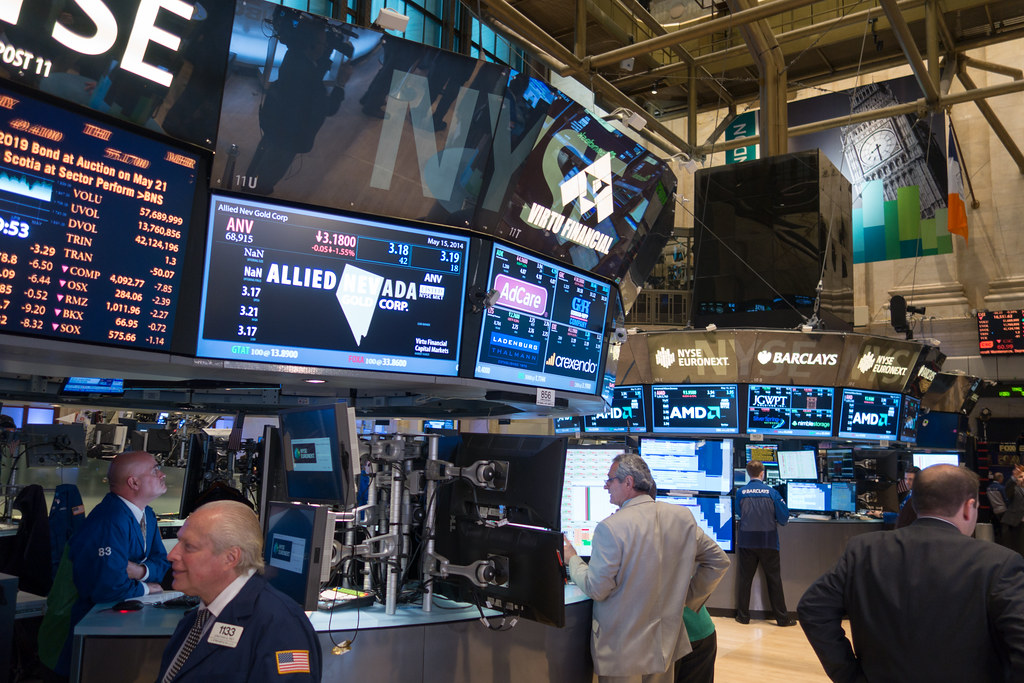
Image context: the cover is a real photograph of the New York Stock Exchange trading floor.[6] The floor is the right visual precisely because the article is about what happens after the visible trade. T+1 made the back office more market-sensitive, not less.
The priced view: shorter risk window, cleaner capital use
The clean bullish case is real. DTCC's first public progress update after the change showed 94.55% of transactions affirmed by the DTC 9:00 p.m. ET trade-date cutoff on May 29, 2024, up from 73% at the end of January.[2] The same update showed the CNS fail rate at 1.90% on the first day of T+1 settlement, lower than the 2.01% May average under T+2, while the non-CNS fail rate also improved versus its May T+2 average.[2]
The balance-sheet result was not cosmetic. DTCC said the NSCC clearing fund fell from a recent-quarter average of $12.8 billion to $9.1 billion, a $3.7 billion or 29% decline, in the early T+1 environment.[2] The later SIFMA, ICI, and DTCC after-action report framed the same benefit on an average basis: the clearing fund decreased by $3.0 billion, or 23%, from the prior three-month average to $9.8 billion after implementation.[3]
That is the part markets like. Less time between trade and settlement means less unsettled exposure. Less unsettled exposure means lower clearing resources, all else equal. If those resources can be redeployed or simply held with less friction, the system becomes slightly less capital-hungry for the same trading activity.[2][3]
The new constraint: the problem moved into the calendar
The mistake is to translate "shorter settlement" into "operational risk disappeared." The better translation is that operational risk now has a shorter runway. The SEC's risk alert made this point before the conversion: May 28, 2024 was also the compliance date for new processing rules around institutional trades and related recordkeeping, not just a calendar flip from two days to one.[1]
The after-action report is especially useful because it separates the successful go-live from the permanent work. It says the industry continued to affirm nearly 95% of transactions by the 9:00 p.m. ET cutoff, but it also shows where the work had to happen: prime-broker affirmation reached 98% by July 31, investment-manager auto affirmation reached 96%, and custodian or investment-manager self-affirmation rose to 88% from 51% in January.[3] Those are strong numbers. They are also evidence that T+1 is mainly an automation and data-quality regime.
The trade lifecycle became less forgiving in three places. First, settlement instructions have to be right earlier. Second, buy-side and broker workflows have to pass through allocation, confirmation, and affirmation before the evening cutoff instead of relying on next-day repair. Third, cross-border investors may still need to fund U.S. securities in dollars while their home-market or FX processes follow a different clock.[3][4]
That last point is the reason T+1 remains investable rather than just operational trivia. DTCC's 2025 discussion of global market structure says U.S. benefits were tangible, including a clearing-fund drop of more than 28%, but it also notes that cross-border transactions still face time-zone and FX complications. In its account, trade fails from Asia-Pacific into the U.S. rose 9%, and fails from the EU rose 5%, with foreign exchange timing, cash shortages, inventory problems, and instruction errors all part of the friction set.[4]
Mechanism: less counterparty time, more same-day discipline
The causal chain is short. Under T+2, a U.S. equity trade had two business days after trade date to get from execution to settlement. Under T+1, most covered broker-dealer transactions have one.[1][5] The settlement-risk benefit comes from cutting the time during which one side could fail before cash and securities change hands. The operational cost comes from compressing the work that makes settlement possible.
This is why the right market read is not "T+1 lowers risk" in isolation. It lowers one kind of risk while exposing another. Counterparty exposure falls. The tolerance for manual breaks falls too. A firm that entered T+1 with clean standing settlement instructions, automated matching, disciplined securities lending recalls, and early funding checks likely gained from the transition. A firm that relied on end-of-next-day repair merely discovered the same errors sooner and with less room to maneuver.[3][4]
The consumer-level version is simpler but points in the same direction. SEC investor material emphasized that trades settling after the change would generally complete on the next business day, while also flagging that investors should understand how the timing affects cash availability and account operations.[5] For a long-term investor, this is often invisible. For active traders, leveraged accounts, cross-border funds, and operationally complex institutions, the one-day shift changes the cadence of liquidity.
Numeric anchors that constrain the thesis
- May 28, 2024: the U.S. standard settlement cycle shortened from T+2 to T+1 for most broker-dealer transactions.[1]
- 9:00 p.m. ET: DTC's trade-date affirmation cutoff became the central same-day discipline point.[2][3]
- 94.55%: DTCC's May 29, 2024 same-day affirmation rate, versus 73% at the end of January.[2]
- 1.90%: the first-day T+1 CNS fail rate, below the 2.01% May T+2 average cited by DTCC.[2]
- $3.0 billion to $3.7 billion: the reduction in NSCC clearing-fund requirements described across the early DTCC update and the after-action report.[2][3]
- 9% and 5%: DTCC's later cross-border fail-rate pressure points for Asia-Pacific and EU flows into the U.S., respectively.[4]
Strongest counterweight
The strongest counterargument is that the system already passed the test. The first implementation window included a difficult calendar feature: trades from Friday, May 24 under T+2 and trades from Tuesday, May 28 under T+1 both settled on Wednesday, May 29 because of the Memorial Day closure.[3] If the market could digest that "double settlement day" without a visible systemic failure, then maybe T+1 is now just background infrastructure.
That pushback is fair, but it is incomplete. A smooth conversion proves that preparation worked. It does not prove that the remaining frictions are immaterial. The after-action report itself warns against treating T+0 as an automatic next step; it says same-day settlement would require a fundamental reinvention across products and processes, and could worsen dislocations between U.S. T+1 markets and regions still on longer settlement clocks.[3] In other words, the success of T+1 argues for targeted automation, not for assuming time can keep disappearing without cost.
Falsifier
This thesis is too cautious if high affirmation rates stay near the mid-90s, U.S. fail rates remain around or below T+2 norms, cross-border fail pressure fades, and clearing-fund savings persist without a rise in liquidity strains during volatile sessions. In that case, T+1 would be closer to a completed efficiency gain than an ongoing cash-clock constraint.[2][3][4]
Watchlist
- DTCC affirmation and fail-rate metrics: the key question is whether same-day affirmation remains high when volume and volatility spike, not only during calm periods.[2][3]
- Cross-border funding and FX fixes: U.S. T+1 remains messier for investors whose currency conversion, custody, or lending process still runs on a different regional clock.[4]
- Europe, U.K., and Switzerland 2027 planning: synchronized T+1 moves abroad would reduce some timing mismatch, but they would also export the same automation test to more fragmented markets.[3][4]
- Any serious T+0 proposal: the threshold should be much higher than "T+1 worked," because the after-action report treats same-day settlement as a different operating model, not the next small calendar step.[3]
Takeaway
T+1 is best understood as a successful compression of market plumbing, not as instant settlement. The benefit is real: lower counterparty time, lower clearing-fund drag, and proof that more trades can be affirmed on trade date. The cost is also real: cash, instructions, securities, and FX now have less time to be wrong. For investors, the signal is not a broad market direction call. It is a quality filter on brokers, custodians, funds, and market infrastructure firms that can turn settlement speed into automation rather than stress.[1][2][3][4][5]
Sources
- U.S. Securities and Exchange Commission, "Shortening the Securities Transaction Settlement Cycle" (March 27, 2024) - risk alert noting the May 28, 2024 move from T+2 to T+1 and related institutional-trade processing requirements.
- DTCC, "DTCC Comments on Industry's T+1 Progress" (May 30, 2024) - early affirmation, fail-rate, and NSCC clearing-fund metrics after conversion.
- SIFMA, ICI, and DTCC, "T+1 After Action Report" (September 2024) - post-implementation metrics, double-settlement-day note, and caution on T+0.
- DTCC, "T+1 and Beyond: Building the Future of Global Markets" (October 29, 2025) - 2025 view on clearing-fund savings, fail-rate changes, and cross-border FX/time-zone friction.
- Investor.gov / SEC Office of Investor Education and Advocacy, "New T+1 Settlement Cycle: What Investors Need To Know" - investor-facing explanation of next-business-day settlement and account-timing implications.
- Wikimedia Commons, "File:Trading Floor at the New York Stock Exchange.jpg" - source page for the lead photograph.