Self-storage REITs are no longer a clean "rates rebound" trade. Priced is that new supply is slowing and the worst rent pressure is behind the sector. New is that the largest operators are still guiding same-store growth around flat or below it, which means the durable spread has already moved elsewhere: non-same-store lease-up, acquisitions, and fee-heavy platform scale.[1][2][3][4]
That shift matters because the macro picture is not broken, but it is not healed either. Yardi Matrix said the national average advertised asking rate fell to $16.10 per square foot in February, down 1.1% from a year earlier, while the under-construction pipeline still equaled 2.4% of existing inventory, or about 48.4 million net rentable square feet.[1] A sector in that condition can stabilize without yet producing a broad same-store snapback.
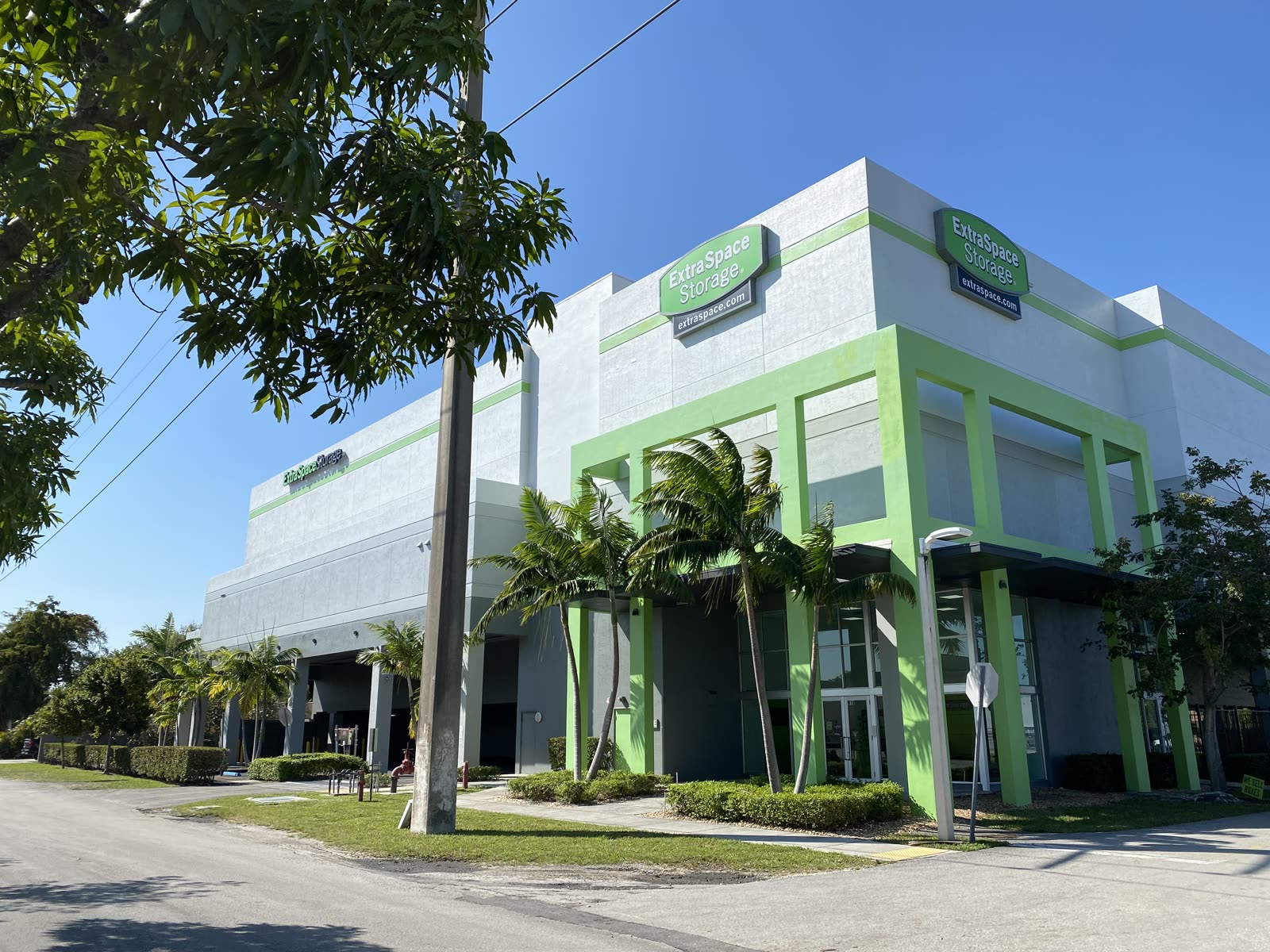
Image context: the cover uses a real Extra Space Storage facility photograph rather than a generic REIT or rates graphic. That is the right visual anchor because this sector's earnings still come from actual boxes, drive aisles, leasing desks, and neighborhood supply conditions.[5]
Why the easy rebound is not here
If self-storage were already back in a straightforward pricing regime, management guidance would look cleaner than it does now.
Public Storage's 2026 guidance calls for same-store revenue growth between -2.2% and 0%, with same-store NOI growth between -3.9% and -0.5%.[2] Extra Space Storage is less negative, but not dramatically so: it guided same-store revenue growth of -0.50% to 1.50% and same-store NOI growth of -2.25% to 1.25% for 2026.[3] CubeSmart's initial 2026 outlook sits in the same neighborhood, with same-store revenue growth of -0.25% to 1.25% and same-store NOI growth of -1.75% to 0.25%.[4]
Those are not collapse numbers. They are transition numbers. The sector is telling investors that street-rate pressure is easing, but not yet clean enough to make same-store the whole story again. Yardi's metro map points in the same direction: most top markets still are not showing broad rent strength, and several of the heaviest-supply metros remain materially above the national construction rate.[1]
CubeSmart's fourth quarter is a useful snapshot of that middle state. Same-store occupancy ended the year at 88.6%, down from 89.3% a year earlier, while same-store revenues slipped 0.1% and same-store NOI fell 1.1%.[4] Extra Space's fourth quarter was better, with same-store revenue up 0.4% and same-store NOI up 0.1%, but even that result still had to sit next to a 2026 guidance range that assumes only modest improvement.[3] Public Storage sounded similar: it highlighted that 56% of its markets posted positive same-store revenue growth in the fourth quarter, up from 49% a year earlier, which is a stabilization signal rather than a declaration that pricing power has broadly returned.[2]
Where the spread has actually moved
That is why platform scale matters more now than a simple sector-level rent call.
Public Storage expects $335 million to $355 million of 2026 non-same-store NOI, after acquiring 87 facilities totaling 6.1 million square feet for $945.6 million in 2025 and carrying a development and expansion pipeline expected to add 3.5 million square feet.[2] In plain English, it has more ways to grow than just raising rent inside a mature same-store pool.
Extra Space is even more explicit about that multi-lane model. At year-end it managed 2,263 stores across third-party owners and unconsolidated joint ventures, ended 2025 with about $1.5 billion of bridge loans outstanding, and disclosed total 2025 EXR investment of 82 stores or projects for about $879.2 million.[3] That is no longer just a landlord collecting rent inside owned same-store properties. It is a broad operating and capital platform with fee streams, lending income, and acquisition optionality.
CubeSmart is smaller, but the same logic applies. It ended 2025 with 862 third-party managed stores totaling 56.8 million rentable square feet, added 136 managed stores during the year, and guided 2026 FFO as adjusted to $2.52 to $2.60 per share even while same-store NOI guidance remained around flat to down.[4] That combination is the key signal. In this part of the cycle, the better operators do not need same-store rents to do all the work at once.
The practical read-through for investors is narrow. The sector can still work in 2026, but it is not enough to say "supply is peaking." The higher-quality spread belongs to platforms that can absorb soft same-store math while monetizing lease-up assets, external growth, and management infrastructure. In a strong rent year, everyone looks more similar. In a middling rent year, structure shows.
Six numeric anchors
- National street-rate backdrop: the average advertised asking rate was $16.10 per square foot in February, down 1.1% year over year.[1]
- Supply is better than the peak, not gone: the under-construction pipeline still stood at 2.4% of existing inventory, with about 48.4 million square feet underway.[1]
- Public Storage still sees a soft same-store year: 2026 same-store revenue guidance of -2.2% to 0% and NOI guidance of -3.9% to -0.5%.[2]
- Extra Space is only modestly better: 2026 same-store revenue guidance of -0.50% to 1.50% and NOI guidance of -2.25% to 1.25%.[3]
- CubeSmart remains in the same transition band: 2026 same-store revenue guidance of -0.25% to 1.25%, NOI guidance of -1.75% to 0.25%, and FFO as adjusted guidance of $2.52 to $2.60 per share.[4]
- Platform scale is real, not rhetorical: Public Storage acquired 87 facilities in 2025; Extra Space managed 2,263 stores at year-end; CubeSmart managed 862 stores totaling 56.8 million square feet.[2][3][4]
Those anchors point to the same conclusion. The sector-wide rebound case is no longer a simple call on rent healing. It is a sorting exercise inside a still-imperfect operating market.
Strongest counterweight
The best pushback is that the platform distinction could matter less very quickly. If new supply keeps decelerating, if seasonal leasing improves more cleanly than current guidance assumes, and if advertised rents stop falling market by market, same-store growth could reaccelerate fast enough that nearly every large operator participates.[1][2][3][4] In that branch, it would turn out that 2026 was simply the bridge year before a broader rent reset.
That counterweight is real. Self-storage has historically recovered faster than many property types once supply pressure clears. The narrower claim is only that, today, management guidance still tells investors to get paid for platform design rather than for a sector-wide pricing miracle.
Falsifier
This framework is too selective if the next two quarterly reporting windows show broad same-store revenue reacceleration across the group, occupancy rebuilding without meaningful promotional pressure, and the heaviest-supply markets normalizing fast enough that platform advantages stop mattering at the margin.[1][2][3][4] If that happens, the plain sector beta trade will have been the right one.
Watchlist
- The next Yardi Matrix national self-storage update: the key numbers are whether advertised rents stop falling and whether the under-construction pipeline drops decisively below 2.4% of stock.[1]
- Public Storage's next quarterly disclosure: watch whether same-store revenue turns less negative while non-same-store NOI continues to carry real weight.[2]
- Extra Space's next quarterly disclosure: the key test is whether same-store NOI can move clearly positive while management, lending, and acquisition activity keep diversifying growth.[3]
- CubeSmart's first-quarter 2026 earnings call on May 1, 2026: this is the cleanest near-term check on whether management's "inflection point" language starts showing up in actual same-store and FFO progress.[4][6]
Takeaway
Self-storage REITs are not broken. They are just no longer a one-variable rent trade. Supply is easing, but same-store guidance across the large operators still says 2026 begins as a transition year. The durable spread already sits in platform scale: lease-up pools, acquisitions, management contracts, and the ability to keep growing while street rates are still healing. In this cycle, the higher-quality operators are not waiting passively for rents to rescue the story. Their structure is doing part of the work already.
Sources
- Yardi Matrix, "Self Storage Market Outlook – March 2026" (March 2026).
- Public Storage, "Public Storage Reports Fourth Quarter and Full Year 2025 Results" (February 12, 2026).
- Extra Space Storage, "Extra Space Storage Inc. Reports 2025 Fourth Quarter and Year-End Results" (February 19, 2026).
- CubeSmart, "CubeSmart Reports Fourth Quarter and Annual 2025 Results" (February 26, 2026).
- Wikimedia Commons, "File:Extra Space Storage Miami.jpg."
- CubeSmart, "CubeSmart First Quarter 2026 Earnings Call" (May 1, 2026).