Stablecoins are already priced as a Washington-blessed digital-dollar story. The new finance question is narrower: how much of the growth becomes real net demand for the front end of the Treasury market, and how much is only a reshuffling of money that already sat in government money funds, bank deposits, or bill ladders?[1][2]
As of 2026-04-21 UTC, the answer points toward a front-end bid, not a broad duration bid. The GENIUS Act pushed payment stablecoins into a reserve model built around 1:1 backing, public monthly disclosures, short Treasury maturities, cash, deposits, and overnight Treasury-backed repo.[2] Tether and Circle then show what that means in practice: huge reserve pools, high liquidity, short average maturities, and earnings tied to front-end rates.[3][4][5] The market should not read this as a new buyer for 10-year duration. It should read it as another large account in the bill, repo, and liquidity-fund ecosystem.
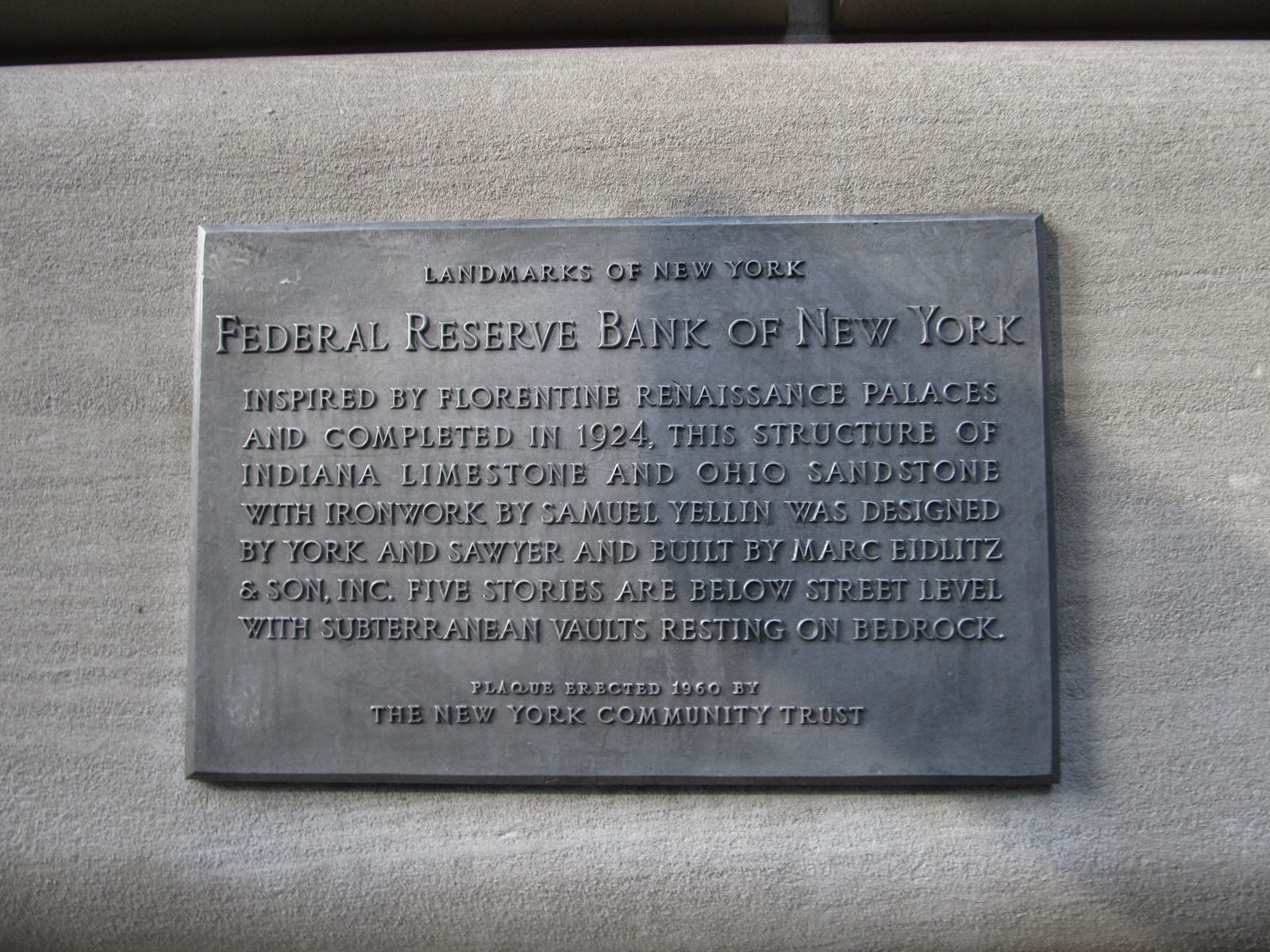
Image context: the cover uses a real photograph of the Federal Reserve Bank of New York, not a token graphic. That fits the argument because the economic story is less about blockchain branding than about the dollar plumbing beneath it: custody, liquidity, collateral, and Treasury-market transmission.[6]
Mechanism first: reserve law compresses the maturity profile
The reserve rule matters more than the token wrapper. Public Law 119-27, the GENIUS Act, requires permitted payment stablecoin issuers to maintain reserves at least 1:1 against outstanding payment stablecoins and to make monthly public disclosures of reserve composition.[2] The eligible reserve list is deliberately short-end: U.S. currency, insured deposits, certain short Treasury bills, notes, or bonds with remaining or original maturity of 93 days or less, and overnight repurchase agreements backed by qualifying Treasury bills.[2]
That architecture has two immediate financial consequences. First, the stablecoin reserve portfolio behaves closer to a government liquidity fund than to a balanced fixed-income account. Duration is a constraint to be minimized, because redemptions must be funded at par. Second, the regulatory design channels marginal demand toward instruments that can survive same-day or next-day liquidity stress: T-bills, Treasury repo, deposits, and cash-like funds. This is why "stablecoin demand for Treasuries" is directionally true but too blunt. The buyer is constrained by product design to the front end.
Tether's year-end 2025 disclosure gives the scale. The company said USDt in circulation surpassed $186 billion, total reserve assets climbed to nearly $193 billion, direct U.S. Treasury holdings exceeded $122 billion, and total direct plus indirect Treasury exposure surpassed $141 billion including overnight reverse repurchase agreements.[3] It also said it issued nearly $50 billion of new USDt in 2025.[3] Those numbers are large enough for Treasury-market desks to care, but the maturity channel still sits in bills and repo rather than long coupons.
Circle's reserve stack tells the same story in a more institutional format. Circle says USDC reserves can be held as cash, short-dated U.S. Treasuries, overnight Treasury repurchase agreements, or inside the BlackRock-managed Circle Reserve Fund.[4] The BlackRock fund page for USDXX showed, as of 2026-04-20, a $67.367 billion fund size, a $1.00 NAV, a 3.60% 7-day SEC yield, 14 days of weighted average maturity, 14 days of weighted average life, and 100.0% daily and weekly liquid assets.[5] That is not a stealth duration vehicle. It is a liquidity sleeve.
Five numeric anchors
- Legal reserve shape: payment stablecoin reserves must be at least 1:1, disclosed monthly, and can include short Treasury securities with maturity no longer than 93 days plus overnight Treasury-backed repo.[2]
- Tether scale: USDt circulation surpassed $186 billion by year-end 2025, while reserve assets were nearly $193 billion.[3]
- Tether Treasury exposure: direct U.S. Treasury holdings exceeded $122 billion, and direct plus indirect Treasury exposure surpassed $141 billion.[3]
- Circle liquidity profile: the Circle Reserve Fund stood at $67.367 billion on 2026-04-20, with 14-day weighted average maturity and 100.0% daily and weekly liquid assets.[5]
- Treasury's official sensitivity frame: the Treasury Borrowing Advisory Committee described a then-current stablecoin market cap around $234 billion, with roughly half reported in T-bills, another $90 billion in money market funds, and some industry growth estimates reaching about $2 trillion by 2028.[1]
The fifth anchor is the hinge. A market that goes from a few hundred billion dollars to trillion-scale could matter a lot for bill auctions. But net demand depends on the source of money. Treasury's advisory committee was explicit on that point: growth funded by unbanked or new digital-dollar users would be positive for T-bill demand, while growth funded by shifts out of money market funds would likely be much closer to neutral.[1]
The priced story and the new story
The priced story is easy: stablecoin regulation gives issuers a clearer U.S. pathway, dollar tokens continue to function as trading collateral and payment rails, and reserve income remains attractive while front-end yields stay positive. The law also strengthens the sales pitch by replacing informal reserve claims with a federal framework, monthly disclosure expectations, and priority treatment for holders in issuer insolvency proceedings.[2]
The new story is less promotional. Stablecoin growth creates a Treasury-demand headline, but the investable transmission is mostly through front-end scarcity, repo balances, money-fund competition, and bank-deposit leakage. If new token balances come from a crypto exchange user who previously sat in volatile assets or offshore dollars, the issuer may need to buy additional T-bills or Treasury repo. If the same balance comes from a government money market fund, the system may have moved the same underlying collateral from one wrapper to another.[1][5]
That distinction changes the trade. Long-duration bulls should not treat stablecoin adoption as automatic support for the 10-year note. Banks should watch deposit beta and corporate-treasury behavior. Bill investors should watch whether large issuers keep pulling collateral into short-dated securities. Treasury watchers should care about whether incremental stablecoin balances arrive as new dollar demand or as a substitution away from existing front-end buyers.
Strongest counterweight
The strongest bullish counterweight is that the system can still create real incremental demand even with short maturities. If regulated stablecoins keep growing through cross-border payment use, emerging-market dollar access, on-chain settlement, and users who were outside U.S. money funds, then reserve managers have to acquire more short Treasury collateral.[1][3] In that branch, stablecoins become another structural bill buyer alongside government funds, foreign reserve managers, corporations, and cash-rich households.
There is also an earnings feedback loop. Tether's 2025 profit and reserve figures show how powerful the front-end carry model can be when a large non-interest-bearing token supply sits against income-producing reserves.[3] The GENIUS Act's framework, including restrictions and disclosures, may lower some adoption friction for users who previously treated stablecoins as opaque crypto infrastructure.[2] More trust can mean more balances, and more balances can mean more short-end demand.
The catch is that this positive loop still does not turn into duration support unless reserve rules or issuer behavior change. A bigger liquidity pool can make bills richer at the margin, change repo usage, and alter competition with bank deposits. It does not mechanically compress long-end term premium.
Falsifier
This framework is wrong if issuer disclosures begin showing persistent migration into longer-dated Treasury securities, or if Treasury and regulatory guidance broaden the effective reserve toolkit away from bills, cash, deposits, and overnight repo. It also weakens if stablecoin growth is demonstrably funded mostly by redemptions from government money market funds, because then the Treasury market has gained a new wrapper without gaining much net collateral demand.[1][2][5]
Watchlist
- Monthly reserve disclosures: whether issuer portfolios stay dominated by cash, bills, overnight Treasury repo, and liquidity funds.[2][4][5]
- Tether attestations: whether direct Treasury holdings and indirect Treasury exposure keep growing with USDt supply or plateau while other reserve assets take share.[3]
- Circle Reserve Fund data: fund size, weighted average maturity, liquidity percentages, and yield are the quickest public read on how USDC reserve mechanics are behaving.[5]
- Treasury refunding and TBAC language: whether official documents keep treating stablecoins as a monitoring item or start changing bill-supply assumptions around the sector.[1]
Takeaway
Stablecoins now belong in a finance dashboard, but the right box is short-end plumbing. The market can be bullish on stablecoin adoption and still be precise about the channel: 1:1 reserve rules, short maturity limits, monthly disclosures, large issuer reserve pools, and money-fund-like portfolios point to T-bills and overnight Treasury repo first.[1][2][3][4][5] The investment mistake is turning a front-end collateral bid into a generic "Treasury demand" story. The cleaner read is narrower and more useful: stablecoins are becoming another balance-sheet allocator in the dollar liquidity stack.
Sources
- U.S. Department of the Treasury, "Report to the Secretary of the Treasury from the Treasury Borrowing Advisory Committee" (April 29, 2025) — stablecoin market-cap, T-bill, money-fund, and inflow-source sensitivity.
- Congress.gov, Public Law 119-27 PDF, "GENIUS Act" (July 18, 2025) — reserve backing, eligible assets, maturity limits, disclosures, and holder-priority framework.
- Tether, "Tether Delivers $10B+ Profits in 2025, $6.3B in Excess Reserves, and Record $141 billion Exposure in U.S. Treasury Holdings" (January 30, 2026).
- Circle, "Transparency & Stability" — USDC reserve disclosure framework and reserve-asset description.
- BlackRock, "Circle Reserve Fund (USDXX)" — fund size, NAV, yield, liquidity, and portfolio-characteristics disclosure.
- Wikimedia Commons, "Federal Reserve Bank of New York, Manhattan, New York (7237026020).jpg" — real photograph by Ken Lund.