Service Corporation International has the kind of demand profile investors like to call defensive, but that label is too blunt. Deathcare demand is recurring across society, not smooth inside any quarter. The priced part is visible in SCI's scale, brand system, and preneed backlog. The new test is whether those assets can keep converting into earnings while comparable funeral volumes fall, cremation keeps taking share, and the stock still asks for a mid-teens forward multiple.[1][3][5]
At $68.77 on June 3, 2026, SCI carried about $9.49 billion of market value, an 18.15x trailing P/E, a 16.21x forward P/E, and a 10.92x EV/EBITDA multiple.[5] That is not distressed pricing. It is a quality-business price after a pullback. The multiple says investors still believe the largest North American deathcare operator can turn local trust, cemetery inventory, preneed selling, and capital return into steady compounding. The quarter says that case now needs proof.
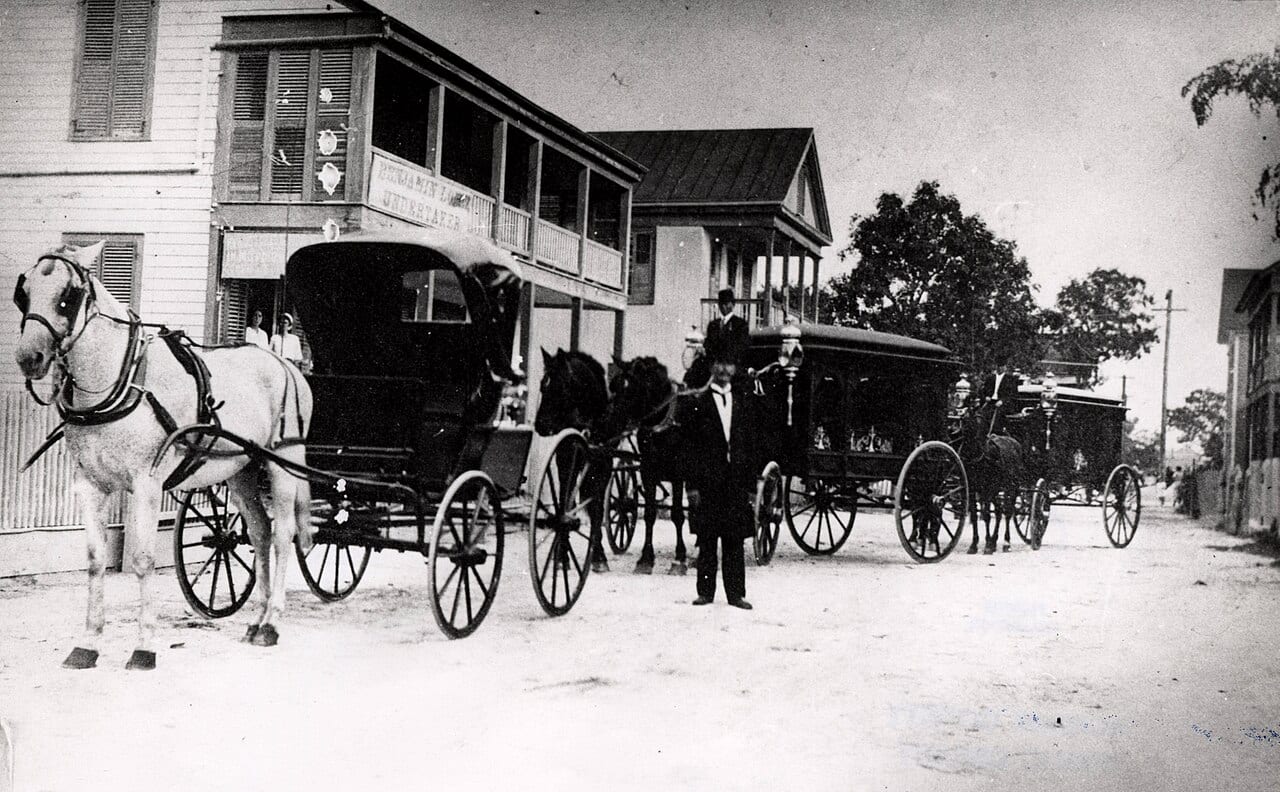
What The Multiple Is Paying For
SCI's first-quarter 2026 release starts with the scale advantage. The company described itself as North America's largest deathcare provider, serving about 700,000 combined preneed and atneed families each year. At March 31, 2026, it owned and operated 1,487 funeral service locations and 503 cemeteries, including 314 combination locations, across 44 states, eight Canadian provinces, D.C., and Puerto Rico.[1] The investor site rounds the network to more than 1,900 funeral homes and cemeteries.[3]
That network matters because deathcare remains unusually local. SCI's 2025 Form 10-K says most North American deathcare businesses are still locally owned independent operations, while SCI estimates its funeral and cemetery market share at about 18% of North American industry revenue.[2] This is the basic moat: the company is large enough to centralize systems, purchasing, marketing, compliance, sales training, and capital allocation, but the customer relationship still arrives through local names, facilities, cemeteries, and staff.
The second asset is preneed. A preneed contract is not just a sale booked earlier. It is a future service pipeline, a trust or insurance funding mechanism, and a customer lock-in instrument. SCI's 10-K is explicit about the accounting split: most preneed merchandise and service revenue is deferred until time of need, while developed and available cemetery property can create current revenue recognition.[2] That distinction is why cemetery property is not a side business. It is the place where advance demand, land inventory, trust mechanics, and current earnings meet.
Six Anchors
- $1.096 billion: first-quarter 2026 revenue, up 2% year over year.[1]
- 6% funeral volume decline: management said comparable funeral service volumes fell year over year, against a strong prior-year flu season and demographic noise.[1]
- 10% cemetery preneed sales growth: comparable preneed cemetery sales production rose in Q1.[1]
- $4.05 to $4.35 adjusted EPS guidance: SCI confirmed its 2026 range despite the funeral-volume weakness.[1]
- $1.005 billion to $1.065 billion adjusted operating cash-flow guidance: cash conversion remains central to the valuation case.[1]
- 63.4% cremation rate: NFDA data summarized by US Funerals Online put the U.S. cremation rate at 63.4% in 2025, more than double the 31.6% burial rate.[4]
Those anchors explain why this is a valuation walkthrough rather than a simple earnings recap. A one-quarter funeral-volume miss is not enough to break a deathcare compounder. But the combination of lower case volume, a rising cremation mix, and still-premium pricing means the company has to prove that preneed and cemetery economics can carry the model without relying on easy volume.
The Mechanism
The Q1 segment data shows the tension cleanly. Funeral revenue fell to $630.6 million from $639.5 million, and funeral gross profit fell to $134.0 million from $154.0 million. Funeral services performed declined to 93,686 from 97,854, while average revenue per service rose to $5,919 from $5,748.[1] That is the defense and the warning in one table. Pricing and mix helped, but lower volume still hurt operating leverage in a fixed-cost service network.
Cemetery moved in the opposite direction. Cemetery revenue rose to $465.9 million from $434.7 million, and cemetery gross profit rose to $152.5 million from $137.4 million. Recognized preneed cemetery property revenue reached $209.6 million, up from $188.7 million, and recognized preneed merchandise and service revenue rose to $106.3 million from $98.5 million.[1] This is the part of SCI that can make the stock work even when funeral service counts wobble.
The balance sheet also shows why preneed deserves valuation weight. At March 31, 2026, SCI reported $7.264 billion of preneed receivables and trust investments, $5.709 billion of deferred receipts held in trust, $1.800 billion of deferred revenue, $2.227 billion of cemetery property, and $2.365 billion of cemetery perpetual-care trust investments.[1] These numbers are not all economic value available to shareholders in the same way, but together they show the scale of future obligations, future service revenue, and cemetery asset management embedded in the model.
The Cremation Counterweight
The strongest counterweight is cremation. NFDA data summarized by US Funerals Online put the U.S. cremation rate at 63.4% in 2025, the burial rate at 31.6%, and the projected 2045 cremation rate at 82.3%.[4] For SCI, that shift cuts both ways. Cremation can still carry service revenue, memorialization, receptions, niche placement, travel protection, online arrangements, and family relationship value. But a direct-cremation-heavy market can pressure average revenue and reduce the traditional burial pathway that ties funeral home services more tightly to cemetery property.
SCI is not blind to this. Its Q1 description emphasizes a range of choices from simple cremations to full life celebrations and personalized remembrances.[1] The valuation issue is whether the company can monetize the new mix without making the experience feel overbuilt or the pricing feel stretched. In other words, the company has to sell personalization, planning, and cemetery options because families want them, not because the old burial bundle has to be replaced line by line.
Capital allocation helps the bridge. Q1 diluted weighted average shares outstanding fell to 139.9 million from 145.3 million, and the company spent $143.2 million repurchasing shares during the quarter.[1] At the right price, buybacks can turn slow top-line growth into better per-share growth. At the wrong price, they can mask a weakening service mix. With the stock around 16x forward earnings, repurchases look reasonable only if funeral volume stabilizes and cemetery/preneed momentum keeps holding.
Falsifier
The thesis fails if SCI's funeral-volume weakness proves persistent rather than seasonal, while cemetery preneed growth slows and cremation mix keeps pressuring average revenue per service. The clean numerical version is this: adjusted EPS falls below the $4.05 to $4.35 guidance range, adjusted operating cash flow misses the $1.005 billion to $1.065 billion range, and management has to lean harder on buybacks to sustain per-share growth.[1] Under that branch, SCI would still be a strong operator, but the stock would deserve a lower multiple because the preneed asset would no longer be offsetting mix and volume pressure fast enough.
Watchlist
- Second-half funeral volumes: management's guidance assumes the Q1 volume hit does not become the full-year run rate.[1]
- Cemetery preneed production: the 10% Q1 growth has to keep showing that cemetery property and merchandise/service pipelines can absorb funeral volatility.[1]
- Average revenue per service: pricing must offset cremation mix without creating customer pushback or brand damage.[1][4]
- Cash flow versus capex: SCI guided to $325 million of maintenance, cemetery development, and other capex, including $165 million for cemetery property development; the cash-flow spread over that spending funds debt service, dividends, and buybacks.[1]
The clean conclusion is that SCI is not just a death-rate stock. It is a preneed, cemetery-property, trust-accounting, local-service, and capital-allocation stock. Defensive demand gets the company into the quality bucket. The rerating depends on whether cemetery and preneed economics can keep doing the work as funeral volumes fluctuate and cremation becomes the default American disposition.
Sources
- Service Corporation International, "Service Corporation International Announces First Quarter 2026 Financial Results and Confirms 2026 Guidance" (April 29, 2026) — Q1 revenue, segment results, preneed sales, location count, balance sheet, guidance, capex, and buybacks.
- Service Corporation International, 2025 Annual Report on Form 10-K — market-share estimate, local-industry structure, preneed revenue recognition, trust mechanics, and risk factors.
- Service Corporation International investor overview — company scale, exchange listing, headquarters, and current network summary.
- US Funerals Online, "What was the Cremation Rate in the US in 2025? How is this affecting 2026 prices?" (March 27, 2026) — NFDA-based cremation and burial-rate summary, 2045 projection, and cost context.
- StockAnalysis, "Service Corporation International (SCI) Statistics & Valuation" (accessed June 5, 2026) — share price, market capitalization, valuation ratios, share count, cash flow, debt, and dividend data.
- Wikimedia Commons, "File:Lopez Funeral Home Key West Florida c 1900.jpg" — archival photograph from Florida Keys Public Libraries used as the article image.