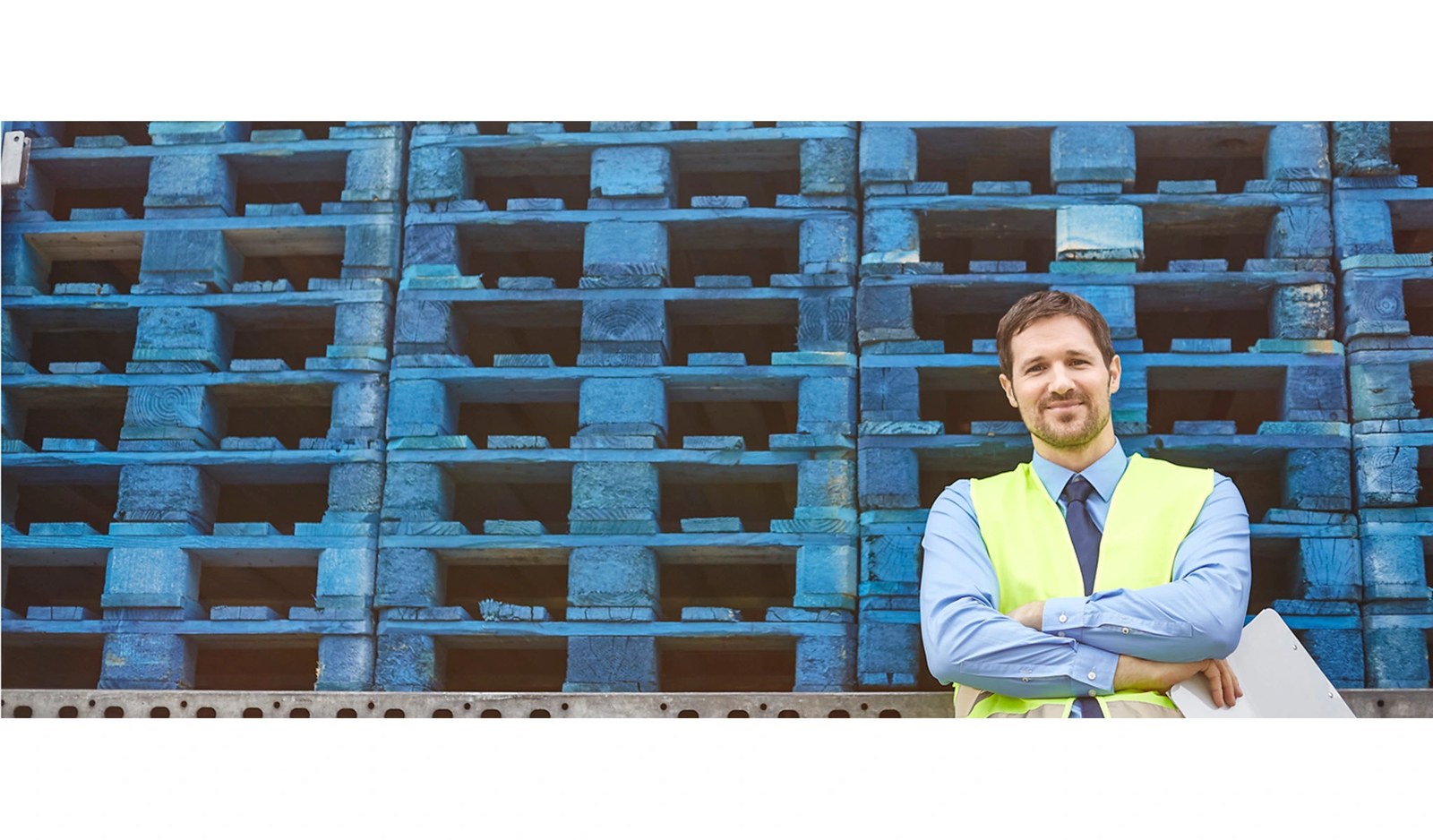
Brambles has been priced for a durable pooling franchise; the new information is that the franchise still depends on a very physical bottleneck. On 18 May 2026, the CHEP parent cut FY26 guidance after repair capacity tightened in the Central and Northeastern United States, forcing extra pallet purchases and raising short-term service costs.[1]
That does not look like a demand break. It looks like a capex timing test. Customers still need the blue pallets, and CHEP says its North American platform business supplies more than 1 million pallets per day through the region's broad service-center network.[4] The problem is that more automated warehouses need pallets repaired to a more consistent standard. If the repair loop slows, Brambles has to buy, relocate, inspect, and repair more assets before revenue can turn cleanly into margin.
Five Numeric Anchors
- 2-3% sales growth: Brambles lowered FY26 constant-currency sales revenue growth guidance from 3-4% to 2-3%.[1]
- 3-5% profit growth: Underlying profit growth guidance fell from 8-11% to 3-5%, a much sharper reset than the revenue guide.[1]
- US$60 million earnings hit: management attributed the downgrade primarily to repair capacity constraints in parts of the U.S. subcontracted service-center network.[1]
- About 2 million pallets: Brambles expects to purchase this incremental quantity in 4Q26, with further purchases possible in 1H27.[1]
- US$1.0-1.1 billion free cash flow: despite the profit cut, free cash flow before dividends was narrowed to the upper end of the prior range.[1]
The priced-versus-new gap is therefore narrow but important. The market can forgive a one-off operating stumble if free cash flow stays intact and service levels recover. It should not forgive a recurring need to overbuild the pallet pool every time customer automation raises the quality bar.
Base Case: A Costly Reset That Protects The Moat
The base case is that Brambles absorbs the 2026 repair shock, spends ahead of the bottleneck, and keeps the pooling model intact. The company says the constraints emerged in April 2026 and were driven by subcontractor turnover, labor availability, and the extra time needed to repair pallets consistently to a higher standard.[1] That explanation matters because it points to execution friction inside the network, not a structural collapse in customer need.
The broader business had entered the downgrade from a position of visible scale. Brambles' FY25 annual report showed US$6.67 billion of sales revenue, US$1.37 billion of underlying profit, and about 348 million pallets, crates, and containers operating across roughly 60 countries and more than 750 service centers.[3] The pooling model's promise is simple: customers rent a reusable platform, CHEP retrieves it, inspects it, repairs it, and sends it back into use. The asset earns more when that loop is fast.
The May update says the loop has slowed in part of the United States. Brambles' response is to relocate pallets, add repair capacity, and buy new pallets so customer service does not crack while repair throughput catches up.[1] That is not elegant, but it is rational. In a pooled network, refusing to spend can be more expensive than spending: service misses risk customer trust, while low-quality pallets create product damage, labor friction, and automated-handling failures.
The cash-flow guide is the support beam for the base case. Brambles narrowed free cash flow before dividends to US$1.0-1.1 billion, up from the lower end of the old US$950 million-US$1.1 billion range.[1] If that holds, the downgrade is a margin and working-capital timing problem rather than a balance-sheet problem. The company can keep funding repair capacity, buybacks, and dividends while proving the U.S. service issue is finite.
Upside Case: Quality Spending Becomes Pricing Power
The upside case is that the repair scare makes Brambles' moat clearer. CHEP's own product page sells the customer proposition around quality control: pallets return to a service center, go through inspection before reuse, and reduce pallet failure and product damage risk.[4] That sounds operational rather than financial, but it is exactly where pricing power can live. A pallet that behaves consistently in a manual warehouse is useful; a pallet that behaves consistently in an automated warehouse can be mission-critical.
Brambles' 1H26 presentation already showed why the Americas matter. CHEP Americas reported US$1.96 billion of first-half sales revenue, US$430.6 million of underlying profit, a 22.0% margin, and 24.3% return on capital invested.[2] The same presentation said U.S. like-for-like pallet volumes were down because consumer demand was subdued, but net new business wins and asset-efficiency initiatives supported margin improvement.[2] That mix is attractive if service quality remains credible.
In this upside branch, the extra repair capacity does two jobs. First, it clears the immediate service problem by the end of 1H27, which is the timeline management gave.[1] Second, it lets Brambles defend higher standards for customers investing in automation. The company already frames its strategy around platform quality, data, digital capability, and better visibility across supply networks.[3] If customers see CHEP as the safest way to keep automated distribution lines moving, the cost of the 2026 reset can become part of a stronger contract conversation.
The upside trigger is not another buyback. It is evidence that U.S. service levels recover while the free-cash-flow guide remains intact. A company can repurchase stock after a selloff and still have a broken operating problem. The stronger signal would be fewer urgent pallet relocations, lower incremental repair cost, stable customer retention, and language at the August results that the repair queue is normalizing.
Downside Case: Automation Raises The Permanent Cost To Serve
The bear case is that the downgrade exposes a lasting mismatch between old pallet economics and new warehouse standards. The issue is not that pallets suddenly became technologically complex. It is that high-throughput automated systems tolerate less variation. A pallet that a human forklift operator can work around may be unacceptable in a more automated line. More precise repair standards mean more inspection time, more rejected boards, more labor dependence, and possibly more owned assets sitting in the system as buffers.
That is why the profit guide moved more than the revenue guide. A sales growth cut from 3-4% to 2-3% is annoying. A profit growth cut from 8-11% to 3-5% says the marginal cost of serving demand has changed, at least temporarily.[1] Bell Wire's readout noted that the constraints centered on subcontracted U.S. repair capacity and that management was pairing extra pallet purchases with repair capacity additions and relocations.[5] Even if the article's exact cost breakdown is secondary analysis, its strategic point is sound: a subcontracted repair base can become a weak link when customers need uniformly higher quality.
The downside case also asks whether the buyback is the right signal. Brambles announced a new US$400 million on-market share buyback alongside the downgrade.[1] That can be read as confidence in free cash flow. It can also be read as capital leaving the company while the operating system is demanding more redundancy. The distinction matters less if the bottleneck is fixed by 1H27. It matters a lot if further U.S. or European repair investments become necessary.
Counterweight
The strongest argument against overreacting is that Brambles is not a thinly capitalized cyclical manufacturer losing end demand. It is a global pallet-pooling operator with a large reusable asset base, consumer-staples exposure, and a service proposition that becomes more valuable when customers care about reliability.[3][4] The FY25 numbers show a business that had been generating operating leverage and free cash flow before the repair issue surfaced.[3]
The strongest argument against dismissing the downgrade is that the May update hit the core of the model. Pooling economics depend on asset turns, loss control, repair throughput, and transport discipline. When pallets take longer to repair or have to be bought ahead of schedule, more capital gets tied up before revenue can be served. That is precisely why the same revenue guide can support very different profit outcomes.
Falsifier
The thesis fails if the repair issue does not resolve on management's timeline. Specifically, if the FY26 results on 20 August 2026 or later 1H27 commentary show that U.S. repair capacity remains constrained, incremental pallet purchases continue beyond the expected catch-up phase, or free cash flow guidance weakens materially, then this is no longer a one-off capex timing problem. It becomes evidence that automated-customer quality standards have permanently raised Brambles' cost to serve.
Watchlist
- 20 August 2026 FY26 results: management promised an update on repair-capacity progress at this event.[1]
- End of 1H27: Brambles' stated deadline for resolving the short-term U.S. constraints is the key operating checkpoint.[1]
- Free cash flow before dividends: the US$1.0-1.1 billion guide is the clearest proof that extra pallets and repair work are not consuming the model.[1]
- Americas margin and ROCI: 1H26 showed a 22.0% Americas margin and 24.3% ROCI; deterioration here would reveal whether the problem is concentrated where the highest-quality customer demand is strongest.[2]
The practical investment frame is not "blue pallets are defensive." It is narrower: Brambles remains attractive only if physical pallet quality can keep pace with automated supply chains without turning a high-return pool into a permanently heavier capital machine.
Sources
- Brambles Limited, "Brambles revises FY26 guidance to reflect investments required to support service levels in the US; new US$400 million share buy-back announced" (ASX & Media Release, 18 May 2026).
- Brambles Limited, Half-Year 2026 Results Presentation (19 February 2026) - segment revenue, margin, ROCI, volume, price, and cost context.
- Brambles Limited, Annual Report 2025 - FY25 financials, asset pool scale, service-center network, and operating model.
- CHEP USA, "Efficient Platform Solutions for Supply Chains" - share-and-reuse model, inspection and repair process, North American service network, and pallet supply claim.
- Bell Wire, "Brambles Limited Cuts FY26 Profit Guidance on US$60M Hit from US Repair Constraints" (18 May 2026) - market readout and operating interpretation of the downgrade.
- CHEP USA, "How to return empty blue pallets" - official CHEP page and source for the real blue-pallet cover photograph.