The headline on new I bonds did improve on May 1. TreasuryDirect now shows a 4.26% composite rate for bonds issued from May 1, 2026 through October 31, 2026, up from 4.03% in the prior issue window.[1][2] That part is easy to see.
The narrower point is the one that matters more for buyers. The fixed rate stayed at 0.90%, the same as the November 2025 window, while the semiannual inflation component rose from 1.56% to 1.67%.[2] So the new issue does not offer a richer lifetime real floor. It offers the same fixed floor plus a slightly hotter first six-month inflation strip. In other words, the real contract is still about horizon, tax timing, and liquidity discipline, not about a dramatic reset gift from Treasury.[1][2][3][4]
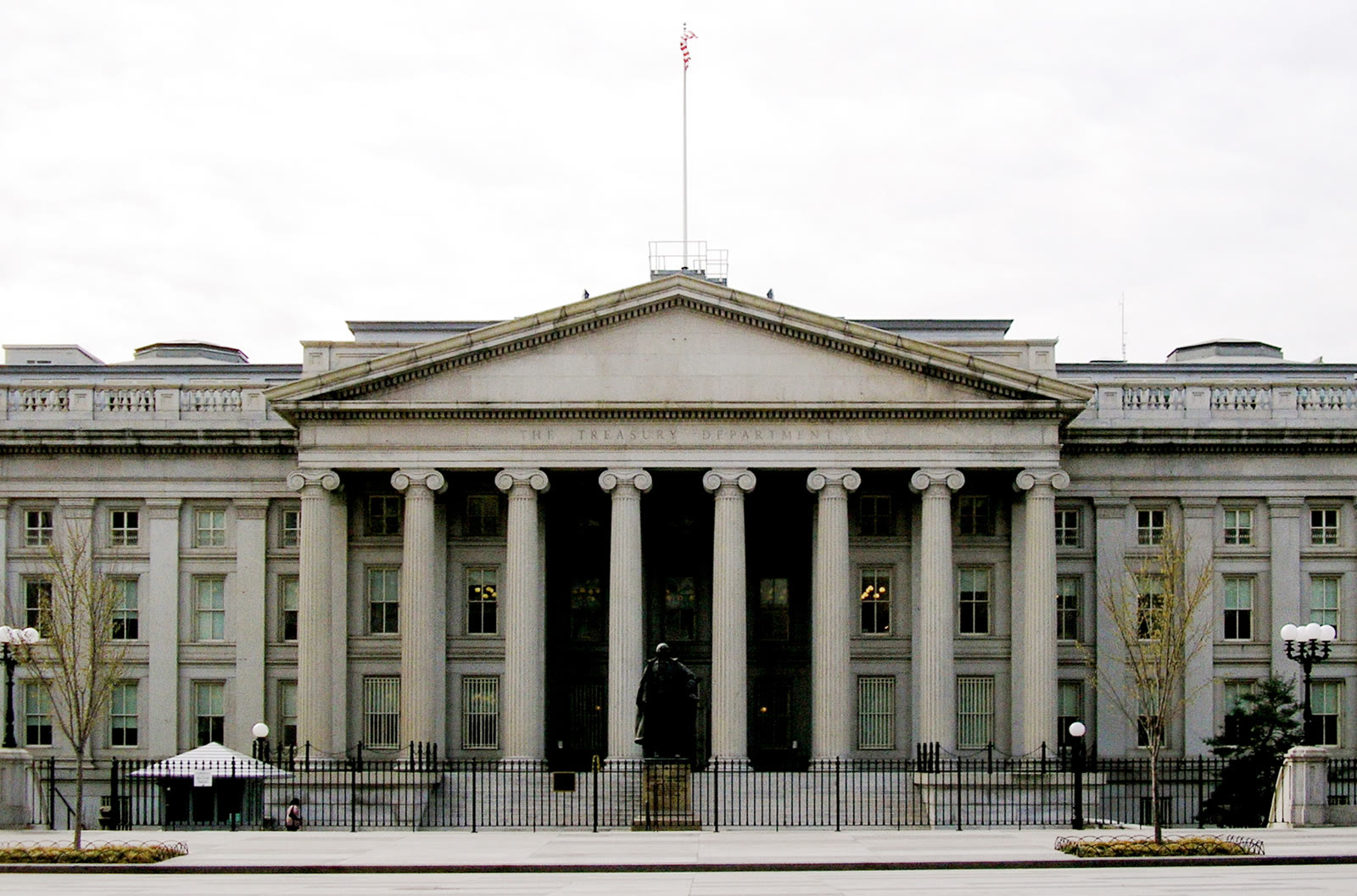
Image context: the cover uses a real Wikimedia Commons photograph of the U.S. Treasury Building in Washington, D.C.[6] That is the right visual here because an I bond is not a market mood product. It is a Treasury savings contract with a fixed floor, a formula, and a calendar.
What moved and what did not
TreasuryDirect's structure is clean. An I bond combines a fixed rate that stays with the bond for its full life and an inflation rate that resets every six months for all outstanding I bonds.[1][2] For the new May-through-October 2026 issue window, the fixed rate is 0.90% and the composite rate is 4.26%.[1][2]
The rate history page shows why the distinction matters. Treasury set the fixed rate at 1.10% on May 1, 2025, cut it to 0.90% on November 1, 2025, and left it at 0.90% again on May 1, 2026.[2] The improvement in the new headline rate therefore came from the inflation leg, not from a better permanent real base. Treasury's May 1 release states that the new composite rate combines the 0.90% fixed rate with a 3.34% annualized inflation rate.[3]
That is why the usual "the rate went up" summary is incomplete. The rate that went up is the first six-month earnings rate. The rate that defines the bond's long-life character did not improve.[1][2][3]
Why the fixed floor matters more than the six-month headline
This matters because I bonds are slow instruments by design. TreasuryDirect says they are only available electronically, they can be redeemed only after 12 months, they forfeit the last 3 months of interest if redeemed before 5 years, and they can keep earning for 30 years.[1][4] The product therefore asks the buyer to make two commitments at once: accept a one-year lock, and accept that the best part of the contract may reveal itself over many reset periods rather than in the next statement cycle.
Tax treatment reinforces the same point. TreasuryDirect says I bond interest is subject to federal income tax but not to state or local income tax, and the owner can choose to report earnings annually or wait until redemption.[1] That deferral option is useful, but it is useful mainly for money that can stay put. A saver who expects to need the cash in the first one to three years is buying a product whose rules will dominate the economics more than the 23-basis-point bump from 4.03% to 4.26%.[1][2][4]
The inflation data also support that calmer reading. TreasuryDirect says the new inflation rate is based on changes in non-seasonally adjusted CPI-U, and the BLS March 2026 CPI release showed inflation still firm enough that the all-items CPI-U was up 3.3% from a year earlier.[2][5] That explains why the inflation strip nudged higher. It does not change the fact that each new buyer is still locking in the same 0.90% fixed base that was already available in the prior issue window.[2]
Six numeric anchors
- Current composite rate: new I bonds issued from May 1, 2026 to October 31, 2026 earn 4.26% for their first six months.[1][2]
- Lifetime fixed floor: the fixed rate is 0.90%, unchanged from the November 1, 2025 setting.[2]
- Prior headline comparison: the prior issue window carried a 4.03% composite rate.[2]
- Inflation leg: TreasuryDirect lists a 1.67% semiannual inflation rate, which Treasury's release expresses as 3.34% annualized inflation in the composite-rate explanation.[2][3]
- Liquidity boundary: you cannot redeem before 12 months, and redemption before 5 years costs the last 3 months of interest.[1][4]
- Scale boundary: one Social Security Number can buy up to $10,000 of electronic I bonds in a calendar year, and the bond can earn for up to 30 years.[1]
Those numbers describe a product that still works best as a patient inflation-and-tax sleeve rather than as a short-horizon rate trade.
Strongest counterweight
The strongest pushback is straightforward. Even with an unchanged fixed rate, a new buyer still gets a better opening composite rate than the buyer did six months ago, plus the same state-tax exemption and optional federal-tax deferral.[1][2] For someone building a slow-moving reserve, a first-six-month rate of 4.26% is not trivial.
That objection has force. The article's narrower claim is only that the improvement sits in the temporary inflation strip, not in the permanent floor. If the appeal of the product rests on "I finally have a meaningfully better long-run contract," the May 2026 reset did not actually deliver that.[2][3]
Falsifier
This reading becomes too cautious if the next reset changes the fixed-rate layer rather than merely the inflation strip.[2] A materially higher fixed rate on November 1, 2026, or a future Treasury pattern that starts lifting the real floor again, would change the argument because the buyer would then be locking in a genuinely stronger lifetime base instead of recycling the same 0.90% floor.[2]
Watchlist
- May 12, 2026 CPI release: the April CPI print will not change the current May-through-October rate, but it begins shaping the path toward the next inflation reset.[5]
- November 1, 2026 TreasuryDirect reset: the important question is whether the fixed rate moves off 0.90%, not just whether the composite headline wiggles again.[2]
- Your own cash horizon: if the money may be needed before the 12-month lock clears, or before the 5-year penalty window ends, the bond's rules matter more than the current headline rate.[1][4]
Takeaway
May 2026 did give new I bond buyers a better headline number. It did not give them a better permanent floor. The visible move is 4.26%. The real contract is still 0.90% for life, plus whatever inflation resets add or subtract over time.[1][2][3]
That leaves the decision in a familiar place. I bonds still make the most sense when the buyer values tax timing, state-tax exemption, and long-horizon inflation protection enough to accept the lockup and the purchase cap. The product improved a little. The product type did not change.
Sources
- TreasuryDirect, "I bonds," including the current 4.26% rate, 0.90% fixed rate, redemption rules, tax treatment, purchase cap, and 30-year earning period.
- TreasuryDirect, "I bonds interest rates," including the fixed-rate table, the current 4.26% composite rate, the prior 4.03% rate, the 1.67% semiannual inflation rate, and the rate-reset schedule.
- TreasuryDirect, "Fiscal Service Announces New Savings Bonds Rates, Series I to Earn 4.26%, Series EE to Earn 2.40%" (May 1, 2026).
- TreasuryDirect, "Cash EE or I savings bonds," including the 12-month minimum holding period and 3-month interest penalty before 5 years.
- U.S. Bureau of Labor Statistics, "Consumer Price Index News Release - March 2026," released April 10, 2026.
- Wikimedia Commons, "US Treasury Building.jpg" file page, photograph of the Treasury Department Building in Washington, D.C.