Covered-call ETFs have already won the easy 2026 argument. Priced is that investors want monthly cash flow without building their own options desk. New is whether the cash flow is being read correctly. The distribution is only one leg of the trade; the other leg is the upside cap that gets reset each option cycle, plus the total-return gap that appears when the underlying index runs faster than the call premium can replenish it.[1][2][3]
That distinction matters because the category sells simplicity while the mechanism stays technical. JEPI's March 31, 2026 fact sheet shows $43.96 billion of investments, 0.350% net expenses, an 8.40% 12-month rolling dividend yield, and an 8.45% 30-day SEC yield.[1] QYLD's April 20, 2026 page shows $8.23 billion of net assets, a 0.60% total expense ratio, a 13.32% trailing 12-month distribution rate, and a live Nasdaq-100 call position with $8.35 billion of short notional exposure, a 26,700 strike, only 0.41% upside before the cap, and 25 calendar days to expiry.[2] Those are useful numbers. They are also a warning against treating headline yield as the whole answer.
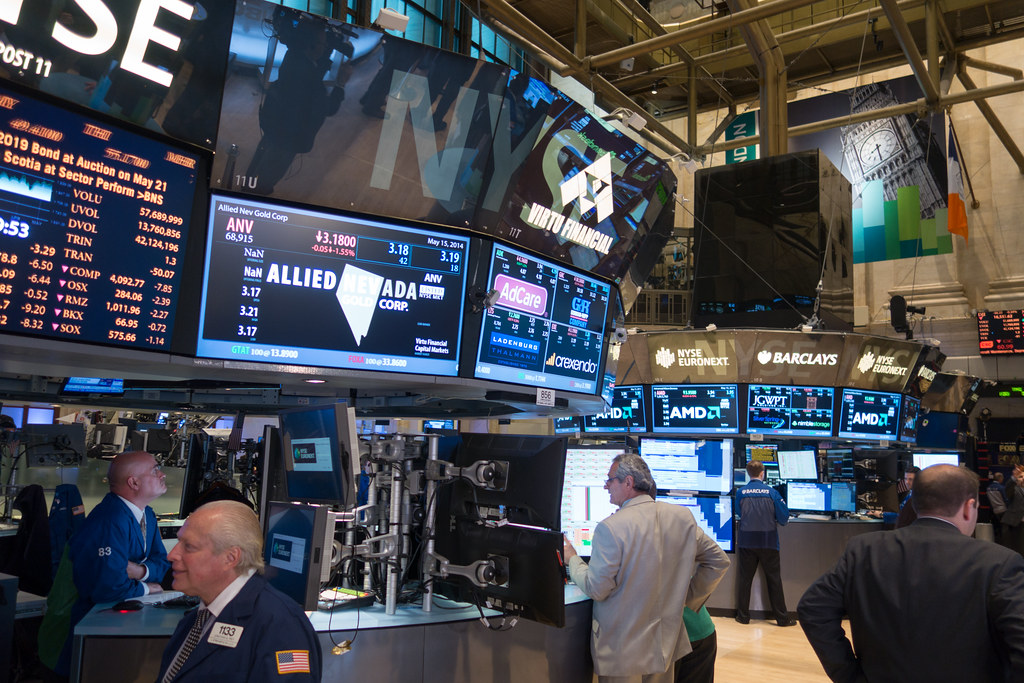
Image context: the cover uses a real New York Stock Exchange trading-floor photograph rather than an abstract income visual. The article's subject is the repeated conversion of market exposure into option premium, so the documentary anchor should show market infrastructure rather than a decorative chart.[6]
The mechanism: income is sold upside, repackaged
A covered-call strategy owns an equity exposure and sells call options against it. Cboe's BXM benchmark is the clean reference point: it holds S&P 500 exposure and is deemed to sell a succession of one-month, at-the-money S&P 500 calls.[3] The methodology makes the clock explicit. BXM rolls on the third Friday of each month, sells a new call after the expiring option settles, and holds the long index component and short call component in equal notional amounts.[4]
That is the whole bargain. The fund collects option premium now and gives away some future upside if the index rises through the strike. Cboe's own fact sheet describes the tradeoff in performance terms: from June 1986 through March 2026, BXM had an 8.4% annualized return versus 10.9% for the S&P 500 Total Return Index, with lower annualized volatility, 10.7% versus 15.2%, and a shallower maximum drawdown, -35.8% versus -50.9%.[3] The trade can reduce volatility and soften drawdowns. It can also lag a strong equity tape.
That benchmark history is why the 2026 debate should start with cap math rather than yield admiration. A distribution can feel like income while part of the economic cost appears as missed upside or NAV drift. Global X says QYLD's trailing 12-month distribution is estimated to include return of capital, and its own page separates the distribution rate from the 0.11% 30-day SEC yield.[2] That does not make the product defective. It means investors have to read cash flow, total return, and tax character together.
Six numeric anchors
- JEPI scale and cost: $43.96 billion of investments, 0.350% net expenses, and 120 holdings as of March 31, 2026.[1]
- JEPI income versus equity catch-up: 8.40% 12-month rolling dividend yield and 7.99% 1-year NAV return, versus 17.80% for the S&P 500 benchmark on the same fact sheet.[1]
- JEPI risk shape: 0.46 1-year beta and 7.67% 1-year standard deviation, versus 10.31% standard deviation for the S&P 500 benchmark.[1]
- QYLD live cap: $8.35 billion of short Nasdaq call notional, 26,700 strike, 0.41% upside before cap, and May 15, 2026 expiration with 25 days remaining as of April 20.[2]
- QYLD income label split: 13.32% trailing 12-month distribution rate, 12.30% distribution rate, and 0.11% 30-day SEC yield.[2]
- BXM long-run tradeoff: 8.4% annualized return and 10.7% volatility for BXM, versus 10.9% annualized return and 15.2% volatility for the S&P 500 Total Return Index from June 1986.[3]
Those anchors describe a product category built for a specific market regime. It is most attractive when option premium is rich enough and equity upside is choppy enough that selling calls turns volatility into useful cash flow. It is less attractive when the underlying index trends upward in a narrow, persistent line.
Base case: income holds, but benchmark lag remains visible
The base case is that covered-call ETFs keep their audience because the user job is real. Retirees, cash-flow investors, and volatility-sensitive allocators often prefer a steadier distribution profile to the emotional experience of selling shares into uncertain markets. JEPI's current scale proves that demand is no longer niche.[1]
The base-case problem is that the fund wrapper does not remove the option trade. If the equity market rises steadily, the call premium earned this month can be smaller than the upside surrendered above the strike. That is already visible in JEPI's fact sheet: the fund's 1-year NAV return trailed the S&P 500 benchmark by roughly 9.81 percentage points, even while the distribution yield looked generous.[1] That is the priced-vs-new split in one line. Priced is income. New is whether investors are measuring the total-return bill.
Upside case: range-bound volatility does the work
The upside case is a market that chops instead of melts up. In that branch, monthly call sales can keep monetizing implied volatility while the underlying exposure avoids a large opportunity cost. BXM's long-run volatility and drawdown profile explains the attraction: the index has historically shown lower beta, lower volatility, and a less severe maximum drawdown than the S&P 500 Total Return Index.[3]
QYLD's structure also becomes easier to defend in this branch. If the Nasdaq-100 spends a month moving around the strike rather than sprinting through it, the call premium has a cleaner chance to become distributable cash flow instead of an obvious cap on foregone gains.[2][4] This is the market where a covered-call ETF feels like a feature, not a compromise.
Downside case: the cap is tight and the distribution story gets confused
The downside case is not only a falling market. A covered-call ETF can disappoint in two different ways. In a sharp rally, the fund lags because upside has been sold. In a weak market with lower implied volatility, option premium can be less powerful while the equity book still absorbs downside. FINRA's assignment explainer is a useful reminder of the underlying obligation: an option seller receives premium but accepts a duty to perform if assigned, and short option positions carry their own operational and risk mechanics.[5]
ETF wrappers make that smoother for end investors, but they do not erase the economics. QYLD's April 20 cap snapshot is the cleanest warning. A fund showing a double-digit trailing distribution rate was, at that moment, selling Nasdaq upside with only 0.41% room before the cap.[2] If the index runs, the product has already chosen cash flow over participation for that cycle.
Falsifier
This framework becomes too cautious if covered-call ETFs deliver competitive total return across several reset cycles while keeping distributions high and avoiding material NAV erosion. Concretely, the caution is wrong if the category keeps capturing enough premium in choppy markets that 1-year and 3-year total returns stay close to uncapped benchmarks after fees, even while the funds maintain monthly distributions.[1][2][3]
Watchlist
- Monthly reset evidence: compare each new call strike with the underlying index level and the remaining upside before cap. The reset, not the trailing yield, is the fresh information.[2][4]
- Total return versus distribution rate: track NAV total return against the fund's stated benchmark, especially after strong equity months.[1][2]
- Distribution character: read 19a notices and tax documents when a fund indicates return of capital may be part of the payout.[2]
- Volatility regime: premium income is most useful when implied volatility is rich and realized upside stays uneven; it becomes less valuable when markets trend cleanly upward.[2][3]
Takeaway
Covered-call ETFs are not broken income machines or magic income machines. They are repeatable option-selling programs inside convenient fund wrappers. The useful 2026 question is therefore narrow: is the investor being paid enough in premium and lower volatility to accept the cap reset? If the answer is yes, the product can fit an income-first sleeve. If the answer is no, the headline yield is simply a prettier way to describe sold upside.
Sources
- J.P. Morgan Asset Management, "JPMorgan Equity Premium Income ETF Fact Sheet" (March 31, 2026) — JEPI assets, expenses, yield, holdings, performance, beta, and risk notes.
- Global X, "Nasdaq 100 Covered Call ETF (QYLD)" (accessed April 21, 2026) — QYLD objective, expenses, assets, live option cap, distribution, SEC yield, and return-of-capital note.
- Cboe Global Indices, "Cboe S&P 500 BuyWrite Index Fact Sheet" (March 31, 2026) — BXM performance, volatility, drawdown, beta, and buy-write tradeoff.
- Cboe Global Indices, "Cboe BuyWrite Indices Methodology" (February 2024) — monthly roll date, strike selection, settlement, and covered notional design.
- FINRA, "Trading Options: Understanding Assignment" (December 14, 2020) — option-seller obligations, assignment mechanics, and options-risk context.
- Wikimedia Commons, "Trading Floor at the New York Stock Exchange.jpg" — documentary photograph by Scott Beale used for the cover image.