Priced: higher earners age 50 and older have had time to hear the headline that some catch-up contributions must become Roth. New: 2026 is the first operational year after the IRS transition period ended, and the investable question is not whether Roth treatment is good or bad. It is whether payroll files, plan documents, and recordkeeping elections can route the right dollars without accidentally shutting older workers out of catch-up saving.[1][5]
The mechanism is narrower than the tax chatter suggests. A participant does not fall into the rule because household income is high, capital gains were large, or a spouse earns a lot. The trigger is prior-year wages with the plan sponsor: for 2026, participants of plans with Roth features offering catch-up contributions must make catch-up contributions on a Roth basis if those prior-year wages exceeded $150,000.[2][4] That makes the rule a payroll-data problem before it is a portfolio-allocation problem.
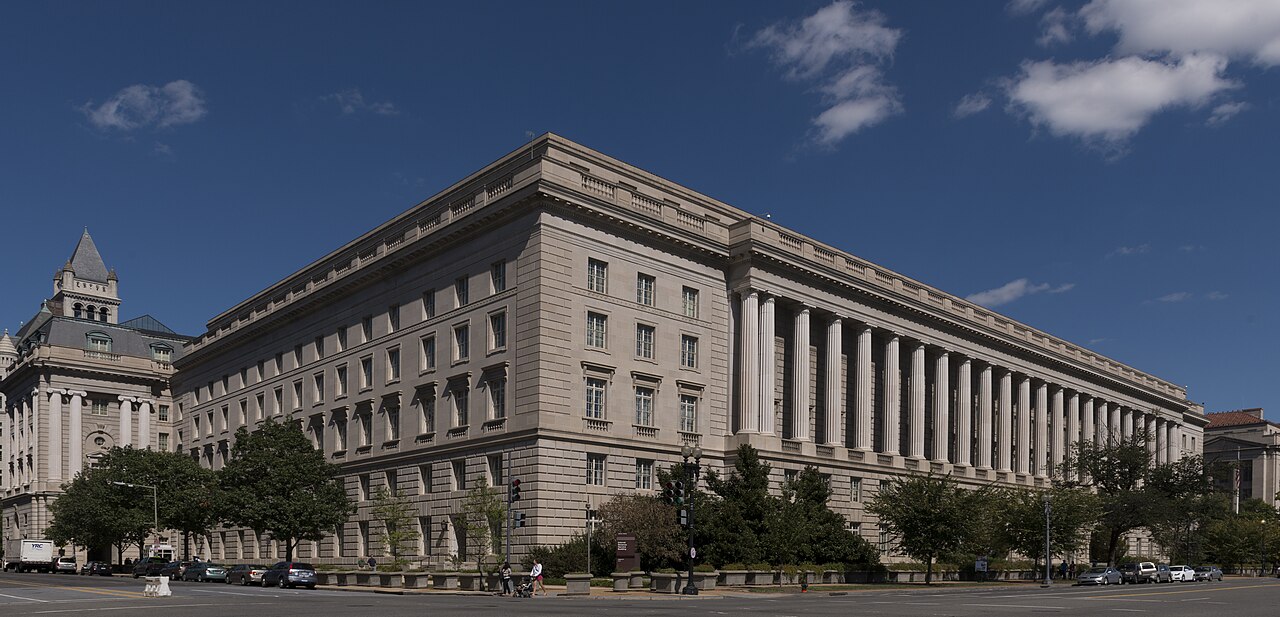
The cover photograph shows the IRS building in Washington, D.C., which fits a rule whose practical friction lives less in market prices than in records, elections, and administrative timing.[7]
The Mechanism
The standard catch-up system still starts with age. IRS guidance says individuals age 50 or older by the end of the calendar year may make catch-up contributions. For 2026, most 401(k), 403(b), SARSEP, and governmental 457(b) plans may permit up to $8,000 of annual catch-up contributions, and elective deferrals are not treated as catch-up contributions until they exceed the ordinary $24,500 deferral limit, the applicable ADP-test limit, or the plan's own limit.[2] That puts a typical age-50-plus participant's maximum employee deferral at $32,500 before employer contributions enter the picture.[3]
The higher 60-through-63 catch-up tier adds another layer. For employees who turn 60, 61, 62, or 63 in 2026 and participate in most 401(k), 403(b), governmental 457(b) plans, or the federal Thrift Savings Plan, the higher catch-up limit remains $11,250 instead of the normal $8,000.[2][3] The bigger dollar amount is useful, but it also raises the operational stakes. The dollars most likely to be reclassified late in the year are exactly the dollars that high-saving older workers care about most.
That is why the "Roth" label is not the whole story. The worker sees a contribution election. The plan has to decide when regular elective deferrals become catch-up contributions, whether the participant crossed the prior-year wage threshold, whether the plan has a Roth feature, and how to handle an election that was made before the system knew which dollars would count as catch-up. IRS final-regulation commentary specifically addresses deemed Roth elections and correction methods because the edge cases are not cosmetic.[1][6]
The 2026 Bridge Year
The timeline is easy to misread. Notice 2023-62 said the statutory Roth catch-up provision originally applied to taxable years beginning after December 31, 2023, but it created a two-year administrative transition period. Until taxable years beginning after December 31, 2025, affected catch-up contributions could be treated as satisfying the Roth requirement even if they were not designated Roth, and a plan without designated Roth contributions could be treated as satisfying the related plan requirement.[5]
That bridge is now over. At the same time, the final regulations issued in 2025 generally apply to contributions in taxable years beginning after December 31, 2026, while permitting plans to implement the Roth catch-up requirement before 2027 using a reasonable, good-faith interpretation. The IRS release also says the final regulations did not extend or modify the Notice 2023-62 transition period.[1] In plain English: 2026 is not a clean no-rule year. It is the messy implementation year between the end of the transition period and the general applicability of the final regulations.
That distinction matters for employers, recordkeepers, and participants. A plan sponsor treating 2026 as "wait until 2027" could still face payroll and plan-design friction if high-earner catch-up elections are accepted as pre-tax without a Roth path. A participant treating 2026 as "nothing changed" could be surprised when the recordkeeper flips catch-up dollars into Roth under a deemed election.
The Payroll Gate
The wage threshold is the most under-read part of the rule. Notice 2023-62 framed the statutory trigger as wages, as defined for FICA purposes, for the preceding calendar year from the employer sponsoring the plan, above $145,000 as adjusted.[5] Notice 2025-67 then increased the relevant 2025 wage threshold used for 2026 Roth catch-up determinations to $150,000.[4] The IRS catch-up page now states the 2026 rule in the practical way participants will encounter it: prior-year wages with the plan sponsor above $150,000.[2]
That is not the same as adjusted gross income. It is not the same as total compensation in every benefits conversation. It is also not necessarily obvious in a merger, payroll conversion, multiemployer setting, or transfer between related entities. The IRS final-regulation release notes that the final rules permit a plan administrator to aggregate wages received in the prior year from certain separate common-law employers when deciding whether the participant is subject to the Roth catch-up requirement.[1] That sentence is administrative, but it is the hinge. The rule lives or dies by whether payroll history follows the worker accurately enough.
The plan-design gate is just as important. Notice 2023-62 explained that if an applicable employer plan does not include a qualified Roth contribution program, then an eligible participant subject to the Roth catch-up requirement would be prohibited from making catch-up contributions under the plan.[5] That is the hard counterweight. A high earner's issue may not be "Roth or pre-tax?" It may be "does my plan let me make the catch-up at all?"
The Counterweight
The strongest counterargument is that this is more implementation nuisance than macro finance. For many participants, the change shifts taxes forward but leaves retirement saving intact. Roth dollars are included in current taxable income, while qualified Roth withdrawals can be tax-free later. A participant who expected pre-tax catch-up contributions loses current-year deduction capacity, but not necessarily long-term retirement value.
That counterweight is fair, but incomplete. The market implication is in behavior and administration, not in the intrinsic superiority of Roth or pre-tax. Higher-income older employees often front-load, bonus-load, or true-up contributions near year-end. If payroll systems cannot identify catch-up dollars cleanly, plans may rely on default Roth elections, corrections, or participant notices that arrive after behavior has already been set. IRS bulletin language preserving flexibility for deemed Roth elections exists because real systems do not always know at the first paycheck which contributions will become catch-up contributions by December.[6]
There is also a communications problem. The 2026 headline limit is simple: $24,500 regular deferral, $8,000 ordinary catch-up, and $11,250 for the 60-through-63 tier.[2][3] The actual household decision is harder: whether to reduce pre-tax deferrals elsewhere, accept higher current withholding, change Roth versus pre-tax defaults, or keep saving the same gross amount and absorb the tax timing. For some workers, the rule changes after-tax cash flow at exactly the age when they are trying to compress the final savings sprint before retirement.
Falsifier
The thesis breaks if recordkeepers and plan sponsors make 2026 operationally boring. If high-earner flags, Roth features, deemed elections, and correction procedures work cleanly through year-end payroll runs, then the rule is mostly a tax-timing adjustment. The payroll gate would have been overestimated.
The thesis is confirmed if 2026 year-end brings visible friction: plan amendments rushed late, catch-up elections suspended for high earners in plans without Roth features, participant notices after payroll cutoff dates, or corrective distributions and recharacterizations showing up because pre-tax catch-up dollars went to the wrong bucket. In that branch, the rule is less a Roth preference story than a systems-readiness test.
Watchlist
First, watch July-December 2026 plan communications for whether high earners are told explicitly that catch-up contributions will route to Roth if prior-year plan-sponsor wages exceeded $150,000.[2][4] Second, watch year-end payroll calendars, because catch-up dollars often appear only after regular deferrals have crossed the $24,500 limit.[2] Third, watch plans without Roth features: their practical choice is to add Roth capability or risk blocking affected high earners from catch-up contributions.[5] Fourth, watch 2027 plan documents, because the final regulations generally apply after December 31, 2026 and should turn good-faith 2026 practice into more standardized administration.[1]
The useful finance reading is therefore modest but concrete. Roth catch-up is not mainly a debate about whether after-tax saving is attractive. In 2026, the spread is in implementation. The participant who checks only the contribution limit may miss the real gate: the payroll system must know last year's wages, the plan must offer a Roth route, and the recordkeeper must catch the moment ordinary deferrals become catch-up dollars.
Sources
- Internal Revenue Service, "Treasury, IRS issue final regulations on new Roth catch-up rule, other SECURE 2.0 Act provisions" - final-regulation release, good-faith 2026 implementation note, 2027 general applicability, wage aggregation, deemed election, and correction context.
- Internal Revenue Service, "Retirement topics - Catch-up contributions" - 2026 catch-up limits, age rules, $24,500 ordinary deferral limit, $150,000 Roth catch-up wage threshold, SIMPLE limits, and IRA catch-up reference.
- Internal Revenue Service, "401(k) limit increases to $24,500 for 2026, IRA limit increases to $7,500" - 2026 retirement-plan limit announcement, $8,000 catch-up amount, $32,500 age-50-plus total, and $11,250 age-60-through-63 higher catch-up amount.
- Internal Revenue Service, Notice 2025-67 - 2026 cost-of-living adjustments, including the Roth catch-up wage threshold increasing from $145,000 to $150,000 for 2026 determinations.
- Internal Revenue Service, Notice 2023-62 - SECURE 2.0 Section 603 transition guidance, FICA-wage trigger, two-year administrative transition period, Roth feature implications, and plan-without-Roth consequence.
- Internal Revenue Service, Internal Revenue Bulletin 2025-40 - final catch-up contribution regulations, including deemed Roth election mechanics and correction treatment for Roth catch-up failures.
- Wikimedia Commons, "File:The Internal Revenue Service Building, located in the center of the Federal Triangle complex in Washington, D.C LCCN2013634106.jpg" - source page for the Library of Congress/Carol M. Highsmith photograph used as the article image.