Rollins still trades like a high-quality route-density compounder. What is already priced is the resilience: pest control is recurring, fragmented, and local enough to support pricing and bolt-on acquisitions. What is new is the margin burden. After a first quarter with 10.2% revenue growth but 110 basis points of adjusted EBITDA margin compression, the stock needs proof that growth is becoming operating leverage again, not merely a larger service base.[1]
That is why the valuation debate is narrower than "pest control is a good business." At about 43.7x trailing earnings, 27.8x EV/EBITDA, and 36.9x price to free cash flow, Rollins is not being valued as a cyclical services company in disguise.[3] It is being valued as a durable compounder whose local technicians, brand trust, scheduling density, and acquisitions can keep converting small customer relationships into high-return cash flow. The premium is understandable. It is also demanding.
What The Multiple Is Paying For
The clean bull case starts with persistence. Rollins reported $906.4 million of first-quarter 2026 revenue, up 10.2%, including 6.6% organic growth and 3.6% from acquisitions.[1] Management says the company is on its 98th consecutive quarter of revenue growth, and two weeks later it reiterated a medium-term algorithm of 7% to 8% organic growth, 2% to 3% acquisition growth, 30% to 35% core incremental margins, and free-cash-flow conversion above 100%.[1][2]
That algorithm is the valuation bridge. Pest control does not require a factory-scale capital cycle. It needs route density, local reputation, customer retention, technician availability, pricing discipline, and enough training to make service repeatable across many branches. Orkin describes the Rollins Learning Center as a 26,000-plus-square-foot facility with simulated environments and at least 160 hours of first-year hands-on training for every Orkin Pro.[4] That is not a decorative detail. In a route business, training is part of margin architecture: fewer callbacks, better upsell judgment, safer chemical use, and more consistent customer experience.
The acquisition side also matters. On April 1, Rollins bought Romex Pest Control for $90 million plus up to $10 million of contingent consideration, funded with cash and commercial-paper borrowings.[1] That is the model in miniature. Buy local density, put it into the operating system, and let shared brand, procurement, routing, and training lift the acquired revenue base. If that playbook keeps working, a premium multiple has a rational foundation.
Five Numeric Anchors
- 43.7x trailing P/E: the current multiple leaves little room for "good company, bad quarter" excuses.[3]
- 27.8x EV/EBITDA: Rollins is priced as an asset-light service compounder, not merely as a roll-up.[3]
- 10.2% Q1 revenue growth: demand and acquisitions are still moving the top line.[1]
- 19.8% Q1 adjusted EBITDA margin: the figure was down 110 basis points year over year, making margin recovery the live test.[1]
- 7% to 8% organic growth target: management's medium-term promise requires the March improvement to persist beyond a weather-helped rebound.[1][2]
Those anchors set up the investment case cleanly. The stock can work if Rollins keeps the growth algorithm intact and shows that the first-quarter margin dip was timing, weather, staffing, fleet, insurance, and selling investment rather than a structural erosion of route economics. The stock gets fragile if revenue growth remains good but incremental margins miss the company's own 30% to 35% core target.[2]
The Mechanism
Rollins' operating leverage comes from the distance between customer acquisition cost and repeat service economics. Once a route has enough stops in a geography, every extra customer can improve technician utilization, reduce windshield time, support denser scheduling, and create more chances to sell termite, mosquito, wildlife, or ancillary services. The economics are not magic. They are local logistics plus trust.
The first-quarter filing shows both sides of that mechanism. Revenue growth was broad: residential pest control rose 9.3%, commercial pest control rose 9.6%, and termite and ancillary services rose 13.5%.[1] Organic growth was strongest in termite and ancillary work at 9.8%, with commercial at 7.7% and residential at 4.2%.[1] That mix helps the bull case because ancillary work can deepen the customer relationship beyond basic recurring visits.
The cost line is the warning. Gross margin fell to 50.8% from 51.4%, and operating margin fell to 16.1% from 17.3%.[1] Management cited higher insurance and claims costs, fleet expenses, employee expenses, and selling and marketing investment.[1] Some of that can be temporary. But with the stock already carrying a premium multiple, investors need temporary to become visible in the numbers quickly.
This is where price discipline matters. A recurring service company can usually pass through some labor, insurance, routing, and vehicle cost inflation, but only if customers believe the service is essential and reliable. Rollins' training infrastructure and brand system are therefore not separate from valuation. They are what make price increases and retention plausible.[4]
The Counterweight
The strongest counterweight is simple: the stock may be paying for perfect execution while the income statement is already showing friction. Rollins has a premium multiple, positive organic growth, an acquisition engine, and an enviable record of revenue persistence. Yet Q1 adjusted EBITDA grew only 4.4% on 10.2% revenue growth, while free cash flow fell 20.6% because of tax-payment timing and interest-payment timing.[1]
That does not break the thesis by itself. Timing really can distort cash flow, and Q1 is seasonally important but not the whole year. The problem is the asymmetry. A low-multiple stock can absorb a messy quarter if the cash engine is intact. A stock at more than 36x price to free cash flow is asking investors to underwrite durability in advance.[3] The proof has to arrive in margin progression, not just management language.
Falsifier
The falsifier is two consecutive quarters in which organic growth stays near the target range but adjusted incremental margins fail to move toward the 30% to 35% core objective.[2] If Rollins can grow but cannot convert that growth because labor, fleet, insurance, acquisition integration, or selling costs keep absorbing the benefit, then the premium multiple is too high. The company would still be a good business. It would no longer be a clean compounding setup at the current valuation.
Watchlist
- Second-quarter 2026 margin bridge: Q2 should show whether Q1's higher staffing, fleet, insurance, and selling costs were front-loaded or persistent.[1]
- Organic growth mix: commercial and termite/ancillary organic growth need to keep offsetting softer residential growth without leaning too heavily on acquisitions.[1]
- Romex integration: the April acquisition is a small but useful test of whether local density can be purchased and absorbed without margin drag.[1]
- Investor-day algorithm updates: watch whether management keeps the 7% to 8% organic, 2% to 3% M&A, and 30% to 35% incremental-margin targets intact as the year progresses.[2]
Rollins deserves a premium only if the route engine keeps doing what the multiple says it should do: turn local density into repeat revenue, repeat revenue into margin, and margin into cash. Pest control resilience is already priced. The new proof is route density with discipline.
Sources
- Rollins, Inc., Quarterly Report on Form 10-Q for the quarter ended March 31, 2026 — Q1 revenue, organic growth, margins, cash flow, cost drivers, service-line growth, dividend, and Romex acquisition details.
- Rollins, Inc., "Rollins Reinforces Long-Term Value Creation Strategy and Medium-Term Growth Algorithm" (May 14, 2026) — organic growth, M&A, incremental-margin, and cash-conversion targets.
- StockAnalysis, "Rollins (ROL) Statistics & Valuation" (accessed June 1, 2026) — market valuation, trailing P/E, EV/EBITDA, price/free-cash-flow, revenue, and cash-flow data.
- Orkin, "The Rollins Learning Center" — training facility, simulated environments, and first-year hands-on training description.
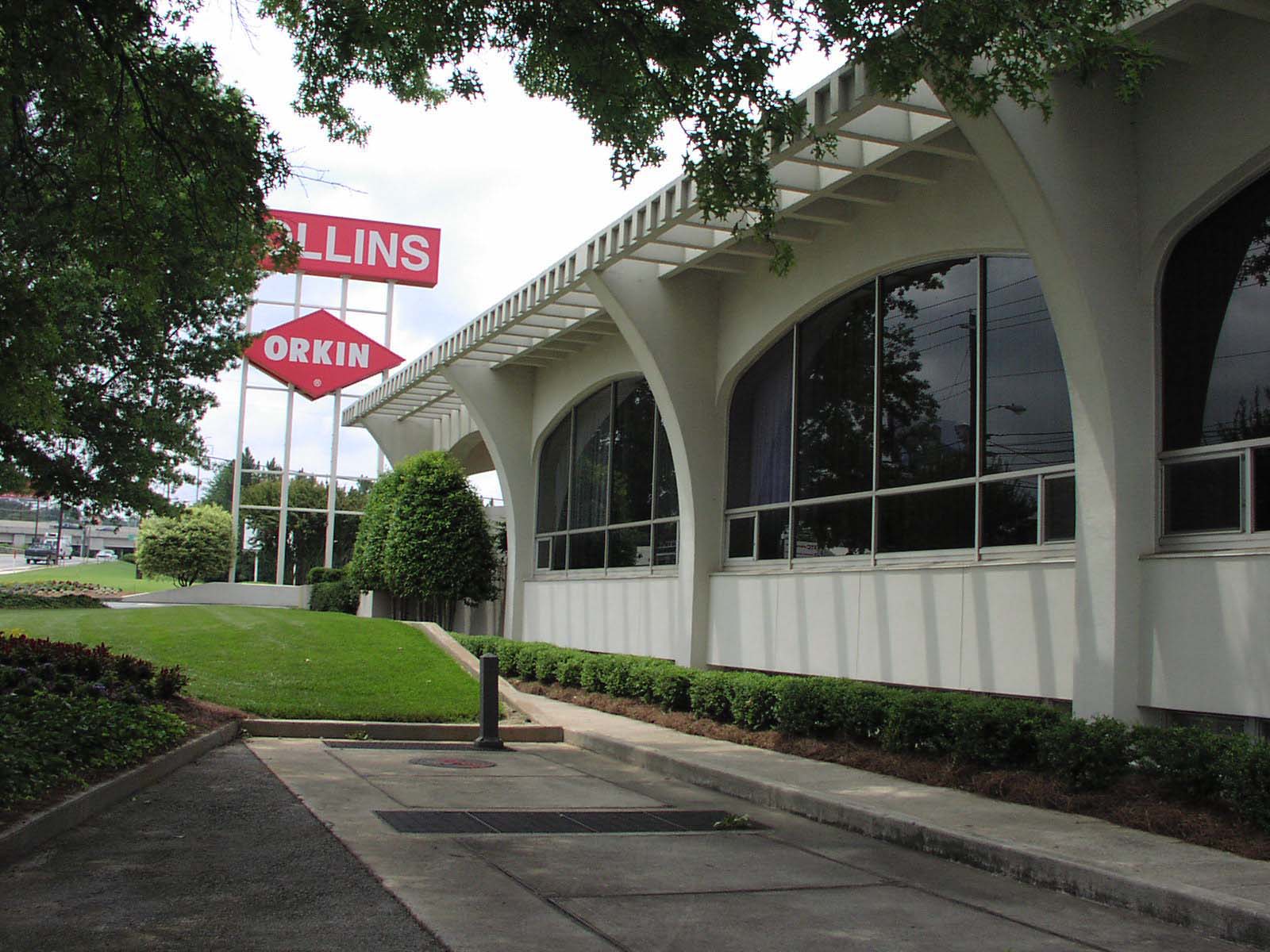
- New Georgia Encyclopedia, "Rollins and Orkin Headquarters" — photographic source and context for the article image.