A low rail-freight quote can look like a purchasing win while leaving the cost of an uneven delivery schedule unpriced. When a week's cars arrive together, a factory's unchanged unloading capacity can turn the apparent saving into a bill for waiting: demurrage.[1]
The clock can start outside the gate
Demurrage gives stationary equipment a price. The Surface Transportation Board describes it as compensation for holding cars beyond their permitted free time and an incentive to release equipment for further use. It belongs alongside the cost of moving freight when assessing a delivery's economics.[1]
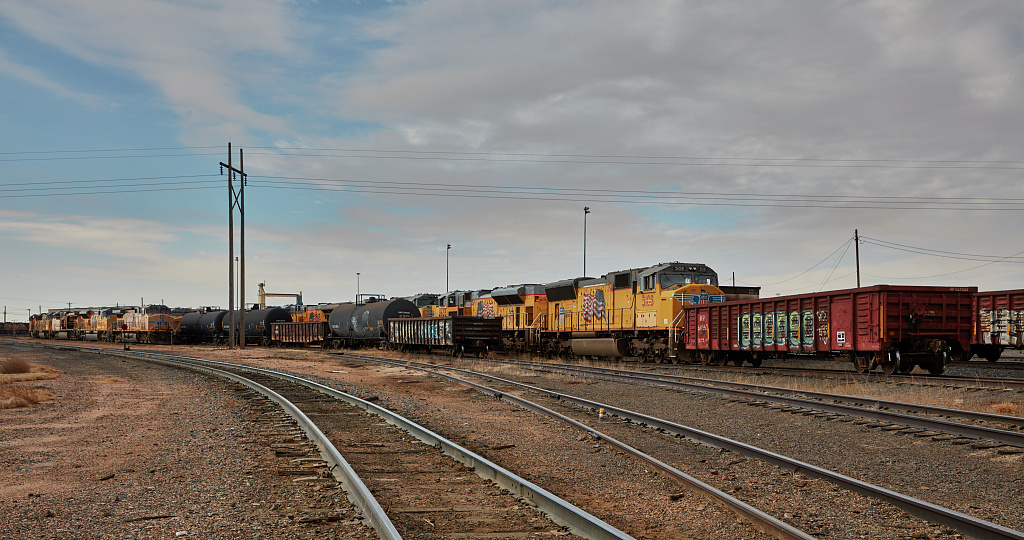
The surprise is where waiting may begin. Union Pacific's Chargeable Events System distinguishes a customer's own track from its designated serving area, where cars wait before delivery to the facility. Its guidance for customers using private industrial track says debits can accrue in either location. A receiver therefore needs to understand the yard inventory as well as the cars visible outside its unloading door.[2]
A debit is only an input to the bill. Union Pacific describes the calculation as debits less credits, multiplied by the applicable rate. Credits provide loading or unloading time and compensate for specified events outside the customer's control, including failure to place requested equipment. The guidance points customers to the governing tariff for the detailed rules.[2]
This distinction matters financially. A queue can be physically expensive while its gross charge is later offset. Equally, an apparently generous credit allowance may provide little protection if the particular delay does not qualify. The relevant cost is what survives the billing rules and reconciliation.
The same cargo, a different queue
Consider a deliberately simplified factory receiving 10 cars of material during a working week. It can unload and release two cars per day. Assume all cars are accessible when needed, the plant starts empty, and there are no equipment failures or interruptions.
For this illustration, give every car one free day, its arrival day. Each car still waiting at the start of a subsequent day incurs $100, including on the day it is unloaded. There are no additional credits. These are invented terms to isolate the scheduling effect; they are not Union Pacific's tariff.
Under a smooth schedule, a pair arrives each morning from Monday through Friday. The factory clears that pair before the day ends. Every car leaves within its free day, so there is no demurrage charge.
Now send the entire week's consignment on Monday. The factory works at exactly the same speed, but most cars must wait. After Monday's unloading, the queue shrinks by a pair each day until Friday. Adding the cars waiting at the start of each chargeable day produces 20 car-days. The illustrative demurrage bill is $2,000.
The factory bought the same material, handled the same volume and used the same unloading process. Only the arrival pattern changed. A weekly average would miss the queue completely: the plant's weekly throughput still matches its weekly deliveries.
This is also why more track and more unloading capacity solve different problems. Extra siding space can hold a larger batch without increasing the rate at which a pump, conveyor or crew empties it. Faster unloading can shorten the queue, but its additional cost must be compared with the charges it actually avoids. Capacity purchased to eliminate a rare peak may sit idle through ordinary weeks.
Who could have prevented the waiting?
The strongest counterweight to this cost argument is that a gross waiting calculation does not establish a justified invoice. Responsibility matters.
The STB's 2020 policy statement calls for case-by-case assessment of bunching. Railroad-caused delays that receivers cannot reasonably avoid frustrate demurrage's incentive purpose; upstream carriers' actions should also be considered.[3]
The receiver's conduct matters too. The policy recognizes rail users' responsibility for efficiencies within their control. An idle unloading crew or delayed release therefore needs a different assessment from an unexpected delivery surge.[3]
The Board also questioned credits whose expiration undermines relief for carrier-caused delays. It did not say credits must last forever: what matters is a reasonable opportunity to use them.[3]
For the factory in the example, full relief for the bunching would remove the illustrative demurrage expense. It would still have an awkward production schedule, but a proposal to buy unloading equipment could no longer claim that avoided bill as a benefit.
The invoice is an operating record
The evidence needed to distinguish these cases is unusually concrete. Federal rules require Class I demurrage invoices to include car identifiers, placement and release times, and applicable credits and debits. They also require machine-readable access to the specified information. The serving carrier's tariff governs in the absence of a demurrage contract.[4]
The STB's explanation of its invoice rule identifies the practical aim: helping customers verify charges and resolve disputes. Confusing bills had been a recurring complaint in its hearings.[5]
My interpretation is that a freight comparison should include the expected net cost of delivery variability, supported by the facility's own records. The falsifier for a claimed bunching-driven demurrage penalty would be matched delivery and billing records showing no additional net charge after all applicable credits and adjustments. That would remove this particular reason for discounting the apparent freight saving.
Three upcoming operating events can test the view:
- The next confirmed delivery plan: compare the daily arrival pattern with unloading and release capacity. A weekly volume total cannot reveal which days create a queue.
- The next monthly invoice reconciliation: connect each charged car to arrival, placement, release and applied credits. Separate receiver delays from service failures before treating the invoice as a recurring cost.[4]
- The next freight-contract renewal or tariff change: check when the clock starts, what relief applies and whether credits remain usable. Reprice the expected delivery pattern under those terms before assigning a value to faster unloading.[3][4]
Sources
- Surface Transportation Board, “Demurrage & Accessorial Charges” — definition, incentive purpose and regulatory context.
- Union Pacific, “Chargeable Events FAQ” — serving areas, private-industry customers, debits, credits and tariff boundaries; checked November 17, 2026.
- Surface Transportation Board, “Policy Statement on Demurrage and Accessorial Rules and Charges,” May 6, 2020, especially the sections on bunching and credits — responsibility, upstream delays and usable relief.
- Electronic Code of Federal Regulations, 49 CFR Part 1333, sections 1333.2, 1333.4 and 1333.5 — contract and tariff framework, invoice information and machine-readable access; checked November 17, 2026.
- Surface Transportation Board, “Surface Transportation Board Adopts Final Rule Establishing Minimum Information Requirements for Class I Demurrage Invoices,” April 6, 2021 — verification, transparency and dispute-resolution rationale.
- Carol M. Highsmith, photograph of Union Pacific’s Bailey Yard, North Platte, Nebraska, December 31, 2021. Library of Congress, Prints and Photographs Division, LC-DIG-highsm-69775 — archival photograph.