A dairy farm that bought hay through the summer of 2023 and a neighbor that filled its loft before prices rose could have earned identical federal payments. For a lender estimating how much cash either farm had left to service debt, the missing document was the feed bill. [1][2]
What June paid
In June 2023, the US Department of Agriculture recorded an all-milk price of $17.90 per hundredweight, the unit in which dairies sell a hundred pounds of milk. The agency priced a standard feed ration using corn, soybean meal and premium alfalfa hay. That ration cost $14.25 per hundredweight of milk produced, leaving a national margin of $3.65. Milk prices had fallen far enough to squeeze producers even as feed came down from its highs. [1][3]
Take a farm enrolled in Dairy Margin Coverage at $9.50 per hundredweight. Subtract June’s national margin and the gross payment rate comes to $5.85. To get the check, multiply that rate by one-twelfth of the farm’s covered annual production history, expressed in hundredweights. The farmer’s June milk deliveries can run ahead of that monthly allowance. Each extra load then brings in its milk price and costs something to produce, while the federal check stays the same. [1][2][4]
Where the neighbors part company
Give the two farms equal covered histories, the same coverage election and the same milk price. One has hay on hand bought at an agreed price. The other is taking deliveries at the going local price. During a nationwide milk slump, the June calculation works just as well for one as for the other in a specific sense. Each can put the same gross federal receipt in its cash budget. The farm buying expensive hay, though, sends more of that money straight back out to its supplier. The difference survives even if the farms ship exactly the same quantity of milk.
Now change the shock. A poor local cutting leaves the second farm bidding against its neighbors for replacement hay. If milk and feed prices elsewhere keep the national margin at or above the elected threshold, its federal payment for that month is zero. A national squeeze in which expensive feed pushes the published margin below the threshold would produce a payment, even for the neighbor still drawing on the cheaper hay. Both outcomes follow from using a common price series to settle the claim. [1][2]
There is a case for treating the payment as a close hedge. Suppose a farm’s realized milk price and feed cost per hundredweight track the federal figures, and its shipments match its covered monthly quantity. In a month like June, its milk receipts less feed expense, plus the gross payment, would then come close to the elected margin on every hundredweight shipped. Those conditions would overturn the concern that a lender had materially overstated this farm’s cushion. Payroll, interest and the cost of coverage would still have to come out of it. [2][4]
What to watch at the next monthly close
- When USDA posts the monthly margin, compare it with the farm’s elected threshold. A rebound to the threshold eliminates the gross payment for that month, even if feed delivered locally is still dear. [1][2]
- When the processor issues the milk statement, compare hundredweights sold with one-twelfth of covered history. Spread the estimated check over actual shipments to see what it adds per hundredweight sold. [2]
- When the feed invoices close, compare the farm’s cost of the ration used that month with USDA’s feed figure on the same per-hundredweight basis. For a farm feeding hay out of inventory, carry through its cost even in a month when no hay truck comes up the drive.
Sources
- USDA Farm Service Agency, Dairy Margin Coverage program updates and prices, including the June 2023 monthly series.
- 7 CFR § 1430.409, monthly trigger and payment calculation.
- USDA Economic Research Service, “Falling Milk Prices Led to Record Program Payments for Dairy Producers in 2023.”
- United States Code, 2024 edition, Title 7, Chapter 115, §§ 9056–9057 on coverage elections and premiums.
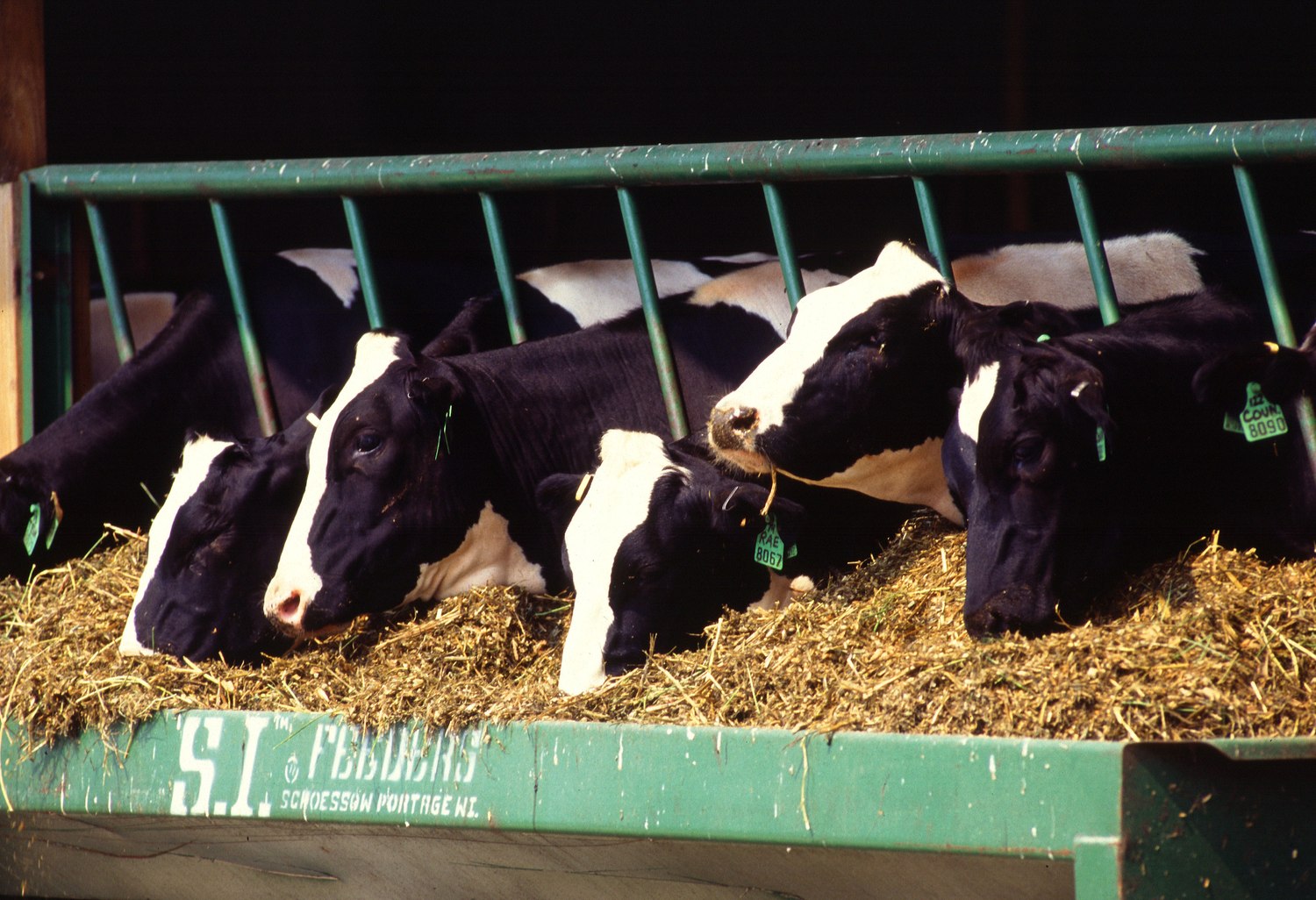
- Scott Bauer, Holstein dairy cows, USDA Agricultural Research Service photograph K7964-1.