Plasma-derived therapy companies are already priced as scarcity assets. The market understands the attractive headline: immunoglobulin and albumin demand is durable, plasma cannot be manufactured synthetically at scale, and the largest players own vertically integrated collection and fractionation networks. The new question is less romantic. Priced is medical scarcity. New is whether operators can turn scarce plasma into better liters, better yield, and better cash conversion without paying away the economics to donor fees, center overhead, policy friction, or debt service.
That makes plasma a scenario trade rather than a simple biologics growth story. The bull case needs three things to happen together: donor-center productivity improves, fractionation yield rises, and global sourcing becomes less dependent on the U.S. collection model. If only demand grows, investors may own a stretched supply chain. If throughput and yield improve, they own a compounding industrial-biologics system.[1][2][4]
The Mechanism
The bottleneck starts before a factory. Plasma centers need eligible donors, repeat visits, medical screening, trained staff, machines, regulatory records, and local labor economics. The federal Source Plasma regulation states that repeat-donor collection cannot occur less than 2 days apart or more frequently than twice in a 7-day period.[3] That frequency ceiling matters because it turns supply into a throughput problem. A center cannot solve demand simply by asking the same donor to return indefinitely; it has to recruit, retain, schedule, and screen enough donors while keeping adverse events and quality failures low.
The industry structure also explains why the U.S. matters so much. PPTA says it represents more than 1,100 human plasma collection centers in North America and Europe, and that member companies produce about 80% of plasma protein therapies in the U.S. and 60% of those manufactured in Europe.[4] In finance terms, this is not a generic pharmaceutical volume chain. It is a network business with regulated inputs, local donor behavior, and a long conversion cycle from collection to finished product.
CSL's February 2026 half-year presentation shows both the attraction and the pressure. CSL reported first-half FY2026 revenue of $8.332 billion, down 4% at constant currency, and reported NPAT of $401 million, down 81%, partly reflecting restructuring and impairment charges.[1] But inside CSL Behring, immunoglobulin revenue was still $3.046 billion in the half, albumin was $494 million, and management described Ig fundamentals as supported by significant unmet medical need, mid-to-high single-digit market growth, and balanced demand and supply.[1] The tension is the trade: demand can be structurally attractive while reported earnings are still dominated by policy changes, mix, impairment, and operational reset.
The Numbers That Matter
Start with the donor clock. The FDA frequency limit of twice in a 7-day period is not just a safety rule; it defines the upper bound of repeat-donor capacity at the individual level.[3] A company that improves appointment adherence, staff utilization, machine uptime, and donor retention can raise liters per center without violating that boundary. A company that relies only on opening more centers has to keep funding leases, labor, and donor acquisition before the collected plasma has worked through the manufacturing chain.
Second, watch product concentration. CSL's first-half FY2026 Ig revenue of $3.046 billion was more than six times its albumin revenue of $494 million in the same presentation table.[1] That does not make albumin irrelevant, especially in China, but it means the investment case often lives or dies on immunoglobulin volume, indications, reimbursement, and yield.
Third, watch Grifols because its balance sheet makes the same industry issue sharper. Grifols said Q1 2026 revenue rose 3.3% to EUR 1.7 billion and net profit rose 21.9% to EUR 73 million.[2] More importantly for the plasma thesis, it expects Egypt plasma collection to reach about 1 million liters in 2026 and up to 3 million liters by 2029, with the goal of reducing reliance on U.S.-sourced plasma for ex-U.S. markets.[2] That is the cleanest example of the "scarcity" thesis becoming an operating model: not just more demand, but a different sourcing map.
Fourth, use Takeda as a demand cross-check. Takeda's interim FY2025 business report listed Plasma-Derived Therapies revenue of JPY 517.4 billion in the first half, up 0.4% at constant exchange rates, with immunoglobulin up 3.1% and albumin down 2.4%; management still confirmed full-year guidance for mid-single-digit PDT portfolio growth at constant exchange rates.[5] That is not explosive growth, but it is steady enough to keep pressure on supply discipline.
Base Case: Scarcity Converts Slowly
The base case is a grinding improvement, not a sudden rerating. Demand remains resilient because immunoglobulin treats chronic immune and neurologic conditions and albumin demand is tied to hospital systems and country-specific policy. Supply grows, but the conversion of new liters into margin is slow because centers need donors, plasma needs testing and handling, and manufacturing yield programs take time.[1][2][5]
Under this branch, the right companies show modest revenue growth, better center productivity, and gradual margin repair. CSL's transformation language matters here because it explicitly includes reallocating plasma collections to more efficient centers, rolling out collection and donor systems, and pursuing yield improvement.[1] The base case does not require every new center to be heroic. It requires management to prove that the average liter is less expensive to collect and more valuable to process.
Upside Case: Yield Becomes The Hidden Multiple
The upside case is that investors stop treating plasma companies as donor-center rollouts and start valuing them as yield-improvement platforms. If the same donor network produces more usable grams of target proteins per liter, operating leverage can arrive without an equal increase in donor payments or center footprint.
That upside has two forms. The first is physical: more efficient centers, better scheduling, fewer failed collections, faster machines, improved donor experience, and lower staff friction. The second is industrial: fractionation, purification, and process improvements that raise output per liter. CSL's half-year materials point to a Horizon 2 yield improvement program and Ig life-cycle-management work; Grifols points to global plasma-footprint optimization and Egypt volumes as a way to improve cost per liter and resilience.[1][2]
If those programs land, the scarcity story becomes more durable. The company is not merely chasing donors; it is extracting more economics from every compliant liter. In a sector where FDA frequency rules limit the easy version of supply growth, that is where the multiple should come from.[3]
Downside Case: Scarcity Gets Paid To Someone Else
The bear case is that plasma scarcity is real but shareholders do not capture enough of it. Donors may need higher compensation. Staff costs may rise. Regulators may tighten collection practices. China albumin policy may pressure mix. Debt may absorb cash that would otherwise fund network quality. In that branch, revenue grows but free cash flow disappoints.
The risk is especially visible when companies carry leverage or restructuring burdens. Grifols' improving Q1 2026 profit is encouraging, but the strategic need to rebalance plasma supply also shows how dependent the economics have been on sourcing geography.[2] CSL's first-half reported NPAT decline, even with attractive industry fundamentals, is a reminder that a great end-market does not immunize investors from impairment, policy, and portfolio mistakes.[1]
Falsifier
The thesis fails if liters rise but economics do not. The specific falsifier is two reporting periods in which plasma companies report higher collections or better demand language while gross margin, cash conversion, and leverage metrics fail to improve. That would say scarcity is being captured by donors, labor, freight, regulation, or creditors rather than by shareholders.
The thesis also fails if ex-U.S. supply expansion does not lower risk. Grifols' Egypt target is useful because it is measurable: about 1 million liters in 2026, up to 3 million by 2029.[2] If that kind of regional supply expansion arrives without better cost per liter or resilience, the market should discount similar capacity stories elsewhere.
Watchlist
- Center productivity: liters per center, donor retention, failed collections, staffing levels, and machine rollout progress.
- Yield programs: any disclosure that links process improvement to more saleable Ig or albumin per liter, not just generic "efficiency."
- Geographic mix: progress toward non-U.S. plasma supply, especially Grifols' Egypt ramp from roughly 1 million liters in 2026 toward 3 million by 2029.[2]
- Cash conversion and leverage: revenue growth is lower quality if inventory, debt service, or restructuring absorbs the benefit.
The investable conclusion is deliberately narrow. Plasma-derived therapies deserve scarcity value, but scarcity alone is not enough. The better underwriting question is whether management can make every donor visit, every liter, and every fractionation run more productive. In 2026, the premium should go to throughput and yield, not to demand slogans.
Sources
- CSL Limited, "Results Presentation for the half-year ended 31 December 2025" (February 11, 2026) - 1H26 revenue, NPAT, CSL Behring therapy revenue, Ig market commentary, transformation actions, and yield-improvement references.
- Grifols, "Grifols increases Q1 2026 revenues by 3.3% to EUR 1.7 billion, and net profit 21.9% to EUR 73 million" (May 7, 2026) - Q1 results, Egypt plasma collection targets, and global plasma-footprint optimization.
- GovInfo, "21 CFR 640.65 - Plasmapheresis" - Source Plasma collection procedure, donor-record, volume, and repeat-donor frequency requirements.
- Plasma Protein Therapeutics Association, "About PPTA" - industry representation, collection-center network, and U.S./European plasma protein therapy production shares.
- Takeda, "Business Report: 149th Interim Period" - first-half FY2025 Plasma-Derived Therapies revenue, immunoglobulin and albumin growth, and full-year PDT growth guidance.
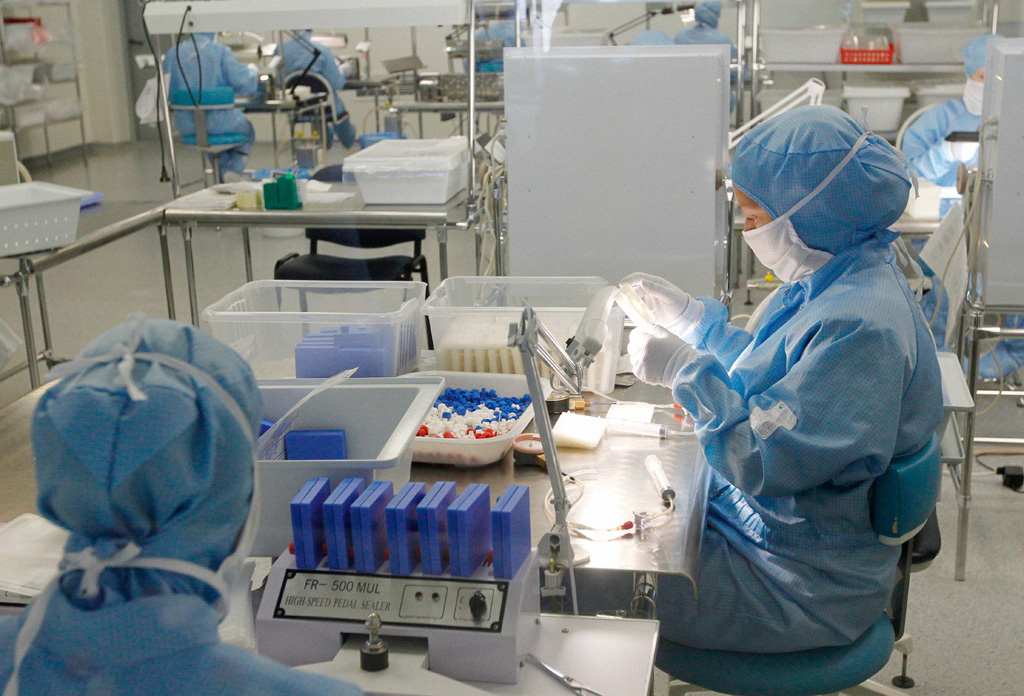
- Wikimedia Commons, "File:RIAN archive 708518 Membrane filter for blood plasma production.jpg" - 2010 RIA Novosti archival photograph by Iliya Pitalev used as the article image.