Putting a cash-like value on a nuclear operator's cleanup trust skips the most important question: who can spend it? Investment gains have strengthened these funds, but the first benefit is greater capacity to meet a future bill; a shareholder windfall requires a separate claim on what remains.[1][3]
Evidence cut-off: September 23, 2026. Industry figures describe year-end 2024; the company example uses Constellation's June 2026 filing. These are different reporting populations and dates.
The portfolio behind the demolition crew
Callan's latest study puts the nuclear decommissioning trust assets it surveyed at $100 billion. Stock-market gains drove much of the increase, bringing assets close to the study's aggregate estimated cleanup costs. Its sample includes investor-owned and public power utilities with stakes in operating reactors and some closed plants.[1]
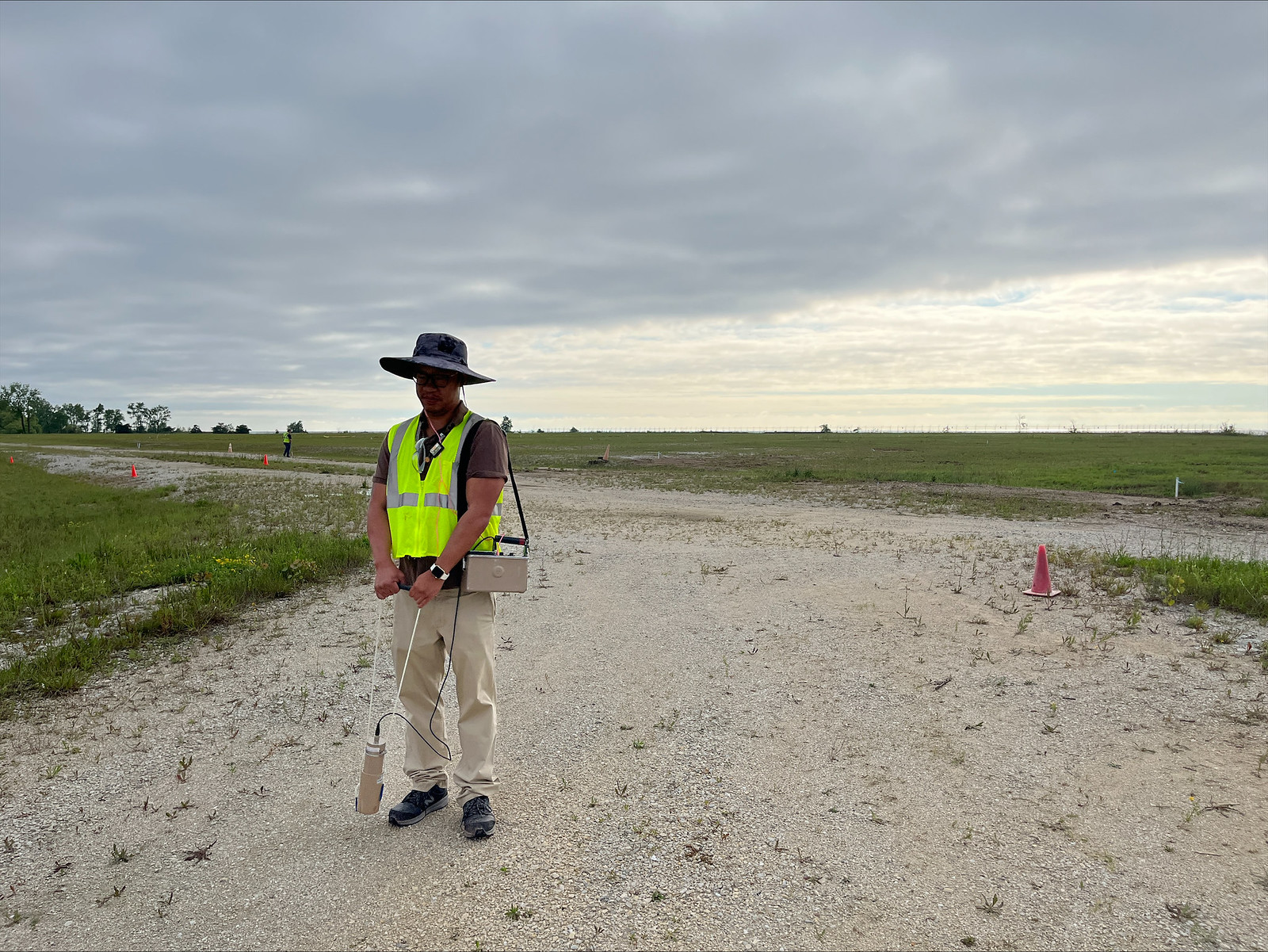
That makes the investment portfolio part of the plant's lifetime economics. Electricity earns revenue while a reactor operates; the trust helps finance the work after that revenue ends. The photograph of an NRC inspector surveying Zion's exposed ground shows the physical destination of the money: a site must be assessed and cleared, not merely removed from an earnings model.[6]
The legal structure explains why a trust balance deserves different treatment from ordinary corporate cash. Under the NRC's external sinking-fund rules, money is accumulated in a segregated account outside the licensee's administrative control. Funding reports disclose both accumulated assets and assumptions about future costs and investment earnings.[5]
Withdrawals also have a purpose test. The baseline decommissioning rule ties them to legitimate cleanup activities and requires enough financial protection to preserve safe storage and eventual completion. A large balance alone supplies no authority to redirect it to a buyback.[4]
Three measurements that refuse to become one
Constellation offers a concrete example. Its second-quarter filing reports $20.583 billion in total nuclear decommissioning trust funds and $11.942 billion in nuclear asset retirement obligations at June 30. The trust total includes its current portion, which is presented separately on the balance sheet.[2]
Subtracting those figures is easy. Calling the difference spendable surplus would require much more evidence.
The asset retirement obligation is a discounted estimate of future legally unavoidable costs. Constellation's annual report describes site-specific estimates, alternative retirement scenarios and costs that can extend beyond radiological dismantling, including spent-fuel management. The NRC minimum funding calculation uses a different framework and assumptions.[3]
These measures answer distinct questions. Today's portfolio value describes resources held. The accounting liability translates future obligations into a present amount. The regulatory test asks whether acceptable funding arrangements support the required cleanup. None, by itself, tells an equity investor how much money can leave the trust or when.
Timing can move the accounting number substantially. Constellation recorded a $1.277 billion reduction from changes in estimated future cash flows and their timing during the first half, driven primarily by revised assumed retirement dates at several plants.[2] That is a change in the estimate, not evidence that crews completed an equivalent amount of work.
A surplus can belong to someone else
There is another claim between the portfolio and shareholders. Constellation says remaining funds for its Regulatory Agreement Units must generally return to the respective utility customers after decommissioning, with limited sharing for former PECO units. It retains residual funds for its other nuclear units, subject to specified potential clawbacks at certain plants.[3]
An aggregate trust balance therefore conceals different economic owners of the upside. The useful valuation exercise follows each plant: identify the obligations, estimate when they fall due, then establish who receives anything left. A group-wide subtraction loses that last step.
The distinction also prevents double counting. If an analyst already values an operator on cash flows relieved of future cleanup contributions, adding the entire trust again would count resources committed to producing that relief as though they were an additional distribution. Any residual value needs its own assumptions about costs, timing and ownership.
Strong markets help, but cannot finish the work
The strongest counterweight to this caution is straightforward: better-funded obligations are economically valuable. They can reduce the need for future support, even without an immediate payout. Constellation describes possible cash contributions or financial guarantees when a unit fails its minimum funding test.[2]
The portfolio still brings market risk into an industrial obligation. Among the investor-owned trusts reporting allocations in Callan's study, the median equity weight was 64%. That is a subset statistic, not the equity share of every dollar in the national total.[1]
The analytical implication is a timing problem. A fund with distant expenditures may tolerate market volatility more readily than one selling investments to pay contractors now. If a drawdown coincides with substantial withdrawals, recovery in asset prices arrives after some assets have already been sold. The relevant stress test pairs the investment portfolio with the actual payment schedule.
This supports a cautious thesis: treat recent trust gains chiefly as stronger backing for obligations until a distributable residual is demonstrated. The falsifier would be material, documented releases to corporate owners after required work and customer claims are satisfied, supported by updated site-level estimates. That would establish shareholder cash value beyond reduced funding risk.
What to watch
- Constellation's next quarterly filing: reconcile trust movements with spending and liability revisions. Distinguish investment performance from changes in retirement assumptions.
- The December 31, 2026 funding snapshot and March 31, 2027 reporting cycle: inspect reactor-level coverage, investment-return assumptions and any new support commitments. The rule generally requires biennial reports, with annual reporting in specified circumstances.[5]
- Each site-completion or trust-release decision: look for the named recipient and the obligations already discharged. A completed cleanup with an enforceable residual claim is the evidence that turns a portfolio balance into an owner's money.[3][4]
Sources
- Julia Moriarty, Callan, “Stock Gains Drive NDT Fund Balances to $100 Billion, Callan Study Finds,” February 17, 2026 — study scope, year-end 2024 assets and reported investment allocations.
- Constellation Energy, Form 10-Q filed August 6, 2026 — Note 9, nuclear trust balances and retirement-obligation changes; liquidity discussion of NRC minimum funding requirements.
- Constellation Energy, 2025 Form 10-K filed February 24, 2026 — Note 10, discounted obligations, regulatory funding differences and rights to residual trust assets.
- 10 CFR 50.82, “Termination of license,” via Cornell Legal Information Institute — paragraph (a)(8), conditions on decommissioning-fund withdrawals.
- 10 CFR 50.75, “Reporting and recordkeeping for decommissioning planning,” via Cornell Legal Information Institute — paragraphs (e) and (f), segregated funding and reporting requirements.
- U.S. Nuclear Regulatory Commission, “Decommissioning Inspection at Zion Nuclear Power Plant,” published October 2, 2023 — source photograph and inspector identification, CC BY 2.0.