A farmer can sell corn futures in spring and still pay for a shallow Mississippi in autumn. In October 2022, some lower-river buyers quoted corn about $2.50 a bushel below the Gulf price. A farmer watching the Chicago futures quote alone would have missed the distance that had opened up between two cash markets. [1][2]
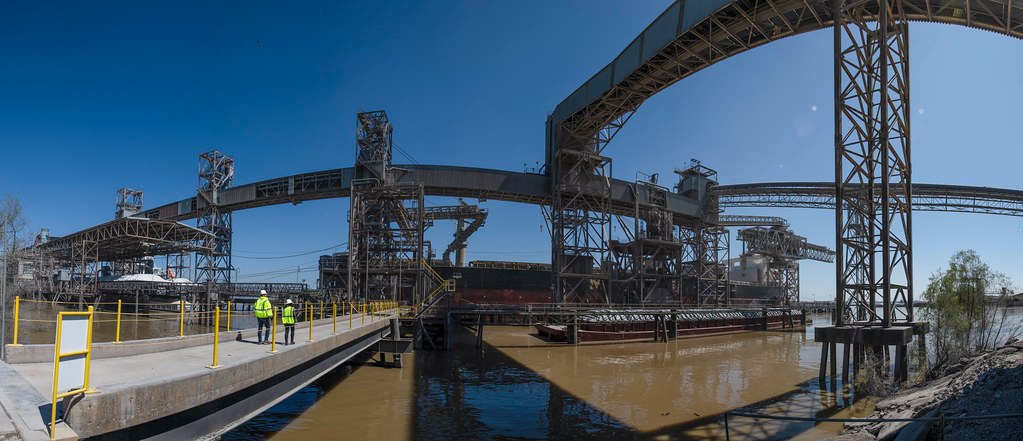
Work back from the ship
An elevator in St. Louis can start with what a Gulf terminal will pay for a bushel. From that, it deducts what it costs to get the corn there and what it needs to earn for handling it. What remains is the bid it can afford to put in front of a farmer. At low water, each barge has to ride higher and carry less. A narrower channel can also mean fewer barges per tow. The towboat still has to make the trip. [1]
The arithmetic showed up in bids along the route. USDA economists tracking corn and soybeans put the Gulf–St. Louis price gap at roughly $20 per metric ton before the disruption. By their November 2022 account, it had reached about $90 per ton, close to the barge rate itself. Subtracting the same futures quote from both cash bids leaves that gap intact. Traders call each location’s cash price minus futures its basis. The spread between those two bases gives a farmer a way to see what the journey costs. [1]
The part of the check still at risk
Suppose a grower has already sold futures against the coming harvest. At delivery, the grower sells the corn to the elevator and buys back the futures. A decline in futures between those trades produces a gain in the brokerage account. Add that gain to the elevator check and the grower receives the original futures price plus the local basis at delivery, before fees. Every cent by which that basis falls short of the grower’s budget comes out of the proceeds. [2]
That makes the identity of the next buyer worth money. If a nearby ethanol plant needs corn, a farmer can compare its bid after trucking costs with the river elevator’s offer. The plant can use the bushel where it stands. In 2022 the USDA economists saw a much smaller response to barge rates in northwest Iowa, where buyers depended less on the Mississippi. A Gulf premium measures an opportunity only for someone who can get grain to the Gulf at a cost below the spread. [1]
The river gauge alone makes a poor price signal. Low water returned in 2023, yet USDA found weaker export demand and spare barges on open stretches of river. There were fewer buyers competing for the available freight. Both the number of bushels a tow can carry and the number waiting for passage matter to the elevator’s bid. [4]
What to watch at the next low-water harvest
- When tow operators cut loads, check the next USDA weekly southbound spot freight quote for St. Louis. A higher rate is the first evidence that shippers are bidding for scarce space. [4][5]
- When elevators post harvest bids, compare St. Louis and Gulf corn for the same delivery window against the same futures month. If freight stays expensive and that spread stays near its seasonal norm, the claim that farmers are absorbing the extra freight through weaker river bids fails for that episode. [1][2]
- When the weekly lock figures arrive, read southbound grain tonnage beside the export sales still awaiting shipment. Light traffic alongside a thin order book gives a different reading of the same shallow river than light traffic with ships waiting for grain. [4][5]
Sources
- Shawn Arita and colleagues, “Low Mississippi River Barge Disruptions,” farmdoc daily, November 2022.
- Iowa State University Extension and Outreach, “Using Hedging in a Marketing Program.”
- Lance Cheung, USDA photograph of the grain transfer at Nine Mile Point, March 10, 2022.
- USDA Agricultural Marketing Service, Grain Transportation Report, March 14, 2024, comparing the 2022 and 2023 low-water seasons.
- USDA Agricultural Marketing Service, Grain Transportation Report datasets for barge freight, lock movements and export balances.