As of 2026-04-09T05:11:17Z, the easy market mistake is to treat the next CPI print as the whole inflation story. Priced is that traders will react first to the March CPI release on April 10 because it lands before the next FOMC meeting and still dominates rate-screen reflexes.[5][6] New is that the latest published official data are already split across the two gauges that matter most: February CPI ran at 2.4% headline and 2.5% core year over year, while January PCE ran at 2.8% headline and 3.1% core.[1][2] When the wedge is already that visible, the policy question stops being “Was CPI hot?” and becomes “Does the same pressure survive the translation into PCE?”
The Fed has made the hierarchy explicit. In the January 27, 2026 reaffirmation of its longer-run goals statement, the FOMC again said its 2 percent inflation objective is measured by the annual change in the price index for personal consumption expenditures.[4] That does not make CPI irrelevant. It does mean CPI is the first draft of the policy signal, not the final one.
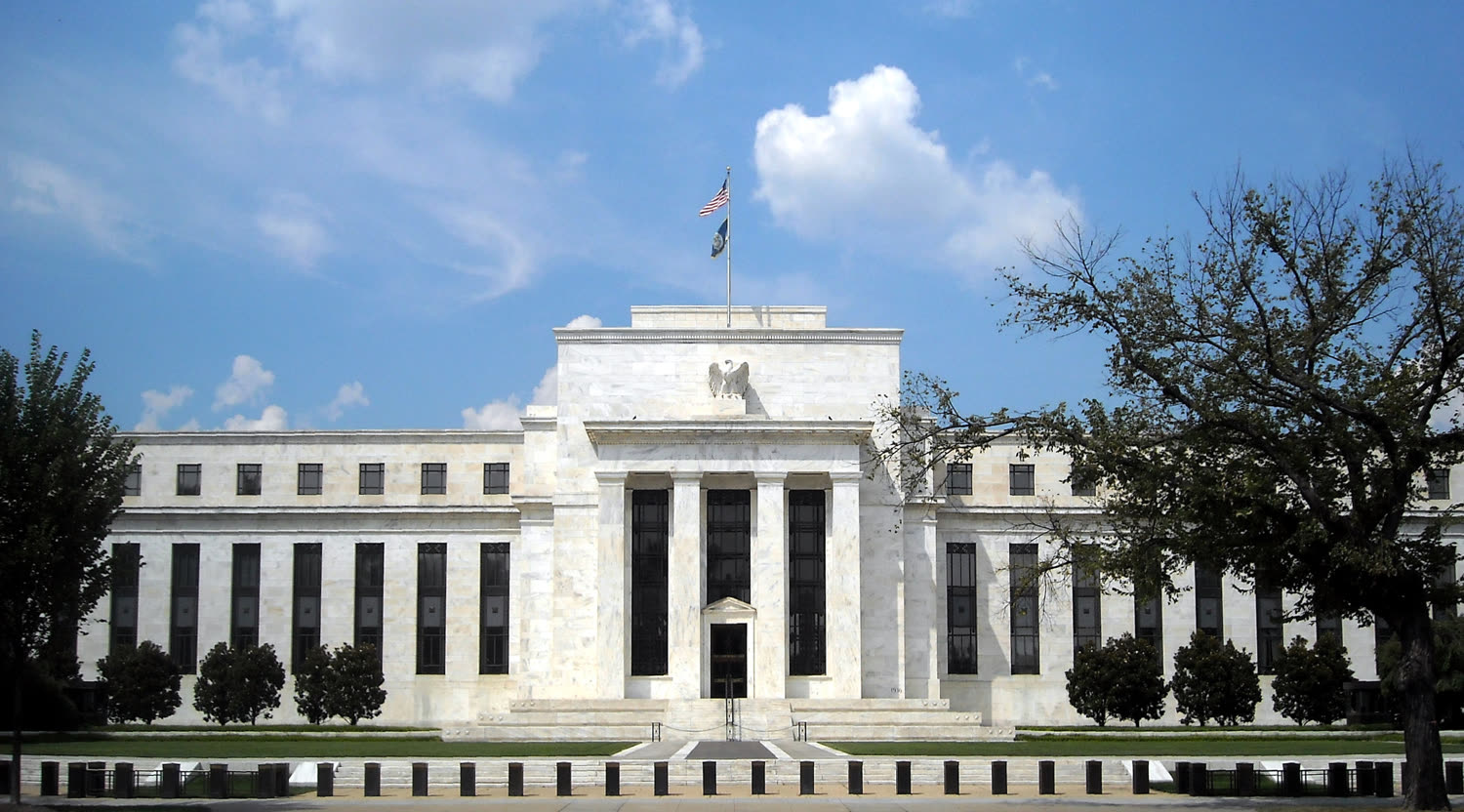
Image context: the cover uses a real photograph of the Marriner S. Eccles Federal Reserve Board Building rather than a symbolic shopping cart or chart collage. That is the right visual anchor because this piece is about the policy gauge the central bank actually follows.[7]
Why the wedge exists
1. Formula effect
BEA's own CPI-versus-PCE FAQ starts with formula design. PCE is built with a Fisher-Ideal formula, while CPI uses a modified Laspeyres formula.[3] That distinction matters when relative prices move unevenly. A chain-type index adapts faster to what consumers substitute toward or away from. A Laspeyres-style framework is intentionally stickier. So even before you argue about shelter, gasoline, or medical care, the two gauges are not trying to summarize price change in exactly the same mechanical way.[3]
2. Weight effect
The second source of divergence is weighting.[3] February CPI makes that easy to see in practice. Shelter rose 0.2% month over month and 3.0% year over year, and BLS said it was the largest factor in the monthly all-items increase.[1] Medical care services rose 0.6% on the month and 4.1% over the year.[1] When the slow-cooling pieces of inflation carry different relative importance across CPI and PCE, the same underlying economy can generate two different inflation summaries for several months.
This is why a soft shelter print does not automatically equal a soft Fed print, and why a services re-acceleration can matter more in PCE than a quick first read from CPI suggests. The composition matters at least as much as the headline.
3. Scope effect
BEA's third category is scope.[3] PCE measures spending by and on behalf of the personal sector, while CPI tracks out-of-pocket household spending.[3] That sounds technical until you apply it to the categories policymakers watch. Employer-paid and government-paid medical services show up more directly in PCE. CPI is closer to what households pay themselves. So the same healthcare system can cool in one measure more slowly than the other, or stay sticky in PCE even when CPI looks temporarily calmer.[3]
Why it matters more right now
The current data already show why translation risk matters. January PCE prices rose 0.3% on the month and 2.8% over the year; core PCE rose 0.4% on the month and 3.1% over the year.[2] February CPI rose 0.3% on the month and 2.4% over the year; core CPI rose 0.2% on the month and 2.5% over the year.[1] That is not a trivial rounding issue. It is a live gap between the gauge the market headlines first and the gauge the Fed says it is targeting.[2][4]
The next implication is practical. If March CPI surprises on goods, airfare, or gasoline, the Fed still has to decide whether that move survives formula, weight, and scope translation into PCE. The reverse is also true. If shelter keeps cooling in CPI while medical and other third-party-paid services remain firm, PCE can stay uncomfortable even when the CPI tape feels reassuring. That is why a one-line inflation verdict is too crude for this point in the cycle.[1][2][3][4]
Six numeric anchors
- Fed target: the FOMC reaffirmed a 2 percent inflation goal measured by the annual change in the PCE price index.[4]
- Latest published PCE: January PCE was 0.3% month over month and 2.8% year over year; core PCE was 0.4% month over month and 3.1% year over year.[2]
- Latest published CPI: February CPI was 0.3% month over month and 2.4% year over year; core CPI was 0.2% month over month and 2.5% year over year.[1]
- Sticky CPI component: February shelter inflation was 0.2% month over month and 3.0% year over year.[1]
- Hotter services pocket: February medical care services inflation was 0.6% month over month and 4.1% year over year.[1]
- Release clock: BEA's February 2026 PCE release is scheduled for April 9, 2026 at 8:30 a.m. EDT, and BLS's March 2026 CPI release is scheduled for April 10, 2026 at 8:30 a.m. ET.[2][5]
Those anchors are enough to frame the decision problem. The market sees one inflation report first. The Fed targets another. Right now the two are not telling the same story.
Strongest counterweight
The strongest pushback is that the market is still right to trade CPI first. CPI arrives earlier, it shapes same-day rate pricing, and broad services pressure in CPI usually does leak into PCE with only a short lag.[1][5] If the next CPI print is hot across services less energy services, not just a narrow shelter or gasoline move, then the translation argument may matter much less than this article suggests.
That counterweight is real. This is not an argument for ignoring CPI. It is an argument against mapping it one-for-one into the Fed path before PCE confirms the breadth.
Falsifier
This explainer is leaning too hard on construction effects if the next release pair compresses the wedge quickly. Concretely, if the April 9 PCE report and the April 10 CPI report leave core PCE and core CPI telling essentially the same directional story again, with the year-over-year gap shrinking to only a few tenths and the underlying services trend lining up, then the case for treating the current divergence as a policy-relevant translation problem loses force.[2][5]
Watchlist
- April 9, 2026, 8:30 a.m. EDT: BEA Personal Income and Outlays for February 2026. This is the immediate test of whether the hotter January PCE backdrop holds into February.[2]
- April 10, 2026, 8:30 a.m. ET: BLS Consumer Price Index for March 2026. The key question is whether any March heat is broad services pressure or a narrower category shock.[5]
- April 15, 2026, 8:30 a.m. ET: BLS Import and Export Price Indexes for March 2026. If import prices re-accelerate, the goods side of the CPI-to-PCE translation gets more complicated.[5]
- April 28-29, 2026: FOMC meeting. The statement and press conference will show how much policymakers are leaning on the incoming PCE confirmation rather than on the earlier CPI headline alone.[6]
Takeaway
The point of comparing CPI and PCE is not to pick a favorite series. It is to read the rate path more accurately. In April 2026, the official data already show a meaningful wedge between the market's first inflation headline and the Fed's stated target gauge.[1][2][4] Until that wedge closes, the right question after every CPI surprise is not “what did prices do?” but “what survives into PCE after formula, weight, and scope do their work?”
Sources
- U.S. Bureau of Labor Statistics, "Consumer Price Index - February 2026" (released March 11, 2026).
- U.S. Bureau of Economic Analysis, "Personal Income and Outlays, January 2026" (released March 13, 2026; next release noted for April 9, 2026).
- U.S. Bureau of Economic Analysis, "What accounts for the differences in the PCE price index and the Consumer Price Index?" FAQ 555.
- Federal Open Market Committee, "Statement on Longer-Run Goals and Monetary Policy Strategy" (reaffirmed effective January 27, 2026).
- U.S. Bureau of Labor Statistics, "Schedule of Selected Releases for April 2026."
- Board of Governors of the Federal Reserve System, "Calendar: April 2026."
- Wikimedia Commons, "File:Marriner S. Eccles Federal Reserve Board Building.jpg" (documentary image source page).