The headline rule on many inherited IRAs is already in the market's bloodstream: if you are an adult nonspouse beneficiary, you usually have 10 years to empty the account.[1][2] That part is priced. The under-read part in 2026 is narrower and more consequential. If the original account owner died on or after the required beginning date, IRS Publication 590-B still requires annual minimum distributions in the years before the account is finally emptied, and the Treasury's 2024 final regulations made that reading applicable for calendar years beginning on or after January 1, 2025.[2][3]
That changes the planning problem. What looks like one deadline is often two clocks: an annual RMD clock that can create taxable income in the middle years, and a year-10 cleanout deadline that can still force a large final distribution.[2][3] If a beneficiary misses the annual amount, the IRS says the shortfall can face a 25% excise tax, reduced to 10% if corrected within the window and properly reported.[4][5]
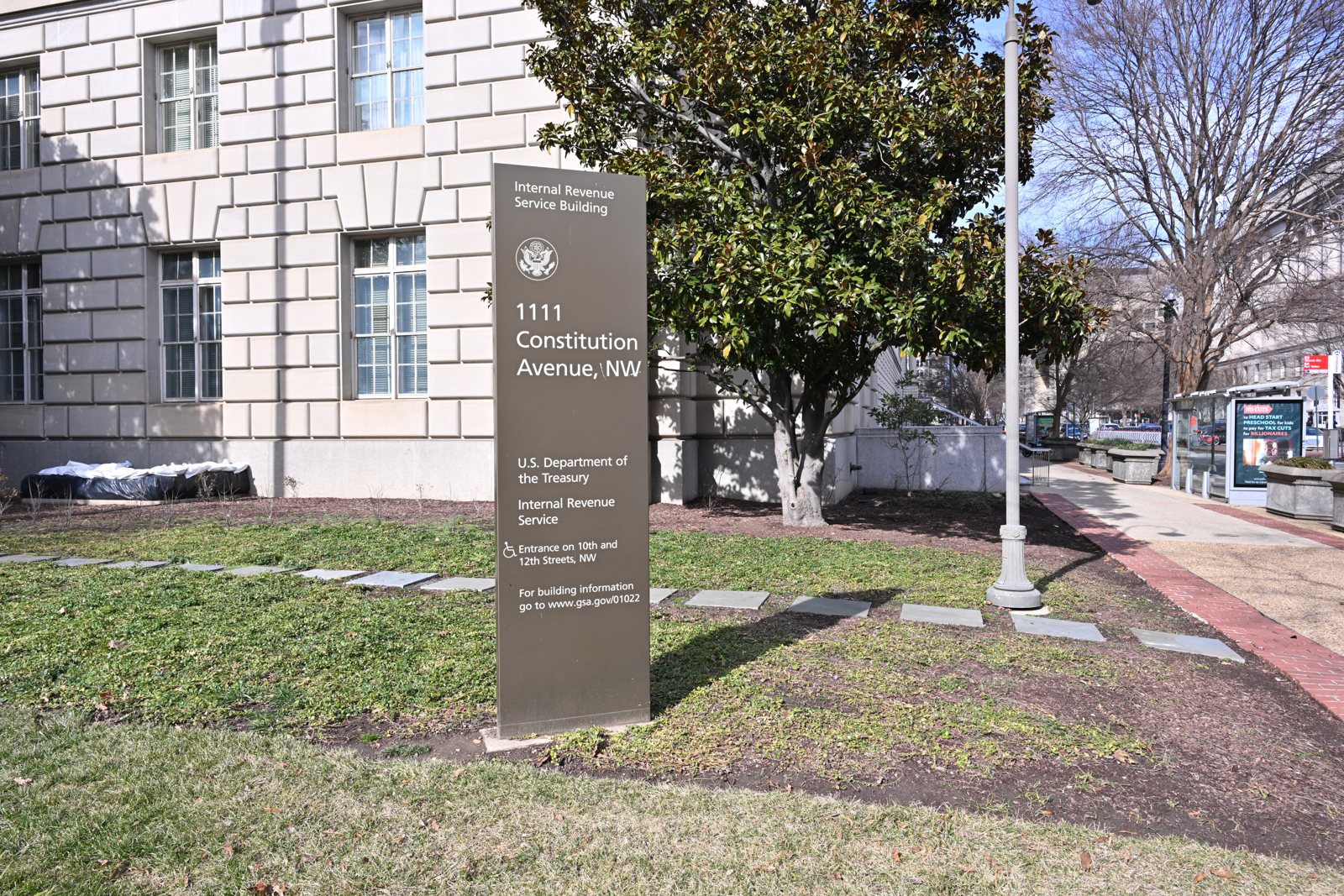
Image context: the cover uses a real Wikimedia Commons photograph of the IRS headquarters rather than a retirement chart or generic family stock image.[6] That is the right visual scale for this piece because the important mistake is legal sequencing: whether the decedent had reached the required beginning date, whether a year-of-death RMD was still outstanding, and whether the beneficiary is reading "10 years" as a single deadline when the tax rules may still require annual withdrawals.
Priced vs new
What is priced is the SECURE-era headline. The IRS beneficiary guidance says a designated beneficiary who is not an eligible designated beneficiary generally follows the 10-year rule.[1] Publication 590-B states the same endpoint in more formal terms: the entire inherited IRA must be distributed by December 31 of the year containing the 10th anniversary of the owner's death.[2]
What is newer in practical planning is the post-2024 enforcement shape. Publication 590-B draws the key branch at the decedent's required beginning date. If the owner died before that date and the 10-year rule applies, no distribution is required for any year before the 10th year.[2] If the owner died on or after that date and the beneficiary is a designated beneficiary, required minimum distributions for years after the year of death are still calculated using the longer of the beneficiary's single life expectancy or the owner's remaining life expectancy, while the account also must be completed within 10 years.[2] The 2024 final regulations confirmed that this framework applies for calendar years beginning on or after January 1, 2025, after several years of transition relief.[3]
That means inherited-IRA planning in 2026 is no longer mostly a "wait until year 10 or smooth it out sooner" question. For many adult children inheriting a traditional IRA from a parent who had already started RMD age, the planning question starts with a harder constraint: the middle years are not empty calendar space.[2][3]
Three scenarios that actually change the tax bill
1. The owner died before the required beginning date
This is the cleaner branch. The IRS says that if the owner died before the required beginning date and the 10-year rule applies, no distribution is required for any year before the 10th year.[2] The beneficiary still must finish the account by the end of year 10, but the interim calendar is flexible.
That flexibility matters because it turns the account into a tax-bracket management problem rather than an annual-compliance problem. A beneficiary can use low-income years, career transitions, or early-retirement gaps to pull more money out deliberately. The account is still on a countdown. It is simply a one-clock countdown.[2]
2. The owner died on or after the required beginning date
This is the branch that creates the real surprise. Publication 590-B says that if the owner died on or after the required beginning date and you are a designated beneficiary, your required minimum distributions for years after the year of death are based on the longer of your single life expectancy or the owner's life expectancy.[2] The same publication then says a designated beneficiary who is not an eligible designated beneficiary must still complete distributions within 10 years of the owner's death.[2]
Put plainly: the beneficiary may owe both an annual distribution stream and a final year-10 cleanout. The annual amounts can be modest compared with the full account, but they are not optional if this branch applies.[2][3] The year of death also has its own housekeeping rule. The IRS RMD page says that for the year of the account owner's death, the RMD due is the amount the owner was required to withdraw, if any, but did not withdraw before death.[4] A beneficiary who misses that fact can start the inheritance with an avoidable compliance problem.
This is also where transition relief can confuse readers. The final regulations discuss IRS notices that waived excise-tax treatment for certain beneficiaries who missed what would have been annual distributions in 2021, 2022, 2023, and 2024 under the post-SECURE interpretation.[3] That relief helped people through the ambiguity. It did not erase the underlying rule going forward.
3. The account is inherited, but the harshest version of the rule does not apply
This is the scenario that keeps the article from overreaching. The IRS beneficiary page says an eligible designated beneficiary includes a surviving spouse, a minor child of the deceased account holder, a disabled or chronically ill individual, or someone not more than 10 years younger than the account owner.[1] Those beneficiaries can have different distribution options from a standard adult child beneficiary.[1][2]
Inherited Roth IRAs also deserve separate treatment. The IRS says inherited Roth accounts are generally subject to the same RMD framework as inherited traditional IRAs, but most withdrawals of contributions are tax free and most earnings withdrawals are also tax free if the Roth satisfies its holding rules.[1] The distribution clock may still exist. The income-tax pressure can be very different.
That is why "I inherited an IRA" is still an incomplete sentence. The account type, the beneficiary category, and the owner's death date relative to the required beginning date all determine whether the problem is mainly about tax timing, annual compliance, or both.[1][2][3]
Six numeric anchors
- 10 years: a designated beneficiary who is not an eligible designated beneficiary generally must empty the inherited IRA by the end of the year containing the 10th anniversary of the owner's death.[1][2]
- Age 73: the IRS RMD page says original owners generally must begin RMDs when they reach age 73, which is the practical hinge for whether a later death happened before or after the required beginning date.[4]
- January 1, 2025: the 2024 final Treasury regulations apply for calendar years beginning on or after this date.[3]
- 25%: the IRS says the excise tax for an insufficient required distribution is generally 25% of the undistributed amount.[4][5]
- 10%: Form 5329 instructions say that rate can fall to 10% if the shortfall is corrected within the correction window and reported properly.[5]
- 2021-2024: the final regulations discuss transition relief for certain post-required-beginning-date beneficiaries who did not take what would otherwise have been annual distributions in those years.[3]
Together, those anchors show why the 2026 problem is about sequencing more than slogans.
Strongest counterweight
The strongest pushback is that many beneficiaries will not face the harshest version of this rule. That is true. A pre-required-beginning-date death gives a designated beneficiary more timing freedom inside the 10-year window.[2] An inherited Roth IRA changes the income-tax burden even when the distribution clock remains.[1] An eligible designated beneficiary may qualify for a different distribution regime altogether.[1][2]
That counterweight matters. The argument here is not that every inherited IRA now demands annual taxable withdrawals. The narrower claim is that many beneficiaries still talk about the rule as if "10 years" were the whole answer, when the IRS materials make the mid-window annual clock decisive in a large and costly branch of cases.[2][3][4]
Falsifier
This framework would weaken quickly if Treasury or Congress rewrote the post-death distribution rules so that standard designated beneficiaries subject to the 10-year rule no longer had annual RMD obligations after a death on or after the required beginning date.[2][3] In that world, the planning problem would collapse back into a single year-10 deadline.
Watchlist
- The decedent's final-calendar-year paperwork: first determine whether a year-of-death RMD was still due before you optimize anything else.[4]
- The decedent's required-beginning-date status: this is the branch point that decides whether years 1-9 are flexible or constrained.[2][4]
- Each December 31 between inheritance and year 10: if annual RMDs apply, every year-end becomes a compliance deadline, not just the final one.[2][4]
- The correction window after any miss: if a required amount was skipped, the difference between 25% and 10% depends on how quickly and cleanly the beneficiary fixes it.[5]
Takeaway
For inherited traditional IRAs in 2026, the expensive mistake is often conceptual before it becomes numerical. People hear "10-year rule" and imagine one distant cleanup date. The official IRS materials draw a sharper map. In a post-required-beginning-date inheritance, the beneficiary may be carrying an annual RMD clock inside that 10-year shell.[2][3][4]
That is the decision edge. Before modeling tax brackets, Roth conversions, or portfolio returns, identify which branch of the rule you actually inherited. One clock can be planned around. Two clocks need to be managed.
Sources
- Internal Revenue Service, "Retirement topics - Beneficiary" - beneficiary categories, the 10-year rule, eligible designated beneficiary definitions, and inherited Roth IRA treatment.
- Internal Revenue Service, Publication 590-B (2025), Distributions from Individual Retirement Arrangements (IRAs) - the 10-year rule, pre- and post-required-beginning-date branches, and year-10 deadline examples.
- Internal Revenue Service, Internal Revenue Bulletin 2024-33 - final required-minimum-distribution regulations, applicability beginning January 1, 2025, and discussion of transition relief notices for 2021-2024.
- Internal Revenue Service, "Retirement topics - Required minimum distributions (RMDs)" - age-73 owner rule, year-of-death RMD treatment, and the 25% excise-tax summary.
- Internal Revenue Service, Instructions for Form 5329 (2025) - 25% excess-accumulation tax, 10% reduced rate, and the correction-window standard.
- Wikimedia Commons, "File:IRS Building.jpg" - source page for the IRS headquarters photograph used as the article image.