Homebuilder equities are no longer just a clean rate-cut proxy. Priced is that builders have learned how to keep volume moving in a high-rate market: spec inventory, captive mortgage operations, and aggressive rate buydowns let them sell houses that many resale sellers cannot finance into affordability. New is that the next leg of the trade depends on whether those incentives can shrink before they become a semi-permanent tax on margins.[1][2][3][4]
That distinction matters because the spring 2026 setup is mixed, not euphoric. Freddie Mac's weekly survey put the 30-year fixed mortgage at 6.23% on April 23, down from 6.81% a year earlier and at the lowest level of the last three spring buying seasons.[1] But the resale market is still tight rather than healthy: NAR says March 2026 existing-home sales ran at 3.98 million annualized, with a $408,800 median price and only 4.1 months of inventory.[2] Builders therefore still own the one part of housing supply that can be engineered in real time, but they are paying for that advantage through incentives, pricing discipline, and lower margin ceilings.[1][2][3][4]
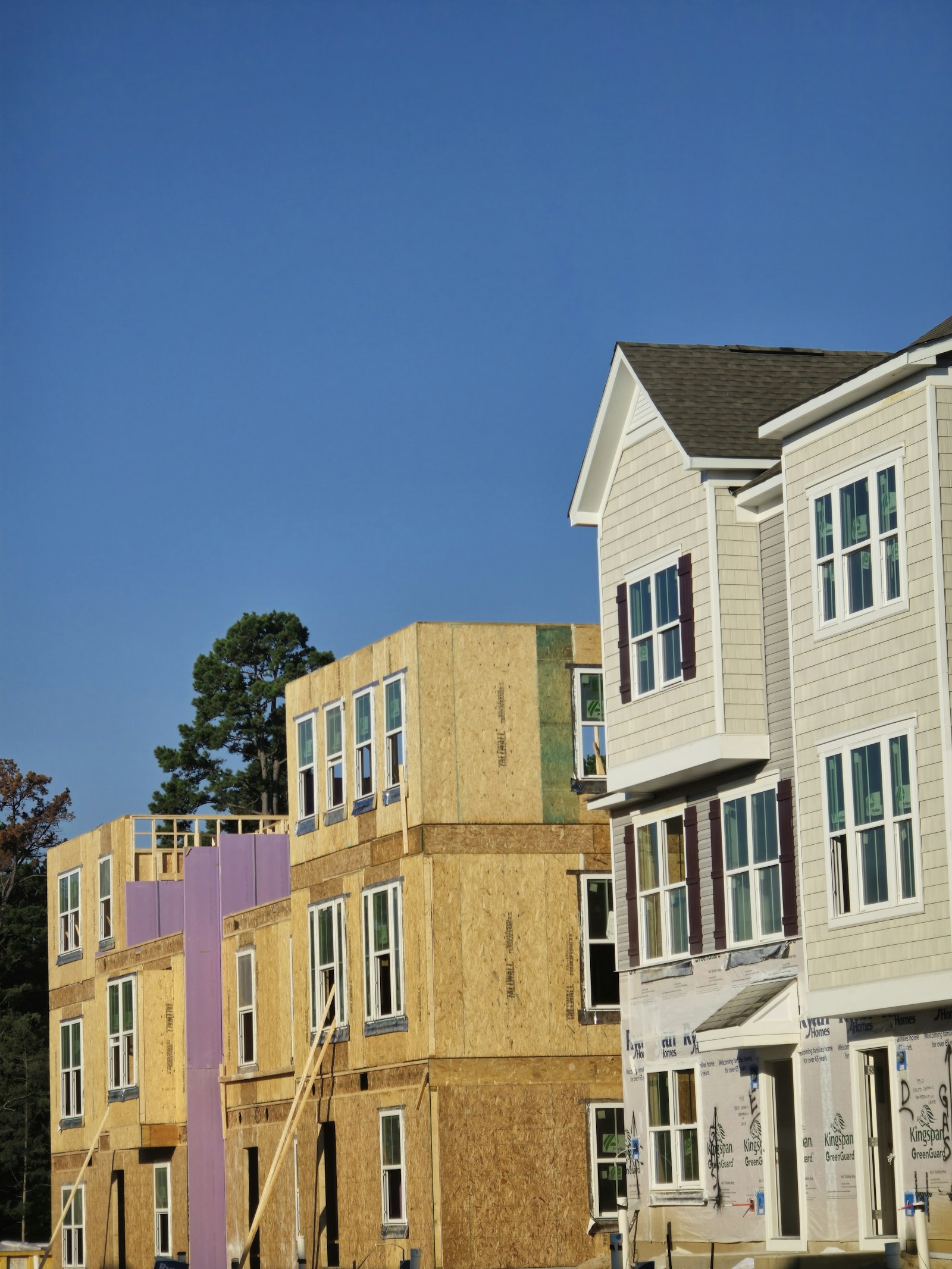
Image context: the cover uses a real Unsplash photograph of townhouses under construction next to finished homes. That is the right visual anchor because this finance story is about a live production machine: builders are balancing starts, spec inventory, incentives, and closings in the same physical neighborhood rather than reacting to housing demand in the abstract.[6]
Priced vs new
The market has already absorbed the first-order lesson: builders can still take share when existing homeowners stay locked into old mortgages. If resale inventory remains lean, national builders can keep moving buyers toward new homes by subsidizing the monthly payment instead of waiting for headline mortgage rates to fall all the way back to pandemic-era levels.[1][2]
The newer question is what that volume costs. Lennar gave the clearest disclosure in March. First-quarter 2026 new orders rose 1% to 18,515 homes, but the company said the average sales price was only $374,000, supported by approximately 14% in incentives, while gross margin on home sales fell to 15.2%.[3] D.R. Horton delivered the same message in a different register. Fiscal second-quarter 2026 net sales orders rose 11% to 24,992 homes, yet homebuilding pre-tax profit margin was 10.7%, and management explicitly said incentives should remain elevated through fiscal 2026.[4]
That is the gap. Orders are proving that affordability tools work. The rerate now needs proof that the subsidy bill is cyclical rather than structural.
Base case: orders keep moving, but margins stay capped
The base case is not a housing collapse. It is a volume-holds, margin-lags outcome. Mortgage rates in the low-6% area help enough buyers qualify, resale inventory remains too thin to flood the market, and national builders keep absorbing demand with mortgage buydowns, smaller floorplans, spec homes, and price discipline.[1][2][3][4]
In that branch, the order book can still look healthy. D.R. Horton's second quarter showed why. Orders grew double digits, the company reduced unsold completed homes by 35% from a year earlier, and it ended the period with 5,500 completed unsold homes, only 800 of which had been finished for more than six months.[4] That is not distress inventory. It is controlled supply moving through a cautious market.
But the base case is also a reminder that builders are manufacturing affordability out of their own P&L. Lennar's quarter was explicit: incentives and base-price adjustments were necessary to sustain volume, even while cycle time improved to 122 days and inventory turn improved to 2.5x.[3] Faster turns help, yet they do not fully offset lower revenue per home when incentives remain this large. Under this base case, investors keep getting decent orders and decent cash generation, but not the kind of clean margin rebound that deserves a larger multiple.
Upside case: lower rates turn incentives into a bridge, not a permanent habit
The bullish branch is not hard to imagine. If mortgage rates keep drifting lower from here and the resale market remains supply-constrained, builders may be able to hold absorptions while reducing the size of the buydown package.[1][2] That is the cleanest operating leverage in the group: keep the production machine full, but claw back some of the affordability subsidy.
This is the branch where recent order resilience matters most. D.R. Horton updated fiscal 2026 guidance to $33.5 billion to $34.5 billion of consolidated revenue and 86,000 to 87,500 homebuilding closings.[4] Lennar, meanwhile, guided second-quarter gross margin on home sales to 15.5% to 16.0%.[3] Those numbers do not prove a margin recovery, but they define the path. If rates stay friendlier and incentives start fading even modestly, builders can move from defending volume to rebuilding earnings quality.
The strongest counterweight sits here. Freddie Mac said the latest rate decline came with a pickup in purchase applications and refinance activity.[1] If that momentum persists into late spring, the market may decide that the incentive peak is already behind the group.
Downside case: incentives stop being tactical and start becoming the business model
The risk branch is narrower and more dangerous. If mortgage rates stall or re-rise, and if consumer caution deepens faster than resale inventory loosens, builders can still keep orders alive only by raising the incentive bill again.[1][2][3][4] At that point, the business is no longer using buydowns as a bridge across an affordability gap. It is using them as a recurring substitute for organic demand repair.
That would matter because homebuilder earnings do not break all at once. They erode through mix, price, and margin quality. Lennar has already shown the shape of that pressure: orders can stabilize while gross margin remains far below the prior year's level.[3] D.R. Horton has shown the corresponding boundary: volume can improve while management still warns that incentives remain elevated.[4] In the downside branch, investors keep seeing houses move, but each incremental closing does less work for returns.
Six numeric anchors
- Mortgage rate backdrop: the 30-year fixed mortgage averaged 6.23% on April 23, 2026, versus 6.81% a year earlier.[1]
- Resale constraint: March 2026 existing-home sales ran at 3.98 million annualized, with 4.1 months of inventory and a median price of $408,800.[2]
- Lennar's affordability subsidy: first-quarter 2026 new orders rose 1% to 18,515 homes, average sales price was $374,000, and incentives were about 14%.[3]
- Lennar's margin ceiling: gross margin on home sales was 15.2%, with second-quarter guidance only 15.5% to 16.0%.[3]
- D.R. Horton's order strength: second-quarter fiscal 2026 net sales orders rose 11% to 24,992 homes with an order value of $9.2 billion.[4]
- D.R. Horton's inventory discipline: homebuilding pre-tax margin was 10.7%, while unsold completed homes fell 35% year over year.[4]
Together, these anchors support one conclusion: the spring 2026 housing trade is an incentive-efficiency trade, not a simple rate beta.
Falsifier
This cautious scenario analysis is wrong if the next several housing prints show a cleaner combination than the market currently has. Concretely, if mortgage rates stay around the low-6% area, existing-home inventory remains lean, and builders report stable or improving orders while incentives step down and gross margins improve, then the subsidy burden will have proved more temporary than this framework assumes.[1][2][3][4]
Watchlist
- April 29, 2026: New Residential Construction release. The question is whether starts and permits still say builders are willing to keep feeding supply into the spring selling season.[5]
- May 5, 2026: New Residential Sales release. Watch whether new-home months' supply and pricing show absorption staying healthy without a fresh giveaway cycle.[5]
- May 11, 2026: NAR existing-home sales for April. If resale inventory stays tight, builders keep their share advantage; if listings loosen materially, incentive competition gets harder.[2]
- April 30, 2026: next weekly Freddie Mac PMMS update. Another leg lower in mortgage rates would strengthen the upside case; a reversal higher would raise the odds that incentives stay embedded.[1]
Takeaway
Homebuilders still have one real advantage in this market: they can manufacture affordability faster than the resale market can. That is enough to keep orders alive. It is not yet enough to justify a clean rerating.
The real question for the next few months is whether the buydown bill begins to fade. If it does, builders can turn volume resilience into better margins and better earnings quality. If it does not, the sector remains investable, but on a narrower and more operationally demanding thesis.
Sources
- Freddie Mac, "Mortgage Rates" - Primary Mortgage Market Survey update for April 23, 2026, including the 6.23% 30-year fixed rate and year-ago comparison.
- National Association of REALTORS®, "Existing-Home Sales" - March 2026 sales, median price, inventory snapshot, and next release date.
- Lennar, "Lennar Reports First Quarter 2026 Results" (March 12, 2026).
- D.R. Horton, "D.R. Horton, Inc., America's Builder, Reports Fiscal 2026 Second Quarter Earnings and Declares Quarterly Dividend of $0.45 Per Share" (April 21, 2026).
- U.S. Census Bureau, "Survey of Construction Release Schedule" - release dates for New Residential Construction and New Residential Sales in April and May 2026.
- Kranthi Marneni, "A row of houses under construction in a residential area" (published November 26, 2024) on Unsplash.