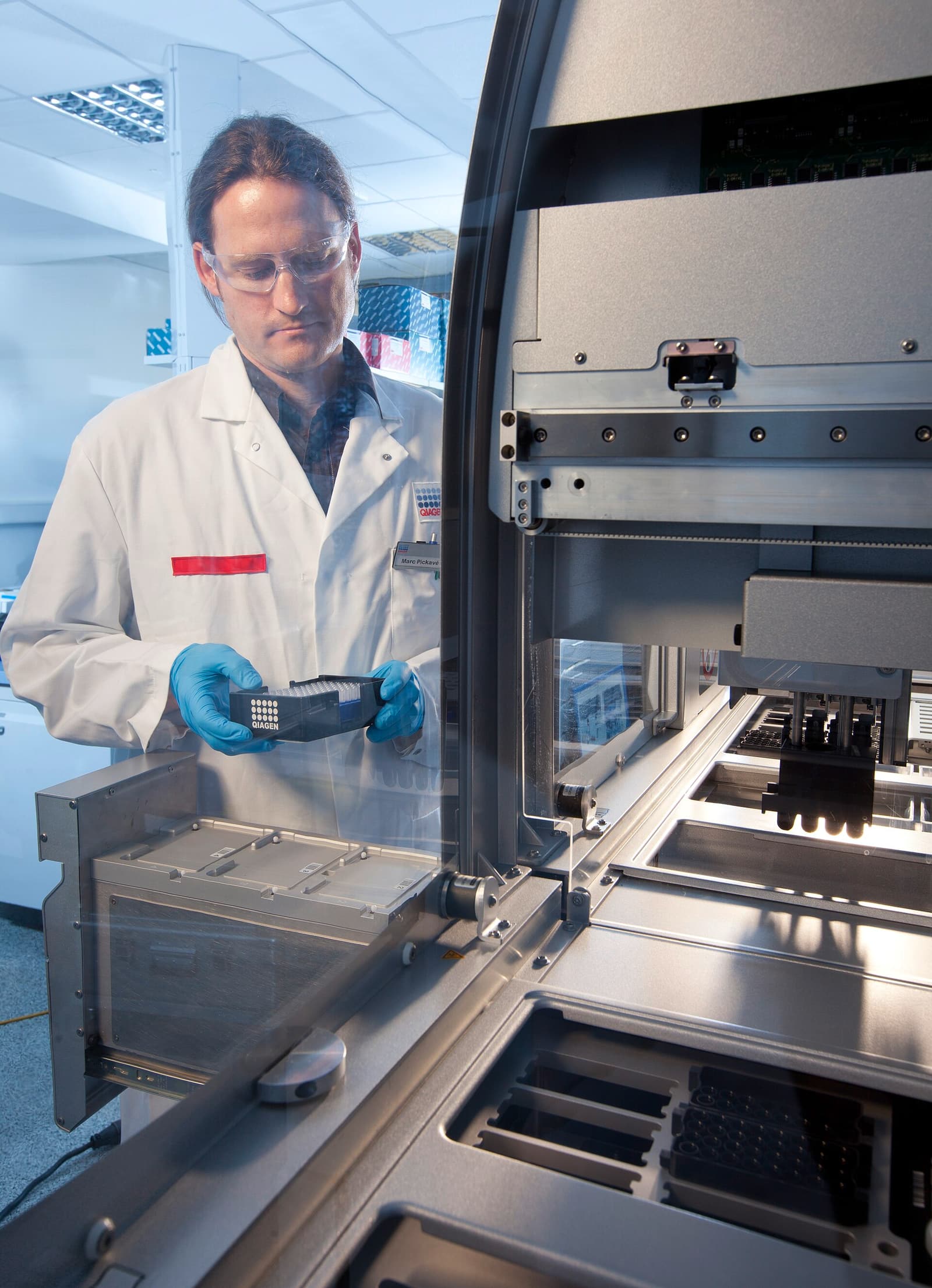
Priced: contract research organizations are being treated as if the long biotech funding freeze has started to thaw. New: first-quarter 2026 data support a recovery, but not a clean one; bookings, cancellations, and backlog conversion matter more than the word "recovery."
The CRO trade is easy to narrate and harder to underwrite. When venture capital reopens, small and midsize drug developers can fund trials again. Those trials need site start-up, monitoring, patient recruitment, biomarker work, data management, safety reporting, and regulatory support. That pushes work toward IQVIA, ICON, Medpace, and peers. The problem is that a funding headline does not become revenue immediately. It has to pass through signed awards, backlog, cancellation risk, trial activation, enrollment, and margin capture.
That is why this is not a generic biotech-beta call. It is a conversion call.
IQVIA's first quarter shows the constructive side. R&D Solutions revenue rose 6.2% to $2.397 billion, contracted backlog reached $34.2 billion, and next-12-month backlog conversion was expected to be $8.9 billion, up 7.6% year over year. The same release put first-quarter R&D net new bookings at $2.5 billion, with a 1.04x book-to-bill ratio and 1.11x on a trailing-12-month basis.[1] Those are not euphoric numbers, but they are usable numbers: backlog is large, conversion is positive, and orders are still above current revenue.
ICON's print is more dramatic, and therefore more complicated. The company reported $2.034 billion of first-quarter revenue, up only 0.9% year over year, while adjusted EBITDA fell 20.2% to $317.7 million, or 15.6% of revenue. Yet net business wins were $2.88 billion, net book-to-bill was 1.42x, and backlog rose to $22.7 billion. Gross bookings of $3.263 billion came with $383 million of cancellations.[2] That combination says demand can be improving before income-statement quality improves. It also warns that investors should not pay the same multiple for backlog if it arrives with lower utilization, poorer mix, or more cancellation risk.
Medpace gives the other side of the mosaic. First-quarter revenue jumped 26.5% to $706.6 million and EBITDA margin was 21.1%, but net new business awards were $618.4 million, producing a 0.88x net book-to-bill. Backlog still grew 2.9% to $2.929 billion.[3] That is the opposite signal from ICON: current revenue and margins looked strong, but orders did not replenish the quarter's revenue at a one-for-one rate.
The funding backdrop is selective rather than broad. UK biotech equity financing rose to 552 million pounds in the first quarter of 2026 from 466 million pounds in the prior quarter, helped by venture capital of 516 million pounds, up 17% sequentially. Deal activity also improved, with 25 venture transactions. But the same industry update noted that first-quarter funding was still below the 924 million pounds raised in the first quarter of 2025 and that there were no UK biotech IPOs in the quarter.[4] Private capital may be loosening; public-market validation has not clearly returned.
The mechanism matters because CROs are operating businesses, not funding tickers. A sponsor can raise money and still delay a program. A backlog can be signed and then cancelled. A large award can start with low-margin pass-through work before higher-margin services appear. A clinical trial can be booked and then run into slow enrollment. The equity story therefore has to clear four hurdles: book-to-bill above 1.0x, manageable cancellations, visible conversion of backlog into service revenue, and margins that prove the work is being staffed and priced well.
On that score, the sector is improving but not de-risked. IQVIA's R&D backlog and conversion outlook give the cleanest large-company bridge. ICON's 1.42x book-to-bill is the strongest demand signal, but its margin pressure keeps the quality question open. Medpace's growth and margin profile are attractive, but a 0.88x book-to-bill makes the next awards update important. The UK financing data support a thaw, not a boom.
The falsifier is straightforward. If the next two quarterly reporting rounds show book-to-bill slipping below 1.0x across the group, cancellations rising, IQVIA's next-12-month backlog conversion flattening, ICON unable to stabilize margins despite strong wins, and biotech public markets still shut, then the market will have been paying for a funding recovery before the revenue bridge was actually in place.
For now, the cleaner conclusion is narrower. CROs deserve attention because the leading indicators have stopped looking frozen. They do not yet deserve a free pass, because 2026 is about whether those leading indicators become revenue with acceptable margin.
The watchlist is practical. First, watch ICON's next update for whether the 1.42x book-to-bill converts without further EBITDA pressure. Second, watch Medpace's next awards number for a move back above 1.0x. Third, watch IQVIA's R&D backlog conversion, not just total backlog. Fourth, watch biotech financing mix: venture rounds help clinical activity, but a reopened IPO and follow-on market would make sponsor funding more durable.