Coffee has already priced some relief. The International Coffee Organization's April report shows the composite coffee price retreating 2.7% from March to 266.24 US cents per pound as traders weighed a better global supply outlook against higher freight, fuel, and fertilizer costs.[1] The new question is narrower and more tradable: can Brazil's coming crop refill the exchange and roaster buffer fast enough to matter?
That distinction is the whole setup. A record or near-record crop forecast is bearish only if it becomes timely export flow, certified inventory, and lower basis risk. If it remains on farms, inside domestic financing channels, or delayed by weather and currency incentives, coffee futures can stay stubbornly tight even while supply headlines look friendlier.
The Contract Is A Delivery Problem
ICE Coffee C is not a generic bet on cafe demand. It is a physically settled Arabica contract for 37,500 pounds of exchange-grade green coffee, deliverable from specified origins into licensed warehouses in the United States and Europe, with quality testing and origin-based premiums or discounts.[3] Brazil is deliverable at a discount, while Colombia, Costa Rica, and Kenya carry premiums.[3] That basis structure matters because the futures price is not only asking, "Will the world grow more coffee?" It is asking, "Which coffee can satisfy the contract, at what location, quality, and discount?"
That is why the low-stock detail matters more than a casual reader might expect. ICO reported that London certified Robusta stocks closed April at 0.65 million bags, while U.S. certified Arabica stocks fell to 0.55 million bags, a 10.1% month-over-month decline.[1] It also noted that current certified stock levels equaled only 0.22 months of EU and U.S. consumption, compared with 0.91 months during 2010-2021.[1] In a market like that, a better crop outlook can cap prices, but it may not immediately remove the inventory premium.
Five Numeric Anchors
- 266.24 cents/lb: ICO's April composite price, down 2.7% from March, shows that better supply expectations have already entered the price.[1]
- 178.8 million bags: USDA FAS forecasts record world coffee production for 2025/26, up 3.5 million bags from the prior year.[2]
- 173.9 million bags: USDA also forecasts record consumption, which keeps the balance from looking loose despite higher production.[2]
- 20.1 million bags: USDA expects ending stocks to fall for a fifth consecutive year, even in the record-production setup.[2]
- 71.9 million bags: USDA's Brazil attache report forecasts Brazil's 2026/27 crop at this level, up 14% from the 2025/26 estimate.[4]
Put together, the anchors argue against both extremes. Coffee is not in a clean shortage story if Brazil delivers the forecast. But it is also not in a clean glut story while certified stocks are thin and world consumption keeps rising.
Base Case: Supply Improves, But The Buffer Rebuild Is Slow
The base case is a capped but choppy market. USDA's world balance already contains the bearish headline: record 2025/26 production, higher bean exports, Vietnam recovering to 30.8 million bags, and Indonesia Robusta output rising on better yields.[2] ICO's April price retreat suggests the market has noticed.[1]
But the same USDA report keeps the bull case alive by forecasting record consumption and another drawdown in ending stocks.[2] That is a poor setup for a quick return to complacency. A market can have more production and still feel tight if the extra bags arrive in the wrong grade, the wrong port, or too late for roasters and exchange shorts that need nearby cover.
Brazil is the swing factor. The 2026/27 Brazil report is clearly more constructive: total production is forecast at 71.9 million bags, with Arabica up 25% to 47.5 million bags on the positive biennial cycle, expanded area, better crop management, and more favorable weather.[4] That is the relief valve. If those beans move smoothly into export channels, nearby futures should lose scarcity premium.
The catch is that the same Brazil report says short-term Arabica availability is low, producers are holding back on sales, and the stronger Brazilian real reduces exporters' incentive to sell stocks.[4] That does not cancel the bigger-crop thesis. It changes the timing. The base case is therefore not "coffee crashes on Brazil." It is "coffee rallies fade until certified stocks and Brazil exports prove the buffer is genuinely rebuilding."
Upside Case: Inventory Stays Tight While Costs Stay Noisy
The upside case starts with inventories, not romance about coffee scarcity. ICO says certified stocks remain historically very low, and the April draw in U.S. Arabica stocks happened even as the broader supply outlook improved.[1] If the Brazil harvest is slower to commercialize, if farmers keep inventory off the market, or if quality and port logistics do not match the futures contract's delivery needs, the market can keep paying for nearby optionality.
There is also a cost channel. ICO's April report framed coffee as caught between improved supply and a logistics-cost shock: the report cited a sharp rise in Brent crude, freight, and urea prices between late February and late April.[1] The important finance point is not that coffee ships through one chokepoint. It is that growers, exporters, roasters, and warehouses all face working-capital pressure when fuel, fertilizer, and freight costs jump together. That can delay selling, raise carrying costs, and make physical coffee less willing to move at a headline futures price.
In this scenario, the market's April decline was a partial reset, not a finished repricing. The trigger would be visible: certified Arabica stocks fail to recover, Brazil export sales lag the crop forecast, and the New York-London spread stays wide enough to signal that Arabica deliverability is still the scarce piece.
Downside Case: Brazil Converts Forecast Into Flow
The downside case is straightforward and deserves respect. Brazil's 2026/27 production forecast is large enough to change the conversation if it shows up cleanly. A 47.5 million-bag Arabica crop would represent a sharp rebound from the prior cycle and would hit precisely the side of the market that Coffee C prices most directly.[4] If exporters sell, warehouses receive beans, and certified stocks rise, the low-inventory premium should compress.
Vietnam and Indonesia also make the bearish setup more credible on the Robusta side. USDA sees Vietnam production recovering and Indonesia Robusta output increasing, while ICO reported that Robusta green-bean exports were up 24.0% in March 2026 from a year earlier.[1][2] Cheaper Robusta does not replace every Arabica use, but it can relieve blended-product pressure and reduce the panic bid for lower-end coffee inputs.
The clean downside trigger is therefore not just a forecast update. It is a chain: Brazil harvest confirmation, farmer selling, export acceleration, certified stock rebuilding, and a narrower Arabica premium. If that chain forms, the market stops paying for "what if the coffee is not there?" and starts paying for "how much surplus needs to clear?"
Counterweight
The strongest pushback to a bearish Brazil-crop view is that production forecasts are not inventory. Coffee trees can carry a big crop while the market still fights over grade, timing, financing, and currency incentives. Brazil's own attache report points to low short-term Arabica availability and producer reluctance to sell while discussing the stronger real's effect on exporter margins.[4] That is enough to keep the downside case conditional.
The strongest pushback to a bullish inventory view is that supply relief is real. USDA's global production number is record-high, and Brazil's next crop forecast is meaningfully larger.[2][4] A long scarcity thesis that ignores that supply response is just fighting the calendar.
Falsifier
The thesis fails if Brazil's 2026/27 crop converts into exports and certified stocks quickly. Specifically, if USDA's next global update confirms higher production while ICO or exchange data show sustained rebuilding in U.S. Arabica and London Robusta certified stocks, then "low inventory" stops being the dominant explanation. At that point, the better view is that coffee futures have moved from scarcity pricing into surplus-clearing.
Watchlist
- USDA FAS coffee release on July 22, 2026: USDA says the next Coffee: World Markets and Trade update is scheduled for this date, making it the cleanest official check on the global balance.[2]
- Brazil export and farmer-selling signals: the Brazil report's tension is larger crop versus low short-term availability and producer withholding; export data decide which side is winning.[4]
- Certified stocks: ICO's low-stock figures are the live stress gauge. Rebuilding stocks would matter more than another optimistic crop headline.[1]
- New York-London arbitrage: ICO reported the April futures-market arbitrage at 133.99 cents/lb and a New York-to-London ratio of 1.89; persistent widening would keep pointing to Arabica-specific tightness.[1]
The trade frame is not "coffee is expensive because people drink coffee." It is more mechanical. Futures have started to price a better supply year, but the market still needs proof that Brazil's crop becomes deliverable inventory. Until that proof arrives, the inventory gate matters more than the harvest headline.
Sources
- International Coffee Organization, Coffee Market Report - April 2026 - composite prices, futures prices, certified stocks, exports, and logistics-cost context.
- USDA Foreign Agricultural Service, Coffee: World Markets and Trade (December 2025) - world production, consumption, exports, ending stocks, and next release date.
- ICE Futures U.S., "Coffee C Futures" - contract size, physical settlement, deliverable origins, quality basis, and delivery locations.
- USDA Foreign Agricultural Service, Brazil: Coffee Annual (BR2026-0025, June 2026) - Brazil 2026/27 production forecast, Arabica rebound, stocks, currency, and farmer-selling context.
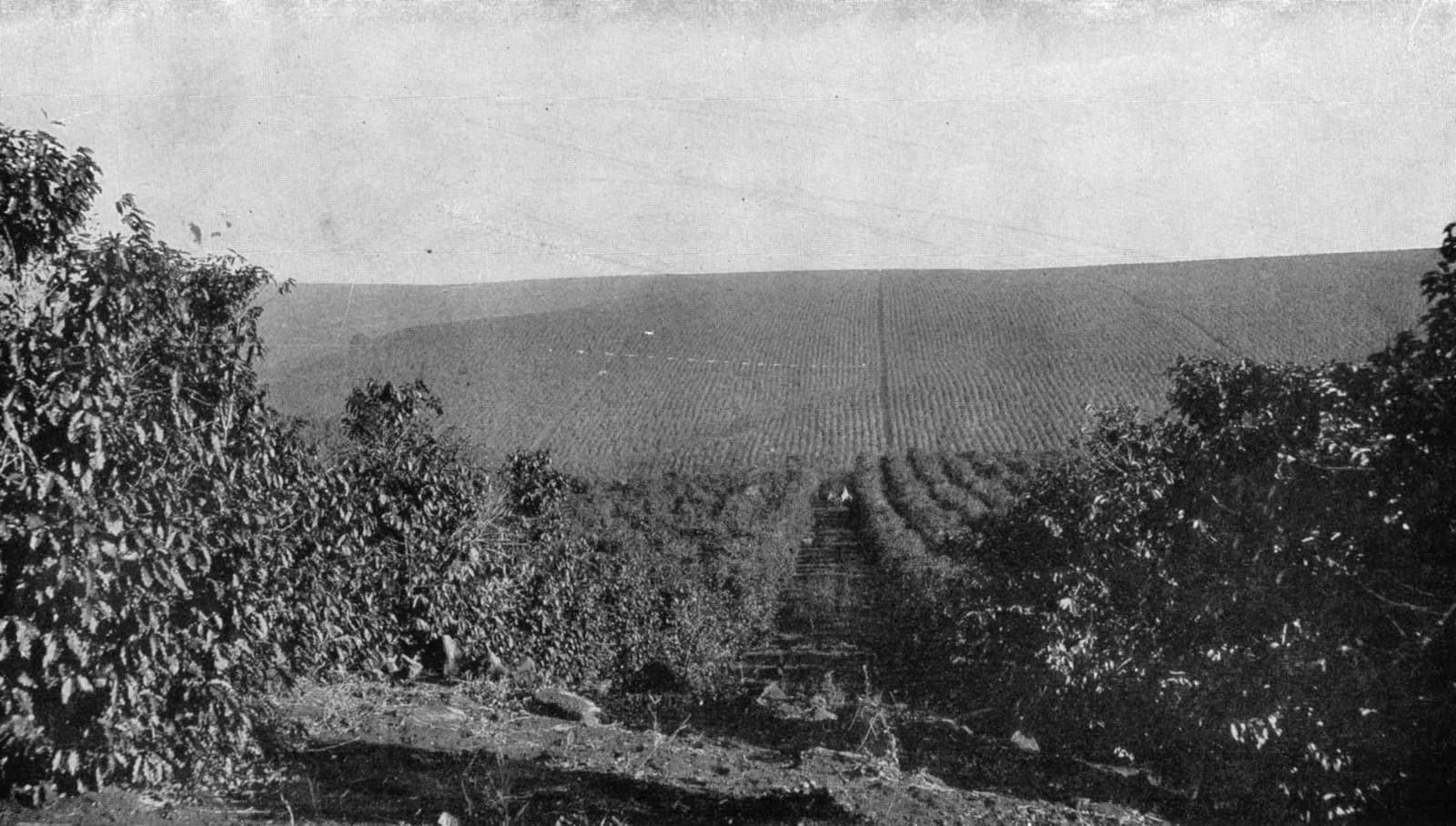
- Wikimedia Commons, "Coffee plantation in Brazil.jpg" - archival photographic source image for the article cover.