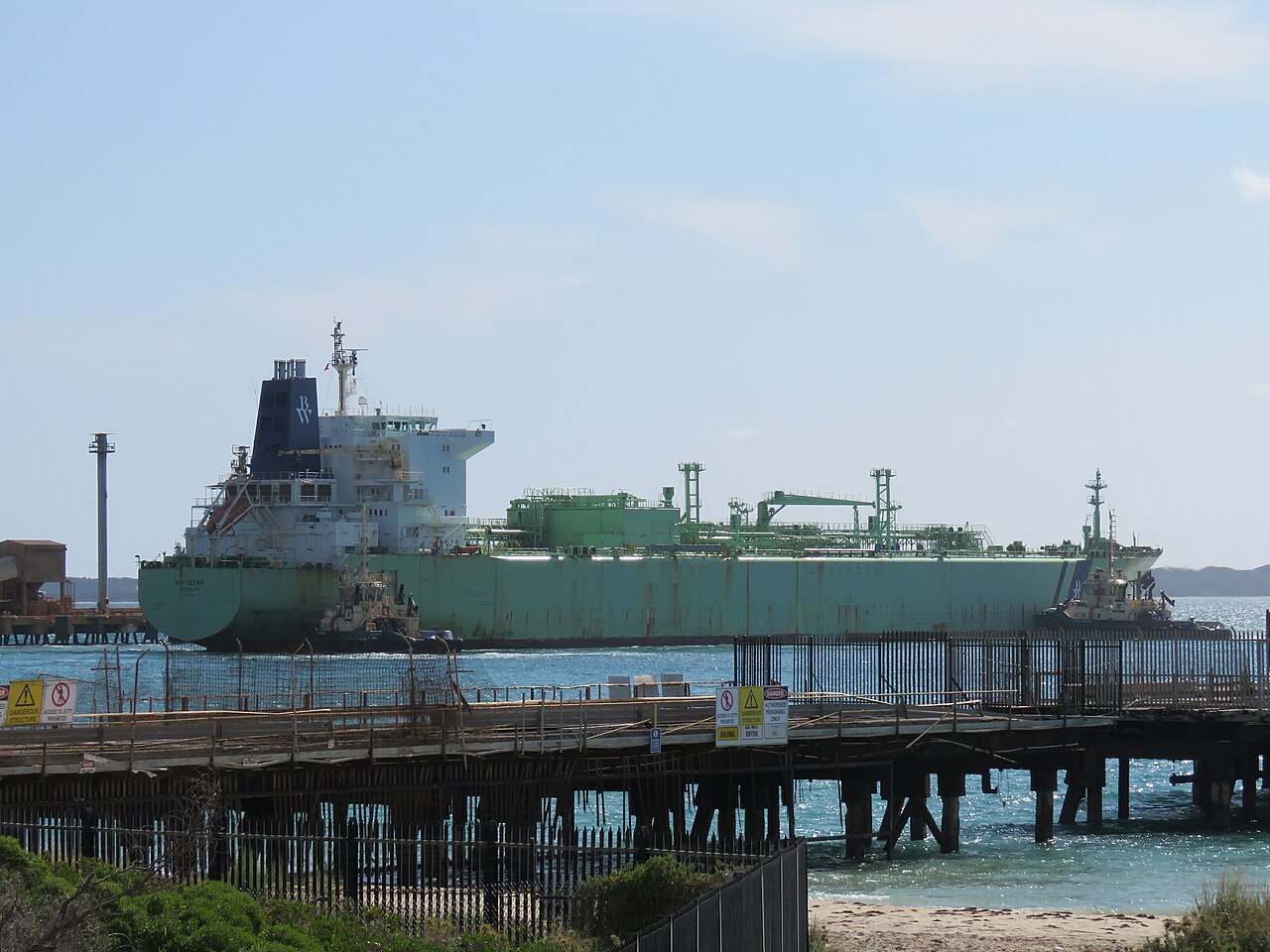
Ethane exports look like another shale abundance trade until the molecule reaches the water. The priced part is familiar: the United States has cheap natural gas liquids, petrochemical demand wants ethylene feedstock, and shale basins keep producing more recoverable ethane than the domestic market can absorb. The newer part is more specific. The marginal value is moving toward export docks, refrigerated tanks, vessel availability, and policy friction on ships.
That makes ethane different from a simple natural-gas price call. EIA's October 2025 Short-Term Energy Outlook framing says U.S. ethane net exports were forecast to rise 14% in 2025 and another 16% in 2026, with the United States importing no ethane.[1] The financial question is not whether the U.S. can produce ethane. It is whether the export chain can keep converting cheap domestic molecules into higher-value overseas feedstock without losing the spread to congestion, petrochemical weakness, or shipping tolls.
The Mechanism
Ethane starts as an associated product of natural gas processing. EIA's 2024 record-year review put U.S. ethane production at 2.6 million barrels per day in 2023, domestic consumption at 2.1 million barrels per day, and exports at a record 471,000 barrels per day.[2] That already describes a surplus economy. If ethane is cheap enough relative to natural gas, processors recover it; if it is not, more can be rejected into the gas stream. The export option is what makes recovery more valuable.
The bottleneck is physical. Ethane must be chilled, stored, loaded, and carried in specialized ships. EIA notes that Energy Transfer's Nederland project added a 250,000 b/d ethane-or-propane export option in 2025, while Enterprise's Neches River terminal started with 120,000 b/d and was expected to add another 180,000 b/d in early 2026.[1] Those are not soft signals. They are the capacity steps that decide whether upstream abundance becomes midstream toll revenue.
Energy Transfer's own Nederland factsheet makes the point from the asset side. The terminal has about 33 million barrels of total storage, including ethane tankage, and can export roughly 700,000 b/d of NGLs; its description of VLEC loading rates above 45,000 barrels per hour shows why the dock, not only the pipeline, sets the commercial tempo.[3][4]
Five Numeric Anchors
- 14% and 16%: EIA's forecast growth rates for U.S. ethane net exports in 2025 and 2026.[1]
- 2.6 million b/d: U.S. ethane production in 2023, before the latest export-capacity additions.[2]
- 471,000 b/d: record U.S. ethane exports in 2023, with China taking 45% that year.[2]
- 250,000 b/d: Nederland's ethane-or-propane export increment cited by EIA for the second quarter of 2025.[1]
- 1.5 million barrels: the capacity EIA cites for Ultra Large Ethane Carriers on intercontinental routes.[1]
Those anchors create the thesis. If export growth clears smoothly, U.S. ethane remains a monetization story for integrated midstream systems and petrochemical logistics. If the chain stalls, low domestic ethane can stay low, but the rents accrue only to assets that already control pipes, chilling, storage, docks, and vessel contracts.
Why Demand Is More Concentrated Than It Looks
The bullish story depends heavily on Asia, especially China. EIA says China accounted for 47% of U.S. ethane exports in 2024, and it links the next leg of demand to Chinese cracker conversions and new ethylene capacity.[1] That is powerful because ethane competes with naphtha and propane as a petrochemical feedstock. When U.S. ethane is cheap, a cracker designed or converted to take it can gain a feedstock advantage.
The concentration is also the risk. EIA explicitly flags slowing Chinese demand growth in 2026 because of weaker product margins and oversupply in ethylene derivatives.[1] That matters because an export dock is not a generic growth asset if the buyer set narrows. A midstream company can have the tank and dock ready, but if derivative margins compress, the foreign cracker has less reason to bid aggressively for U.S. feedstock.
Europe gives the trade a second lane, but not enough to erase China risk. EIA points to INEOS Project One in Antwerp, with about 80,000 b/d of ethane capacity slated for the third quarter of 2026.[1] That creates useful diversification, but it is not the same as a broad global bid. Ethane remains a specialized waterborne commodity whose demand depends on a relatively small set of crackers, vessels, and long-term commercial relationships.
The Shipping Toll Is Now Part Of The Spread
The new wrinkle is policy. USTR's 2025 shipbuilding action introduced phased fees on Chinese vessel owners and operators and on operators of Chinese-built ships, with first-phase rates starting after a 180-day zero-fee period.[5] EIA connects that policy to the ethane trade because some ethane-capable ships are Chinese-built, and because larger ULECs are part of the capacity story.[1]
This does not mean every cargo becomes uneconomic. USTR says fees are per U.S. voyage, not per port call, and are not stacked.[5] But the fee regime changes the optionality. If a ship is the wrong build, ownership, or charter category, the delivered cost of U.S. ethane can shift even when the molecule price has not moved. That is exactly the kind of second-order cost that commodity screens miss.
For investors, the lesson is to separate molecule price from logistics franchise. A cheap ethane print at Mont Belvieu is not automatically bearish for the exporters if the spread to overseas feedstock remains wide and docks are scarce. Conversely, a constructive demand forecast can still disappoint if vessel cost, terminal congestion, or buyer margins absorb the arbitrage.
The Counterweight
The strongest bearish argument is petrochemical overcapacity. Ethane's end market is not energy consumption in the ordinary sense; it is plastics, resins, synthetic rubber, packaging, apparel, and industrial materials through ethylene chains.[1][3] If derivative margins weaken, crackers can lower operating rates, delay conversions, or choose alternative feedstocks. That would leave U.S. producers with plenty of ethane but less export pull.
There is also a domestic release valve. EIA notes that when ethane prices are low relative to natural gas prices, plant operators can leave more ethane in the natural gas stream.[2] That makes ethane less rigid than crude oil. The system can reject some volume rather than force every barrel-equivalent through the export chain. The same flexibility that protects upstream operations can cap the urgency of any export squeeze.
Falsifier
The falsifier is a demand-side failure that shows up before the new dock capacity earns its toll. If China-linked cracker margins stay weak, European start-up demand slips, and U.S. exports fail to grow despite Nederland and Neches River capacity, then the thesis breaks. In that case, ethane remains a cheap shale byproduct with optional export upside, not a tight logistics franchise.
Watchlist
- Monthly EIA ethane export volumes: export growth should validate the 2025-2026 capacity step rather than remain a forecast artifact.[1][2]
- China petrochemical margins and cracker utilization: China's share of U.S. exports makes buyer economics the key demand gate.[1]
- Neches River second-phase timing: the extra 180,000 b/d matters because it turns one terminal start-up into a larger export-capacity reset.[1]
- USTR shipping-fee implementation and exemptions: the delivered-cost spread depends on whether ethane carriers fall into affected ownership, build, or charter categories.[5]
Ethane exports are therefore a midstream finance story with a petrochemical demand tail. The U.S. can make the molecule. The scarce part is the conversion system: recover it, chill it, store it, load it, sail it, and deliver it into crackers that still want the feedstock advantage after freight and policy costs.
Sources
- U.S. Energy Information Administration, "U.S. ethane exports are expected to grow through 2026" (October 14, 2025) — export-growth forecast, terminal additions, China share, INEOS Project One, ship capacity, and policy context.
- U.S. Energy Information Administration, "U.S. ethane production, consumption, and exports set new records again in 2023" (April 3, 2024) — production, consumption, export volumes, destinations, pricing behavior, and ethane rejection context.
- Energy Transfer, Nederland Terminal factsheet (PDF, updated 2025) — storage capacity, NGL export capacity, VLEC loading rates, and wellhead-to-water chain description.
- Energy Transfer, "Natural Gas Liquids" — company overview of NGL pipeline, fractionation, storage, and export infrastructure.
- Office of the United States Trade Representative, "Fact Sheet: USTR Takes Action to Bolster U.S. Shipbuilding" (April 2025) — phased fees, voyage treatment, non-stacking rule, and shipbuilding policy rationale.
- Calistemon, "Mooring of the LPG Tanker BW Cedar at the Kwinana Bulk Terminal, September 2020 19." Wikimedia Commons (photograph, September 28, 2020) — source image for the article photograph.