Tower REITs keep getting collapsed into one shorthand trade: own the long-duration cash flows, wait for lower rates, and let contractual escalators do the rest. That reading still catches part of the truth and misses the newer argument. Priced is that these assets remain difficult to replicate, carrier networks still need them, and the lease escalator still puts a floor under revenue. New is that the sector is no longer being carried by a single obvious 5G buildout burst. The next rerate depends on whether tower owners can keep churn contained, simplify the portfolio story, and translate leasing activity into cleaner reported cash flow.[1][2][3][4]
That distinction matters because the business has quietly changed character. A few years ago, investors could dream on a broad amendment supercycle. Now the sector reads more like infrastructure with operating leverage: steady escalators, recurring lease amendments, selective new equipment, and a much harsher penalty for churn, accounting drag, or strategic clutter. The tower floor is still there. The premium now needs proof at a narrower, more operational level.[1][2][3]
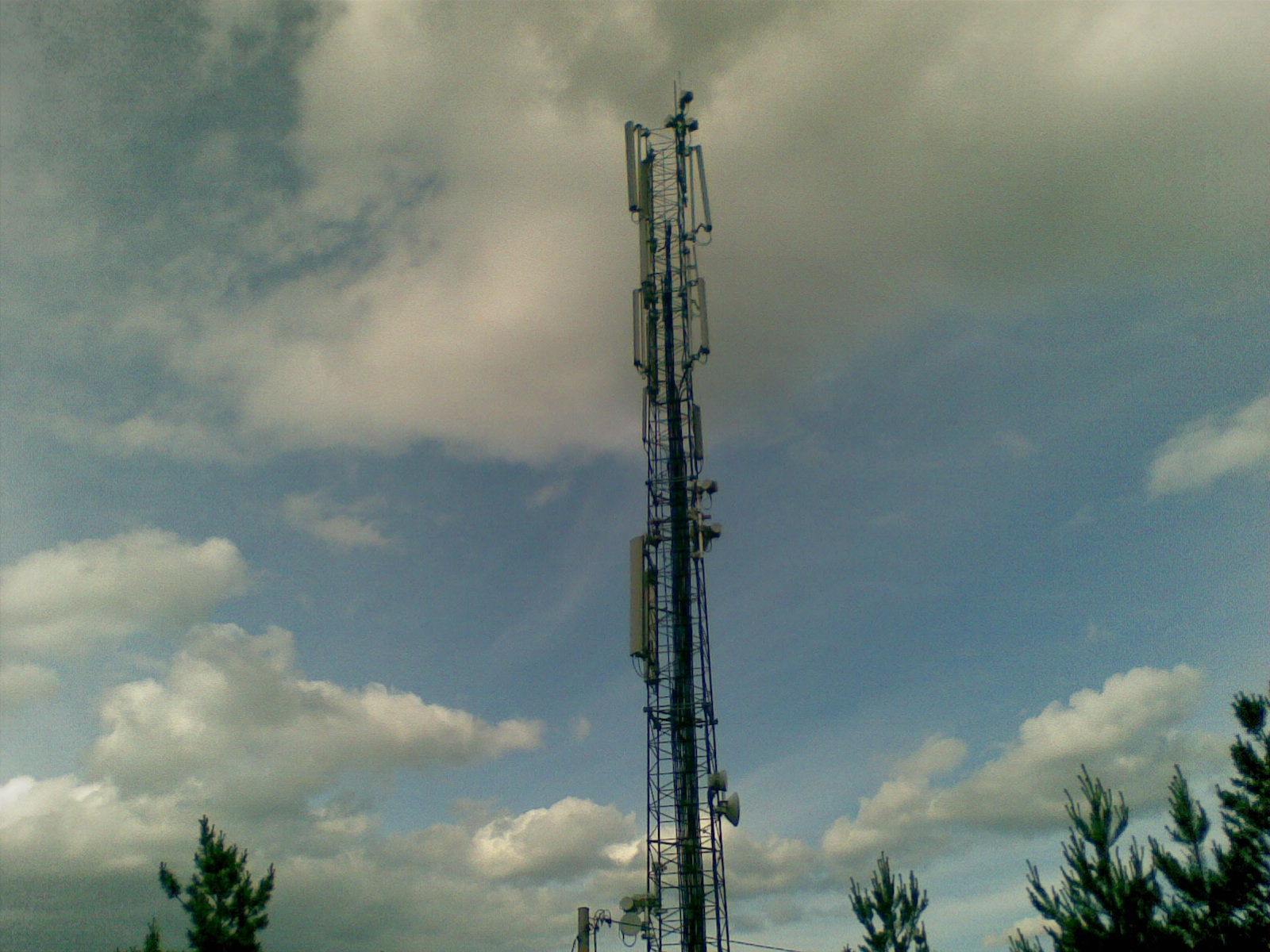
Image context: the cover uses a real Wikimedia Commons photograph of a cellular tower rather than a telecom graphic. That is the right visual because the finance debate is still about actual leased steel in specific places: how much extra equipment tenants add, how long they stay, and how much contractual growth survives cancellations and reporting noise.[5]
The contractual floor is still real
The easiest way to see the floor is to start with the cash-generation metrics themselves. American Tower's 2024 results showed $4.934 billion of AFFO attributable to common stockholders, while its U.S. and Canada segment posted 5.3% organic tenant-billings growth.[1] SBA Communications, meanwhile, reported $2.527 billion of site-leasing revenue in 2024, 81.3% tower cash-flow margins, 71.0% adjusted EBITDA margins, and $13.37 of AFFO per share.[4] Those are not the numbers of a business whose economics have broken.
American Tower's U.S./Canada detail is especially useful because it shows what still works. On a prior-year tenant-billings base of $4.416 billion, the company got $230 million from colocations and amendments and another $132 million from escalations, while cancellations took away $119 million.[1] That is a healthy leasing engine, but it is also a useful warning: cancellations are now large enough to eat a meaningful share of the contractual lift if operators lose discipline.
Crown Castle tells the same story from a more reorganized angle. In its full-year 2024 release, the company said it had delivered 4.5% tower organic growth and agreed to sell its fiber segment for $8.5 billion, aiming to emerge as the only pure-play, publicly traded U.S. tower company with roughly 40,000 towers.[2] The company's language matters here. Management is no longer trying to sell investors on a blended fiber-plus-towers complexity premium. It is trying to re-establish the simplicity premium of tower cash flows themselves.[2]
What changed after the big 5G buildout push
The important post-buildout change is not that wireless demand disappeared. It is that the source of incremental growth became less dramatic and more mixed. American Tower's chief executive said 2024 activity was validated by mid-band deployments in the U.S. and Europe, along with 4G densification and early 5G upgrades in emerging markets.[1] That is real demand. It is also different from saying the whole sector is entering another easy, one-direction amendment rush.
Crown Castle's first-quarter 2025 release makes the new math unusually clear. Excluding Sprint cancellations, tower organic growth was 5.1% in the quarter. Inside that number, core leasing activity contributed 2.9%, escalators contributed 2.5%, and non-renewals subtracted 0.7%.[3] That mix is strong enough to defend the franchise and modest enough to change the valuation conversation. The growth engine now looks more contractual and incremental than explosive.
The accounting bridge reinforces the point. Crown Castle's first-quarter 2025 reported site-rental revenue fell 5.3% to $1.011 billion, even while underlying organic growth excluding Sprint churn remained positive.[3] The drag came from Sprint cancellations, lower straight-lined revenue, and lower amortization of prepaid rent.[2][3] Investors therefore have to separate two questions that are easy to blur together: whether leasing demand is still healthy, and whether that health is translating cleanly into reported numbers.
This is where the pure-play reset becomes financially important rather than cosmetic. In March 2025, Crown Castle explicitly said the 2025 outlook for AFFO and AFFO per share was not representative of the pro forma standalone tower business after the fiber sale closes.[2] That is a polite way of saying the sector's next rerate is partly a reporting-quality story. Investors need cleaner visibility into what the tower business itself earns before they are likely to pay a fuller premium for it.[2][3]
Six numeric anchors
- American Tower's U.S./Canada leasing mix: a $4.416 billion prior-year billings base, with $230 million from colocations and amendments, $132 million from escalations, and $119 million lost to cancellations; U.S./Canada organic tenant-billings growth was 5.3% in 2024.[1]
- American Tower's cash-flow base: AFFO attributable to common stockholders reached $4.934 billion in 2024.[1]
- Crown Castle's strategic reset: the company agreed to sell its fiber segment for $8.5 billion and said the remaining business would center on about 40,000 U.S. towers.[2]
- Crown Castle's continuing tower growth: full-year 2024 tower organic growth was 4.5%, and management expects another 4.5% in 2025 excluding Sprint cancellations.[2]
- Crown Castle's quarter-level operating mix: first-quarter 2025 core leasing activity was 2.9%, escalators were 2.5%, non-renewals were -0.7%, and organic growth excluding Sprint cancellations was 5.1%, even as reported site-rental revenue fell to $1.011 billion.[3]
- SBA's profitability floor: 2024 site-leasing revenue was $2.527 billion, tower cash-flow margin was 81.3%, adjusted EBITDA margin was 71.0%, and AFFO per share was $13.37.[4]
Those anchors describe a sector that still has real embedded growth, yet no longer gets to rely on the market treating every carrier spending cycle as a fresh supercycle.
Strongest counterweight
The strongest counterweight is straightforward. Wireless traffic still rises, carriers still need dense and well-located sites, and the landlords still control assets that are deeply embedded in customer networks. Crown Castle expects lease and amendment applications to rise year over year as carriers keep adding capacity to their 5G networks.[2] American Tower's 2024 commentary on mid-band deployments and SBA's margin profile both point the same way: the underlying demand machine is intact.[1][4]
That matters because it keeps this from becoming a negative tower call. The assets still work. The revenue floor still works. The narrower claim is that the premium has moved from "another huge wave is coming" to "prove the existing wave compounds cleanly." In other words, this has become an execution and reporting-quality sector before it becomes a growth-acceleration sector again.
Falsifier
This caution becomes too conservative if the next few reporting windows show that the sector has already moved back into a cleaner high-single-digit organic phase. Concretely, if Crown Castle's pure-play tower reporting starts converting leasing activity into cleaner site-rental growth, if American Tower's cancellations stop absorbing such a large share of escalators in U.S./Canada, and if SBA can accelerate site-leasing revenue while keeping its margin profile intact, then the "floor is real but the rerate needs proof" framing would undershoot the earnings power already in place.[1][2][3][4]
Watchlist
- Crown Castle's post-transaction tower disclosures: the key issue is whether a simpler pure-play presentation makes the stand-alone tower cash-flow profile easier to underwrite.[2][3]
- American Tower's U.S./Canada billings mix: watch the balance between colocations/amendments, escalators, and cancellations rather than staring only at aggregate growth.[1]
- SBA's site-leasing growth against margin retention: the important signal is whether the company can move revenue faster without surrendering the 81%+ tower-cash-flow economics that make the sector special.[4]
- Carrier leasing and amendment cadence: the next meaningful upside leg still requires more tenant activity to land on towers in a way that survives churn and accounting translation.[1][2][3]
Takeaway
Tower REITs still deserve to be treated as contractual infrastructure. The more precise 2026 reading is that the contract floor by itself is no longer enough for a bigger rerate. The sector now needs cleaner churn, simpler portfolio stories, and a more obvious translation from leasing activity to reported cash flow. The floor is still contractual. The upside has become operational.
Sources
- American Tower, "American Tower Corporation Reports Fourth Quarter and Full Year 2024 Financial Results" (February 25, 2025).
- Crown Castle, "Crown Castle Announces Agreement To Sell Fiber Segment to EQT and Zayo, Reports Fourth Quarter and Full Year 2024 Results, and Provides Outlook for Full Year 2025" (March 13, 2025).
- Crown Castle, "Q1 2025 Earnings Release" (April 30, 2025).
- SBA Communications, 2024 Annual Report.
- Wikimedia Commons, "File:Cell tower.jpg."