Caterpillar's first quarter was too strong to file away as ordinary cyclical noise. Sales and revenues rose 22% to $17.4 billion, adjusted profit per share rose to $5.54 from $4.25, and Power & Energy sales rose 22% to $7.031 billion.[1] The retail-statistics supplement made the mix shift even clearer: Power & Energy retail sales were up 32%, with power generation up 48%, while Construction Industries retail was up 7% worldwide and Resource Industries retail was up 6%.[2]
Priced is the old Caterpillar anxiety: dealer inventories normalize, tariffs and manufacturing costs bite, and the construction cycle stops looking heroic. New is whether data-center-linked power generation and the broader Power & Energy segment can keep growing fast enough to offset that eventual normalization without asking investors to excuse weaker margins forever. This quarter matters because it points toward a different growth engine inside the same industrial shell.[1][2]
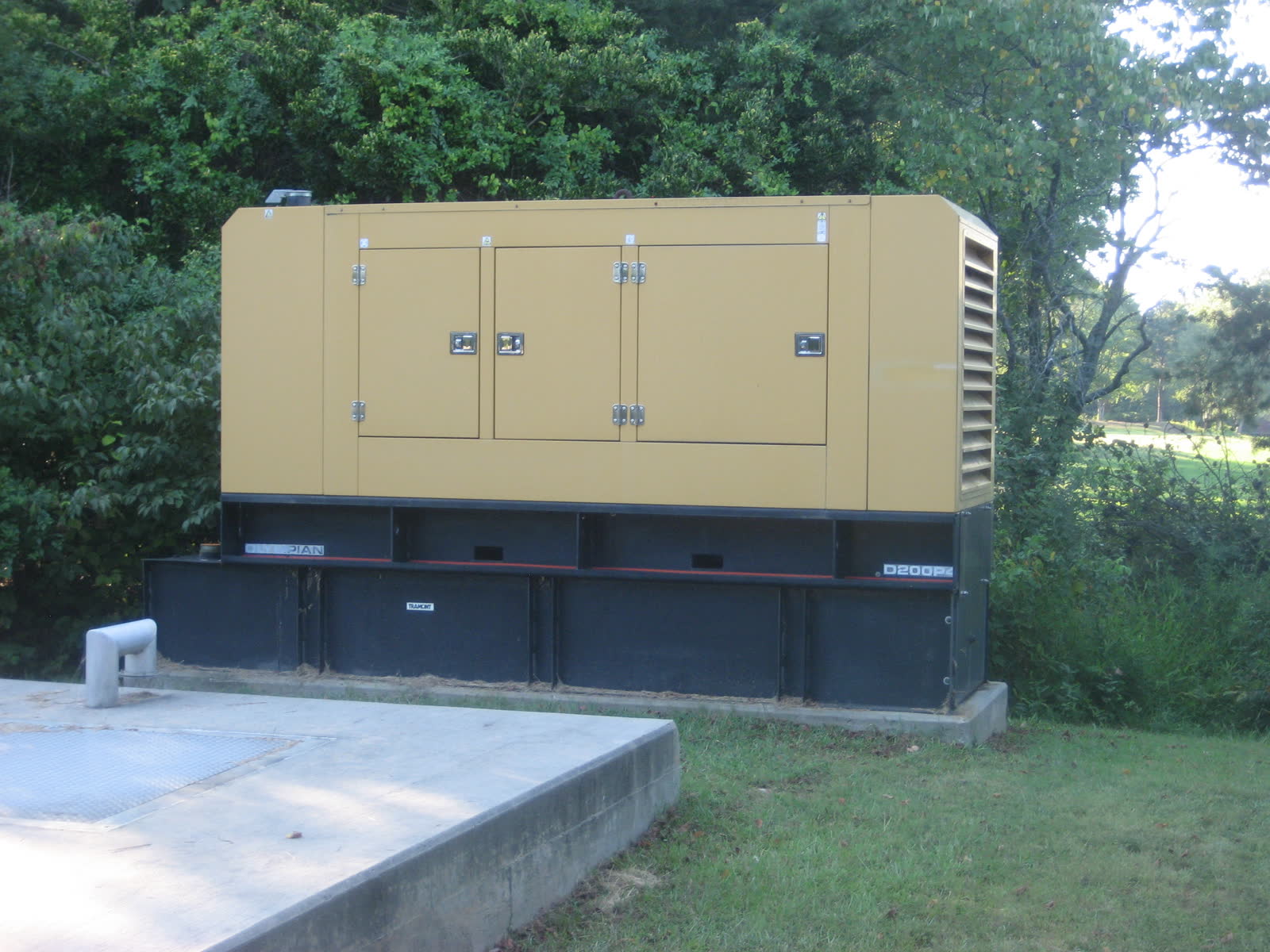
Image context: the cover uses a real Caterpillar generator-set photograph because the quarter's most interesting financial evidence ran through power equipment, not through a generic bulldozer glamour shot. If the current rerating path holds, it will depend less on symbolic "industrial strength" and more on whether continuous-duty power hardware keeps arriving with real orders, real deliveries, and real service follow-through.[4][5]
Priced vs new
The market already understands the machine cycle. Caterpillar still sells into construction, mining, and oil-linked demand that can reverse quickly, and the company itself warns that dealer inventory decisions can distort the timing between Caterpillar's shipments and end-user demand.[2] That caution still belongs in the stock.
What changed in the first quarter was the weight of the power lane. Caterpillar's own results page says Power & Energy sales increased because of higher demand in power generation, oil and gas, and industrial applications, with power generation strength led by large reciprocating engines and turbines used primarily in data-center applications.[1] The retail supplement shows the same skew from a different angle: power generation retail rose 48%, far ahead of the machine businesses.[2]
That matters because it suggests the quarter was not just a synchronized rebound everywhere at once. Construction Industries retail rose a respectable 7% worldwide, but EAME was down 2% and Asia/Pacific was flat.[2] Resource Industries retail was up 6%, with rail still down 4%.[2] This was a good quarter, but it was not a broad, simple "all end markets are booming" quarter. It was a quarter in which one segment, Power & Energy, increasingly looked like the marginal source of upside.
The earlier quarter already hinted at that direction. In fourth-quarter 2025 results, Caterpillar reported Power & Energy sales of $9.400 billion, up 23%, while power generation sales inside that segment rose 44% to $3.238 billion, again primarily data-center-related.[3] The first-quarter numbers therefore look less like a one-quarter spike than the continuation of a genuine mix shift.
Why the power lane matters more now
The cleanest new evidence is that Caterpillar is no longer discussing power generation as a side benefit of an industrial upcycle. It is discussing it as a specific infrastructure lane with unusually large projects behind it. In January, Caterpillar and Boyd CAT announced a strategic alliance with American Intelligence & Power to support Monarch, an AI-compute campus in West Virginia, with 2 gigawatts of fast-response natural-gas generator sets scheduled for delivery from September 2026 through August 2027.[4]
That announcement does not land in first-quarter revenue immediately, and it should not be treated as if it does. Its significance is different. It shows that Caterpillar's power-generation strength is now tied to concrete hyperscale power demand with a defined delivery window, not just to a vague story about "AI infrastructure" floating above the order book.[4] When the first quarter also shows power generation retail up 48%, the order story and the reported-demand story begin to point in the same direction.[2][4]
This is why the stock's debate has changed. Caterpillar does not need every excavator or mining truck line to stay hot at the same time if Power & Energy can keep taking a larger share of the incremental mix. The company can remain cyclical and still deserve a better multiple if the better part of the cycle becomes more structural than fleeting.
Six numeric anchors
- Headline quarter: sales and revenues were $17.4 billion, up 22%, and adjusted profit per share was $5.54, up from $4.25.[1]
- Margin still matters: operating profit margin was 17.7% versus 18.1% a year earlier, and adjusted operating profit margin was 18.0% versus 18.3%.[1]
- Capital returns stayed aggressive: enterprise operating cash flow was $1.9 billion, enterprise cash ended at $4.1 billion, and Caterpillar still deployed $5.7 billion for repurchases and dividends in the quarter.[1]
- Power & Energy carried real size: segment sales reached $7.031 billion, up 22%, and segment profit rose 13% to $1.450 billion.[1]
- Retail demand was uneven but telling: Power & Energy retail rose 32% and power generation rose 48%, versus 7% for Construction Industries worldwide and 6% for Resource Industries.[2]
- The next bridge is already named: the Monarch project order covers 2 GW of fast-response natural-gas generator sets with deliveries scheduled from September 2026 through August 2027.[4]
Those anchors describe a company that still belongs to the machinery cycle, but no longer depends on that cycle alone for its most interesting growth proof.
Strongest counterweight
The strongest counterweight is that the quarter still carried obvious signs of cost pressure and capital-intensity discipline. Operating margins were lower year over year.[1] Power & Energy segment profit rose only 13% on 22% sales growth because higher volume and price were partly offset by $346 million of unfavorable manufacturing costs.[1] The retail supplement also carries its own warning label: the data are voluntarily reported by independent dealers, unaudited, and meant only as an approximate indication of trend and magnitude.[2]
That caution should not be waved away. The stock can look optically better than the underlying economics if buybacks stay heavy while quarterly cash generation remains softer than headline EPS. A quarter with $5.7 billion of shareholder distributions against $1.9 billion of enterprise operating cash flow deserves more than applause.[1] It deserves follow-through.
Falsifier
This thesis fails if the next quarterly update shows Power & Energy falling back toward the same growth range as Construction Industries and Resource Industries while margins keep sliding. If the power lane stops outrunning the machine cycle before the September 2026 delivery window on the Monarch order even begins, then the quarter will read as a peak-mix moment rather than the start of a more durable earnings reshaping.[2][4]
Watchlist
- Second-quarter 2026 results: this is the next direct read on dealer inventory normalization, Power & Energy margins, and whether first-quarter mix strength carried forward.[1][2]
- September 2026: deliveries are scheduled to begin on the 2 GW Monarch power order, which makes this the first hard timing checkpoint for Caterpillar's hyperscale-data-center power story.[4]
- August 2027: the end of the initial Monarch delivery window is the medium-term proof point for whether this AI-power lane is a multi-quarter bridge rather than a single headline contract.[4]
Takeaway
Caterpillar's first quarter was strong, but the value of the report sits in composition rather than in the headline beat alone. Construction and mining still matter. Dealer inventories still matter. Cost pressure still matters.
The new proof sits in power. If data-center-linked generation and the broader Power & Energy segment keep taking a larger share of growth without requiring another step down in margin quality, then the market will have to treat Caterpillar less like a plain construction-cycle proxy and more like a company with a second, faster-moving infrastructure lane inside it.
Sources
- Caterpillar, "Caterpillar Reports First-Quarter 2026 Results" (April 30, 2026).
- Caterpillar, "Retail Statistics" Exhibit 99.2 furnished with the April 30, 2026 Form 8-K, covering first-quarter 2026 retail sales trends by segment and end use.
- Caterpillar, "Caterpillar Reports Fourth-Quarter and Full-Year 2025 Results" (January 29, 2026).
- Caterpillar, "American Intelligence & Power Forms Strategic Alliance with Caterpillar and Boyd CAT to Deploy 2 Gigawatts of Dedicated Power for Hyperscale AI Infrastructure" (January 28, 2026).
- Wikimedia Commons, "File:Caterpillar (Olympian) Generator Set.jpg" — photographic image of a Caterpillar standby generator installation.