The aerospace-engine trade is already priced for one good thing: more flight hours mean more maintenance, more spare parts, and more long-term service revenue. The newer question is less comfortable. As of 2026-04-20 UTC, the spread belongs to suppliers that can convert demand into material flow and shop-visit throughput before airlines start treating the same bottleneck as a margin tax.[1][4][5]
That is the priced-vs-new split. Priced is the annuity: a large installed base, scarce engine assets, and contracts that turn utilization into services revenue. New is execution under scarcity. IATA and Oliver Wyman estimate that aerospace supply-chain problems will cost airlines more than $11 billion in 2025, including $3.1 billion of additional maintenance cost, $2.6 billion of increased engine leasing cost, and $1.4 billion of surplus inventory carrying cost.[5] Those airline costs are not separate from the investment case. They are the other side of the same aftermarket profit pool.
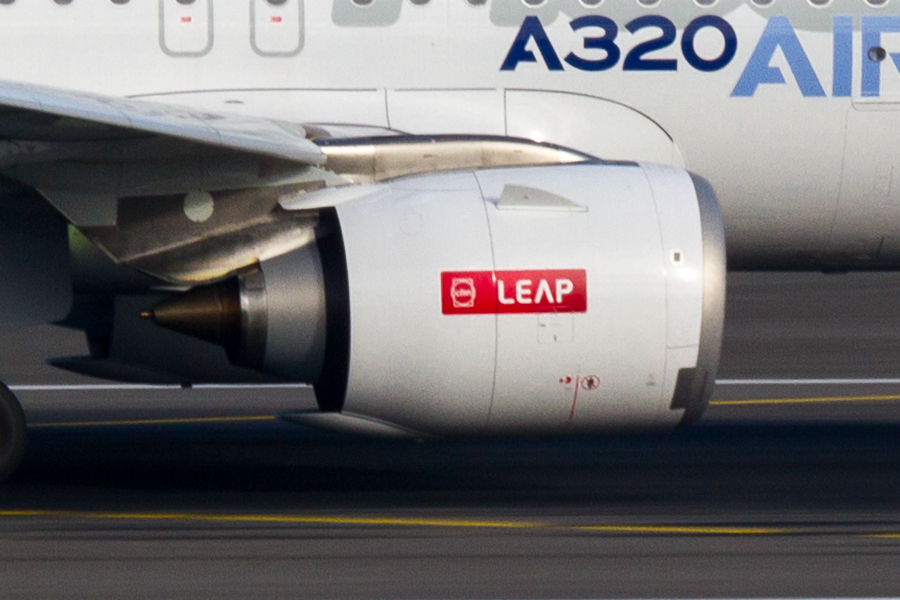
Image context: the cover uses a real photograph of a CFM LEAP nacelle on an Airbus A320neo rather than a chart, mockup, or abstract aviation graphic. That matters because this article is about the physical constraint behind the numbers: engine hardware has to move through supplier cells, overhaul shops, test cycles, and airline operations before it becomes recognized revenue or restored capacity.[6]
The mechanism
Jet-engine economics have a built-in delay. The original equipment sale puts hardware into the fleet, but the profit center matures later, after engines accumulate cycles, need parts, and enter overhaul. That is why the post-pandemic recovery has been especially powerful for engine makers: air travel recovered faster than the supply chain, so the installed base kept working while new-aircraft deliveries and engine turnaround capacity stayed constrained.
GE Aerospace's 2025 numbers show the strength of that setup. Full-year total orders reached $66.2 billion, adjusted revenue reached $42.3 billion, operating profit was $9.1 billion, free cash flow was $7.7 billion, and backlog was roughly $190 billion.[1] Inside Commercial Engines & Services, 2025 services revenue rose 26%, engine deliveries rose 25%, and LEAP deliveries exceeded 1,800 units.[1] That combination is rare: strong new equipment flow and strong services flow at the same time.
Safran shows the same structure from the other half of CFM. Its 2025 recurring operating income reached €5.197 billion, up 26.2%, while Propulsion recurring operating income reached €3.600 billion with a 23.0% margin. Management tied the improvement to civil aftermarket strength, especially CFM56 activity, LEAP-1A rate-per-flight-hour profit recognition, third-party MRO spare-parts sales, and an elevated spare-engine ratio.[3]
Rolls-Royce gives the widebody version. In 2025, underlying operating profit rose to £3.5 billion, group operating margin rose to 17.3%, Civil Aerospace margin reached 20.5%, and free cash flow was £3.3 billion. Civil Aerospace long-term-service-agreement balance growth was supported by 8% growth in large-engine flying hours and a better EFH rate, but was partly offset by more shop visits and supply-chain cost.[4] That last clause is the hinge. The same engine hours that create high-quality revenue also pull more hardware into shops.
Three branches
Base case: scarcity stays profitable but visible. In this branch, flight hours keep expanding, engine makers hold pricing, and airline frustration remains manageable. GE's services growth and backlog support the annuity view, Safran's Propulsion margin remains in the low-20s, and Rolls-Royce keeps turning EFH growth into Civil Aerospace margin. Airline maintenance and leasing costs stay elevated, but not high enough to break demand or force a major commercial backlash.[1][3][4][5]
Upside case: material flow improves faster than expected. GE's annual-report operating examples are important here. The company says material input from priority suppliers grew 40% year over year in 2025, and one supplier cell for LEAP turbine-blade honeycomb assemblies moved from about 47 pieces per week to more than 470 after a focused improvement event.[2] At GE's Celma MRO site in Brazil, LEAP test cycle time has been reduced 23% since August 2024.[2] If those process gains repeat across more supplier cells and shop networks, the market can get both revenue growth and better customer outcomes. That is the cleanest rerating branch.
Downside case: the bottleneck becomes the story. IATA's cost bridge is a warning label for investors, not only for airlines. If delayed aircraft and parts keep forcing older aircraft to fly longer, the industry gets extra maintenance, extra engine leasing, and extra spares inventory rather than a smooth productivity cycle.[5] Engine makers may still earn well in that environment, but the multiple becomes harder to defend if every quarter's services upside is paired with worse customer turnaround time, more airline workarounds, and regulator or customer pressure on aftermarket terms.
Six numeric anchors
- GE Aerospace scale: 2025 total orders were $66.2 billion, adjusted revenue was $42.3 billion, operating profit was $9.1 billion, and free cash flow was $7.7 billion.[1]
- GE aftermarket momentum: 2025 Commercial Engines & Services revenue was supported by 26% services growth, 25% engine-delivery growth, and record LEAP deliveries above 1,800 units.[1]
- GE operating constraint: priority-supplier material input rose more than 40% year over year, while the Celma MRO site cut LEAP test cycle time by 23% from August 2024.[2]
- Safran propulsion margin: 2025 recurring operating income was €5.197 billion, with Propulsion at €3.600 billion and a 23.0% margin.[3]
- Rolls-Royce widebody recovery: 2025 underlying operating profit was £3.5 billion, Civil Aerospace margin was 20.5%, free cash flow was £3.3 billion, and large-engine flying hours rose 8%.[4]
- Airline pain budget: IATA/Oliver Wyman put the 2025 supply-chain cost at more than $11 billion, including $4.2 billion of delayed fuel savings, $3.1 billion of maintenance cost, $2.6 billion of engine leasing cost, and $1.4 billion of extra spares inventory.[5]
Strongest counterweight
The best argument against caution is that aftermarket scarcity is exactly what makes this theme valuable. A normal industrial recovery gives suppliers volume. This recovery gives the engine makers volume, pricing, installed-base utilization, and customer urgency at the same time. The cost to airlines may simply confirm that engines are the scarce asset in the aviation value chain.[1][3][4][5]
That counterweight is strong. It is why this is not a bearish scenario map. The narrower claim is that the first-stage rerating already knows engines are scarce. The next stage has to prove that scarcity can be operationalized into faster material flow and reliable shop exits, not only higher service revenue.
Falsifier
This scenario analysis becomes too cautious if 2026 results show three things together: services growth stays strong, supplier material input and shop-visit cycle times keep improving, and airline evidence of excess engine leasing and spares inventory starts to ease. In that combination, the market would be right to treat engine makers less like companies exploiting a bottleneck and more like companies clearing it at high incremental margin.[1][2][5]
Watchlist
- April 21, 2026: GE Aerospace's first-quarter webcast is the next direct test of whether CES services, LEAP deliveries, and material availability are still compounding after the strong 2025 exit rate.[1][7]
- April 30, 2026: Rolls-Royce's annual general meeting and final-dividend vote matter because management has already paired Civil Aerospace margin recovery with a larger shareholder-return framework. The quality question is whether shop-visit cost and LTSA balance growth stay aligned with that confidence.[4]
- Next IATA/Oliver Wyman supply-chain update: the most useful external check is whether the airline-side cost bridge begins to narrow. If excess engine leasing, additional maintenance, and surplus inventory remain elevated, investors should treat supplier upside as partly funded by unresolved customer friction.[5]
Takeaway
The aerospace-engine aftermarket is one of the cleaner industrial profit pools in 2026, but it is no longer enough to say "more flying equals more service revenue." That part is visible. The investable edge is now operational: which companies can turn parts availability, MRO capacity, and test-cell discipline into reliable throughput. GE, Safran, and Rolls-Royce all show why the theme works. IATA's cost bridge shows why the theme still needs proof.
Sources
- GE Aerospace, "GE Aerospace Releases Its 4Q'25, FY25 Results and 2026 Guidance" (January 22, 2026).
- GE Aerospace, "Annual Report 2025" landing page and shareholder-letter excerpts on supplier material flow, Celma MRO, LEAP durability, and backlog.
- Safran, "Safran reports excellent financial performance in 2025 and raises its 2028 ambitions" (February 13, 2026 press release PDF via Euronext).
- Rolls-Royce, "Rolls-Royce Holdings Plc 2025 Full Year Results" (February 26, 2026).
- IATA, "Supply Chain Challenges Could Cost Airlines More than $11 Billion in 2025" (October 13, 2025).
- Wikimedia Commons, "File:Airbus A320neo CFM LEAP nacelle.jpg" - source page for the article photograph.
- GE Aerospace, "GE Aerospace 1st Quarter 2026 Earnings Webcast" (April 21, 2026 event page).