If you want one Venice move that actually improves outcomes, use one object as your planning spine: the vaporetto ticket clock.
Not “do more sights,” not “walk faster,” not “take whichever boat arrives.” In Venice, your day quality changes when you treat ticket validity, validation, and boarding friction as part of route design.
This guide stays tight on two anchors only:
- The ACTV ticket clock (75-minute vs time-pass logic)
- The Ferrovia C → Fondamente Nove corridor (where many first mistakes happen)
A place-specific texture detail matters here: Venetians still call the water bus a vaporetto (“little steamer”), a name from the steam era that survived every modernization wave. The city is contemporary, but its mobility language still carries lagoon memory.
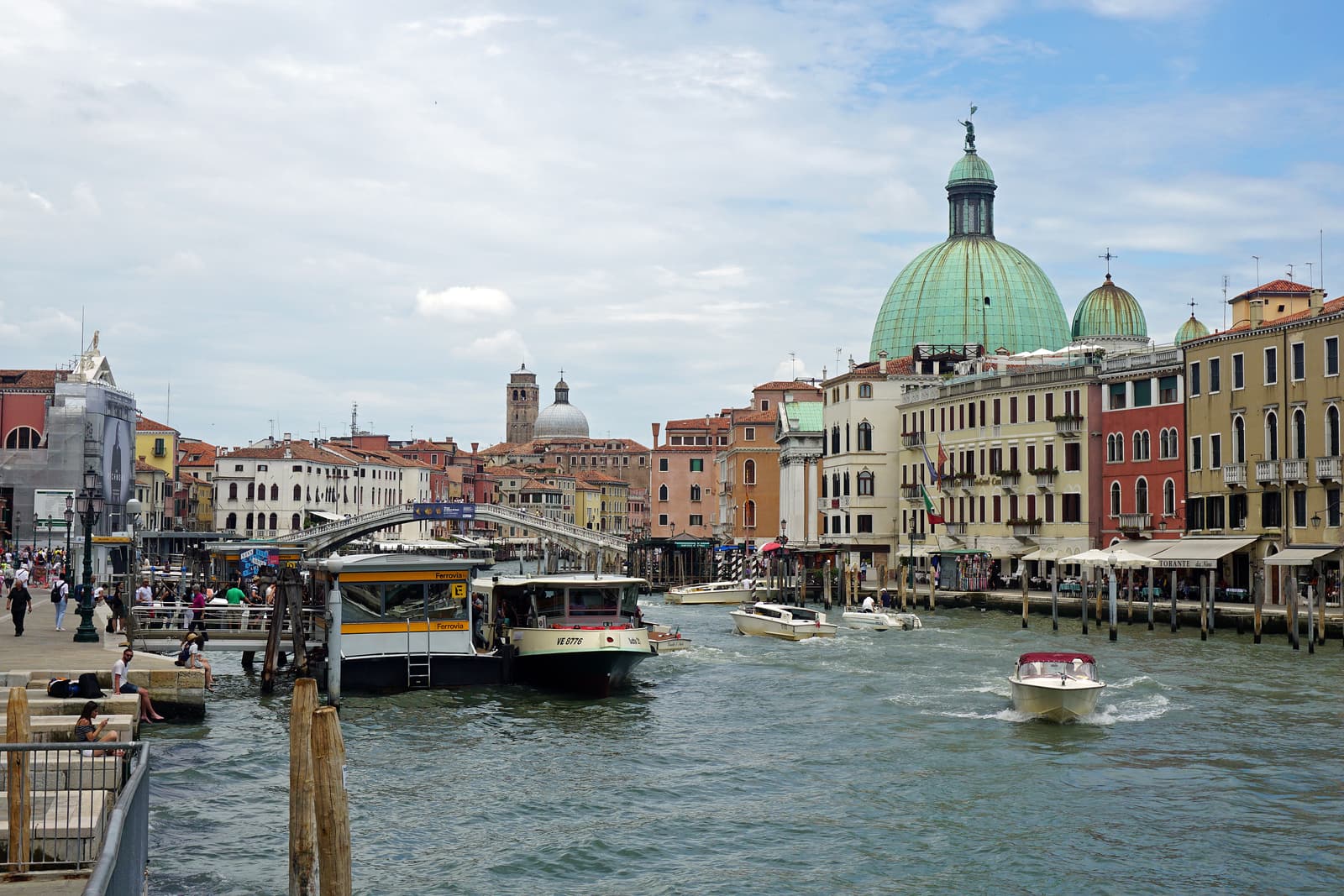
Image context: the cover photo shows the Ferrovia stop geometry and dock edges that make queue choice visible before boarding—the exact operational setting this guide focuses on.
Anchor 1: the ticket clock (your real control panel)
AVM/ACTV’s tourist fare ladder is explicit: 75 minutes = €9.50, 24h = €25, 48h = €35, 72h = €45, 7 days = €65.[1] The same page also states two rules visitors ignore: validation is mandatory, and you must re-validate when changing vehicles.[1]
That means this is not just “buy ticket, ride freely.” It is a time system that starts at first validation and keeps running while you wait, transfer, or hesitate.
In practice, the 75-minute option is efficient for one direct move in low-friction windows, but fragile for multi-leg island chains when docks are crowded. A VeneziaToday local report documents exactly this failure pattern: passengers validated, waited through multiple full boats, and crossed the validity boundary before they could board the target leg.[5]
So the first local move is simple: decide pass type by transfer risk, not by one-leg map distance.
Anchor 2: Ferrovia C → Fondamente Nove (where timing gets lost)
The Ferrovia area feels straightforward when you exit Santa Lucia station, but this corridor punishes indecision. You are choosing between scenic but slower traversals, perimeter lines, and crowd-heavy island connections.
Local routing context from VeneziaToday’s line guide is useful as orientation: lines 1/2 for historic-core movement, ring/perimeter families (like 4.1/4.2), and island connectors.[4] Use that as lane logic, then confirm real-time service on ACTV’s schedule channels before moving.[3]
A second local move: at Ferrovia, decide your line family before you validate. If your target is north-lagoon flow (Murano/Burano side), drifting into the wrong queue burns the exact minutes your ticket needs for the next segment.
A third local move: treat Fondamente Nove as an operating node, not a photo pause. It is a decision point where queue depth and departure spacing matter more than perfect waterfront linger time.
8 local moves woven into one clean run
First, validate only when you are operationally ready to board, not while still discussing route options.[1]
Second, if your day includes at least one likely transfer under crowd pressure, compare €9.50 single-window logic against the €25 day-pass hedge before first tap.[1][5]
Third, from Santa Lucia/Ferrovia, run one decisive queue choice; do not bounce between pontoons after validation.
Fourth, re-validate at every vehicle change exactly as ACTV requires, even when you believe your pass is still active.[1]
Fifth, for island-heavy windows, pre-check ACTV real-time/planned services and any infomobility advisories before committing the next leg.[3]
Sixth, remember environmental disruption thresholds: ACTV notes service changes in fog and with high water above +95 cm.[3] On those days, leave wider transfer buffers.
Seventh, if you need ticketing help instead of guessing at the dock, AVM points to official sales channels and customer support windows (08:00–18:00 call-center coverage).[2]
Eighth, at Fondamente Nove, if two departures are visibly saturated, assume your waiting minutes are part of cost, not bad luck, and switch to a pass strategy that survives delay.[5]
Non-local trapline: 3 common mistakes and better alternatives
Mistake 1: buying by headline price only
Visitors often optimize for the cheapest nominal ticket.
Better alternative: price against transfer uncertainty. If the corridor includes one high-friction wait, the day pass can be cheaper than repeated expiry resets.[1][5]
Mistake 2: validating too early at Ferrovia
People tap immediately, then spend 10–20 minutes debating line choice.
Better alternative: line first, validation second.[1]
Mistake 3: treating queue delay as exceptional
In high season, “next boat is fine” can fail repeatedly.
Better alternative: when docks visibly stack, switch from single-window logic to time-pass logic before the clock traps you.[5]
Time window, spend range, queue reality, and one navigation cue
A reliable non-food lagoon run for this corridor is usually 2.5–4.0 hours if you include one island leg and one return decision.
Expected spend bands (transport only):
- Single-window tactic: €9.50 if your movement stays inside one 75-minute envelope[1]
- Delay-hedged day tactic: €25 for 24h flexibility[1]
- Longer horizon: €35 / €45 / €65 for 48h / 72h / 7-day plans[1]
Queue reality: the biggest risk is not ticket purchase, but post-validation waiting at high-demand pontoons.[5]
One navigation cue that prevents most waste: at Ferrovia, don’t ask “what is the nicest line right now?” Ask “which line family gets me to the next unavoidable transfer with the fewest waiting unknowns?” In Venice, that question beats almost every scenic detour decision.
Sources
- AVM/ACTV — Vaporetto fares and validation basics (75 min €9.50; 24/48/72h and 7-day passes)
- AVM — Prezzi in vigore (fare system, support channels, onboard/digital purchase notes, validation obligations)
- AVM — Orari e percorsi (real-time schedule portal, infomobility channels, fog/high-water service modification threshold +95 cm)
- VeneziaToday — Vaporetti a Venezia: linee e orari (line-family orientation for central, perimeter, and lagoon routes)
- VeneziaToday — Burano-bound crowding case and 75-minute expiry risk under repeated full-boarding skips (recent local confirmation)
- Google Maps community review surface — Ferrovia C stop
- Google Maps community review surface — Fondamente Nove
- Wikimedia Commons image source (hero)