Berlin has many famous water views, but one of its most useful local moves is still a normal transit line: F10 between S Wannsee and Alt-Kladow.
The crossing is short, practical, and oddly calming. On paper it is a public-transport connection. In local language and weekend habit, it is still often treated like a small Dampferfahrt—a little steamer outing folded into daily mobility.[2]
This piece keeps a tight two-anchor scope:
- S Wannsee ferry dock (decision point: timing and ticket choice)
- Alt-Kladow landing (decision point: return rhythm and crowd timing)
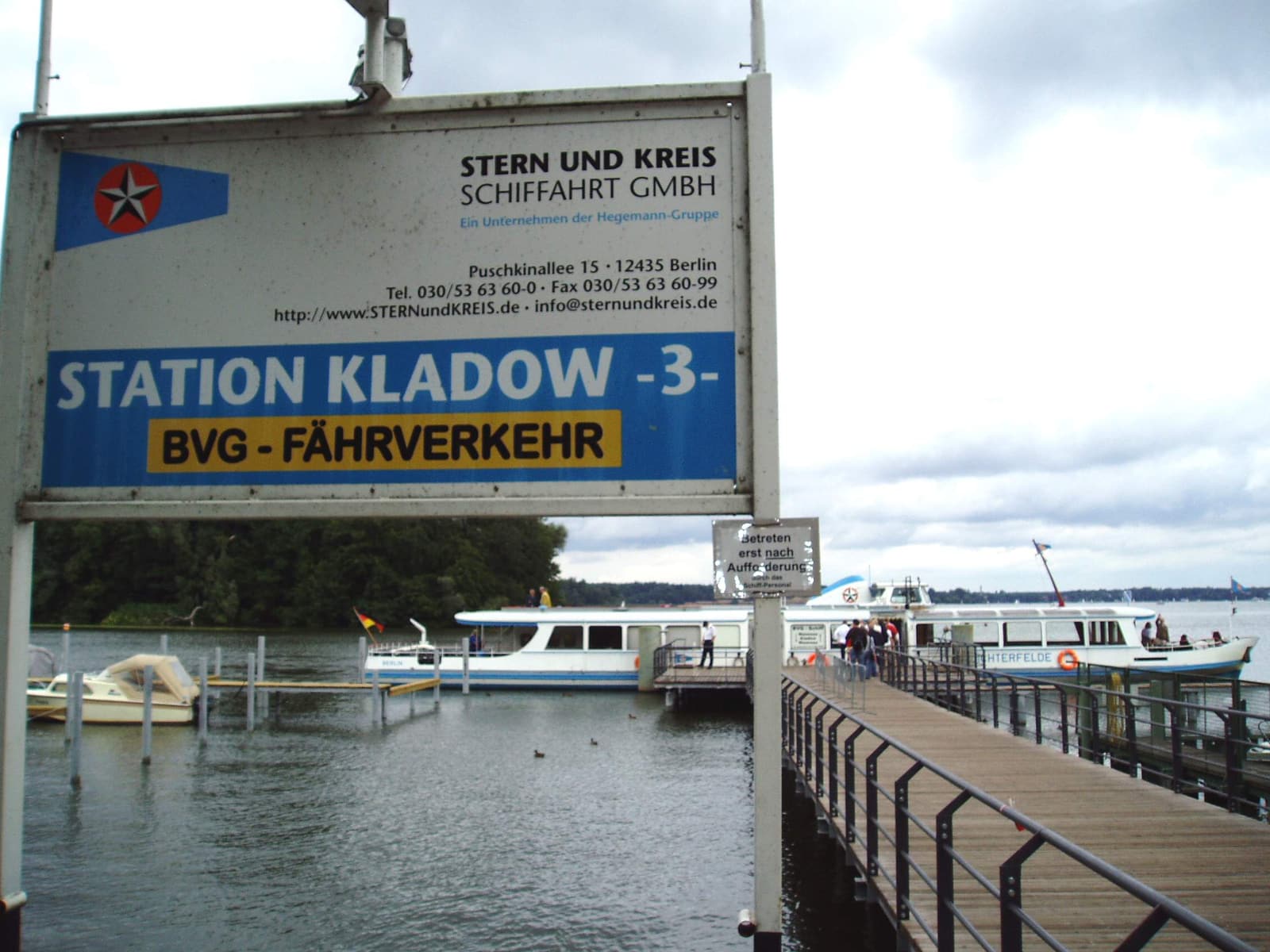
Image context: the cover image shows the Alt-Kladow landing area used by F10, including the dock geometry you will actually navigate at boarding time.
Anchor 1: S Wannsee dock — where the day is won or lost
BVG’s current F10 timetable sheet is unusually clear about operational boundaries:[1]
- average crossing time: 20 minutes
- base frequency: every 60 minutes
- line: S Wannsee ↔ Alt-Kladow
- no short-trip tariff on F10
- in fog or ice, operations may be suspended
The key tactical implication is simple: this is not a “show up whenever” line. With hourly headway, one missed departure can cost a full hour of lakeside time.
Ticket logic also matters before you tap. VBB lists a Berlin AB single fare at €4.00 and Berlin ABC single fare at €5.00; Berlin single-fare validity is 120 minutes from validation.[3] A 24-hour Berlin AB ticket is €11.20 and Berlin ABC is €12.90.[4]
So if you are doing a same-day out-and-back with extra city transfers, the day-pass math can be cleaner than two separate singles plus transfer stress.
Anchor 2: Alt-Kladow landing — where pacing beats hurry
At the Kladow side, the trap is psychological: people disembark like they are on a sightseeing boat, then forget they are still on a fixed-interval transit rhythm.
Berlin’s tourism portal describes F10 as both a meaningful transport link and a line that becomes popular with weekend excursion traffic.[2] Community discussion in r/berlin mirrors the same pattern: riders discover F10 as a high-value local outing because it runs on standard BVG/VBB ticket logic and sits directly by S Wannsee on the city side.[5]
That means your return decision should be made early, not when the dock is already full.
8 local moves that reliably improve this crossing
First, plan around the 60-minute cadence before you leave central Berlin, not after you reach Wannsee.[1]
Second, in the long-summer window (01.05–30.08.2026), use the later operating end (up to 21:00 depending on day) for a calmer evening crossing; in winter windows, your margin is tighter.[1]
Third, on Sundays, remember the seasonal start-time constraints in the BVG sheet (for example 09:00 starts in summer shoulder windows, 10:00 in winter windows).[1]
Fourth, choose ticket type by day shape: one-direction minimal movement can work with a single fare; multi-leg city + ferry days often favor the 24-hour product.[3][4]
Fifth, if bringing a bike, buy the bicycle fare product in advance and keep expectations realistic: VBB explicitly says bicycle carriage is only when space is available, with no guaranteed entitlement.[6]
Sixth, at the dock, board decisively instead of hovering for upper-deck photo angles; the cost of hesitation is often not a seat but an entire missed cycle.
Seventh, on disruption-prone weather days (fog/ice), check BVG traffic updates before committing a one-line-only plan.[1][7]
Eighth, at Alt-Kladow, decide your return sailing as soon as you step off, then treat the in-between time as bonus—not the other way around.
Non-local trapline: 3 common mistakes and better alternatives
Mistake 1: treating F10 like a high-frequency harbor shuttle
Better alternative: run it like a clocked line. With 60-minute intervals, one miss is expensive.[1]
Mistake 2: assuming all Berlin short-distance ticket rules apply
Better alternative: remember BVG’s explicit note that the short-trip tariff does not apply on F10.[1]
Mistake 3: assuming bike boarding is guaranteed because you paid
Better alternative: buy the bike ticket, but keep a fallback plan; VBB states boarding depends on available space and staff decision.[6]
Time window, spend range, queue reality, and one navigation cue
A practical non-food F10 outing usually runs 2.0–3.5 hours door-to-door if you include one full crossing, dock buffer, and return.
Expected spend (transport-only):
- Berlin AB single: €4.00
- Berlin ABC single: €5.00
- Berlin AB 24-hour: €11.20
- Berlin ABC 24-hour: €12.90
- Bicycle single (Berlin AB): €2.70[3][4][6]
Queue reality: weekends and fair-weather slots can stack quickly on this line, precisely because locals and visitors both use it as a short outing crossing.[2][5]
One navigation cue that prevents most first-timer friction: at Wannsee, think in this order—platform exit → dock position check → ticket validation confidence → boarding queue. If you reverse the sequence, you usually lose the line you wanted.
Sources
- BVG — F10 timetable PDF (valid from 14 Dec 2025; seasonal operating windows, 20-minute average crossing, 60-minute interval, usage notes)
- Berlin.de Tourism — Fähren in Berlin (F10 as transport link and weekend excursion line)
- VBB — Single fare ticket (Berlin AB/ABC fares; Berlin 120-minute validity window)
- VBB — Day pass / 24-hour ticket fares (Berlin AB/ABC)
- Reddit r/berlin community thread on BVG ferry usage patterns (local rider signal)
- VBB — Single fare ticket bicycle (bike fare levels and no guaranteed carriage entitlement)
- BVG — Traffic news portal (service-disruption checks)
- rbb24 (24 Feb 2026) — warning strike context in Berlin local transit (recent operations-volatility confirmation)
- Wikimedia Commons image source (hero)