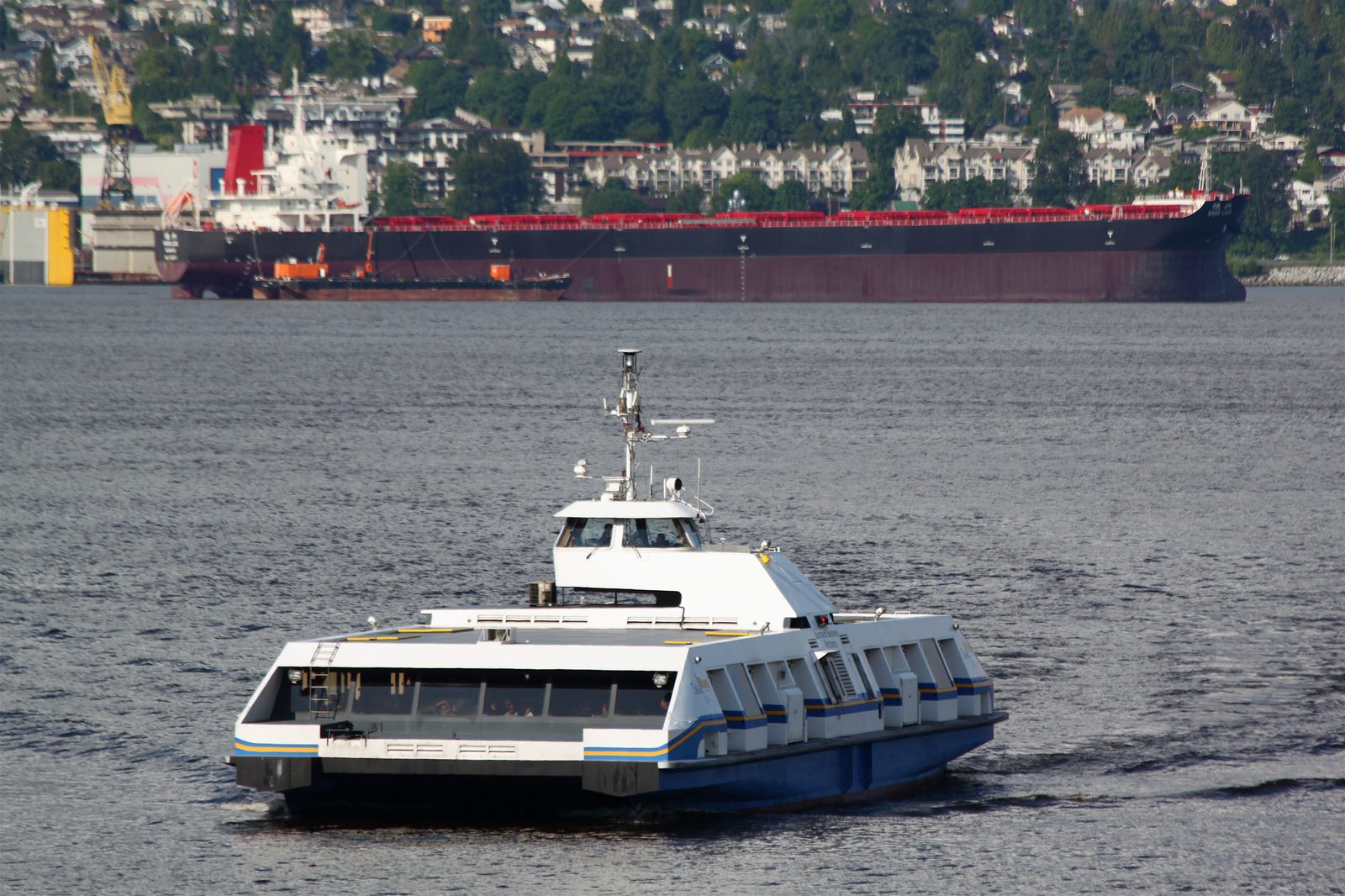
If you want one Vancouver move that still feels local after sunset, ride the SeaBus as a working harbor corridor instead of a skyline detour. Keep the route tight: one anchor in downtown at Waterfront Station, one anchor across the inlet at Lonsdale Quay. The value is not only the view. The value is how quickly you can read the city’s evening rhythm when frequency drops, doors close early, and transfer choices start to matter.
The corridor is compact but concrete: 12 minutes on water, daytime departures as frequent as 10 minutes in weekday peaks, then a 30-minute cadence in late evening. That shift is where most visitor mistakes happen.
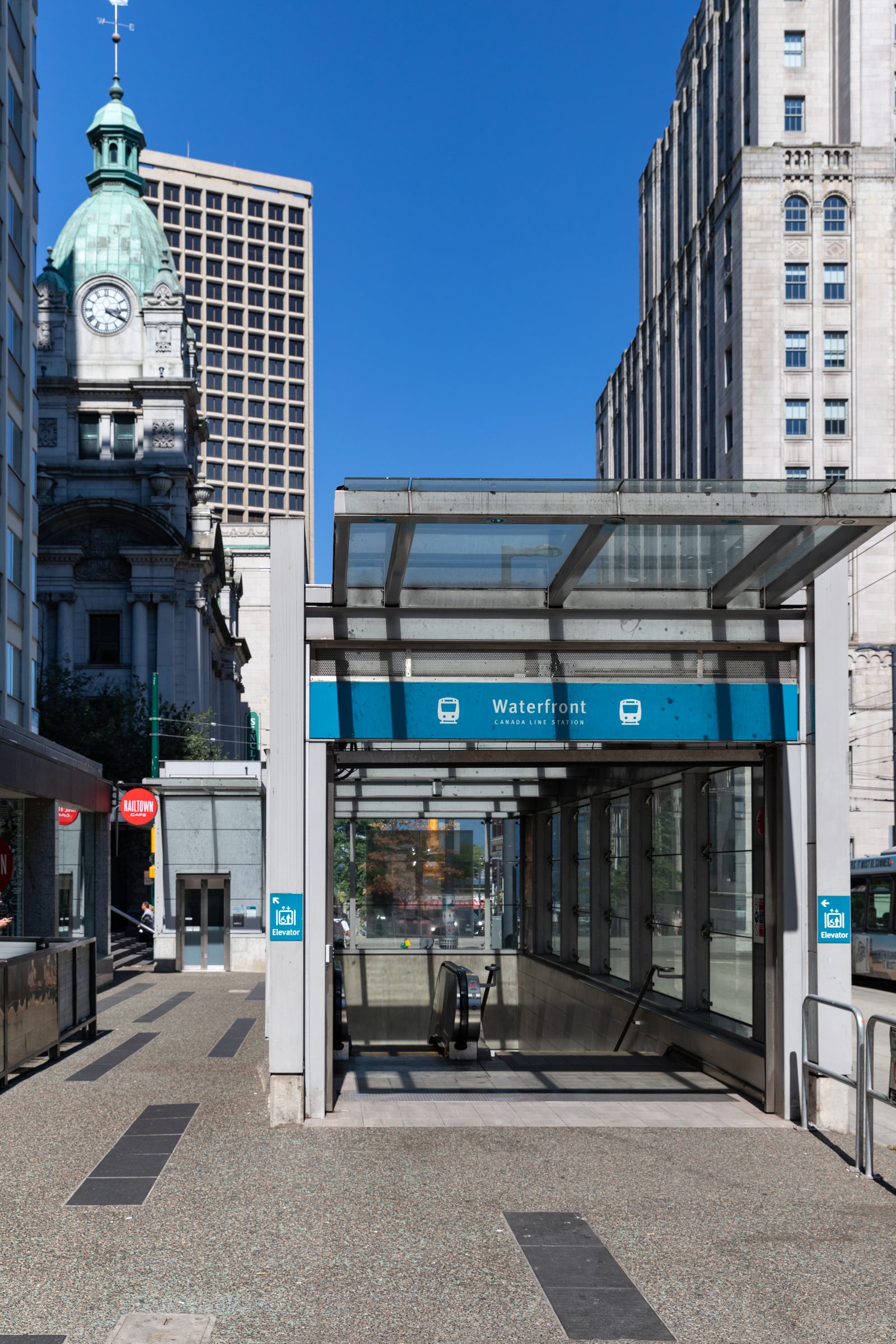
Why this two-anchor run has high yield at night
SeaBus is not a scenic extra; it is a core regional connector between Waterfront and Lonsdale Quay. TransLink’s current schedule shows first departures near 06:01 from Waterfront on weekdays, last departures around 01:22 from Waterfront and 01:00 from Lonsdale Quay on weekday nights, with evening headway moving to 30 minutes after about 21:00. When you build your evening around that cadence, the route becomes reliable and low-stress.
Fare mechanics also reward planning. A single fare is valid for 90 minutes across bus, SkyTrain, and SeaBus. SeaBus uses 1- or 2-zone logic by time and direction, but all trips starting after 18:30 on weekdays and all weekend trips are charged as 1-zone fares. Adult stored-value 1-zone fare is $2.70, cash/contactless 1-zone is $3.35, and an all-zone DayPass is $11.95.
Local-knowledge moves that materially improve the run (8 moves)
- Board one departure earlier than your “ideal” sailing if you are targeting evening photos. Late-day light often aligns with the same departure windows everyone wants; one earlier boat gives cleaner deck space and easier re-boarding.
- Treat the 21:00 shift as a hard boundary. Before that line you can absorb small mistakes; after that line each miss costs about half an hour.
- At Waterfront, clear fare gates early instead of waiting at the corridor mouth. The doors to the SeaBus path open roughly 10 minutes before first departure and close shortly before last departure, so avoid edge-of-window rush behavior.
- Use the first crossing to map your return, not to complete your night. On arrival at Lonsdale Quay, check the next two departures immediately, then decide whether you have a 15–35 minute shore window.
- If wind is strong, hold lower-deck comfort over upper-deck persistence. A nominal 12-minute crossing can feel longer in cold wind; preserving comfort improves your second-leg decisions.
- Pay with Compass or contactless and keep movement continuous. Ticket-machine friction is small in daylight and expensive at night when queue spikes overlap with lower frequency.
- Anchor your North Shore segment to the terminal block unless you have a fixed onward plan. Lonsdale Quay Market and the waterfront edge sit inside a short walk radius, which protects your return buffer.
- Set a last-safe return rule, not a last-possible return rule. If your true cutoff is midnight downtown, do not ride the final practical sailing; keep one extra departure in reserve.
Common visitor traplines (and better alternatives)
Trap 1: treating evening departures like daytime high-frequency service
Better move: after roughly 21:00, schedule with half-hour loss in mind. Night SeaBus errors compound quickly.
Trap 2: using the crossing as a one-way outing and improvising late transfer chains
Better move: decide your return sailing before leaving Waterfront. Then fit North Shore time inside that frame.
Trap 3: buying fares at the last minute inside the terminal flow
Better move: preload Compass or tap contactless directly at gates, preserving your departure margin during evening surges.
Concrete go details
- Route length: 3.24 km (1.75 nautical miles).
- Crossing time: ~12 minutes.
- Vessel seating capacity: up to 395 passengers per vessel.
- Evening frequency: typically 30 minutes after around 21:00.
- Weekday late departures: around 01:22 from Waterfront, 01:00 from Lonsdale Quay.
- Fare-transfer validity: 90 minutes.
- Weekday off-peak zone simplification starts at 18:30.
- Adult 1-zone fares: $2.70 stored value / $3.35 cash-contactless.
Portable takeaway artifact: clear-night vs buffer-night script
| Mode | Waterfront first departure target | North Shore dwell window | Return rule | Total time budget |
|---|---|---|---|---|
| Clear-night photo run | 19:00–20:30 | 25–45 min at quay/market edge | Return before first post-21:00 miss window | 95–125 min |
| Buffer-night practical run | 19:30–21:00 | 15–30 min, terminal-adjacent only | Keep one full extra departure in reserve | 80–110 min |
The small discipline here is what makes the route feel local: watch cadence, protect transfer margin, and let the water crossing sit inside a time plan instead of replacing one.
Sources
- TransLink — SeaBus Schedules
- TransLink — Pricing and Fare Zones
- TransLink — Visiting Vancouver (rider and payment workflow)
- Wikipedia — SeaBus (route length, fleet context, 2025 ridership, service history)
- Wikipedia — Lonsdale Quay (terminal context and upgrade timeline)
- Lonsdale Quay Market (official site, current activation context)
- Destination Vancouver (city orientation context)
- Google Maps community review streams for Waterfront Station and Lonsdale Quay Market (local crowd-flow signal, accessed 2026-03-23)