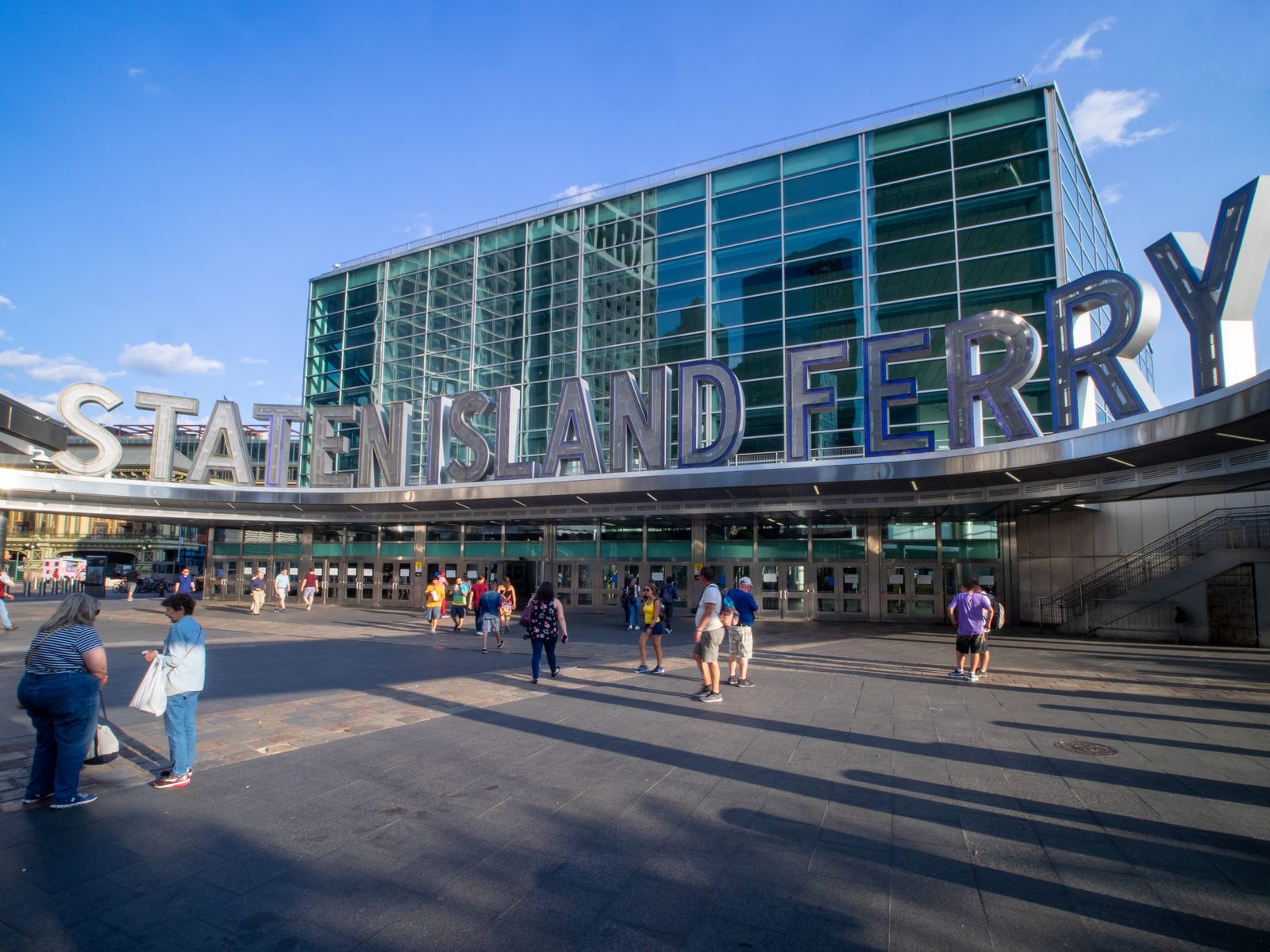
If you want one New York anchor that behaves like real city infrastructure instead of a sightseeing checklist, run the Whitehall–St. George ferry loop as a commuter room, not as a cruise substitute. The route is free, the crossing is short enough to stack into a half day, and the passenger mix forces you to read how locals actually time movement in Lower Manhattan and Staten Island.
This is a Street Microcosm move with one transport anchor and one strict goal: keep harbor-view value high while keeping terminal friction low.
Why this single anchor has unusually high yield
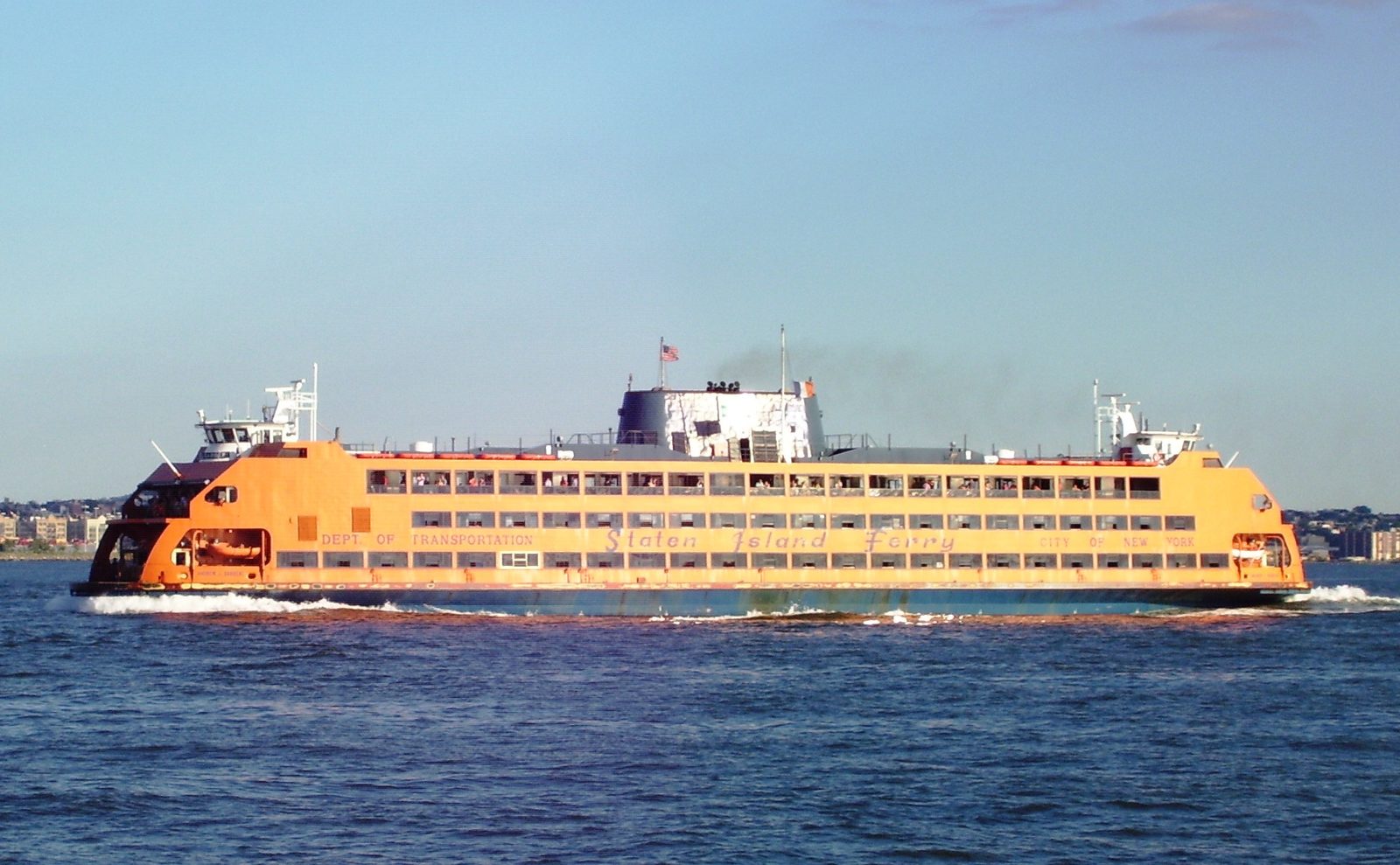
NYC DOT runs the Staten Island Ferry 24/7 on a 5.2-mile harbor leg between Whitehall and St. George. Baseline crossing time is about 25 minutes, annual ridership is over 16 million, and weekday operations run roughly 117 trips with around 45,000 riders. That combination means you are stepping into a real commuter machine, not a novelty route, and your timing decisions matter more than your photo spots.
Whitehall’s non-tactical texture detail is worth noticing: the terminal was rebuilt in 2005 with a 75-foot entry hall and a 19,000 sq ft waiting room, plus Ming Fay’s "Whitehall Crossing" granite benches shaped like canoes. That design language explains why the space feels ceremonial at off-peak and chaotic at tourist surges.
Timing windows that perform best
Use the official service cadence rather than intuition:
- Weekday commuter peak: departures often every 15 minutes (high throughput, highest platform pressure).
- Weekend/holiday baseline: commonly every 30 minutes.
- Trip duration: about 25 minutes each direction.
- Late-night terminal operations note: waiting-room access can be intermittently constrained between 01:00 and 04:30 for mandated security procedures.
Execution window for visitors who still want local rhythm:
- Best first departure from Whitehall: 09:40–11:00 or 13:40–15:30.
- Avoid strongest crush: roughly 07:15–09:00 and 16:45–18:30 weekdays.
- Round-trip planning floor: one clean out-and-back with re-queue buffer usually needs 70–95 minutes.
Local-knowledge moves that materially change outcomes (8 moves)
- Commit deck side before boarding closes. For Statue-facing visibility, use starboard outbound and port inbound, then hold position through departure instead of re-shuffling at mid-channel.
- Treat Whitehall queue shape as the real signal, not posted departure alone. A theoretically better departure can still deliver worse onboard experience if gate pressure is already dense.
- If your goal is flow, do not board the first visually crowded boat. A short wait can return dramatically better standing space and cleaner sightlines.
- Run one purposeful Staten Island turn instead of instant panic re-queue. A 12–20 minute platform reset at St. George often gives you a calmer return cabin.
- Keep terminal transfer chain tight in Manhattan. Whitehall can feed directly into South Ferry/Whitehall St/Bowling Green/Broad St links; decide your next line before disembarking.
- Carry weather layer discipline. Harbor wind can feel 3–6°C colder than inland street reading, especially on upper decks.
- Use holiday schedule logic on federal holidays. Service pattern commonly shifts to half-hour cadence; missing one boat costs more than on weekday high-frequency windows.
- If you must travel in hard peak, optimize for exit position over photos. Fast disembark and immediate terminal clearance beats lingering in the gangway choke.
Visitor traplines (and better alternatives)
Trap 1: Treating the ferry as a no-cost harbor cruise with no operational constraints
Better move: use commuter timing and queue-reading first, then layer views on top. The infrastructure objective is throughput; sightseeing quality is a by-product you can optimize.
Trap 2: Expecting guaranteed same-vessel turnarounds at St. George
Better move: assume re-queue behavior, keep your turnaround flexible, and budget an extra departure cycle when passenger volume is high.
Trap 3: Arriving at Whitehall with no onward transfer decision
Better move: pick your post-ferry subway branch before boarding the return boat; this removes 8–15 minutes of aimless terminal drift.
Concrete go details (execution card)
- Fare: $0.
- Route length: 5.2 miles.
- Crossing time: ~25 minutes each way.
- Typical weekday trip volume: 117 departures systemwide.
- Typical weekday ridership: ~45,000.
- Annual ridership scale: 16M+.
- Holiday baseline cadence: 30-minute departures.
- Late-night terminal closure window to account for: 01:00–04:30 intermittent restrictions.
Portable takeaway artifact: tourist script vs commuter script
| Mode | First departure target | St. George behavior | Return strategy | Total time budget |
|---|---|---|---|---|
| View-first tourist run | 09:40–11:00 | Short 12–20 min reset walk, then re-board | Pick less crowded return slot, prioritize deck sightline | 90–120 min |
| Flow-first commuter run | 07:15–08:30 or 16:45–18:00 only if required | Immediate transfer discipline, no linger | Board for fastest unload and Manhattan connection | 70–90 min |
If you execute this as a transport ritual rather than a checklist attraction, the ferry becomes a compact New York systems lesson: crowd physics, timetable reality, and harbor geography all visible in under two hours.
Sources
- NYC DOT — Staten Island Ferry Schedule (fare-free service, timetable)
- NYC DOT — Staten Island Ferry Traveler Information (security rules, terminal details, transit links, late-night sweep window)
- NYC DOT — Staten Island Ferry Facts (5.2-mile route, 24/7 operation, annual ridership, weekday trip/ridership metrics, peak headway)
- Staten Island Ferry portal — Schedules (operational notes including weather/visibility caveat and rush-hour crowding remark)
- SILive / Staten Island Advance (2025-07-03) — temporary service suspension and holiday cadence confirmation
- Reddit r/AskNYC community discussion on ferry usage patterns and deck-side strategy (thread context)
- Google Maps community review streams for Whitehall Terminal and St. George Terminal (recent rider reports on crowding/queue behavior, accessed 2026-03-20)