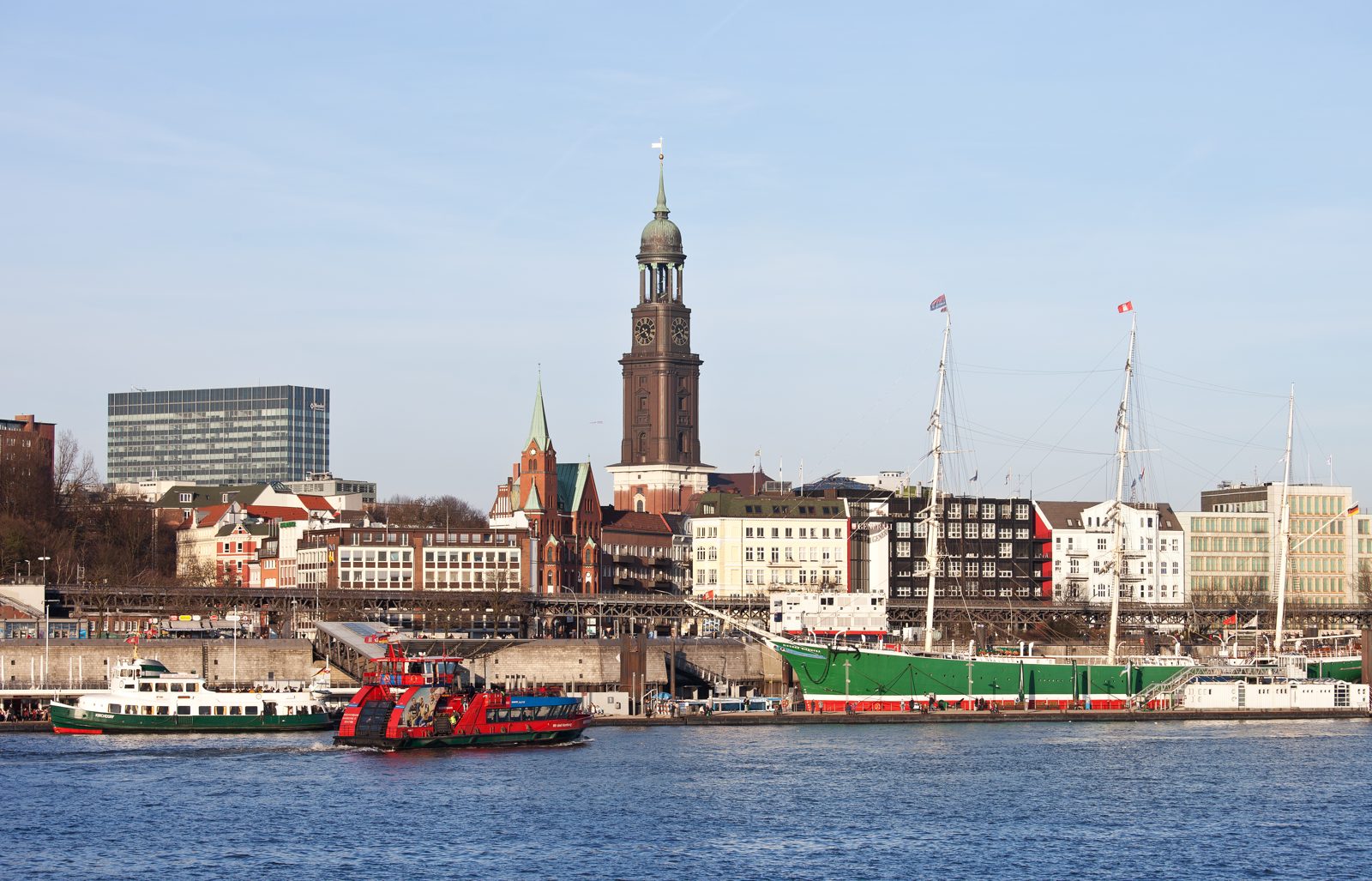
Late March in Hamburg gives you a short but high-yield city window: enough evening light to read the harbor in detail, temperatures low enough that casual crowd pressure has not yet reached summer density, and transport cadence still predictable if you plan around it. Keep the route tight with two anchors only: Landungsbrücken (Bridge 3) for HADAG line 62, then Elbphilharmonie Plaza as your elevated reset point.
This is not a sightseeing buffet. It is a local movement script that uses working transport rhythm to reduce friction. Line 62 is both commuter infrastructure and a low-cost harbor corridor, with departures from Landungsbrücken Bridge 3 as often as roughly every 15 minutes in core daytime bands, and shoulder bands at 30 minutes depending on hour and day. In the March–October weekend/holiday window, service can tighten to around 10-minute headways in the 11:00–18:00 peak block according to the official timetable notes.[1][2]
Why this seasonal two-anchor run works now
Hamburg’s own transport/tourism channels describe line 62 as the city’s most-used harbor ferry and a practical alternative to paid harbor cruises.[1] That dual identity matters: local utility keeps frequency useful, visitor demand keeps visual payoff high. The current HVV PDF timetable includes explicit validity blocks from 14.12.2025 to 29.03.2026 and from 30.03.2026 to 01.11.2026, giving you a clear seasonal handover instead of guessing from old screenshots.[2]
On fares, the practical baseline for short visitors is still simple: in Hamburg AB, a single ticket is €4.10, a day ticket is €8.20, and app/shop purchase can apply a 7% discount according to HVV’s current page.[3] Recent local reporting also confirms the 2026 tariff adjustment context, so using stale pre-2026 numbers is one of the easiest avoidable mistakes.[7]
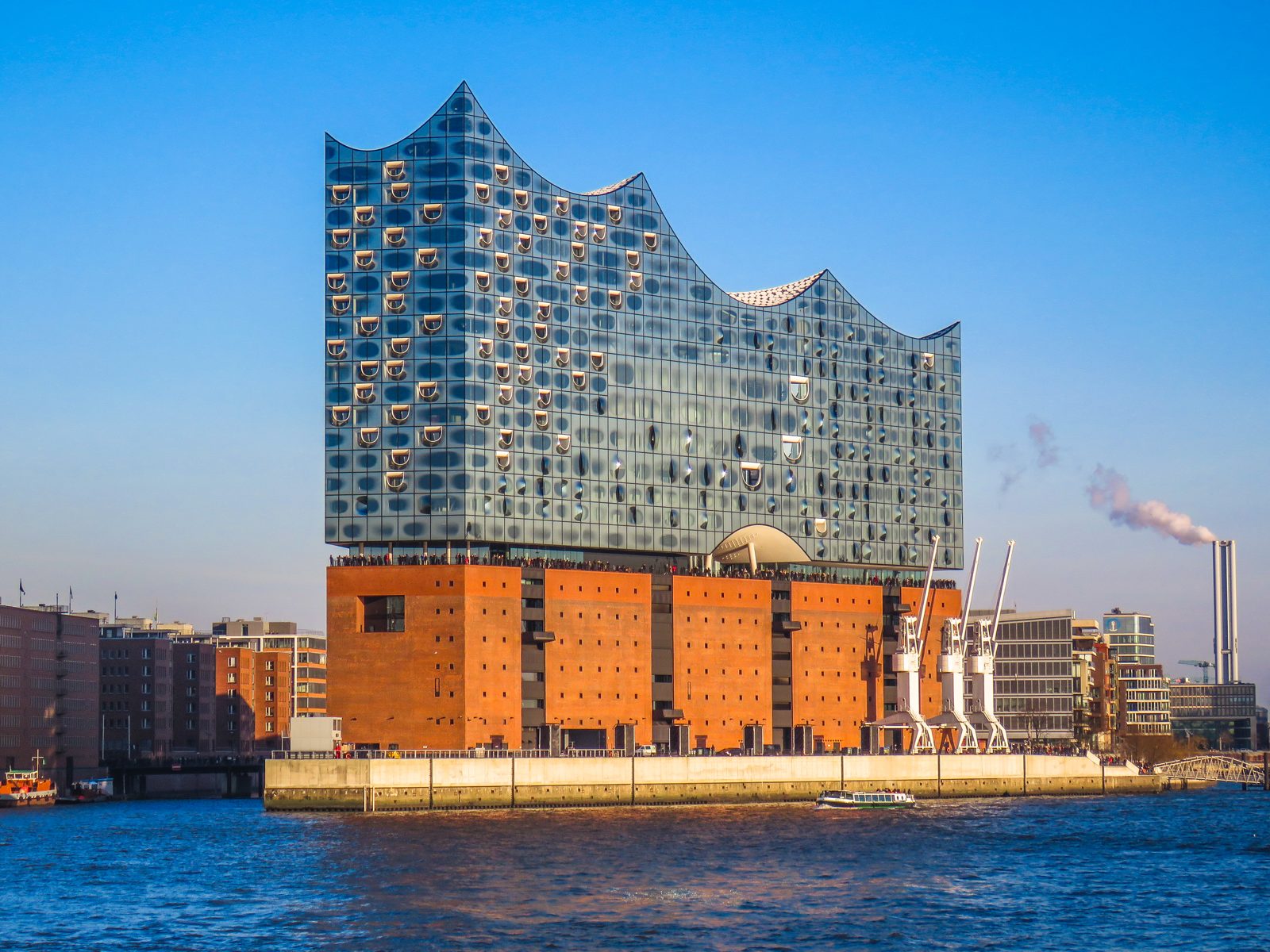
For the second anchor, Elbphilharmonie Plaza is open daily 10:00–24:00 with last admission 23:30, and pre-booked tickets currently carry a €3 booking fee while same-day residual tickets may be released free if capacity allows.[4] The platform’s height (37 m) and the curved escalator transit time (about 2.5 minutes) make it a clean late-run orientation point before returning to S/U/U3 links.[4]
Local moves that materially improve outcomes (8 moves)
- Treat 19:00–21:00 as your prime departure band from Bridge 3. You keep enough light for harbor texture while avoiding the coldest post-22:00 wait behavior.
- Read the timetable validity line, not just departure rows. The PDF has explicit date spans; if your travel date crosses timetable versions, confirm you are on the correct block.[2]
- Use line 62 as a bounded segment, not an open-ended drift. Ride Landungsbrücken → Neumühlen/Övelgönne first; only continue farther if your return buffer is intact.
- Model all late-evening errors as 30-minute penalties. Shoulder-season evenings feel calm, but one miss can erase your Plaza window.
- At Elbphilharmonie, pre-book if your target is a specific hour near sunset/blue hour. On-site free tickets are conditional on remaining capacity.[4]
- Keep one “insurance departure” before your hard cutoff. If your real deadline is midnight transit, do not board your mathematically last possible ferry.
- Work with wind and tide constraints, not against them. Official notes flag tide-dependent operations and gangway slope variability; this matters for comfort and accessibility pacing.[2]
- Use the local habit lens: harbor edge as an after-work social strip, not a checklist monument. The area’s rhythm (commuters, walkers, quick deck stops) rewards short, deliberate pauses over long static loitering.
Non-local traplines and better alternatives
Trap 1: treating line 62 like a guaranteed fixed-interval tourist boat
Better move: respect the operational note structure (15/30-minute bands, weekend seasonal tightening, tide-related caveats) and re-check same-day updates in HVV channels.[2][3]
Trap 2: buying tickets at the last minute with no fare plan
Better move: decide single vs day ticket before you descend to the pontoon; HVV’s AB single/day spread (€4.10 vs €8.20) is small enough that a second substantial ride often tilts value to day ticket.[3]
Trap 3: postponing Plaza entry decision until late night
Better move: lock a Plaza slot earlier, because last admission is 23:30, and spontaneous free access is capacity-dependent.[4]
Concrete execution card
- Line 62 daytime core cadence: around 15 min bands; shoulder bands around 30 min.[1][2]
- Weekend/holiday spring-summer uplift: around 10 min during 11:00–18:00 (March–October note).[2]
- Timetable block transition: 29.03.2026 → 30.03.2026 seasonal rollover.[2]
- Hamburg AB fares: single €4.10, day €8.20, app/shop discount 7%.[3]
- Plaza operating window: 10:00–24:00, last admission 23:30.[4]
- Plaza pre-book fee: €3 per ticket (individual/small groups).[4]
- Plaza viewpoint height: 37 m above ground.[4]
- Elbphilharmonie tube/escalator travel time: about 2.5 min.[4]
Portable takeaway artifact: shoulder-season script (90–130 minutes)
| Segment | Target window | Time budget | Decision rule |
|---|---|---|---|
| Landungsbrücken setup (Bridge 3) | 18:45–19:30 | 10–20 min | Confirm next two departures before boarding |
| Line 62 leg to Neumühlen/Övelgönne and return logic | 19:00–20:20 | 35–55 min | Keep one backup sailing in reserve |
| Move to Elbphilharmonie Plaza | 20:15–21:00 | 15–25 min | Enter before late-slot compression |
| Plaza dwell + transit exit | 20:30–22:00 | 25–40 min | Hard-stop by your insurance departure rule |
Hamburg gives you this route because water transport and urban culture are still stitched together in everyday use. If you keep the script compact and time-aware, the city feels less like an attraction sequence and more like a working harbor you can actually move through.
Sources
- Hamburg.de, "Hafenfähre Linie 62"
- HVV, "hvvlinienfahrplanF62.pdf" (validity blocks and service notes)
- HVV, "Single / Day Tickets"
- Elbphilharmonie, "Plaza"
- Hamburg Tourism, "Elbstrand Övelgönne – Spazieren, relaxen, Schiffe gucken"
- Käpt'n Hamburg, "Geliebter Elbstrand Hamburg Övelgönne - Tipps und Infos"
- NDR, "Hamburg: HVV erhöht Fahrkartenpreise um bis zu 13 Prozent" (2025-10-28)