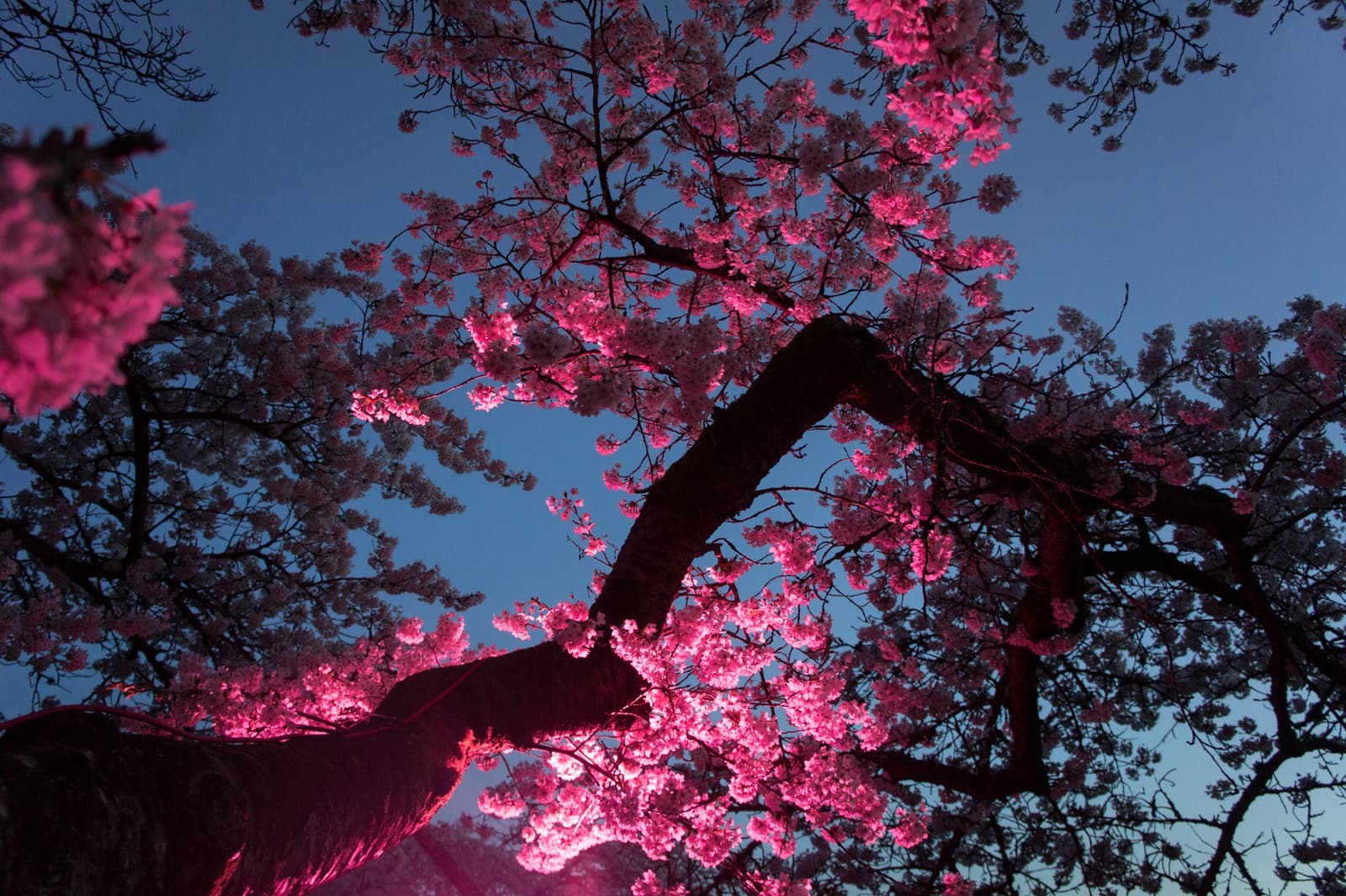
Vancouver’s cherry window is short, but it does not have to feel rushed if you treat it as a two-anchor sequence instead of a citywide scavenger hunt. The festival itself runs from March 27 to April 17, 2026.[1] Underneath that schedule is a deeper local layer: Vancouver Cherry Blossom Festival traces today’s spring ritual to trees that, in large part, came as gifts from Japan, and it frames the season with a civic line that locals repeat often—“there is no stranger under the cherry tree.”[2]
This version keeps the scope tight and outcome-focused:
- David Lam Park (Yaletown) during the early festival pulse
- VanDusen Botanical Garden during the later structured event window
Both anchors are non-food-primary and transit-friendly, so you spend your limited bloom hours in canopy light instead of in cross-town friction.
Why this two-anchor sequence works in practice
The first anchor is David Lam Park because the Festival’s Big Picnic is now planned as a two-day block (March 28–29, 2026), with event metadata showing a 10:30 to 16:30 operating window.[3] The same festival page notes roughly 100 Akebono cherry trees at the site and a short 4–7 minute walk from Yaletown–Roundhouse Station.[3]
The second anchor is VanDusen because it extends the seasonal rhythm with a different format: Sakura Days Japan Fair runs April 11–12, 2026, with explicit day-part cutoffs (Saturday 10:00–18:00, last entry 17:30; Sunday 10:00–17:00, last entry 16:30).[4] That hard entry structure is useful when weather and bloom overlap are uncertain.
The point is not to “see everything.” It is to secure two reliable spring experiences on two different weekend bands, with different crowd profiles.
Local timing mechanics that change your day
Vancouver light shifts quickly across this window. By mid-March, sunrise is around 7:35 and sunset around 19:10; by late March, daylight expands further.[5] That gives you two stable photo and walking bands:
- Morning band: softer contrast, fewer pause-clusters under dense branches
- Late-afternoon band: stronger backlight and warmer pink/white rendering
Locals on r/vancouver often post “first bloom” signals before broader travel media catches up, and those early-season posts are useful for deciding whether to move your outing up by a few days.[6]
The practical move is to choose one band and commit. Splitting one outing across too many neighborhoods usually burns the best light in transit transfers.
8 local moves, embedded in the route (not a generic checklist)
Start with David Lam by transit, not by parking search. Festival guidance explicitly flags limited parking and points people to transit/walk/bike; if you come from SkyTrain, use the Yaletown–Roundhouse exit and keep the 4–7 minute walk direct rather than circling for alternate entrances.[3]
At the park, treat the first pass as a continuity walk, not a stop-every-10-meters photo crawl. The Akebono canopy reads better when you keep motion and let openings arrive, especially if families and event booths are already filling in.[3]
Use crowd shape, not absolute headcount, to decide whether to stay or bail. If your walking pace keeps collapsing into shoulder-to-shoulder pauses, take one full outer loop and leave while light is still clean; you can return next day because Big Picnic spans two days.[3]
For the VanDusen leg, buy or confirm entry before you travel; Sakura Days is ticketed and has clear last-entry thresholds.[4] The local mistake is arriving late and assuming “I’m here, so I’m in.” The event clock does not work that way.
Inside VanDusen, use month-level garden hours as a planning guardrail: March 10:00–17:00, April 9:00–17:00.[7] Even outside festival days, this lets you avoid the false assumption that spring means late-evening access.
Budget transit before the day starts. TransLink’s current fare table gives you concrete ranges: adult stored value $2.70 / $4.00 / $5.10 (1/2/3 zones), adult cash/contactless $3.35 / $4.85 / $6.60, and DayPass $11.95.[8] The right choice depends on whether you are doing one anchor or two.
If you are stitching multiple hops, remember the 90-minute single-fare transfer validity across bus/SkyTrain/SeaBus and that all bus trips are 1-zone fare; these two rules often save more than trying to shave one stop off your walk.[8]
Finally, use community spotters as a confirmation layer. Local posts that aggregate where blossoms are currently peaking (for example Burrard, residential corridors, and park pockets) are often the fastest signal for whether your first-choice street has already thinned.[9][10]
Non-local trapline: 3 mistakes and the better alternative
Mistake 1: treating Vancouver cherry season as one giant all-city mission
People over-scope, then lose the best 2–3 hours in transfers and indecision.
Better alternative: lock two anchors only (David Lam + VanDusen), each with a clear time band and exit rule.[3][4]
Mistake 2: assuming event attendance is unlimited until closing time
At Sakura Days, published last-entry times (17:30 / 16:30) are real operational cutoffs.[4]
Better alternative: target arrival at least 60–90 minutes before last entry, especially on fair weekend.
Mistake 3: defaulting to car-first behavior near festival zones
Festival guidance explicitly warns about limited parking around David Lam.[3]
Better alternative: run transit-first with preselected fare mode and one fallback station plan.[3][8]
Spend range, access reality, and one navigation cue
A realistic non-food blossom day for one person:
- Transit-first lean: roughly $2.70–$6.60 depending on payment method and zone crossings[8]
- Multi-hop comfort: $11.95 DayPass if you plan repeated jumps[8]
- Garden admission layer: VanDusen regular adult admission listed at $11.19 (Jan–Mar) and $15.81 (Apr–Oct), event exceptions may apply[7]
Queue/reservation reality: Big Picnic is free/no ticket, but density is timing-sensitive; Sakura Days is ticketed and constrained by last-entry windows.[3][4]
Navigation cue that prevents drift: if you exit Yaletown–Roundhouse and can see Pacific Boulevard flow, do not improvise side detours first—walk directly to David Lam, complete one clean loop, then decide whether you are in “stay” or “switch” mode.
Sources
- Vancouver Cherry Blossom Festival home (2026 festival window)
- Vancouver Cherry Blossom Festival — About Us (history, hanami framing, tree-gift context)
- Vancouver Cherry Blossom Festival — The Big Picnic (two-day format, location, walking cue, parking note)
- Vancouver Cherry Blossom Festival — Sakura Days Japan Fair 2026 (dates, hours, last entry)
- Time and Date — Vancouver sunrise/sunset table for March 2026
- r/vancouver community signal (2026 first bloom check-in)
- VanDusen Botanical Garden — Hours & Admission (monthly hours, pricing)
- TransLink — Pricing and Fare Zones (fare table, transfer window, daypass)
- The Buzzer (TransLink local blog) — transit-access blossom spots roundup
- 604 Now — local blossom photo-location roundup