San Francisco is easiest to read when you follow one machine instead of ten attractions. The machine here is the cable car: not as postcard décor, but as a working system with operating windows, queue pressure, and a fixed rhythm that can make or break your evening.
This run keeps scope tight to two anchors:
- Powell/Hyde Cable Car line (Powell & Market → Hyde & Beach)
- Cable Car Museum (Washington-Mason powerhouse)
Both anchors are non-food, both are city-specific, and both reward sequencing over speed.
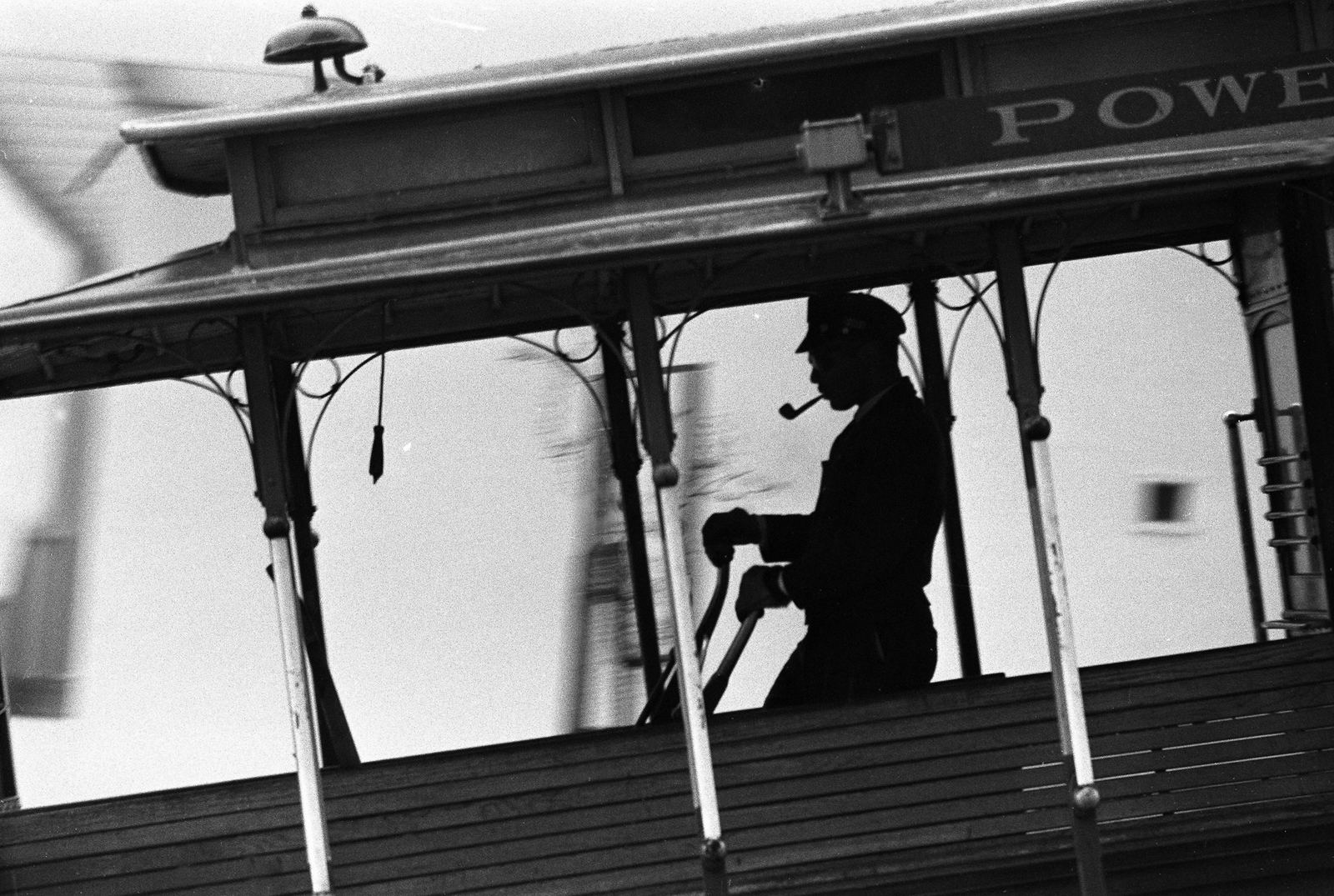
Image context: the cover photo shows a San Francisco cable car in service on the Powell corridor, the exact mobility object this route is built around.
Anchor 1: the object is the route — Powell/Hyde as a timing system, not a novelty ride
The SFMTA route card gives the hard frame first: Powell/Hyde runs 7 a.m. to 11 p.m. daily.[1] If you treat that as soft information, the route becomes a queue gamble; if you treat it as the day’s skeleton, the line becomes predictable.
The second hard frame is service frequency. SFMTA lists weekday headways at 20 min (morning), 10 min (midday), 7 min (evening), 20 min (late night); on weekends the line is 20 / 9 / 12 / 20 minutes across the same blocks.[1] That is enough structure to choose a boarding window instead of guessing from crowd mood.
Fare logic matters because the cable car is priced differently from regular Muni habits. SFMTA’s visitor pass page puts the 1-day passport at $15 with cable car included.[2] If your run is one scenic leg only, single-ride can still be rational; once you’re doing outbound plus a return or a same-day line correction, the pass threshold arrives faster than visitors expect.
A third operational detail is easy to miss and costly to ignore: SFMTA says key terminals require advance fare purchase during kiosk hours, 8 a.m. to 5 p.m. daily (Powell & Market, Bay & Taylor, Hyde & Beach).[3] Show up with unclear payment logic at those terminals and your queue position evaporates while you sort it out.
Anchor 2: the room behind the object — Cable Car Museum as operations context
From the line itself, the move that upgrades understanding is to include the powerhouse. The Cable Car Museum sits at 1201 Mason Street, runs 10:00–16:00 Tue–Thu and 10:00–17:00 Fri–Sun, is closed Monday, and has free admission.[4]
This is not filler culture between photo stops. Seeing the machinery and line heritage reframes the ride you just took from “tourist moment” into “urban system still functioning under load.” The city-specific texture is historical as well as operational: SFMTA frames cable cars as a San Francisco invention, now more than 150 years old and designated a National Historic Landmark in 1964.[5]
A local way to use this pairing is simple: ride first for motion, museum second for explanation. If you reverse it, you understand more but often lose daylight and queue leverage on Powell.
8 local moves that improve outcomes
First, pick one line on purpose. For this run, commit to Powell/Hyde and skip line-hopping early unless service conditions force it.[1]
Second, time your board around published headways instead of “the line looks long/short right now.” The route’s 7–20 minute frequency bands let you choose lower-friction windows.[1]
Third, decide fare strategy before you enter a terminal queue. Use the $15 day-pass breakpoint as your quick decision rule when your plan includes multiple cable car legs.[2]
Fourth, if you board at designated terminals during 08:00–17:00, settle fare purchase first; terminal prepay is operational, not optional.[3]
Fifth, ride one full directional leg before judging city flow. The elevation shifts and stop spacing teach you where to re-enter the line later with less friction.
Sixth, keep one safety behavior that locals repeat: at cable-car intersections, SFMTA notes the green “X” signal is for cable cars, not pedestrians.[5]
Seventh, treat the museum stop as a precision add-on: it is free, but it has a hard clock (16:00 or 17:00 close, day-dependent), so place it before your final evening loop if you want both anchors in one run.[4]
Eighth, use community signal, not just queue length, when deciding if a terminal is worth waiting out. Google Maps and Yelp trend data around these stops reflect crowd intensity and satisfaction patterns that often beat visual guesswork at curbside.[6][7]
Non-local trapline: 3 mistakes and cleaner alternatives
Mistake 1: turning the ride into a single checklist photo
Better alternative: run one directional leg with intent, then decide whether to reverse or transfer based on headway and queue conditions.
Mistake 2: buying fare logic too late
Better alternative: set your pass-vs-single threshold before you enter terminal flow; avoid wasting queue position on payment correction.[2][3]
Mistake 3: treating the museum as optional trivia
Better alternative: use the museum as your second anchor to understand line mechanics, then return to street level with better stop and timing judgment.[4]
Portable takeaway artifact: one-page field card (sunny vs windy/foggy)
| Condition | Board window | Ride shape | Museum slot | Why it works |
|---|---|---|---|---|
| Sunny / high demand | Midday shoulder using published ~9–10 min weekend/weekday midday cadence | One full leg first, no early hopping | After ride, before close | Protects queue position when casual demand spikes[1][4] |
| Windy/foggy / lower casual demand | Early evening using ~7–12 min evening cadence | Full leg + optional corrective leg | Before final loop if close window allows | Better chance to complete two anchors with less curb friction[1][4] |
The practical point is repeatability: one moving object, one machine room, one clean sequence. San Francisco rewards people who run systems, not checklists.
Sources
- SFMTA, Powell/Hyde route page (service span and frequency blocks)
- SFMTA, 1-Day Visitor Passport (price and inclusion)
- SFMTA, Cable Car Single Ride (terminal prepay window and fare rules)
- San Francisco Cable Car Museum, visitor info (hours, closure day, free admission)
- SFMTA, Cable Cars overview (150-year context; landmark framing; safety note)
- DuckDuckGo Lite result snapshot for Google Maps listing context (Cable Car Museum rating/close-time snippet)
- DuckDuckGo Lite result snapshot for Yelp local-review context (Powell/Hyde line review snippet and update recency)