If you want one New York move that reliably improves outcomes, use one object as your planning spine: the Staten Island Ferry departure board.
The useful local logic is not “ride it once for photos.” It is reading the board as a harbor clock, then making every downstream decision—queue timing, deck choice, return cadence—around that rhythm.
This guide keeps a strict two-anchor scope:
- Whitehall Terminal (decision point: when to enter the queue and where to stand)
- St. George Terminal (decision point: whether to loop back immediately or run a short Staten Island extension)
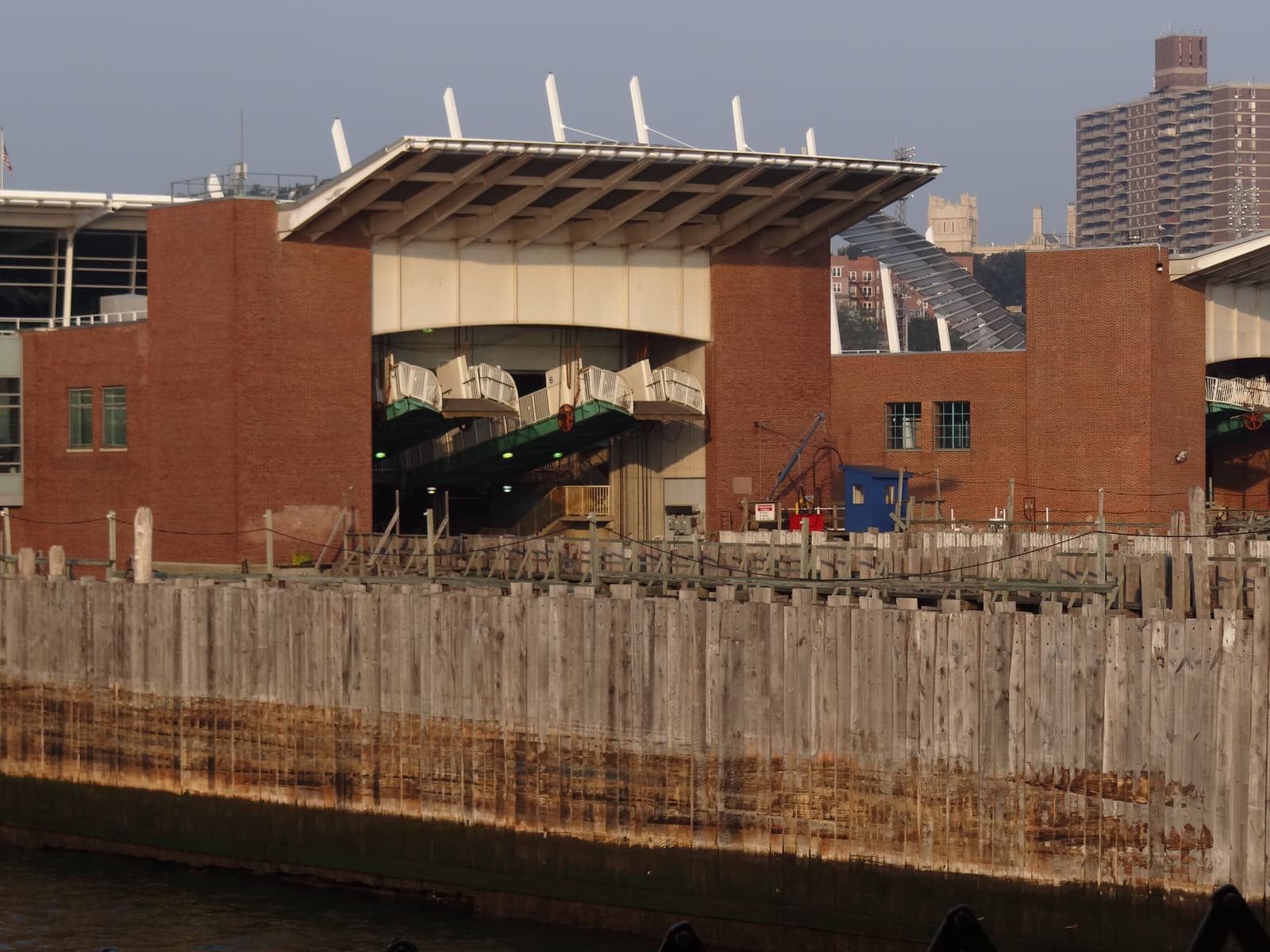
Image context: the hero image shows a Staten Island Ferry docking at St. George Terminal, the exact operational environment discussed in this article.
A place-specific texture detail matters here: the ferry has been city-operated since 1905, and locals still use it as everyday borough infrastructure, not a cruise product.[3] That civic identity is why timing discipline beats sightseeing spontaneity on this route.
Anchor 1: Whitehall Terminal — the board is your real ticket
The service itself is simple on paper and easy to misuse in practice.
NYC DOT’s schedule page states four hard anchors: the ride is free ($0), runs every day year-round, crossing time is about 25 minutes each way, and schedules differ by weekday/weekend patterns.[2] In other words, money is not the constraint; cadence is.
The ferry-facts sheet adds the system-level numbers that clarify crowd behavior: a 5.2-mile run, 24/7 operation (365 days), over 16 million annual riders, about 45,000 weekday passengers, 117 weekday trips, and 15-minute rush-hour spacing under four-boat operation.[3]
Those numbers explain the main Whitehall mistake: people treat free service as “always easy boarding.” During peak windows, queue timing still decides whether your crossing is smooth or stalled.
Anchor 2: St. George Terminal — where the run stays clean or falls apart
At St. George, most visitors lose time by turning a timed crossing into an unstructured pause.
If you disembark, wander without checking the next board cycle, and return when the queue is already full, your “free” run often costs more time than expected. If you check the next departure first, then allocate the gap, the same route stays friction-light.
NYC DOT’s published schedule confirms that outside rush intensification, 30-minute spacing is common through large parts of the day and overnight sequences.[2] That means one missed boat can insert a meaningful idle block, especially on tight Manhattan plans.
Recent local confirmation from SILive during the February 2026 blizzard also reinforces the operational point: when disruption conditions hit, the line can shift to modified patterns (for example, sustained 30-minute intervals), making board-first decision habits even more important.[7]
8 local moves that make this ferry actually useful
First, treat Whitehall security and boarding flow as part of travel time; arrive with intent, not at random minute zero.
Second, for skyline-first riders, pick deck position before boarding opens: commit early to an outer rail or open-deck edge for the Lower Manhattan recede and harbor frame, and avoid late deck switching once the cabin loads.
Third, use the board as your master clock: if the next departure is inside a short window, board now and optimize views on the vessel, not in the terminal queue.
Fourth, hold a tight crossing envelope in your plan: 25 minutes sail + terminal in/out buffer, not “about an hour” guesswork.[2]
Fifth, if you need only a quick Manhattan harbor reset, run one out-and-back cycle and keep your St. George dwell short; if you want island extension time, decide that before disembarking.
Sixth, during weekday pressure windows, assume higher crowding because the line carries roughly 45,000 riders across 117 trips; this is commuter infrastructure first.[3]
Seventh, in weather-stress days, check same-day service updates before committing fixed downstream reservations; recent storm coverage shows schedule compression can happen quickly.[7]
Eighth, when queues look saturated at either terminal, prioritize guaranteed next departure over perfect photo spot. Missed cycle cost is usually larger than marginal viewpoint gain.
Non-local trapline: 3 common mistakes and better alternatives
Mistake 1: “It’s free, so timing doesn’t matter.”
Better alternative: free fare removes cost friction, not cadence friction. Build around the board and published headways.[2][3]
Mistake 2: “I’ll decide return timing after I finish exploring St. George.”
Better alternative: lock return departure first, then spend the remaining window.
Mistake 3: “Disruptions are rare enough to ignore.”
Better alternative: on weather or incident days, check live/local confirmation before committing tight chains; recent Feb 2026 disruption reporting showed modified frequency under storm conditions.[7]
Time window, spend range, queue reality, and one navigation cue
A clean non-food harbor run usually fits 1.5–2.5 hours if you do one crossing each direction plus one short terminal buffer block.
Expected spend (transport-only):
- Staten Island Ferry fare: $0 each direction[1][2]
- Optional terminal coffee/snack budget is separate and highly variable.
Queue reality:
- Rush rhythm can tighten to 15-minute departure spacing with heavier demand; missing one slot still costs momentum.[3]
- Many other windows operate closer to 30-minute rhythm, so late arrival errors are more expensive.[2]
Where to stand/sit:
- For skyline framing on Whitehall → St. George, pre-commit to your side early and avoid last-minute aisle churn.
- For a calmer return cabin, board decisively at St. George instead of waiting until the final call surge.
One navigation cue that prevents most first-timer waste: at Whitehall, run this sequence—entry check → board time check → queue lane choice → deck position commitment. Reversing that order is how people miss the useful boat while chasing a better angle.
Sources
- NYC DOT — Staten Island Ferry overview (free year-round service statement)
- NYC DOT — Staten Island Ferry schedule (free fare, ~25-minute crossing, weekday/weekend departure tables)
- NYC DOT — Staten Island Ferry facts (1905 city operation, 5.2-mile run, 24/7 365 operation, annual and weekday ridership, 15-minute rush-hour pattern)
- NYC311 — Staten Island Ferry contact/complaint channel (official operating authority confirmation path)
- Google Maps community listing — Whitehall Terminal
- Google Maps community listing — St. George Ferry Terminal
- SILive (Feb 23, 2026) — blizzard service disruption report noting modified Staten Island Ferry schedule patterns
- Staten Island Ferry official Facebook page (service-update and rider-signal channel)
- Wikimedia Commons image source (hero)