London has many dramatic river views, but the useful local ritual is not sightseeing—it is using the Thames as a repeatable weekday lane when the Tube feels compressed.
This guide keeps a strict two-anchor scope:
- Embankment Pier (decision point: when to board and how to pay)
- Greenwich Pier (decision point: how to time the return without wasting an hour)
The point is not to maximize photos. The point is to run one clean river rhythm that works on real weekdays.
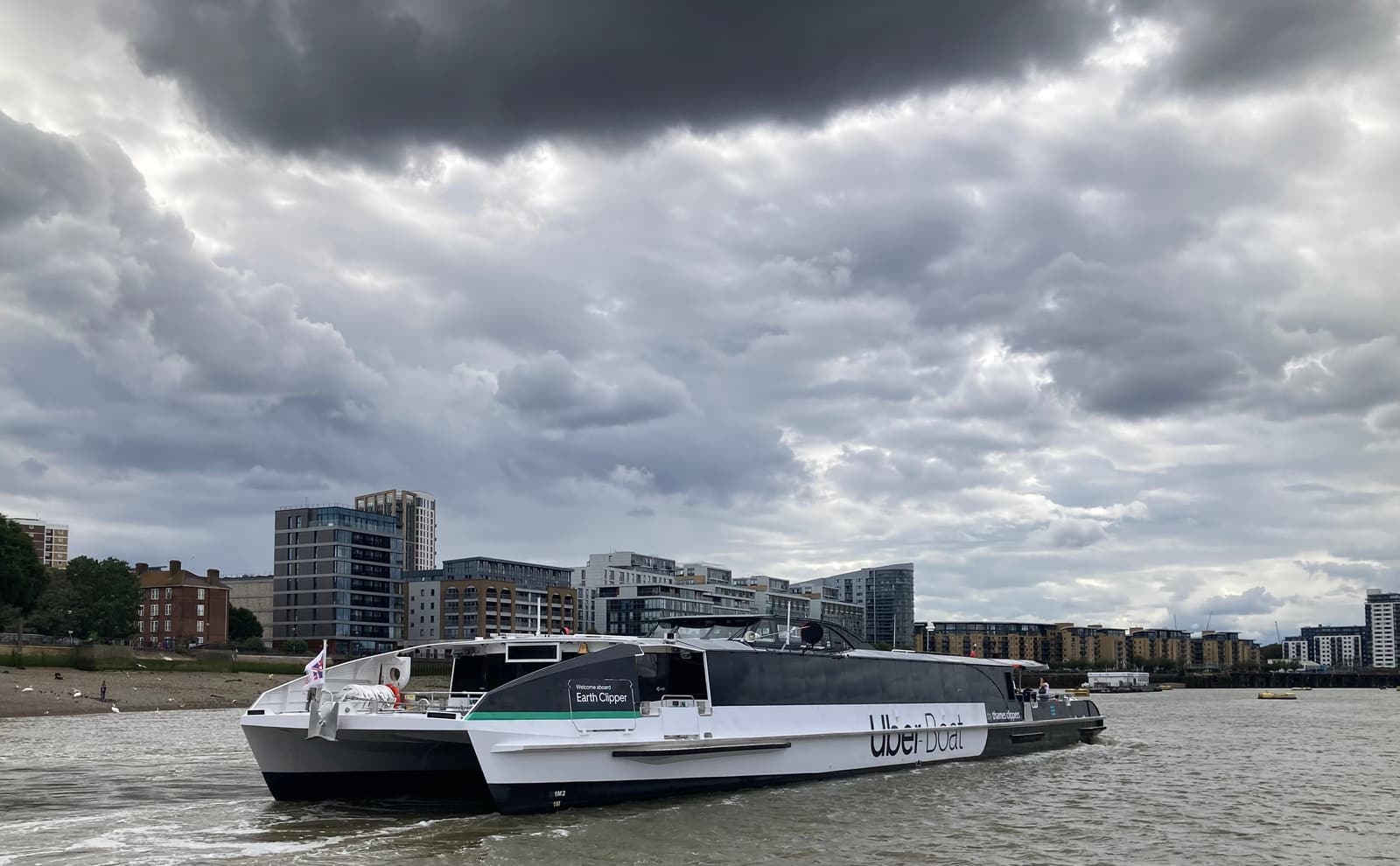
Image context: the cover image shows an Uber Boat by Thames Clippers vessel at Greenwich, the same operating context discussed in this article.
In London, this ritual also carries a place-specific texture that visitors often miss: the river is still treated as active infrastructure, not a scenic backdrop. Barrier tests and tidal conditions can change calls in the eastern section, so river travel here is genuinely “city operations,” not just leisure branding.[4]
Anchor 1: Embankment Pier — where payment logic and timing decide the whole ride
The first non-local mistake is assuming the river works like automatic TfL fare-capping logic. It does not.
Uber Boat’s ticket rules explicitly state that the TfL daily cap does not apply on river services, and that riders must touch in and touch out with the same card.[2] If you board first and sort payment assumptions later, you usually overpay.
For the Embankment → Greenwich pattern, the practical fare anchors are clear:[2]
- Central & East single (Oyster/contactless/app): £11.40
- Central & East single at pier ticket office/machine: £16.90
- Central only single (contactless): £9.90
That spread is why locals treat payment method as part of route planning, not admin.
On timetable shape, weekday westbound/eastbound tables show the line starts early and runs deep into evening. Example morning chain in one westbound sequence: North Greenwich 06:00 → Greenwich 06:08 → Embankment 06:41.[1] On late eastbound runs, Embankment departures can reach 23:25, with corresponding arrivals around 00:02 at Greenwich and 00:10 at North Greenwich in the posted weekday table.[3]
Anchor 2: Greenwich Pier — where people either keep flow or lose it
Greenwich is where this ritual becomes either elegant or clumsy.
If you step off, wander indefinitely, and only then check return times, the river punishes you with long waits. If you check the next eastbound/westbound window first, the same outing feels frictionless.
Google Maps review streams around both Embankment and Greenwich repeatedly surface the same pattern: people enjoy the calmer ride but underestimate pier queue bursts in peak windows and event evenings.[5][6] The smoother behavior is to treat pier arrival like rail boarding—arrive with buffer, then settle.
8 local moves that make this ritual work
First, choose payment channel before you leave home, because river capping assumptions are where many first-timers leak money.[2]
Second, board in the 17:00–19:00 commute shoulder only if you are willing to queue; otherwise shift one boat earlier or later and keep the same route shape.
Third, treat Embankment → Greenwich as roughly a 35–45 minute water segment in normal flow, then decide immediately whether to continue, return, or transfer onward.
Fourth, if you need only a short cross-river hop, use dedicated cross-river logic instead of full-zone habits: the operator lists £4.10 cross-river single products with 3–7 minute crossings on specific links.[2]
Fifth, remember the weekday Commuter AM window (05:00–09:30) exists for regular users; if your pattern is repeated, that product logic may beat ad-hoc taps.[2]
Sixth, check service alerts before committing your evening. Published alerts include Thames Barrier test windows (for example 10:15–12:45 on Tuesday 7 April) that suspend calls at specific eastern piers.[4]
Seventh, at Greenwich, decide return boat first, then spend the gap; reversing that order is how visitors lose a full cycle.
Eighth, when running this ritual weekly, keep one fallback rail route in your notes for fog/event disruption days instead of improvising on the pier.
Non-local trapline: 3 mistakes and better alternatives
Mistake 1: “TfL daily cap will protect my river fares anyway.”
Better alternative: assume no cap protection on river services and pick your payment method intentionally before boarding.[2]
Mistake 2: “I’ll decide the return after I finish wandering.”
Better alternative: lock the return departure right after landing at Greenwich, then spend the remaining window.
Mistake 3: “River services are fixed like the Tube all day.”
Better alternative: read service alerts for barrier tests/tidal constraints before departure, especially for eastern calls.[4]
Time window, expected spend, queue reality, and one navigation cue
A useful weekday run is 2.0–3.0 hours total: one outbound ride, short Greenwich loop, one return ride.
Expected spend (adult, typical single-direction fare logic):
- Central & East single via contactless/Oyster/app: £11.40
- Central & East single bought at pier: £16.90
- East-only single via contactless/Oyster/app: £6.20[2]
Queue reality: piers can load quickly around commuter peaks and event nights, so a 10–15 minute buffer is practical rather than cautious.
One navigation cue that saves first-timer friction: at Embankment, run this order—station exit decision → pier confirmation → payment ready → queue position. Most missed boats happen when people invert this sequence.
Sources
- Uber Boat by Thames Clippers — Weekday westbound timetable (service matrix and sample departure chain)
- Uber Boat by Thames Clippers — Ticket information (zone model, fare table, no TfL daily cap on river, cross-river fares, commuter AM window)
- Uber Boat by Thames Clippers — Weekday eastbound timetable (late eastbound timing including late-night arrivals)
- Uber Boat by Thames Clippers — Service alerts (Thames Barrier closure windows and disruption mechanics; recent update stream)
- Google Maps community listing — Embankment Pier (local review and queue/wayfinding signal surface)
- Google Maps community listing — Greenwich Pier (local review and boarding-flow signal surface)
- Reddit r/london community search channel — Uber Boat / Thames Clipper rider discussions
- Wikimedia Commons image source (hero)