Melbourne sells St Kilda as loose beach atmosphere: a tram to the bay, a little wind, a little sunset, then whatever happens next. The more useful 2026 version is far more exact. If you want the city's cleanest wildlife-meets-infrastructure handoff, treat St Kilda Pier as a ticketed dusk corridor, not as a casual foreshore wander. The little-penguin platform at the pier's end now runs as a nightly free-booking experience, and the people who get the outing right are the ones who plan around the platform's clock rather than around vague beach time.[1][2][3][5]
The operating facts are the whole point. Parks Victoria says St Kilda Breakwater is home to about 1,400 little penguins and that the new 150-metre elevated viewing boardwalk opened in October 2025 to protect the colony while giving visitors a safer way to watch.[2] Phillip Island Nature Parks, which runs the experience, says the platform sits 450 metres along the pier, sessions operate nightly after sunset, Session 1 starts about 30 minutes after sunset, Session 2 about 1 hour 30 minutes after sunset, and each session lasts about 1 hour.[3] Parks Victoria adds that there are 150 spots per session, so the nightly cap is 300 people, and bookings are essential.[2][4] That turns the whole outing into something more precise than the old "go to St Kilda and see what happens" logic.
This precision is why the route is worth doing. The redeveloped pier, marked complete in November 2025, sits on Bunurong Sea Country and was rebuilt as a wider, more accessible public edge with new toilets, tiered seating, and better protection for the penguin habitat.[4] You are walking out along one of Melbourne's most familiar leisure fronts, but the payoff is not nostalgia. It is the moment when tram city, bay wind, protected wildlife habitat, and a long straight concrete walk all line up.
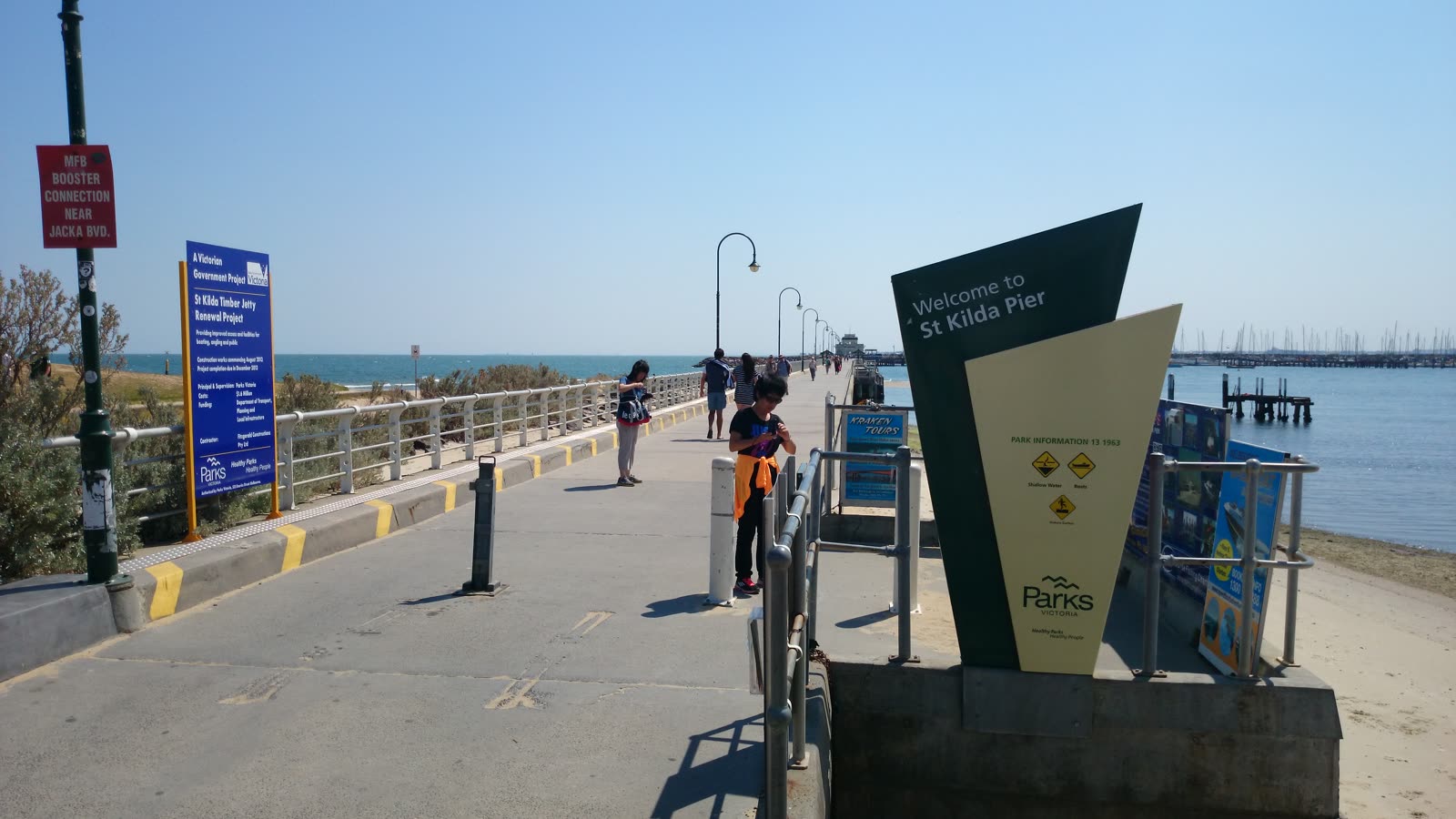
Image context: the cover uses a documentary photograph of the St Kilda Pier entrance rather than a skyline postcard or an animal close-up. That is the right recognition cue because the real local mistake here is not failing to spot a penguin. It is failing to understand that the outing begins with committing to one exact, exposed walk out to the platform.[9]
Why this is a seasonal moment and not just a year-round attraction
The penguins are there all year, but the outing changes with light, wind, and booking pressure.[3] Session 1 is stronger if you want St Kilda to stay legible as a city-beach threshold: there is still color in the sky, the bay has not fully flattened into darkness, and the walk out feels like part of the experience rather than dead transit. Session 2 is stronger if your priority is colony activity itself. Phillip Island Nature Parks says that by about 1 hour 30 minutes after sunset the colony is more active and the birds are settling in for the night.[3]
The other seasonal variable is access scarcity. SBS reported in January 2026 that once the new ticketing system went live, more than five months of sessions were snapped up almost immediately, with tickets unavailable through the end of March before later months were released.[5] A recent St Kilda Sea Baths local guide says tickets are generally released weekly on Tuesdays at 10:00 am and that cancelled tickets are re-released online.[6] That Tuesday rhythm is local-guide information rather than the official rulebook, but it lines up with recent community chatter from travelers watching for May slots and seeing cancellations reappear within the week.[6][7]
The practical conclusion is simple: if you want this outing to work, think like someone booking a small event, not like someone improvising a beach promenade.
8 local moves that materially improve the outing
- Go tram-first from the CBD. Parks Victoria and Phillip Island Nature Parks both point to trams 12, 16, and 96 stopping at St Kilda Pier, while paid foreshore parking is limited.[1][3]
- Book Session 1 if you care about the whole corridor, Session 2 if you care more about penguin behavior. The first slot preserves twilight; the later slot gives you fuller colony activity.[3]
- Treat the ticket-release rhythm as its own task. The most useful local habit right now is to watch release windows and then keep checking for cancellations rather than assuming "sold out" means finished.[5][6][7]
- Arrive at the pier entrance 20-30 minutes before your session. That buffer is a practical inference from the 450-metre walk, the exposed wind, and the way late arrival turns the whole route into a rushed corridor instead of a reset.[3][4]
- Bring a wind layer even on a mild city evening. The official experience runs in all weather except extreme conditions, and the bay edge cools faster than the CBD streets behind you.[3]
- Keep the outing dry and quiet. Parks Victoria prohibits alcohol on the pier and breakwater, and the whole point of the new boardwalk is wildlife protection rather than nightlife spillover.[1][2]
- Use the kiosk and tiered-seating zone as the waiting room, not the far end of the platform. The redevelopment added those public-space features so the approach can absorb people before the guided viewing phase begins.[4][8]
- Do not budget extra "search time" for penguins outside the platform. The protected viewing setup is now the intended way to see them; wandering the wrong edges after dark wastes effort and undercuts the conservation logic.[2][3]
Non-local trapline: 4 common mistakes and cleaner alternatives
Mistake 1: treating St Kilda Pier like an unticketed sunset stroll
Better alternative: decide on your session first, then build the evening around that booked slot.[2][3][5]
Mistake 2: underestimating how fast free sessions disappear
Better alternative: watch the release window, then keep an eye on cancellations instead of giving up at the first "no availability" screen.[5][6][7]
Mistake 3: arriving exactly at session time
Better alternative: reach the pier entrance early enough to walk the 450 metres calmly, use the public seating and kiosk zone, and let the wind and light settle before the viewing starts.[3][4][8]
Mistake 4: treating the platform like a casual photo pit
Better alternative: respect the wildlife-protection setup: no flash, no loud lingering, and no expectation that the boardwalk is there for improvised nightlife behavior.[2][6]
Concrete go details
- Best time window: build the evening around sunset; Session 1 begins about 30 minutes after sunset, Session 2 about 90 minutes after sunset.[3]
- Whole-route time: roughly 90 minutes including early-arrival buffer, the 1-hour session, and the walk back.[3][4]
- Expected spend: the viewing session itself is free; costs are just tram fare or paid parking if you drive.[1][3][6]
- Queue and reservation reality: free but ticketed, 150 people per session, 300 per night, and bookings are essential.[2][4]
- Where to stand or sit: wait near the kiosk and tiered-seating zone before entry, then keep your movements minimal once guides funnel everyone onto the viewing platform.[4][8]
- Navigation cue: if you reach Pier Road and can see the long straight pier with the kiosk ahead, stay on that line; the platform is at the far end, 450 metres out, not somewhere hidden along the beach edge.[3][8]
- Transport anchor: trams 12, 16, and 96 serve the pier from the CBD.[1][3]
- Habitat anchor: the colony is about 1,400 penguins, and the protected viewing boardwalk runs 150 metres.[2]
Melbourne has grander sunset views and easier animal encounters than this. It has very few dusk moves that explain the city so neatly. One tram ride, one exposed pier walk, one protected wildlife platform, and one hour of disciplined looking are enough to show how much of Melbourne still lives at the seam between infrastructure and bay.
Sources
- Parks Victoria, "St Kilda Pier and Breakwater" (tram access via routes 12/16/96, limited parking, pier rules on litter, dogs, and alcohol).
- Parks Victoria, "Little Penguins" (about 1,400 penguins, 150-metre viewing boardwalk, 150 visitors per session, free ticketed access, nightly platform closure after sessions).
- Phillip Island Nature Parks, "St Kilda Penguins / St Kilda Penguin Viewing Experience" (nightly operation, Session 1 about 30 minutes after sunset, Session 2 about 90 minutes after sunset, 1-hour session length, 450-metre walk, all-weather note, CBD access).
- Parks Victoria, "St Kilda Pier Redevelopment" (project completed in November 2025, opened in December 2024, Bunurong Sea Country, wider accessible pier, toilets, tiered seating, 450-metre length, up to 300 nightly visitors).
- SBS News, "St Kilda's penguin-viewing ticket system is frustrating visitors, as spots fill up fast" (January 2026 local report on fast sellouts, two one-hour sessions, 150-cap sessions, and no-show frustration).
- St Kilda Sea Baths, "St Kilda Penguin Colony at St Kilda Pier – The Ultimate Visitor Guide" (local operator guide noting weekly Tuesday ticket release rhythm, cancellation re-release, no-flash etiquette, and practical parking context).
- Reddit
r/melbournechat, "St Kilda Penguin Viewing" (February 2026 community thread on May ticket scarcity and late cancellation availability). - Visit Victoria, "St Kilda Pier and Breakwater" (official attraction page confirming kiosk, skyline-view positioning, and the pier as a current public destination).
- Wikimedia Commons, "File:St Kilda Pier.jpg" (documentary source page for the cover image used in this article).