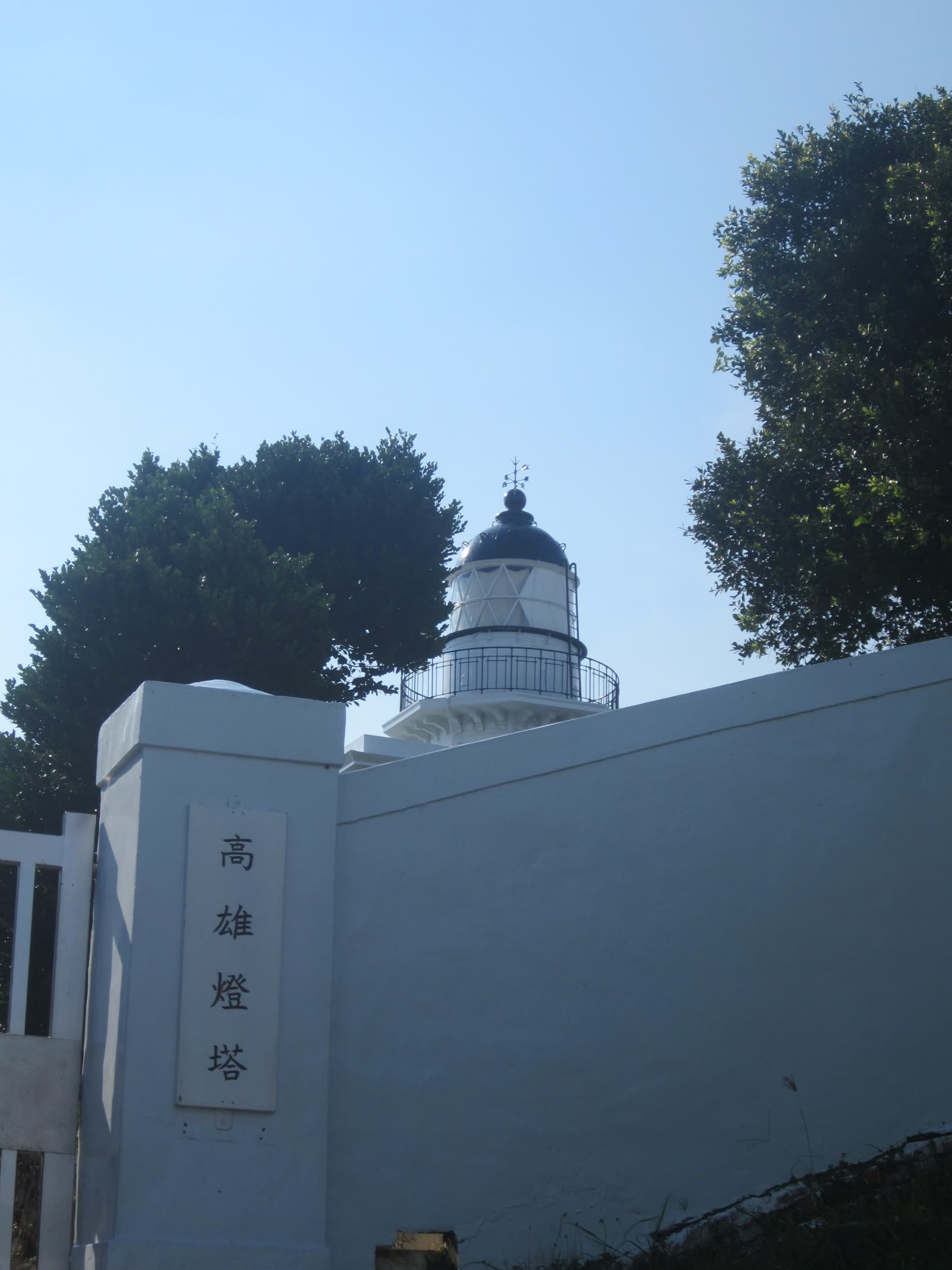
Kaohsiung in warm weather does not need a long island itinerary to make sense. The useful local move is tighter and more climatic. Wait until the worst of the afternoon heat starts loosening, take the regular Gushan-Cijin ferry across the harbor, and climb to Kaohsiung Lighthouse while the port is still readable in daylight. The night portion can belong to the water and the ride back, not necessarily to the summit itself.[1][2][3][4]
That sequence works because the two anchors solve different problems. The Gushan-Cijin ferry changes your body temperature and your pace almost immediately. Kaohsiung City Shipping's current route page, updated 2026-01-28, shows the adult pedestrian fare at NT$30 with electronic ticketing support for iPass, EasyCard, and iCash 2.0, while the timetable keeps the line frequent enough to behave like a real urban crossing rather than a one-off excursion boat.[1] On weekdays, the official schedule tightens to every 8-12 minutes from 16:10-20:00, then relaxes to every 12-15 minutes from 20:00-23:55.[1] The lighthouse does the opposite job. The Tourism Administration describes Kaohsiung Lighthouse, also commonly signed as Cihou Lighthouse, as a municipal heritage structure built in 1883, the only white octagonal brick lighthouse in Taiwan, with a tower 15.2 metres tall and a balcony facing the harbor.[2]
The seasonal part is that Kaohsiung stops feeling punitive once the harbor starts moving air at you. The official lighthouse facts matter, but the lived version is more specific. Cijin is a long, narrow island edge, and a recent reader note on Nick Kembel's local guide pegs the north-south length at about 10 km, which helps explain why most first visits should stay concentrated at the northern end instead of pretending the whole island belongs in one evening.[4] The same guide is stronger on the transport trap that catches non-locals: there are two different ferry products, and the one you usually want for this route is the normal Gushan service, not the pricier KW2 "Sea Bus" aimed at a different rhythm and departure window.[4]
Image context: the cover uses a real Wikimedia Commons photograph of Kaohsiung Lighthouse. That matters here because the article is about physical recognition and timing. You want the lighthouse to register as a working harbor object on a hill, not as a stylized skyline image.[7]
Why this is a seasonal moment instead of a generic sightseeing loop
In cooler cities, a viewpoint can be an all-day anytime proposition. Kaohsiung's waterfront does not behave like that. The regular ferry is short enough that you can use it as a thermal reset, and the climb makes more sense when the sun has dropped from its harshest angle but the harbor still has contour.[1][2][4] The city government's 2023 night-tour article is helpful here even if you should still verify current access before committing to the summit: it describes the restored lighthouse as a place to watch the port move from sunset into illumination and lists visitor hours as 09:00-21:00, closed Monday.[3] Taken together, that suggests the cleanest version of the outing is late-day ascent first, then sea-facing evening second.
There is also a Kaohsiung-specific texture that lifts the route above generic "sunset viewpoint" advice. The lighthouse did not begin as a leisure platform. It sits on the northern headland guarding the old harbor entrance, and the city government notes that its dome-top weather vane is unusually marked with Chinese characters for east, west, south, and north.[3] That small detail matters because Cijin is one of those places where orientation is half the pleasure: harbor on one side, open sea on the other, and the old port city's scale suddenly visible.
8 local moves that make the route land
- Use the regular Gushan ferry, not the KW2 Sea Bus, unless you explicitly want the tourist-terminal version. Nick Kembel's guide makes the distinction clear: KW2 is more expensive and afternoon-limited, while the common Gushan crossing is the practical local default.[4]
- Treat card payment as the normal move. The official operator accepts iPass, EasyCard, and iCash 2.0, which saves friction at boarding.[1]
- If you pay cash, carry coins anyway. Both the operator's page and local traveler notes point to coin-ready boarding habits, and the wrong ferry choice can amplify the no-change annoyance.[1][4]
- Go inside to buy your ticket if you are boarding on foot. Nick Kembel distinguishes the pedestrian flow from the separate bicycle and scooter lanes, which keeps the pier logic cleaner the first time through.[4]
- Take the ferry in the late-day band, not in the middle of the afternoon. The official cadence is best when the day starts cooling, and the whole point of this post is that wind and light do real work here.[1]
- Keep the island scope narrow. The northern end already contains the ferry arrival, the lighthouse climb, and the harbor view; trying to "complete" a 10 km island in one outing weakens the sequence.[2][4]
- Use the lighthouse as the high point, then give the evening back to the waterfront. The summit organizes the harbor, but the return boat is what lets the night actually feel maritime.[1][3]
- Use live place layers as signage checks, not as your historical authority. Google Maps is useful here because current photos and access cues for both Cijin Ferry Station and Kaohsiung Lighthouse help you confirm you are walking toward the right entrance and hill path.[5][6]
Non-local trapline: 3 common mistakes and the better alternative
Mistake 1: paying for the wrong ferry because "Pier-2 ferry" sounds close enough
Better move: decide whether you want convenience-terminal novelty or the normal island crossing. For this article's route, the Gushan ferry is the correct backbone: cheaper, more frequent, and better aligned with a lighthouse-first evening.[1][4]
Mistake 2: arriving too early, getting flattened by heat, and then treating Cijin as disappointing
Better move: wait for the afternoon to break. The ferry is short, the official evening cadence is strong, and the whole reward of this route is that the harbor breeze starts doing part of the city's work for you.[1]
Mistake 3: trying to cover all of Cijin in one pass
Better move: stay loyal to the north end. The lighthouse, the harbor threshold, and the return crossing are enough for one high-quality outing; the island's longer cycling spine can belong to another day.[2][4]
Concrete go details
- Best time window: board in the late afternoon or early evening, with the official weekday ferry rhythm especially useful from 16:10-20:00; after 20:00, keep the slower 12-15 minute spacing in mind for the trip back.[1]
- Expected spend: NT$30 for an adult pedestrian one-way on the regular ferry; budget a little extra only if you knowingly choose the KW2 Sea Bus or add bike rental.[1][4]
- Queue and reservation reality: no reservation culture here, just cadence. The practical question is not booking but whether you are on the correct pier and ready to board with card or coins.[1][4]
- Navigation cue: Kaohsiung Lighthouse is listed by the Tourism Administration at No. 34, Qixia Ln., Qijin Dist., and Google Maps' live place layer is useful for the final approach cue once you are on Cijin.[2][6]
- Transit cue from the city side: Nick Kembel notes the Gushan pier is about a 6-minute walk from Exit 1 of Sizihwan Station and about 10 minutes on foot from the KW2/Pier-2 area if you need to correct course.[4]
- Where to stand: if you are walking, follow the pedestrian ticket flow rather than drifting into the scooter and bicycle lanes; that one small pier habit removes most first-timer confusion.[4]
- Hard numbers worth remembering: NT$30, 16:10-20:00, 20:00-23:55, 8-12 minutes, 12-15 minutes, 1883, 15.2 metres, 09:00-21:00, 10 km, 6 minutes, 10 minutes.[1][2][3][4]
Kaohsiung does not always reward bigger plans. On the right evening, one harbor crossing and one hilltop marker are enough. The ferry cools the body, the lighthouse restores the city's geometry, and the ride back lets the port finish the sentence.
Sources
- Kaohsiung City Shipping, "Gushan Ferry Station to Cijin Ferry Station" (official route page updated
2026-01-28, with fare, supported transit cards, and timetable bands including the16:10-20:00and20:00-23:55evening cadence). - Tourism Administration, Republic of China (Taiwan), "Kaohsiung Lighthouse" (official attraction page noting the lighthouse's
1883construction,15.2-meterheight, white octagonal brick form, balcony, and address). - Takao, Kaohsiung City Government Information Bureau, "Kaohsiung Lighthouse is Open for Night Tours" (
2023-02-28city-government feature describing the restoration, the harbor-view sequence from sunset into illumination, the Chinese-character weather vane, and listed visitor hours of09:00-21:00, closed Monday). - Nick Kembel, "How to Visit Cijin Island in Kaohsiung City's Port" (local guide updated in
2026, covering the difference between the Gushan ferry and the KW2 Sea Bus, walking links from transit, and current traveler confirmations about fares and island scale). - Google Maps, "Cijin Ferry Station, Kaohsiung" (live local place layer used here as a current orientation and signage check).
- Google Maps, "Kaohsiung Lighthouse" (live local place layer used here as a current orientation and final-approach check for the lighthouse headland).
- Wikimedia Commons, "File:Kaohsiung Lighthouse 2013-07-29.jpg" (documentary cover-image source).