Hiroshima's Peace Memorial Park works best when you do not arrive like a conqueror of monuments. Let the streetcar put you down at Genbaku Dome-mae, cross slowly toward the Motoyasu River, and give the first 20 minutes to orientation rather than photography. The ritual is not "see the Dome, enter the museum, leave." It is tram stop, river edge, Dome, cenotaph axis, museum, and then a quieter return to the water.
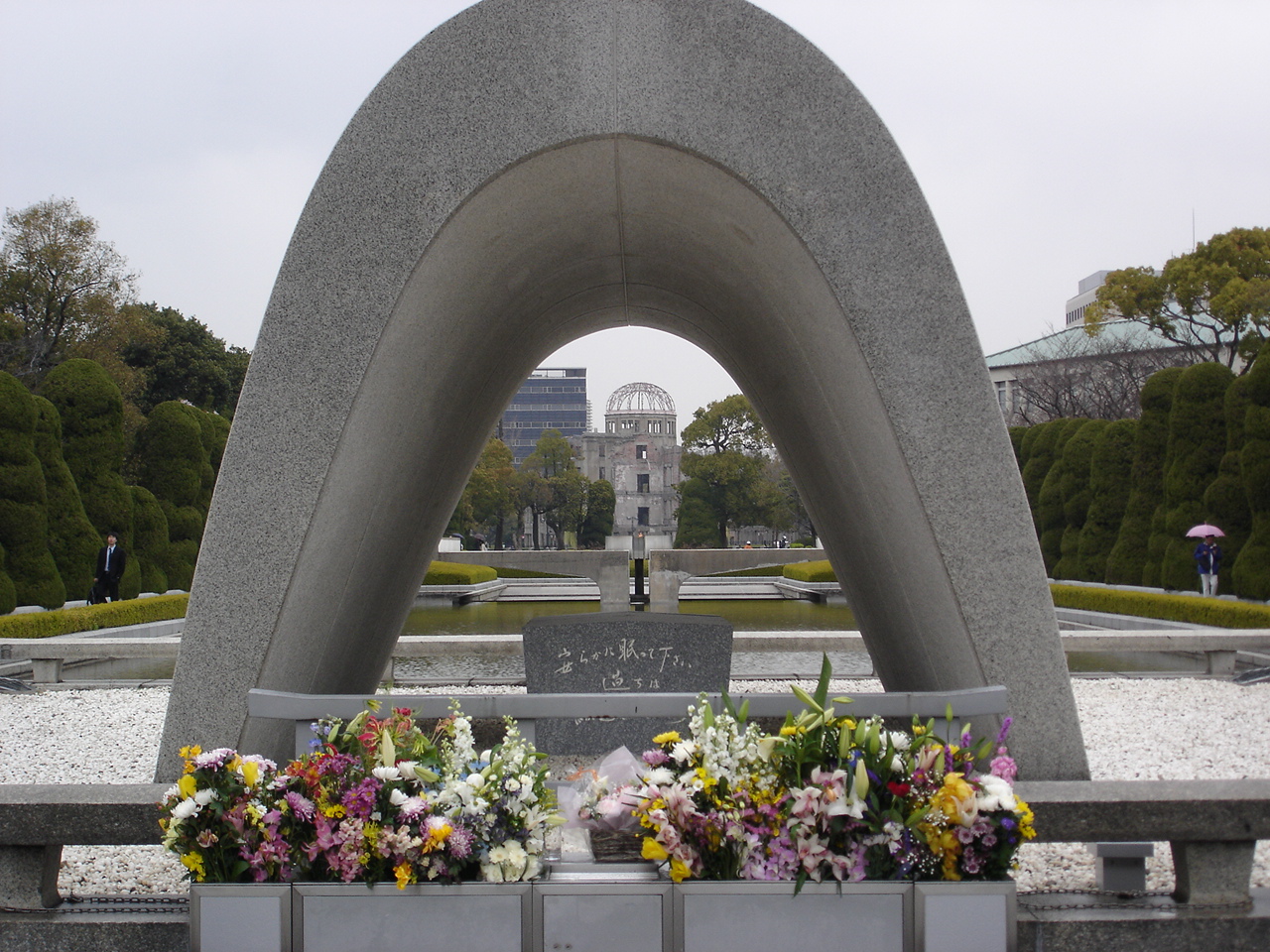
The anchor is tight: one tram arrival and one river-facing memorial room. Hiroshima Electric Railway's visitor route sends streetcar lines 2 and 6 from Hiroshima Station toward Genbaku Dome-mae, with the Dome, Peace Memorial Park, and museum grouped around that stop.[1] That matters because the tram does not hide the city inside a tour-bus bubble. It slides through normal streets, releases you at a stop with an everyday platform rhythm, and makes the memorial district feel embedded in Hiroshima rather than sealed off from it.
Use the tram even if a taxi looks easier. From Hiroshima Station, Japan Guide puts lines 2 or 6 to Genbaku-Domu Mae at about 15 minutes and 240 yen; Hiroden's own sightseeing route frames the hop as about 13 minutes.[1][7] The difference is not worth optimizing. The local move is to board with enough time that you are not carrying railway-station haste into the park. If you have luggage, solve that first at the station or hotel. The tram stop is a threshold, not a locker-room strategy.
The best first window is early, before late-morning compression. A practical rhythm is to reach Genbaku Dome-mae around 8:15, pause at the Dome and river before the largest groups have settled into the paths, then enter the museum after you have already understood the outdoor geometry. The museum's tourism page says its extended 7:30-8:30 opening is reservation-only, and it also lists reservation-only evening extensions by season: 17:30-18:30 from March to July, 18:30-19:30 in August, 17:30-18:30 from September to November, and 16:30-17:30 from December to February.[2] If you can book those edge windows, they are calmer. If you cannot, do not bluff the system; enter after the reserved period or plan the outdoor walk first.
Eight small moves keep the visit coherent. First, get off at Genbaku Dome-mae rather than starting at the museum door, because the Dome should meet you across the street and water before the exhibits do.[1][3] Second, stand back from the Dome fence and read it from more than one angle; UNESCO emphasizes that its value is symbolic and material, a preserved ruin in its original location, not an object to be entered.[3] Third, cross toward the river before opening the camera app. The water is the pace-setter.
Fourth, keep the cenotaph sightline intact. The park is not a theme park of separate memorials; the arch, pond, museum, and Dome form a designed line of attention. Fifth, silence your phone before the museum queue, not inside the exhibition room. Sixth, choose a 60- to 90-minute museum block unless you know you process hard material slowly; recent community reports warn that late-morning crowding can push visitors along the exhibition flow, making lingering difficult.[6] Seventh, use the Peace Memorial Park Rest House or a bench after the museum before making another sightseeing decision. Eighth, leave by walking back to the river or Hondori rather than snapping shut the experience at the exit.
The first visitor mistake is treating the Dome as the photograph and the museum as the content. That splits the place in the wrong place. UNESCO's listing describes the Genbaku Dome as the surviving skeletal form of the former Hiroshima Prefectural Industrial Promotional Hall and notes the 0.40-hectare inscribed property inside a 42.7-hectare buffer zone that includes the park.[3] Those numbers are useful because they remind you that the "site" is not only the building. The official memorial landscape is wider than the frame most visitors try to capture.
The better alternative is to use the Dome as a hinge. Arrive, look, cross, sit, then proceed. Tripadvisor's community review pattern is blunt in a helpful way: recent reviewers repeatedly describe the Dome as powerful, solemn, easy to reach by tram, and also vulnerable to photo-crowd behavior around peak moments.[5] That is not a reason to avoid it. It is a reason to slow the first approach and let the crowd pass through your field of view instead of joining every cluster.
The second mistake is assuming Hiroshima Peace Memorial Museum is a simple walk-up because the admission price is modest. The pressure point is not only cost; it is capacity and timing. The official tourism page recommends buying web tickets in advance and warns that on-site ticket purchases may involve waits when the museum is crowded.[2] GetHiroshima's June 2026 local update adds a sharper seasonal warning: during the August 8-16 Obon period in 2026, the museum is moving to all-day online reservation only, with no walk-up entry in that window.[4] If your Hiroshima date sits inside that week, booking is not a convenience. It is the plan.
The third mistake is stacking Miyajima, Hiroshima Castle, okonomiyaki, the Dome, and the museum into one heroic day without giving the memorial district a recovery pause. The park is central, and transit makes it easy to connect onward, but ease is exactly the trap. After the museum, step outside and do nothing useful for 10 minutes. Cross back toward the Motoyasu River, or walk south through the park until the city noise returns gradually. Hiroshima is not asking you to stay solemn all day. It is asking you not to turn the most difficult hour into a transit errand.
The fourth mistake is entering the park only from the busier museum side. If you come by streetcar, the stop name itself teaches the route: Genbaku Dome-mae means the Dome comes first. That order gives the visit a civic texture specific to Hiroshima. The tram is a living piece of city movement, the Dome is a preserved interruption, and the river carries both into the park. You can feel the ordinary city and the memorial city occupy the same block.
For a clean first pass, set the route this way: board line 2 or 6 from Hiroshima Station, allow about 15 minutes for the ride, get off at Genbaku Dome-mae, spend 20 minutes outside before committing to the museum, use a reserved 7:30-8:30 or seasonal evening slot only if you have booked it, and hold 60 to 90 minutes for the exhibition itself.[1][2][6][7] If you visit during August 8-16, treat online reservation as mandatory planning because the 2026 Obon rules remove the walk-up fallback.[4]
The payoff is not efficiency. It is proportion. A taxi can deliver you to an entrance. A tram arrival gives you the city first, then the ruin, then the river, then the designed line of remembrance. Hiroshima becomes clearer when the first move is public, slow, and slightly exposed to ordinary street life. The memorial district can absorb visitors, but it rewards the ones who let the river set the pace before the schedule takes over.
Sources
- Hiroshima Electric Railway, "Sightseeing" - official visitor route showing streetcar lines 2 and 6 from Hiroshima Station to Genbaku Dome-mae for the Atomic Bomb Dome, Peace Memorial Park, and museum.
- Hiroshima Peace Tourism, "Hiroshima Peace Memorial Museum" - official tourism listing covering access, web-ticket advice, and reservation-only extended opening windows.
- UNESCO World Heritage Centre, "Hiroshima Peace Memorial (Genbaku Dome)" - heritage listing for the Dome, preserved ruin, inscribed property, and Peace Memorial Park buffer zone.
- GetHiroshima, "Visiting Hiroshima Peace Museum in August? Read this first" - June 2026 local update on Obon crowding and the August 8-16, 2026 all-day online reservation system.
- Tripadvisor, "Atomic Bomb Dome, Hiroshima" - community review page with recent visitor observations on access, atmosphere, crowding, sunset, and public-transit convenience.
- Reddit r/JapanTravelTips, "Is the Hiroshima Peace Memorial Museum timed?" - recent community discussion on museum crowd flow, late-morning pressure, and practical timing expectations.
- Japan Guide, "Hiroshima Peace Memorial Museum and Park" - practical access note for tram lines 2 and 6 from Hiroshima Station to Genbaku-Domu Mae, with ride time and fare.
- Wikimedia Commons, "File:Genbaku Dome and Hiroshima Peace Memorial (8062056099).jpg" - real photograph by Peter Broster used as the article image.