The ferries are worth watching after you have stepped off one. Writing about the Dartmouth waterfront, the Halifax Dogventures blogger describes an ordinary walk spent watching boats cross the harbour; she had already taken the ferry to and from work that day.[1] The same movement can be a commute, a view from shore, or a small excursion. You can borrow all three perspectives on a trip from downtown Halifax to Alderney Landing.
Give it a morning. The published timetable allows 12 minutes for a typical crossing, but the pleasure of this little journey lies partly in the gap between boats.[2] Step aboard, let Halifax draw away, spend some time looking back from Dartmouth, then return. A ticket expiry is useful information; it need not become the purpose of the outing.
Choose the crossing before the boat arrives
Inside the Halifax terminal, look for Alderney on the departure information. Both ferry routes cross to Dartmouth, but they deliver you to different parts of it. A local Reddit discussion about confused visitors describes people joining the Woodside queue when that boat arrives, then discovering that they have missed downtown Dartmouth.[3] For this outing, stay with the Alderney departure even if another boat is loading first. The destination name matters more than the direction across the water.
For a quieter first ride, I would choose a weekday between 10:00 and 11:30 a.m. Discover Halifax recommends mornings after rush hour; this particular window is a suggested plan, not a guarantee of empty seats.[4] Aim to reach the terminal 10 minutes before departure, with payment ready. Halifax Transit asks passengers to enter the waiting area individually so staff can count them.[2] Let that small procession set the pace.
The regular Alderney schedule offers 15-minute intervals through much of the weekday daytime, with 30-minute intervals on weekends.[2] Check the operator’s current service notices before setting out. In an August 2, 2026 local discussion, one passenger reported reaching the cutoff for the waiting area while people behind had to wait for another sailing.[5] That was a busy summer day, not a forecast for your morning. It does explain a second common mistake: treating a short crossing as a promise of a short door-to-door trip. If you have a timed commitment afterwards, leave room for another departure.
Keep the ticket; loosen the timetable
As checked on October 13, 2026, the ordinary adult fare is C$3. Budget C$3–6 per adult for this out-and-back: one fare if the return fits within your valid transfer, two if you stay longer.[6] This is a walk-up transit service; the local family-ride discussion describes getting off and boarding again, rather than reserving a round-trip seat.[8]
Paying cash, bring the exact fare and ask for a paper transfer when you pay. The operator says paper transfers remain valid for up to 90 minutes after the end of the route, in either direction; use the expiry actually marked on yours.[6] An individually purchased HFXGO ticket lasts 150 minutes from activation. Set up the app in advance, then activate that ticket when you are ready to board.[10] Those are different clocks, so a blanket instruction to “come back within ninety minutes” leaves out something useful.
There is also a newer option. Fare-system supplier Masabi confirmed the launch of account-based HFXGO payment on September 30, 2026: riders can load money and scan their phone at the ferry platform entrance.[7] This “Tap & Ride” balance is distinct from buying an individual mobile ticket. The municipality says only the balance-and-barcode method counts toward fare capping.[6] For a simple two-crossing outing, choose the method you understand and have it ready before reaching the gate.
The upper deck, when available, gives the crossing its generous feeling. Discover Halifax recommends it for harbour views and suggests bringing a layer even in summer.[4] Find a seat with a view back toward Halifax as you leave. Watch the waterfront separate into buildings, gaps and water; then let your attention shift to the approaching shore. Keep the boarding route clear while choosing your spot.
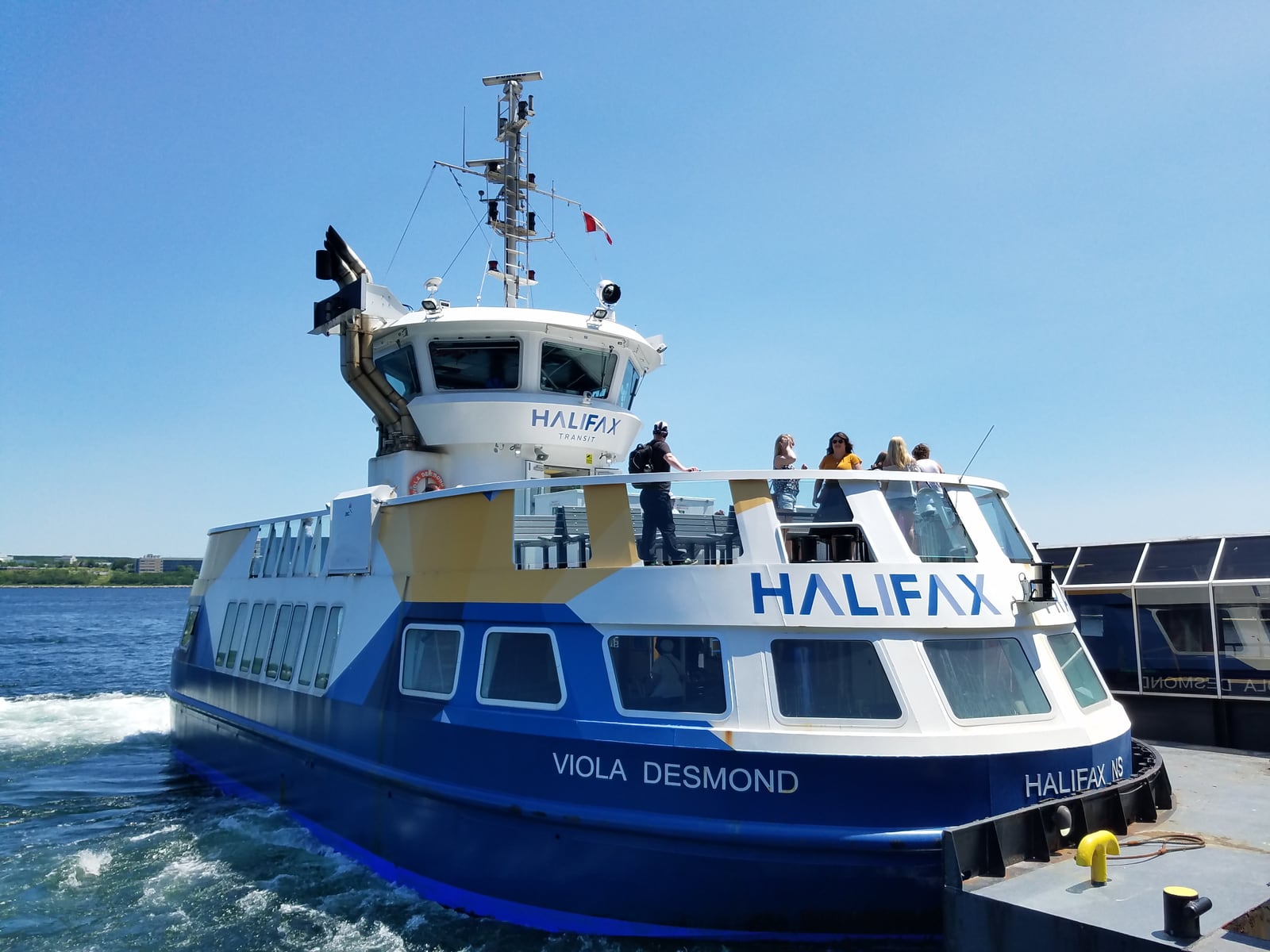
The names on these boats are another way the city travels with you. Viola Desmond, shown in the photograph, ran a beauty business on Halifax’s Gottingen Street; her resistance to segregation became part of Canadian civil-rights history. Another ferry carries the name of Mi’kmaq poet Rita Joe.[2] Reading a vessel’s name gives a familiar-looking commuter boat a particular life to remember. The photograph identifies one member of the fleet, not the boat promised for your departure.
A pause on the Dartmouth side
At Alderney, get off with everyone else. When a parent asked the local forum whether a family could remain aboard for the return, riders repeatedly explained that passengers must disembark and board again.[8] Staying in your seat is the third visitor trap. Follow the crew’s directions, and join the return queue when you are ready; an unexpired ticket does not reserve a place on a full boat.
Allow 20–30 minutes on the waterfront beside the landing before deciding whether to head back. That is a suggested pause, easily shortened or extended. The harbourwalk gives this shore its own perspective: the Halifax Dogventures account describes watching ferries from the paved waterfront route, with the skyline across the water.[1] You can enjoy that change of viewpoint close to the terminal without turning a short outing into the full walk toward Woodside.
Look back at the crossing you have just made. From here, the ferry becomes small enough to see as part of the harbour’s working pattern. Someone else is now enjoying the view from the seat you left. If the next departure gives you a comfortable margin before your transfer expires, take it. If you want to linger, the second fare is already in the budget. You have reached the other shore; give yourself time to be there.