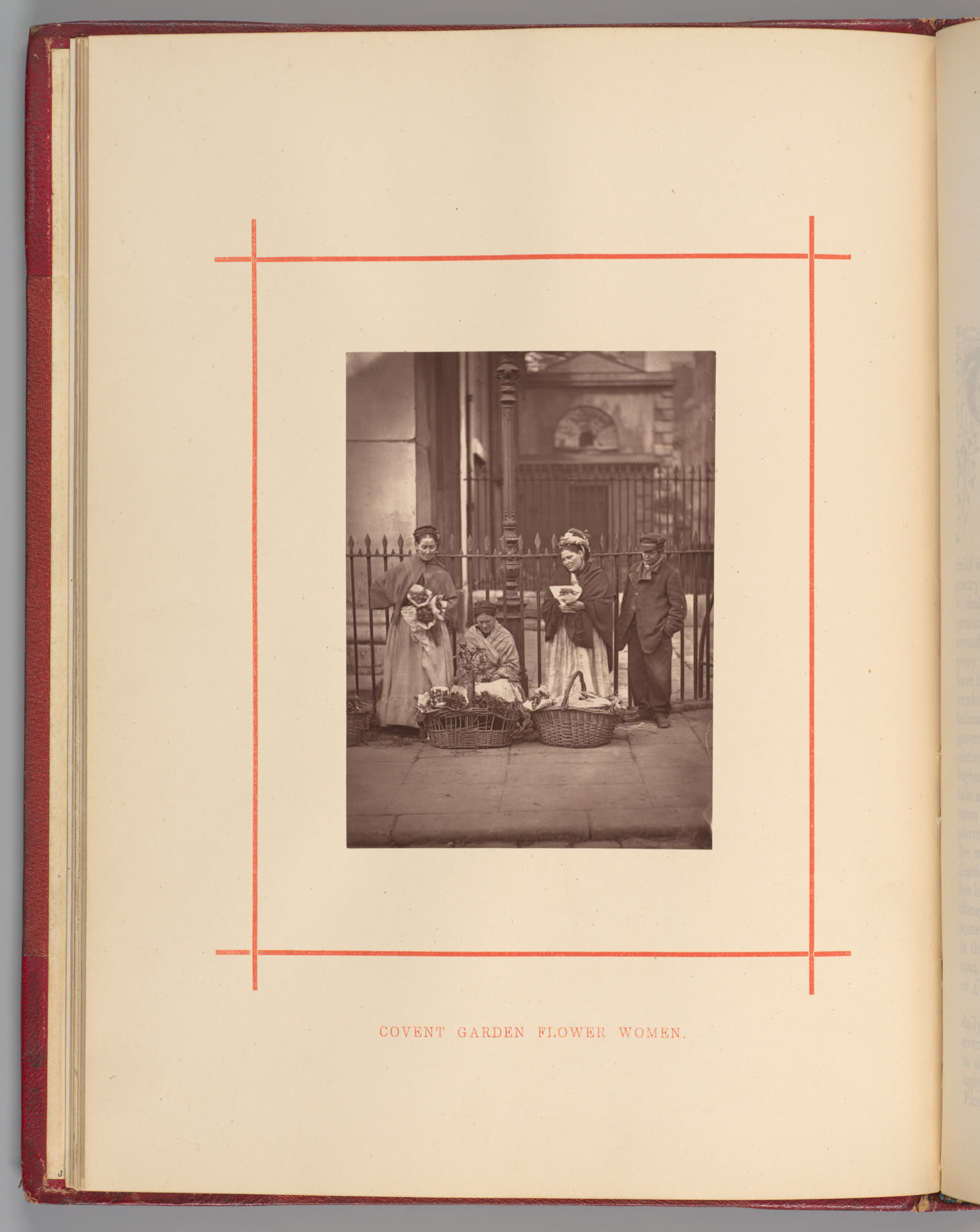
Woodburytype is easy to underrate because it does not announce itself like a camera, a lens, or a dramatic darkroom effect. It is a reproduction process, and reproduction processes often get filed as supporting cast. But in the last third of the nineteenth century, Woodburytype solved a problem that mattered deeply to photographic art: how could a photograph enter a book as a printed object without losing the continuous tone that made it feel photographic in the first place?
That question was not cosmetic. Early photographic prints could be beautiful, fragile, and specific, but they did not slide easily into ordinary publishing systems. Engraving could translate a photograph into printable lines, but translation came at a cost: tone became interpretation, and the photograph's claim to optical contact weakened. Woodburytype offered a stranger compromise. The final print was not a light-sensitive photograph in the usual sense. It was a photomechanical image made from pigmented gelatin pressed through a mold, yet it could hold tonal gradation with unusual smoothness.[5][6]
The result occupies a fascinating middle zone. It is not simply a photograph, because the image on the page is not formed by silver salts reacting to light. It is not simply an illustration, because its tonal information still descends from a photographic negative rather than from a hand-drawn translation. Woodburytype made ink and gelatin behave as if they remembered the camera.
Tone Had To Become A Material
The core mechanics explain why the process felt so compelling. In broad terms, a light-hardened gelatin relief was made from a photographic negative, that relief was converted into a printing mold, and warm pigmented gelatin was pressed or cast so that thicker and thinner deposits produced darker and lighter tones.[5][6] The key is thickness. Instead of breaking tone into dots or lines, the process used physical depth to carry gradation.
That is why descriptions of Woodburytype often return to two linked qualities: continuous tone and slight relief.[5][6] Continuous tone meant the image could keep the smooth transitions that viewers associated with photographs: skin, fog, cloth, street shadow, softened masonry, a face receding into brown. Relief meant the print was not only an image on paper but a thin object sitting on paper. Tone had body.
This material logic makes Woodburytype different from later halftone dominance. Halftone would win the publishing economy by breaking photographs into printable dots that newspapers and magazines could reproduce cheaply at scale. Woodburytype's claim was more luxurious and more exacting. It said: before mass image culture accepts the dot, let photography enter print as molded tone.
A Street Book Needed A Trustworthy Surface
John Thomson and Adolphe Smith's Street Life in London shows why that mattered outside a process manual. The Met identifies its copy as a 1870s book of Woodburytypes by Thomson with text by Smith, first released in monthly installments and now understood as among the early published collections of social documentary photographs.[1] London Museum frames the project through the workers, traders, and shop owners of Victorian London, while the LSE Digital Library stresses the collaboration between Thomson's photographs and Smith's detailed passages based on interviews.[2][3]
The book therefore needed two things at once. It needed photographic specificity: actual bodies, street stalls, baskets, pavements, postures, faces, work clothes, and the awkward time of people holding still before a camera. It also needed circulation: pages, captions, essays, monthly release, binding, and readers who could encounter urban labor without standing in Covent Garden or Whitechapel themselves.[1][2][3][4]
Woodburytype served that double demand. In the cover image, the plate titled Covent Garden Flower Women is not isolated as a modern cropped JPEG. The whole page remains visible: cream paper, red printed border, mounted photograph, caption, book edge. That page context is not incidental. It is the medium's argument in miniature. A street encounter has become a printed artifact, and the artifact asks to be read as both evidence and design.[1]
The photograph itself benefits from the process. The flower baskets need low, dark mass; the women's skirts need soft transitions; the iron fence needs edge; the stone background needs atmospheric recession. A harsher line translation would turn the scene into a report. A weak photographic print might turn it into a fading relic. Woodburytype lets the image keep a documentary sobriety while also becoming a durable page object.
The Page Is Not Neutral
The danger, of course, is to treat that smoothness as innocence. Street Life in London is documentary, but it is not raw street life spilled directly onto paper. Thomson chose the frame. Smith wrote the accompanying text. The people photographed were converted into named or typed subjects for readers. The book's own title promised "permanent photographic illustrations," a phrase preserved in institutional records and digitized copies.[1][4] Permanence was part of the pitch.
Woodburytype intensifies that pitch because it makes the image look materially settled. A print with stable tone and a clean page setting can make social facts feel more orderly than they were. The viewer meets poverty, labor, vending, performance, and survival through a composed rectangle. The red border on the page is a small but revealing sign: the book does not merely deliver evidence. It frames evidence.
That does not weaken the project. It makes it more modern. Documentary photography has always lived inside this tension between witness and construction. The Woodburytype page makes the tension visible. It says: here is a photograph from life, but here is also a book, a caption, a printing method, a readerly contract, and a market for looking at social conditions from a controlled distance.[1][2][3]
Why The Process Still Feels Alive
Woodburytype's historical window was limited, but its artistic lesson remains useful. It reminds us that photographic meaning is never only captured at the camera. Meaning also happens when the image is stabilized, multiplied, captioned, bound, sold, archived, scanned, and re-seen. A negative is one stage. A print is another. A book page is another. A museum digitization is another still.
This is why Street Life in London is a strong anchor for the process. If Woodburytype were used only for polite celebrity portraits, it would still be technically interesting. In Thomson and Smith's hands, the process becomes socially charged. It makes workers and street figures reproducible without surrendering them entirely to caricature. It lends the book a visual seriousness that fits its reform-minded documentary ambition while also exposing the limits of any polished representation of urban hardship.[2][3]
The medium's beauty is therefore not separate from its pressure. The warm brown tones, soft shadows, and mounted page can feel calm, almost elegant. The subjects are not calm. They are working, waiting, selling, enduring, being arranged for the camera, and then being arranged again for the reader. Woodburytype lets those pressures coexist because it is itself a pressure process: gelatin, mold, pigment, paper, and publication all compress the photographic image into a portable form.[5][6]
That is the deepest reason to keep looking at Woodburytype. It does not merely sit between photography and printing as a historical curiosity. It shows the moment when photographic tone learned to travel as ink without forgetting that it had once been light. In Street Life in London, that technical achievement becomes an ethical and aesthetic problem: the city can be made visible, but only through a surface that is already made, framed, and addressed to someone else.[1][3][4]
Sources
- The Metropolitan Museum of Art Collection API, object 259687, "Street Life in London. With Permanent Photographic Illustrations Taken from Life Expressly For This Publication" - object metadata for John Thomson's 1870s Woodburytype book and source for the public-domain article image.
- London Museum, "Street life & work in 1877" - museum story on John Thomson and Adolphe Smith's 1877 book, Victorian street workers, and the social-documentary subject matter.
- LSE Digital Library, "Street Life in London" collection page - institutional description of the 1877 collaboration, working-class Londoners, interviews, and documentary-photography significance.
- Wellcome Collection, "Street life in London: with permanent photographic illustrations taken from life expressly for this publication" - digitized public-domain copy and bibliographic record.
- American Institute for Conservation Wiki, "Woodburytype" - process overview covering Woodburytype as a photomechanical continuous-tone process with relief characteristics.
- Getty Conservation Institute, Atlas of Analytical Signatures of Photographic Processes: Woodburytype - technical PDF on Woodburytype materials, structure, and identification.