
The surviving clip of John Cage performing Water Walk on I've Got a Secret looks, at first glance, like a joke that somehow escaped into the CBS studio. Cage stands in suit and tie among a bathtub, a pitcher, radios, ice, a pressure cooker, a rubber duck, flowers, and a piano. The audience has been warned that some people will laugh. Cage accepts the laughter before the piece begins. Then he walks through a score in which ordinary household objects become events, not props, and in which prime-time television briefly turns into an exhibition space for experimental art.[1][2]
That is why the footage still matters. It is not a cute record of a famous avant-gardist enduring a game-show crowd. It is a public demonstration of a larger mid-century argument about what art can ask from attention. Cage had already made the boundary of music unstable through chance procedures, silence, radio, percussion, and everyday noise. Water Walk, composed in 1959, pulled those concerns into a format that television understood poorly but transmitted beautifully: a body moving through timed actions while the studio audience, host, cameras, and home viewers all became part of the situation.[2][3]
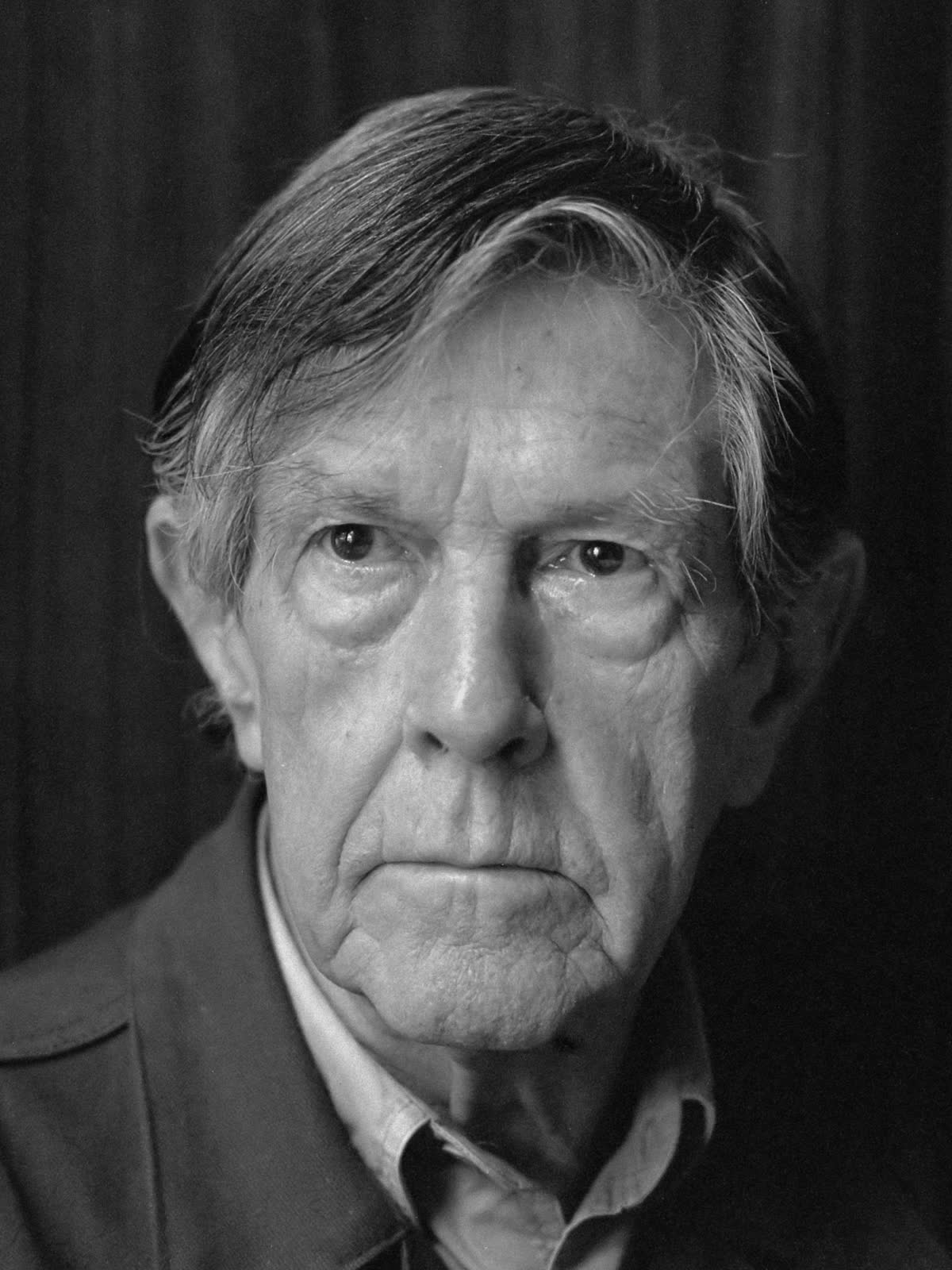
The image attached to this article comes from a later 1988 press photograph by Rob Bogaerts in the Anefo collection.[6] It is not a still from the broadcast, and that distance is useful. The portrait lets the viewer meet Cage without the immediate comic pressure of the bathtub and radios. The broadcast, by contrast, shows what happened when the same compositional intelligence had to operate inside a mass-media frame built for recognition, banter, and quick explanation.
The provenance of the embedded footage is unusually legible even though the YouTube upload itself is not from CBS. The video source is the widely circulated 9:22 upload titled "John Cage - Water Walk," posted by holotone, showing Cage's American television performance on I've Got a Secret.[1] MoMA's 2014 film program identifies the same event as Cage performing his 1959 composition on live television in 1960, courtesy of The John Cage Trust, and notes the unlikely instrumentation that included a rubber duck and vase of roses.[2] The Tang Teaching Museum's 2024 presentation of Water Walk fills in the score's practical architecture: a three-minute work for solo television performer, organized around household materials, water-related objects, and a precisely planned score.[3]
The television frame is part of the artwork's pressure
The clip begins with translation work. Host Gary Moore has to prepare a studio audience for an event that violates the habits of the program around it. A game show normally converts oddity into legibility: a guest has a secret, the panel guesses, the studio laughs, the host keeps order. Cage does something more dangerous. He arrives with a secret that is not a biographical twist but a category problem. The secret is that the objects onstage are already instruments if one accepts sound as the field of composition.[1][5]
This setting matters because it prevents the piece from retreating into specialized avant-garde space. A gallery or concert hall could have protected Cage by surrounding him with viewers trained to treat difficulty as prestige. The CBS studio does the opposite. The audience's laughter is audible, local, and social. It rises when ice clatters, when water is poured, when radios are handled, when a gesture seems too ordinary to be art. Cage does not try to defeat that laughter. He folds it into the conditions of performance. The point is not that the audience misunderstands him. The point is that the audience's uncertainty becomes one more sound-producing element in the room.[1][5]
That makes the footage an art document as much as a music document. Cage's presence is theatrical, but not theatrical in the actorly sense. He does not play eccentricity for applause. He times actions. He crosses space. He lets awkward pauses remain awkward. He accepts that the visual image of a grown man treating a rubber duck, a bathtub, and a vase of roses as score materials will generate social noise. That social noise is not an accident outside the work. It is the evidence that the work has reached the public surface it was made to test.
The score turns household clutter into a disciplined environment
The objects look funny because television makes them visible before it makes them musical. A pressure cooker is still a pressure cooker; a bathtub is still a bathtub; radios still carry the domestic aura of furniture and broadcast habit. Yet Water Walk is not a casual parade of odd sounds. The Tang Teaching Museum describes the score as including a list of properties, a floor plan, a detailed timeline with pictures and descriptions, and notes for actions.[3] The comedy is therefore held inside a strict architecture.
This is the detail that separates Cage from mere randomness. The viewer can enjoy the slapstick surface and still miss the deeper discipline. Cage is not asking the audience to believe that any noise automatically becomes art through provocation. He is showing how attention, timing, placement, and sequence can make a field of sounds readable without turning it into melody in the conventional sense. The work's water objects also keep changing state and function: water is poured, contained, heated, chilled, mixed, and approached as both substance and sound source.[3][5]
The 1959 Italian background sharpens that reading. The John Cage Trust's account of Cage's appearances on Lascia o Raddoppia places him in Milan around RAI's experimental audio world and notes the strange conjunction of mushroom questions, mass television, and unconventional performance.[4] Water Walk did not come from nowhere. It emerged from a period in which Cage was moving among European broadcast culture, experimental studios, and the compositional aftermath of Fontana Mix.[2][4] The American game-show appearance did not dilute the work's seriousness. It gave that seriousness a more volatile public body.
Laughter becomes a test of attention
The most durable line in the clip is Cage's calm acceptance of laughter. Hyperallergic's account emphasizes how the host frames Cage as controversial and how Cage insists on calling the performance music because it produces sound.[5] Open Culture's later writeup stresses the same hinge: Cage knows that audience reaction will be part of what the piece produces.[1] That is why the laughter never feels like a simple failure of reception. It is a sign that the broadcast has reached the difficult zone where viewers are no longer certain which parts of the scene are deliberate.
This uncertainty is visual before it is theoretical. When Cage crosses to an object, the viewer starts anticipating function: will he play it, drop it, pour it, strike it, ignore it, or merely touch it at the exact second the score requires? The studio audience laughs partly because the actions are funny, but also because the usual contract between performer and viewer has shifted. Television expects explanation to arrive quickly. Cage makes explanation lag behind perception. That lag is the work's opening.
The result is not anti-popular. It is almost the reverse. Cage uses one of the most accessible formats in American media to demonstrate that access and ease are different things. Everyone can see the objects. Everyone can hear the sounds. Everyone can track the performer walking. What the piece withholds is the comfort of a single genre label. It asks the mass audience to stay with an event before deciding whether it belongs to music, theater, comedy, performance art, or television spectacle.
Why this archival clip keeps returning
The clip has circulated for years because it is instantly shareable, but its endurance comes from more than novelty. It preserves a moment when the categories of high art and broadcast entertainment touched without either side fully absorbing the other.[1][2] The studio does not become an avant-garde loft. Cage does not become a standard variety act. Instead, the footage holds both systems in tension long enough for viewers to feel the strain.
That tension remains contemporary. Digital culture is full of feeds that sort attention into quick judgments: funny, serious, cringe, brilliant, fake, profound. Water Walk resists that sorting. The piece is funny and disciplined, serious and light, composed and socially unstable. Its objects are ordinary, but the ordering of those objects makes ordinary seeing feel strange. Its audience laughs, but the laughter becomes part of the evidence rather than a verdict against the work.
Seen now, the 1960 broadcast is a small lesson in artistic generosity. Cage does not demand reverence before beginning. He gives the audience permission to respond and then performs with exactness anyway. That combination is rare. It lets the work survive both solemn overinterpretation and easy mockery. The bathtub, radios, roses, ice, and rubber duck remain visible, absurd, and specific; the score keeps moving through them; the audience keeps negotiating what it is hearing. The clip matters because it shows experimental art succeeding in the least protected way: in public, on schedule, with laughter in the room.[1][3][5]
Sources
- holotone, "John Cage - Water Walk," YouTube video of Cage performing on I've Got a Secret, posted May 4, 2007.
- The Museum of Modern Art, "John Cage and the Avant-Garde Film Score" - 2014 film program note identifying the 1960 Water Walk television performance and its John Cage Trust provenance.
- Tang Teaching Museum, "Elevator Music 49: John Cage-Water Walk" - exhibition note on the 1959 score, objects, timeline, and later presentation.
- John Cage Trust, '"Lascia o Raddoppia" (Milan, 1959)' - account of Cage's Italian television appearances and RAI context.
- Hyperallergic, "John Cage's 1960 Game Show Performance" - discussion of the broadcast frame, host introduction, and audience laughter.
- Wikimedia Commons, "File:John Cage (1988).jpg" - Rob Bogaerts / Anefo photographic portrait used as the article image.