Fauvism is still too often summarized as a burst of wild color, as if the movement's importance were mainly one of temperature.[1][2] That shorthand keeps the noise and loses the logic. What Matisse, Derain, Vlaminck, and their near contemporaries changed was not simply that they used brighter pigment. They changed what color was allowed to do. In Fauvist painting, color stops behaving like a report on local appearances and starts acting like the main force that organizes space, pressure, and mood.[1][2][4]
The decisive moment came in the summer of 1905, when Henri Matisse and Andre Derain worked side by side in Collioure on the French Mediterranean coast.[1][2][3][4] The Met's Fauvism essay and its 2023 exhibition overview both stress the same fact: the partnership was intense, brief, and structurally transformative.[1][2] In roughly nine weeks, the two painters pushed landscape, harbor, interior, and figure painting toward a new pictorial language in which sensations counted more than optical obedience. The result was scandalous in Paris that autumn, but the scandal is easier to understand if we first see how rigorously the pictures were built.[1][2]
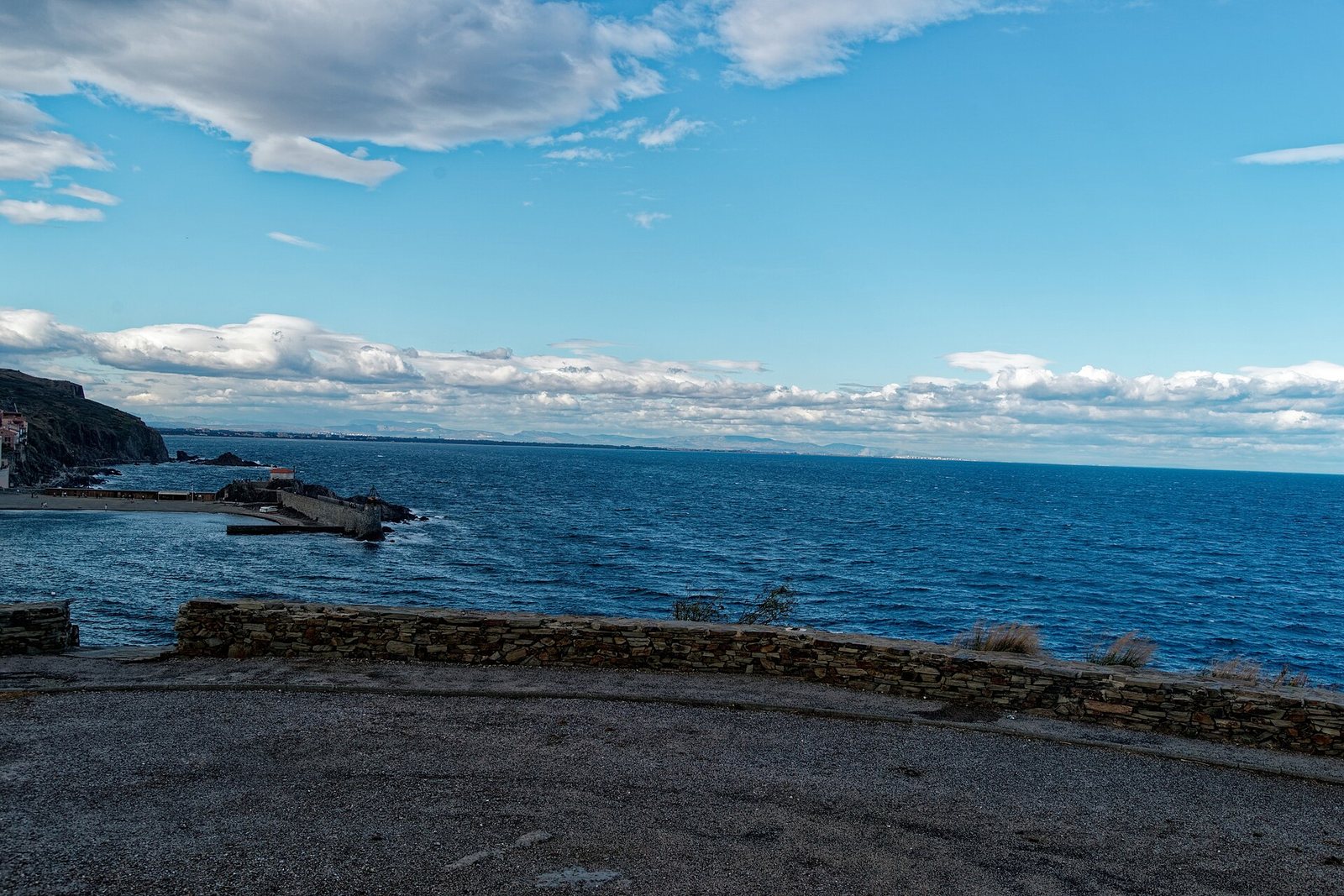
Image context: the cover now uses a real photograph of Collioure harbor, the working Mediterranean setting behind the 1905 experiment. It avoids a diagram or art-reproduction cover while keeping the reader inside the same coastal compression of water, facades, boats, hill, and light that made the Fauvist break legible.[1][2][5]
1) Collioure turned color into a decision-making system
The usual story says the Mediterranean light liberated color. That is true, but it needs to be made more exact. Collioure did not simply present Matisse and Derain with prettier weather. It gave them a setting where harbor traffic, sun, shutters, facades, sails, water, and dry hillside forms could be restated in high-key contrasts without collapsing into visual incoherence.[1][2][3] Fauvism matters because the painters discovered that color could carry two jobs at once: it could register sensation, and it could keep the painting structurally held together.
The Met's exhibition page says nature in these works took on hues responding to the artists' sensations rather than to observed reality.[2] That phrase is useful because it shows where the break actually occurred. Earlier painting traditions, including Impressionism, had already loosened local color and shadow. Fauvism drives that loosening to a point where blue, pink, orange, green, and violet stop reading as atmospheric modifiers and start becoming the architecture of the picture.[1][2] A wall can be green not because green light literally covers it, but because green is the right structural answer to the adjacent red, blue, or orange field.
This is why Fauvism should not be reduced to spontaneity. The surfaces feel immediate, but they are making hard compositional decisions. The painters are not just exclaiming in pigment. They are redistributing visual weight. Once that happens, color is no longer an accessory applied to drawing. It becomes the method by which the painting decides where one area presses forward, where another retreats, and where the whole image can be kept in unstable balance.[1][2][4]
2) Open Window, Collioure makes interior and harbor occupy one surface
Matisse's Open Window, Collioure is one of the clearest demonstrations of this shift.[3][4][5] The National Gallery of Art describes it as a key Fauvist work distinguished by saturated, unmixed color and broad brushwork, painted during the same Collioure summer in which Matisse and Derain worked together.[3] That much is familiar. What matters more is how the picture handles depth. The boats outside, the flowerpots on the sill, the green vines, and the reflected window doors all remain distinct, yet none of them settles into a dependable ladder of foreground, middle ground, and distance.[3][4]
The harbor is seen through an opening, but the opening does not behave like a safe Renaissance window. The balcony rail and boats beyond do not recede into cool distance. They push back toward the viewer in pinks, blues, greens, and oranges that keep the outside world almost flush with the interior frame.[3][4][5] The room is not a neutral container, either. The door panels and wall strips are themselves active planes of color, holding the image together from the sides. Fauvism here is not a matter of random vividness. It is a way of making inside and outside share one charged surface.
That is also why the painting still feels fresh rather than merely historical. The picture does not ask whether color is natural. It asks whether color can build coherence without obeying descriptive expectation.[3][4] Once you accept that question, the painting stops looking unruly and starts looking strict. Every color field has to earn its place against the others.
3) The 1905 Salon scandal was really a scandal of order
When these paintings appeared at the Salon d'Automne in 1905, critics saw enough to understand that something had been broken.[1][2] Louis Vauxcelles' "wild beasts" label survived because it captured the insult value of the work. But the insult was never just brightness. Viewers were reacting to a different hierarchy of pictorial control.[1] If color could carry form directly, if a harbor or a face no longer needed to be stabilized by customary modeling, then a large part of inherited academic order had suddenly become optional.
The Met's Fauvism essay is especially clear that the group was never a party with a firm manifesto.[1] That looseness is important. Fauvism was not a doctrinal school so much as a shared permission structure. It allowed painters to test how far color planes, exposed brushwork, and compressed space could go before the picture failed. The remarkable thing is that many of the best Fauvist paintings do not fail. They remain legible, but under a new law.
This is what makes the famous shock more interesting than a story of public outrage. The viewers at the Salon were not only offended by strong hues. They were seeing paintings in which the old chain from drawing to modeling to color had been reordered.[1][2][4] Fauvism did not destroy composition. It reassigned composition to color.
4) The movement stayed brief because the break had already happened
Fauvism was short-lived, and the brevity matters. By 1908, as the Met notes, several of the artists were already moving toward Cezanne, Cubism, or other directions that promised a different kind of structure.[1] That quick dispersal can make the movement seem like a transitional flare. It is better understood as an accomplished break. Fauvism did not need a long institutional life to matter. Its central discovery had already been made.
MoMA's Matisse retrospective page describes the years 1905-07 as the Fauvist epoch and places Open Window among the breakthrough canvases of that summer.[4] That framing helps. The breakthrough was not simply toward decorative pleasure. It was toward an art of pure color capable of building a picture from the surface outward.[4] Later modernism would make different use of flatness and structure, but Fauvism demonstrated that painting could give up descriptive obedience without giving up formal seriousness.
That is the scale on which Fauvism still holds. It was brief, but it permanently widened the range of acceptable pictorial logic. After Collioure, color in modern painting could be sensation, structure, and argument at once.
60-second viewing drill
- Start with the open doorway and ask whether it behaves like a deep window or like a colored frame pressed against the picture plane.
- Move to the boats and water and notice how little conventional distance Matisse needs to make the harbor readable.
- Compare the wall strips, flowerpots, and reflections to see how interior and exterior are held in the same chromatic system.
- End by asking which color looks most "unnatural," then check whether it is also doing essential structural work.[1][3][4]
Sources
- Sabine Rewald, "Fauvism." The Metropolitan Museum of Art, Heilbrunn Timeline of Art History.
- The Metropolitan Museum of Art, Vertigo of Color: Matisse, Derain, and the Origins of Fauvism - exhibition overview.
- National Gallery of Art, Open Window, Collioure by Henri Matisse - object page.
- The Museum of Modern Art, Henri Matisse: A Retrospective - exhibition page with Fauvist-epoch context.
- Wikimedia Commons, Collioure - Route de Port-Vendres - View NW II.jpg - file page for the real Collioure harbor photograph used as the immersive cover image.