As of 2026-04-19 UTC, the useful way to read OpenBMB's MiniCPM line is no longer to treat it as one surprisingly capable small model that happens to run on a phone.[1][2][3][4] The stronger signal is that MiniCPM is becoming a family-level device lane inside ai-china. The line now has a compact text-reasoning branch in MiniCPM4/4.1, a vision branch in MiniCPM-V 4.0, and a speech-plus-vision branch in MiniCPM-o 4.5.[1][2][4]
That matters because many AI stacks still treat the device as a fallback destination. A big cloud model comes first, then someone tries to distill or quantize enough of it to fit on weaker hardware later. The MiniCPM materials point in a different direction. The official repositories and model cards keep naming the phone, the tablet, the local runtime, and the compact inference stack as part of the product story from the start.[1][2][3][4] My inference from those sources is that OpenBMB is trying to make end-device usability a first-class model boundary rather than a post-launch optimization exercise.
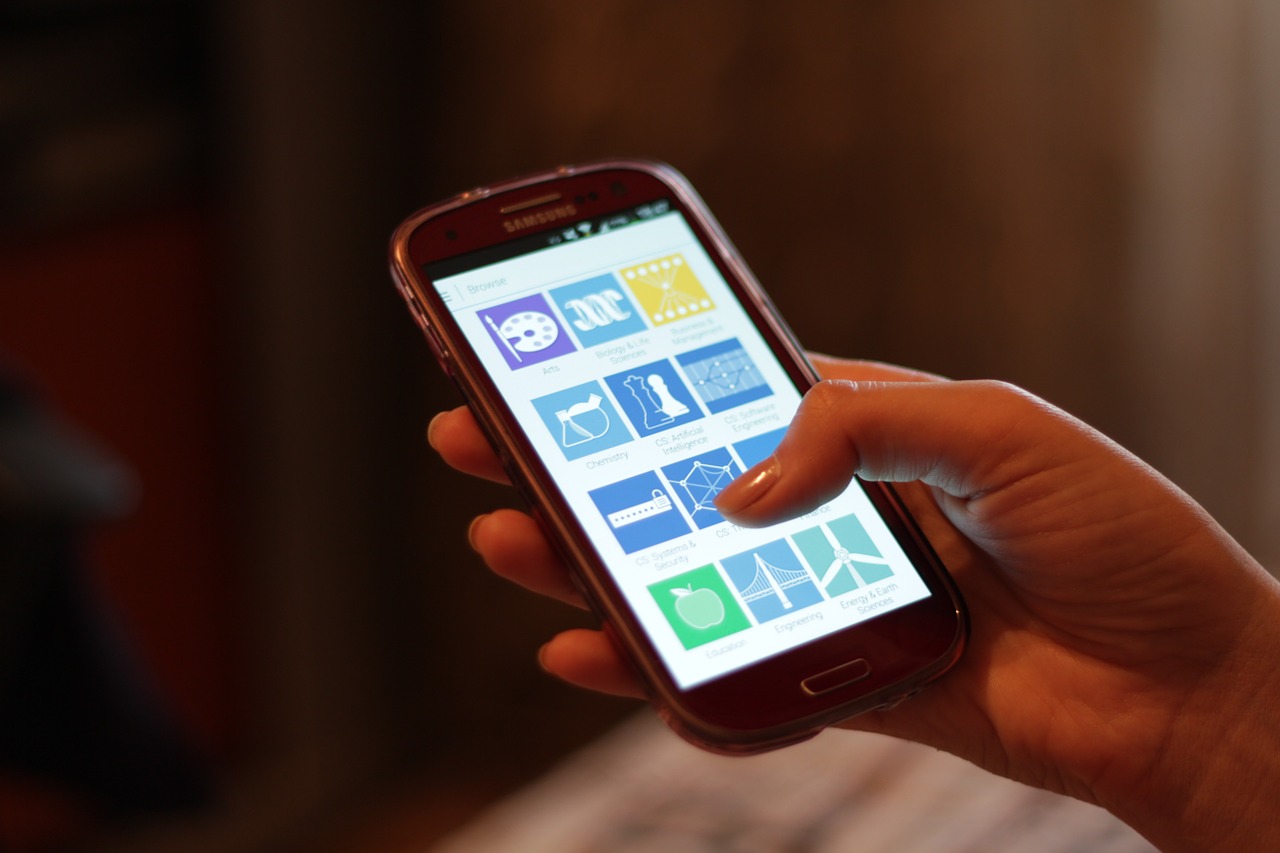
Image context: the cover uses a real smartphone photograph from Wikimedia Commons. It fits this article because the MiniCPM story is about where model capability lands in practice. The strategic claim only matters if compact multimodal systems can live on ordinary local hardware instead of remaining datacenter-only spectacles.[5]
MiniCPM-V made the phone a design target, not a consolation prize
The older MiniCPM-V paper already made the direction plain. In the August 2024 technical report, the authors describe MiniCPM-Llama3-V 2.5 as a GPT-4V-level MLLM aimed at efficient deployment on mobile phones, while also stressing 1.8 million-pixel image perception, low hallucination behavior, and support for 30+ languages.[3] That is a very specific product grammar. The paper does not speak like a team reluctantly shrinking a bigger model after the real launch is over. It speaks like a team that thinks compact multimodality is a meaningful destination.
The later repository updates reinforce that reading. The MiniCPM-o repository's release timeline says that on 2025-08-02 OpenBMB open-sourced MiniCPM-V 4.0, described it as a 4B-parameter model, and framed it as an "ideal choice for on-device deployment on the phone."[1] The same repo also says the model advances the popular features of MiniCPM-V 2.6 while improving efficiency substantially.[1]
The benchmark claim beside that launch should be read with the right boundary. OpenBMB says MiniCPM-V 4.0 surpasses GPT-4.1-mini-20250414 in image understanding on its cited OpenCompass evaluation.[1] That is an official claim, not a neutral universal verdict. Even so, the more important signal is the bundle of claims around it: small parameter count, image-understanding quality, and explicit phone deployment language appear together on the same release surface.[1] In other words, the project is trying to prove that "small" and "serious multimodal utility" can occupy the same lane.
MiniCPM-o turns compact vision into a live speech-and-vision interface
The next shift is what happened when MiniCPM stopped being only a compact VLM and started becoming an interaction stack.
The same official repository says MiniCPM-o 2.6 was open-sourced on 2025-01-13 with the claim that it matched GPT-4o-202405 on vision, speech, and multimodal live streaming, then says MiniCPM-o 4.5 was open-sourced on 2026-02-03 as the latest and most capable model in the series.[1] The important thing here is not one score comparison. It is that the release cadence keeps moving upward from image understanding toward continuous multimodal interaction.
The official Hugging Face card for MiniCPM-o 4.5 makes that product boundary explicit. It says the model is built end-to-end from SigLip2, Whisper-medium, CosyVoice2, and Qwen3-8B, with a total of 9B parameters.[2] It also says the model supports bilingual real-time speech conversation, full-duplex multimodal live streaming, and simultaneous continuous video-audio input plus text-and-speech output without mutual blocking.[2] That is a much stronger claim than "the model can transcribe audio" or "the model can caption images." It is a claim about a local conversational loop that can keep seeing, listening, and speaking at the same time.
That distinction matters in ai-china because many multimodal launches still live at the demo level. They show a clip, answer a question, maybe read a chart, then stop. MiniCPM-o's public materials keep returning to the harder case: sustained, low-latency interaction on compact hardware.[1][2] The Hugging Face page also keeps the older MiniCPM-V strengths in play by calling out high-resolution image support up to 1.8 million pixels, 10fps high-FPS video handling, and strong OCR/document parsing performance.[2] Read together, these are the ingredients of a device-side assistant surface, not just a smaller benchmark entry.
MiniCPM4 and 4.1 give the same thesis a text-reasoning lane plus a runtime stack
The family would still look incomplete if it only covered vision and live multimodality. The text side is what makes the stack argument sturdier.
On the official MiniCPM repository, OpenBMB says MiniCPM4 launches end-side versions with 8B and 0.5B parameter scales, while MiniCPM4.1 launches an 8B end-side version positioned for deep reasoning mode.[4] The repo also says MiniCPM4 is pre-trained on 32K long texts and MiniCPM4.1 on 64K, with both extended to 128K through YaRN.[4] That is not the profile of a family being kept tiny at the cost of all serious reasoning ambition. It is a compact family still trying to preserve long-context and reasoning behavior on local or near-edge deployment paths.
The runtime story is the sharper signal. The same repo documents support across Hugging Face Transformers, SGLang, vLLM, CPM.cu, llama.cpp, and Ollama.[4] It also exposes a hybrid reasoning mode with enable_thinking=True or False, which means the same model can be routed into deeper or lighter behavior without forcing users to swap families entirely.[4]
That software surface matters as much as the weights. A compact model family only becomes operationally important once it has a believable route into real inference environments. OpenBMB is not publishing MiniCPM4.1 as a lab curiosity that only runs in one fragile notebook. The repo explicitly documents dense and sparse inference, speculative decoding, CPU/GPU paths through llama.cpp, local serving through vLLM, and an in-house CUDA framework in CPM.cu built to exploit the family's efficiency profile.[4] My inference from [1] through [4] is that the company is trying to own a practical local stack, not only an attractive parameter count.
What changed in practical terms
Taken together, the MiniCPM line now says something larger than "Chinese labs can also make small models."
First, the family boundary is clearer. MiniCPM-V 4.0 gives the line a compact visual-understanding lane.[1][3] MiniCPM-o 4.5 extends that lane into live multimodal conversation.[1][2] MiniCPM4/4.1 gives the same end-device thesis a text-and-reasoning branch with explicit runtime support.[4]
Second, the public packaging now treats device locality as an organizing principle. The phone is named directly in the vision materials, the omnimodal branch keeps emphasizing live streaming and concurrent input-output, and the text branch documents local inference pathways instead of assuming a hosted API is the default consumption surface.[1][2][3][4]
Third, the stack is starting to look exportable across frameworks rather than trapped inside one proprietary environment. That is strategically important. Once compact models can travel through vLLM, llama.cpp, Ollama, and custom CUDA inference, the value of the family stops resting only on one benchmark PDF.[4]
There is still a clear boundary on the thesis. These are largely official materials, so the headline comparisons to proprietary systems should be treated as directional unless independently replicated under shared conditions.[1][2][3] Public evidence also does not prove that MiniCPM has already become the default end-device family across OEMs, enterprises, or consumer software layers. But the signal is still strong enough to matter. In ai-china, the competition is no longer only about frontier cloud APIs and giant training clusters. MiniCPM shows that compact, local, multimodal execution is becoming a serious lane in its own right.[1][2][3][4]
Sources
- OpenBMB, "MiniCPM-o" GitHub repository (official release timeline covering MiniCPM-o 2.6, MiniCPM-o 4.5, and MiniCPM-V 4.0, plus benchmark and framework notes).
- OpenBMB, "MiniCPM-o 4.5" Hugging Face model card (9B architecture components, bilingual speech, full-duplex multimodal live streaming, and OCR/document-parsing framing).
- Yu et al., "MiniCPM-V: A GPT-4V Level MLLM on Your Phone" (arXiv:2408.01800; mobile-phone deployment framing, 1.8M-pixel support, multilingual coverage, and hallucination note).
- OpenBMB, "MiniCPM" GitHub repository (MiniCPM4/MiniCPM4.1 end-device positioning, 8B/0.5B scale notes, 128K extension, hybrid reasoning mode, and runtime support across vLLM, CPM.cu, llama.cpp, and Ollama).
- Wikimedia Commons, "File:Smartphone Use.jpg" (source page for the smartphone photograph used as the cover image).