As of 2026-06-24T12:32:20Z UTC, Spring AI Alibaba is a useful China-AI signal because it moves the agent conversation away from model novelty and into the Java service layer. The project presents itself as a production-ready framework for building agentic, workflow, and multi-agent applications; its public repository sits under Alibaba, carries an Apache 2.0 license, and shows a Java-first stack with agent framework, graph core, admin UI, sandbox, studio, and Spring Boot starter modules.[1] That shape matters. It says the adoption target is not only the AI engineer who can assemble a Python prototype, but the enterprise team already running Spring Boot services, Maven dependencies, Nacos registration, observability, and cloud deployment routines.
The more interesting signal is that Alibaba is not merely adapting Spring AI model calls to DashScope. The official site splits the stack into a higher-level Agent Framework, a lower-level Graph runtime for long-running stateful agents, and an Admin toolkit for visual development, tracing, evaluation, and MCP management.[2] The GitHub README goes further: the Agent Framework wraps built-in context engineering and human-in-the-loop support, while Graph supplies persistence, workflow orchestration, and streaming for long-running stateful agents.[1] In China's AI market, where public attention keeps returning to Qwen, DeepSeek, Kimi, GLM, and Hunyuan, Spring AI Alibaba points to the less glamorous bottleneck: how agent logic becomes ordinary backend infrastructure.
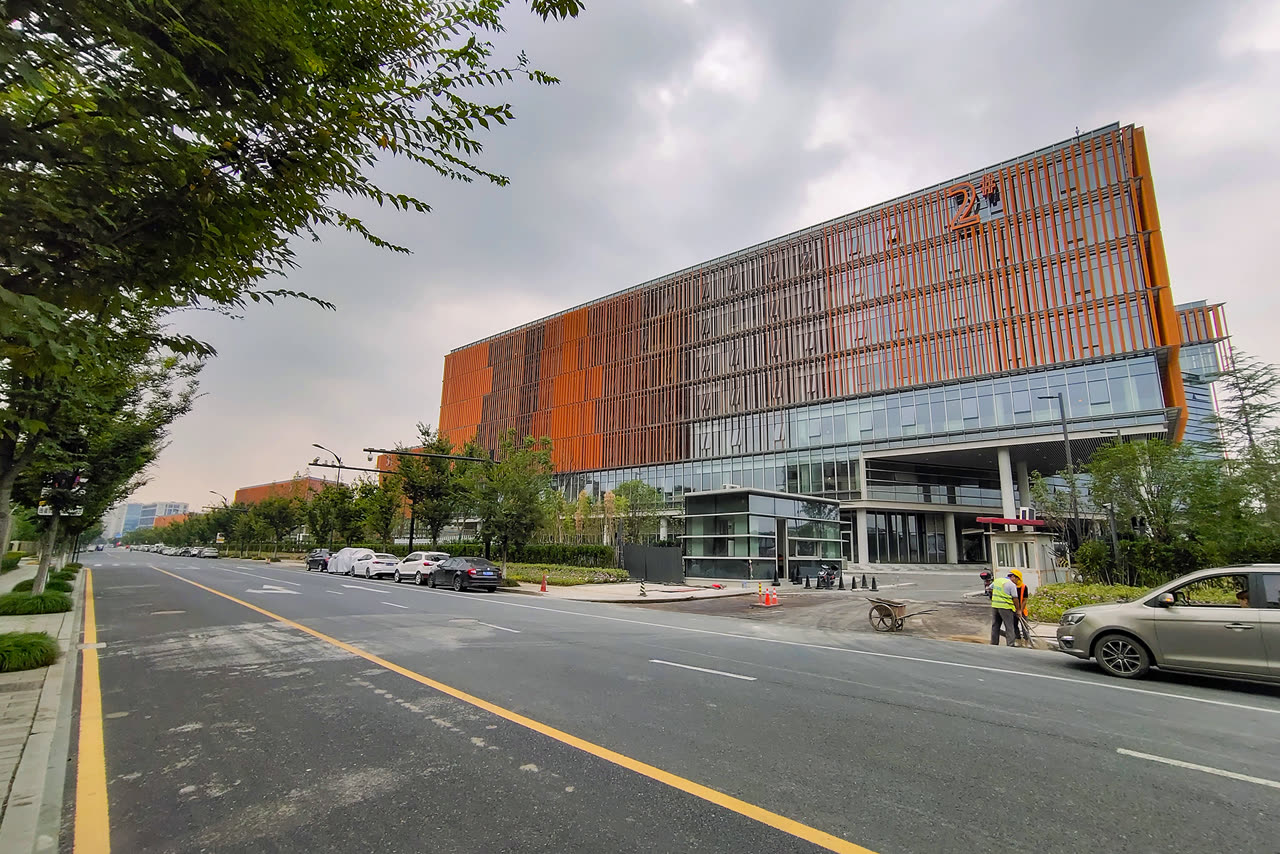
Image context: the cover is a real Wikimedia Commons photograph of Alibaba Xixi Park in Hangzhou. It is not a generated AI image, diagram, chart, or dashboard screenshot. The visual match is intentionally institutional: the article is about Alibaba's Java-native agent infrastructure rather than a single model interface or consumer assistant.[6]
The signal is where the agent lives
The Alibaba Cloud 1.0 GA article frames Spring AI Alibaba as an AI framework based on Spring AI, deeply integrated with the Bailian platform, and supporting chatbot, workflow, and multi-agent development models.[3] That description sounds broad, but the implementation details narrow the claim. Spring AI Alibaba Graph is the core differentiator: it is described as a graph multi-agent framework for workflows and multi-agent applications, with memory management, streaming, human confirmation nodes, execution recovery, persistent storage, process snapshots, nested branches, parallel branches, and PlantUML or Mermaid exports.[3]
Those are not benchmark features. They are operational features. A customer-support agent needs state. A procurement agent needs human approval before a purchase order. A data-analysis agent needs recoverable workflow steps when a SQL tool fails. A document-review agent needs traceable memory and role-bound tool access. Spring AI Alibaba's signal is that the agent becomes a managed process, not a clever prompt wrapped in an HTTP endpoint.
This is also why the Java lane matters. Much of the global agent ecosystem still centers on Python frameworks and notebook-to-service migration. Alibaba's bet is different: if Chinese enterprise adoption depends on existing service teams, then agent infrastructure has to land in the language and dependency system those teams already use. Maven Central currently lists com.alibaba.cloud.ai:spring-ai-alibaba-agent-framework as a package for stateful, multi-agent applications with LLMs, with version 1.1.2.3 shown in the artifact metadata and a POM that depends on Spring AI Alibaba Graph Core and the A2A Java SDK client.[5] That does not prove production maturity by itself, but it shows the project is being packaged as a normal Java library rather than a detached research repo.
Context engineering becomes a framework concern
The strongest design choice is the project's explicit treatment of context engineering. The official documentation says agent failures often come from the wrong context rather than only from weak model capability, then divides control surfaces into model context, tool context, and lifecycle context.[4] That is a mature framing because enterprise agent failures rarely look like a single bad answer. They look like the model seeing too many stale messages, the wrong tool set, an unbounded role, a missing user preference, or a lifecycle hook that failed to summarize state before the next step.
Spring AI Alibaba maps those concerns into Hooks and Interceptors. The docs show model interceptors for dynamic system prompts, message filtering, tool selection by role, model routing by task complexity, and structured response control.[4] The important point is not that each example is novel. It is that the framework places those moves inside the agent lifecycle. Context editing becomes code a backend team can review, test, and version, rather than a paragraph hidden in an application prompt.
That is the China-AI field signal: the stack is converging around control planes above the model. Qwen or another model may execute the call, Bailian may provide hosted model and RAG services, and Nacos or Higress may expose tools or proxy model traffic, but the enterprise value comes from making those pieces governable.[3] Spring AI Alibaba is trying to be the Java coordination layer where prompt context, memory, tool permissions, workflow branches, human approvals, observability, and model access meet.
Alibaba's cloud orbit is visible
The framework is open source, but it is not neutral in the same way a tiny standalone library is neutral. Alibaba Cloud's GA article describes deep integration with Bailian for model access and RAG knowledge bases, ARMS and Langfuse for observability, Nacos MCP Registry for distributed registration and discovery, and Higress AI Gateway for model invocation stability and API-to-MCP proxying.[3] The README points developers to Bailian for a DashScope API key in its chatbot quick start and lists ecosystem components including JManus, DataAgent, and DeepResearch built around Spring AI Alibaba pieces.[1]
That gives Alibaba a familiar open-to-cloud path. A team can start with a Maven dependency and local examples. If the workload grows, the natural adjacent surfaces are Bailian model services, Nacos service discovery, ARMS tracing, Higress gatewaying, and Alibaba Cloud deployment channels. The strategic logic resembles the broader Chinese AI stack pattern: open framework at the edge, cloud control plane underneath, model service and workflow tools close by.
The counterweight is integration burden. A framework that touches Spring AI, Graph runtime, MCP, A2A, Nacos, gateways, RAG, observability, admin UI, low-code export, and cloud services can become heavy before the first production agent proves value.[1][3][5] The practical adoption question is whether Spring teams can use the pieces incrementally. If they must absorb the whole Alibaba agent universe at once, the stack will appeal mainly to committed Alibaba Cloud shops. If the framework stays modular, it can become a bridge for Java teams that want agent capability without rewriting their backend platform around Python.
What to watch
The first watch item is how fast Spring AI Alibaba tracks the upstream Spring AI ecosystem. The March release notes for v1.1.2.0 say the project upgraded to Spring AI 1.1.2, added Agent Skills support for ReactAgent, added parallel sub-agent execution for workflow agents, extended graph conditional edges and aggregation strategies, and added async tool execution and returnDirect behavior.[7] That is the right kind of release signal: less marketing surface, more orchestration mechanics.
The second watch item is whether the Admin layer becomes a real operations surface or only a demo console. The official site describes Admin as local visualization tooling for agent application development, project management, runtime visualization, tracing, and evaluation.[2] If that layer makes traces, evals, MCP management, and generated Java projects inspectable by ordinary platform teams, Spring AI Alibaba becomes much more than an SDK. If it remains a visual wrapper, the serious work will still happen in custom service code.
The third watch item is portability. The framework benefits from Alibaba Cloud orbit, but enterprise teams will ask whether they can run mixed model providers, non-Alibaba tools, and self-hosted components without fighting the abstractions. The README says the project supports multiple LLM providers through Spring AI concepts, including DashScope and OpenAI, tool calling, and MCP.[1] That compatibility is essential. In 2026, Chinese AI adoption is not a one-model decision; it is a routing and governance problem across models, tools, data sources, and compliance boundaries.
The narrow conclusion is that Spring AI Alibaba should be read as a field signal, not just a framework announcement. It shows China's AI stack moving into the enterprise middleware layer: agents as stateful Java workflows, context as lifecycle code, tools as registered and permissioned capabilities, and cloud services as the operating substrate. Models still win headlines, but the next adoption gate is whether agent behavior can be made boring enough for backend teams to ship, observe, recover, and audit.[1][3][4][5]
Sources
- Alibaba,
spring-ai-alibabaGitHub repository (README, project structure, Agent Framework, Graph, Admin, Spring Boot starters, core features, Java package examples, and Apache 2.0 license). - Spring AI Alibaba official site, overview page (Agent Framework, Graph, Admin, DeepResearch, DataAgent, JManus, and ecosystem positioning).
- Alibaba Cloud Native Community, "Spring AI Alibaba 1.0 GA officially released, marking the advent of a new era in Java agent development" (June 13, 2025; Graph, Bailian, Nacos MCP Registry, Higress, ARMS/Langfuse, and enterprise production framing).
- Spring AI Alibaba documentation, "Context Engineering" (model context, tool context, lifecycle context, Hooks, Interceptors, message filtering, role-based tool selection, memory, and state examples).
- Maven Central,
com.alibaba.cloud.ai:spring-ai-alibaba-agent-frameworkartifact metadata (current artifact page, version metadata, description, organization, license, and dependencies). - Wikimedia Commons, "Phase 4 of Alibaba Xixi Park 20200913.jpg" (real photograph of Alibaba Xixi Park in Hangzhou; image source for this article cover).
- Alibaba,
spring-ai-alibabaGitHub releases page (v1.1.2.0 release notes on Spring AI 1.1.2 upgrade, Agent Skills support, parallel sub-agent execution, graph edge extensions, async tool execution, andreturnDirect).