As of 2026-06-17T06:33:48Z UTC, the useful AI-China signal in QAnything is not that NetEase Youdao can put a chat box on top of documents. The sharper use case is more practical: make a local knowledge-base question-answering system that an organization can run near its own files, with enough parsing, retrieval, and deployment machinery that the answer box is not the product by itself.[1][2]
That distinction matters because enterprise RAG often fails in the boring middle. A prototype can answer one PDF in a browser tab. A working system has to ingest PowerPoint decks, spreadsheets, PDFs, email, images, Markdown, text files, CSVs, and web pages; keep retrieval usable as the corpus grows; expose enough state for operators to see what was parsed; and let teams choose between local and hosted model behavior without turning every document set into a bespoke engineering project.[1][3]
QAnything's public materials point directly at that middle layer. The GitHub README describes it as a local knowledge-base QA system that supports offline installation and use, broad file formats, Docker-based startup, CPU-friendly defaults, and independently replaceable components such as PDF parsing, OCR, embedding, and reranking.[1] The official site frames the same product around local document upload and NetEase Youdao's RAG capability.[2] Read together, the message is clear: QAnything is trying to make document QA feel like a deployable application, not a notebook recipe.
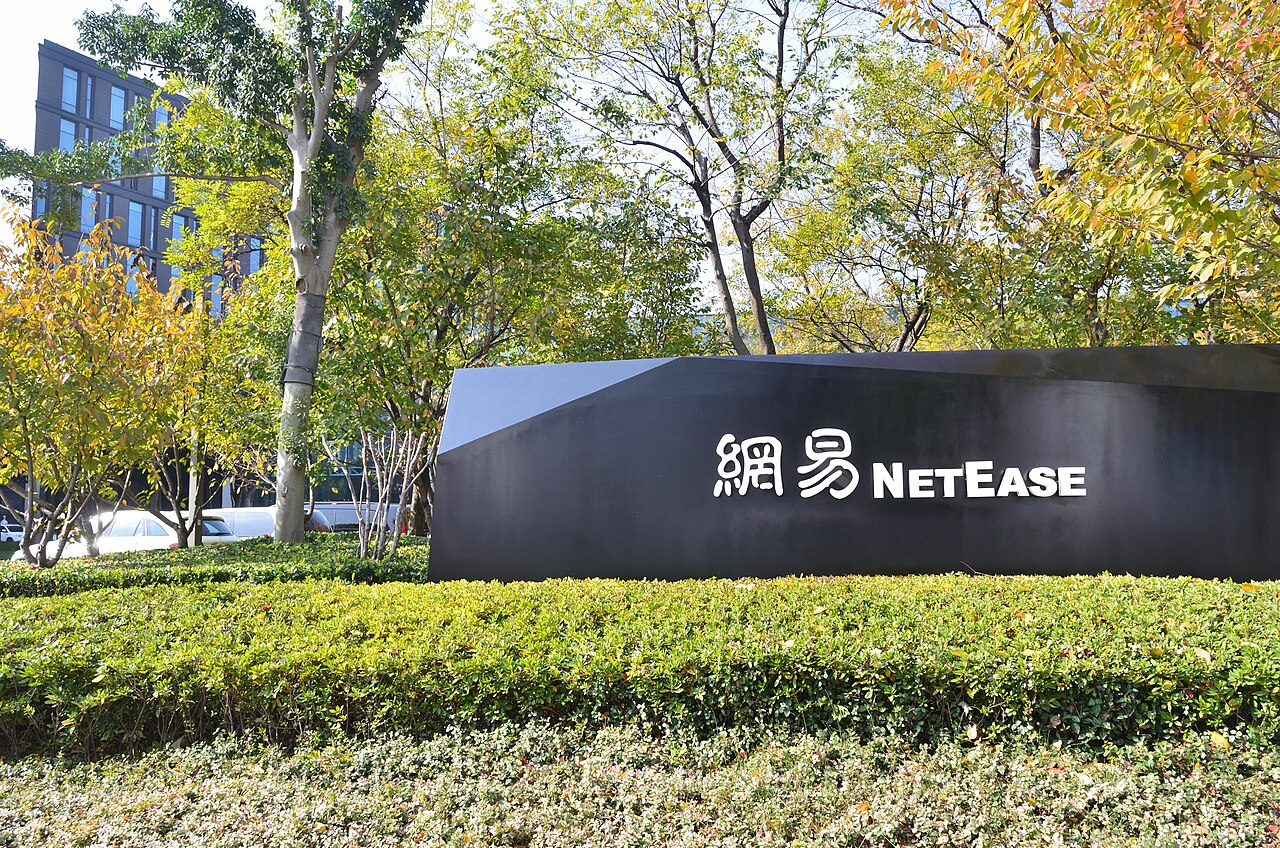
The cover image is intentionally literal. It is a real photograph of NetEase's Hangzhou office, not a generated robot or a diagram of vector search. That matters because the article is about a company turning RAG into a product surface with offices, support channels, distribution pages, and deployment assumptions behind it.[6]
The job is document intake before intelligence
The first useful thing about QAnything is its refusal to pretend that RAG starts at the language model. The file list is the clue. GitHub names support for PDF, Word, PowerPoint, Excel, Markdown, email, TXT, images, CSV, and HTML links, while the Hugging Face page lists the same broad intake direction and warns readers that the GitHub page is the more current source.[1][3] This is mundane, but it is where many enterprise systems break.
A local policy manual and a photographed receipt are not the same retrieval problem. A spreadsheet with multiple sheets, a deck full of screenshots, and a PDF with tables all create different parsing failure modes. QAnything's version 2.0 update notes are valuable because they spend attention on that layer: the update merged the older Docker and Python versions into a unified Docker Compose path, improved parsing, search results, frontend behavior, service architecture, and usage methods, and added visibility into upload progress, per-file processing time, QA statistics, token usage, and model information.[1]
That is the product lesson. The system does not become useful merely by calling a stronger model. It becomes useful when an operator can see where the file went, where it was chunked, how long the steps took, and whether retrieval or generation caused the answer to fail. QAnything's support for chunk visualization and manual chunk editing is especially important because it acknowledges that automatic parsing is never perfect. A user who can repair a bad chunk can improve the knowledge base without retraining a model or filing a ticket with an invisible platform.[1]
Two-stage retrieval is the actual user experience
QAnything's most defensible technical claim is not a sweeping "local AI" slogan. It is the two-stage retrieval design. The README says first-stage embedding retrieval alone can degrade as the knowledge base grows, while adding reranking can stabilize and improve retrieval quality at larger data volumes.[1] The Hugging Face page repeats that architecture summary and names BCEmbedding as the retrieval component.[3]
This is important because RAG quality is felt as trust, not as architecture. If the first answer cites the wrong policy, misses the most relevant paragraph, or retrieves stale boilerplate over the live rule, the user stops believing the system even if the generated prose sounds polished. Two-stage retrieval is not magic, but it gives the system a second chance: first gather plausible candidates efficiently, then rerank those candidates with a model that can inspect relevance more deeply.[1][4]
BCEmbedding makes the China-specific use case sharper. NetEase Youdao describes BCEmbedding as a bilingual and crosslingual embedding and reranker project for RAG, with an EmbeddingModel for semantic vectors and a RerankerModel for refining search results.[4] Its README says the embedding side supports Chinese and English, while the reranker supports Chinese, English, Japanese, and Korean; it also frames the project around business RAG scenarios such as education, medical, law, finance, literature, FAQ, textbooks, Wikipedia, and general conversation.[4]
That multilingual retrieval layer is not a nice-to-have in Chinese enterprise settings. Company knowledge bases often mix Chinese source files, English vendor manuals, bilingual contracts, imported technical docs, and localized product notes. A Chinese employee may ask in Chinese about a document written partly in English. A customer-support team may need the opposite. QAnything's retrieval stack therefore points to a concrete workflow: cross-language document QA where the model should bridge languages through retrieval before it writes an answer.[1][4]
Offline installation is a trust feature, not a retro feature
QAnything repeatedly emphasizes offline installation, including the memorable framing that data security can be supported by using the system with the network cable unplugged.[1][3] That language can sound old-fashioned until you put it in the right enterprise context. Many useful knowledge bases contain contract terms, internal procedures, student data, medical-adjacent notes, customer records, or regulated operational details. For those workloads, a hosted chatbot is not automatically better simply because it is easier to start.
The local lane creates a different bargain. The organization accepts responsibility for setup, updates, storage, and operations, but it gains a clearer boundary around where documents live and which components touch them. QAnything's Docker-centered path lowers the entry cost enough that a team can try the system without building a full RAG stack from scratch, while still keeping the deployment model closer to private infrastructure than to a public SaaS upload flow.[1]
There is a real caveat here. Local deployment does not automatically mean safe deployment. A team still has to handle access control, backups, audit logs, model licensing, dependency patching, and the governance of who can upload what. The GitHub page's AGPL-3.0 license and its note that the open-source version is based on QwenLM are not background details; they are part of the adoption decision.[1] The local path reduces one class of exposure, but it increases the need for operational ownership.
Domestic distribution makes it a China-stack artifact
QAnything also matters because it is distributed through several surfaces that map onto China's AI stack. GitHub gives the project global visibility, Hugging Face mirrors the model package for international developers, and ModelScope provides a domestic model-community route with Chinese documentation and access patterns.[1][3][5] That mix is a useful AI-China pattern: open enough to be visible outside China, local enough to be practical for domestic developers and enterprise users.
ModelScope's QAnything page repeats the core local knowledge-base framing and highlights BCEmbedding as the retrieval component with bilingual and crosslingual capability.[5] That does not make ModelScope the main product, but it tells us how QAnything is meant to travel. It is not only a repo for people comfortable with GitHub. It is also a packaged artifact in a Chinese model hub where enterprises, developers, and local AI teams already look for deployable components.[5]
The best use case is therefore narrow and serious: a Chinese or bilingual organization with many private documents, moderate technical capacity, and a need to answer source-grounded questions without sending every file to an external assistant. QAnything is strongest when treated as a document-operations layer: ingestion, parsing, retrieval, reranking, chunk inspection, answer generation, and deployment all have to work together.[1][3][4][5]
The watch item is maintenance depth. If QAnything keeps improving parsing robustness, model replacement paths, chunk-level observability, and deployment ergonomics, it remains a useful local RAG lane. If it drifts into an impressive but brittle demo, teams will migrate toward RAGFlow, Dify, FastGPT, custom LangChain stacks, or managed cloud knowledge-base services. The falsifier is simple: if operators cannot reliably see, repair, and govern the retrieval path, local installation alone will not save the product.
For now, QAnything's signal is durable because it names the real unit of work. Enterprise RAG is not "chat with files." It is a controlled route from messy private documents to retrievable evidence and answerable questions. QAnything matters because it packages that route in a China-linked, locally deployable form.[1][2][3][4][5]
Sources
- NetEase Youdao,
QAnythingGitHub repository README - local knowledge-base QA framing, supported file types, offline installation, version 2.0 update notes, two-stage retrieval, QwenLM note, component architecture, license, and deployment details. - NetEase Youdao, QAnything official site - official product page for the local knowledge-base question-answering system built around Youdao's RAG capability.
- NetEase Youdao,
QAnythingHugging Face page - model/package distribution surface, file-format summary, offline and cross-language QA claims, two-stage retrieval summary, and pointer back to the current GitHub source. - NetEase Youdao,
BCEmbeddingGitHub repository README - bilingual and crosslingual embedding/reranker models for RAG, QAnything relationship, supported language scope, and two-stage retrieval design. - ModelScope, NetEase Youdao
QAnythingmodel page - domestic distribution page for QAnything, including local knowledge-base QA framing and BCEmbedding retrieval context. - Wikimedia Commons, "File:NetEaseHangzhouOffice.jpg" - source page for the real photographic image used as this article's cover.