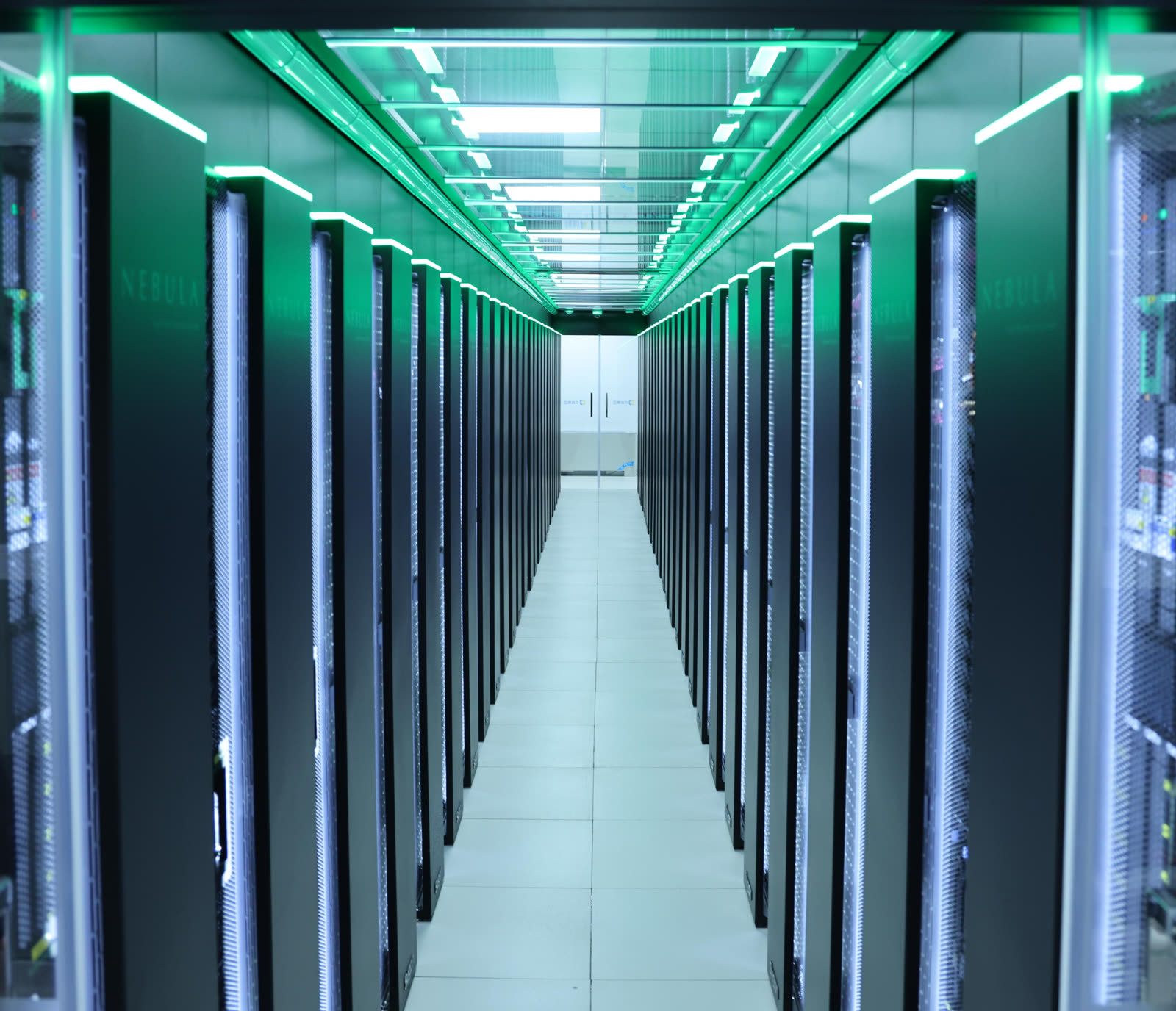
As of 2026-06-17T04:31:48Z UTC, the useful AI-China signal in Mooncake is not that Moonshot AI has another model-serving repo. The sharper signal is that Kimi-style long-context work has made the KV cache a supply-chain object: something to place, move, evict, reuse, schedule around, and expose through connectors rather than something each GPU worker quietly owns until memory runs out.[1][2][3]
That matters because China's frontier-model race is increasingly constrained by serving economics. Kimi's public API docs describe current Kimi models through long-context and tool-use surfaces, including a 256K context window for kimi-k2.6 in the docs' model description.[1] A context window that large is not only a model capability. It is an infrastructure bill. Long prompts produce large key-value state during prefill; multi-turn sessions and repeated document workloads make some of that state reusable; decoding latency still has to feel interactive; and overload has to be handled without pretending every request can always be admitted.
Mooncake is interesting because it names that operational problem directly. The arXiv paper by Moonshot AI and Tsinghua University presents Mooncake as the serving platform for Kimi, with a KV-cache-centric architecture that separates prefill and decoding clusters and uses CPU, DRAM, SSD, and NIC resources in GPU clusters to build a disaggregated KV-cache layer.[2] The repo and docs now turn that paper shape into an open infrastructure surface: Transfer Engine, Mooncake Store, SGLang integration, vLLM connector paths, heterogeneous transport support, and deployment guidance.[3][4]
The cache stops being local
Traditional LLM serving often starts from a worker-centric mental model: a request lands on a GPU worker, prefill creates KV cache on that worker, decoding continues there, and batching tries to keep the hardware fed. That is simple until long context becomes normal. Then the KV cache becomes too valuable and too heavy to treat as an invisible byproduct. A reused system prompt, long codebase context, legal-document bundle, customer-service case history, or agent workspace can leave behind state that is expensive to recreate and awkward to strand on one worker.
Mooncake's design answer is disaggregation. The paper separates prefill and decode, then treats KV-cache placement as the central scheduling problem rather than a side effect.[2] The docs describe Mooncake as using underutilized CPU, DRAM, and SSD resources to form a disaggregated KV-cache pool, with a high-performance transfer layer for moving data across memory, storage, accelerators, and network fabrics.[4] Read as a China AI stack signal, that is the important part: model serving is becoming a memory-and-network logistics layer.
The numbers in the Mooncake paper should stay inside their evaluation boundary. The authors report up to a 525% throughput increase in certain simulated scenarios while meeting service-level objectives, and a 75% real-workload request-capacity increase for Kimi compared with their previous vLLM-based system.[2] Those are not universal claims for every model, cluster, prompt mix, or network. They are stronger as directional evidence: when long context dominates, the old assumption that KV cache naturally belongs to one GPU worker starts to misprice capacity.
Transfer is part of the product
Mooncake's GitHub README is unusually revealing because it foregrounds transport breadth. It describes Transfer Engine support across TCP, RDMA, AWS EFA, NVMe-oF, NVLink, HIP, CXL, Ascend-family paths, and accelerator environments including CUDA, MUSA, HIP, MACA, Cambricon MLU, and Ascend-enabled systems when the relevant runtime is built.[3] Not every listed path should be treated as equal maturity, but the list shows the stack ambition. The project is not merely asking whether a model can run. It is asking how state moves through a mixed hardware estate.
That is exactly where AI-China infrastructure is heading. Chinese labs and cloud teams have to plan for NVIDIA clusters where available, domestic accelerators where policy and procurement demand them, and hybrid environments where the cleanest model API hides a messy southbound runtime. Mooncake does not remove that mess. It makes one of the expensive pieces, KV movement, an explicit engineering boundary.
Mooncake Store sharpens the point. The docs describe it as a distributed KV-cache storage engine for LLM inference, built on Transfer Engine and aimed at cache reuse, replication, eviction, and high-bandwidth transfer.[3][4] The word "store" matters. It moves the conversation from "can the inference engine optimize attention?" to "can the serving stack preserve and route reusable state across a cluster?" For agent workflows, document-heavy chat, and repeated enterprise prompts, that can be the difference between long context as a demo and long context as an economically survivable product.
Ecosystem status is the adoption test
Mooncake's durability will depend less on one paper result than on whether it becomes a normal connector in the serving ecosystem. That is why the PyTorch ecosystem note is useful evidence. PyTorch frames Mooncake around the "memory wall" in LLM serving: as context lengths grow, statically binding KV cache to GPU workers becomes a bottleneck, and Mooncake's value is breaking that binding through capabilities such as prefill/decode disaggregation and cache management.[5]
The same ecosystem question shows up in Mooncake's own docs. The project documents integration with SGLang and vLLM connector usage rather than presenting itself as a replacement for every serving engine.[3][4] That is the right posture. Inference stacks are already sticky because operators build around batching behavior, OpenAI-compatible serving surfaces, observability, deployment manifests, model-specific kernels, and failure habits. A KV-cache system wins only if it can attach to those habits without forcing every team into a new serving religion.
This is also where the supply-chain risk sits. Mooncake wants high-speed RDMA-style networks for best results, even though it supports TCP-only transfer paths.[3] That makes the practical boundary clear: teams with weak network fabric, small batch volumes, short prompts, or limited operational maturity may see more complexity than benefit. The right adoption question is not "should every Kimi-like deployment use disaggregated KV cache?" It is "which workloads have enough repeated or long-lived context, enough traffic, and enough network quality to make cache logistics pay for themselves?"
Why this is an AI-China stack signal
Mooncake turns a national AI story into a systems story. Kimi's public face is a model and app surface. Mooncake's public face is the plumbing underneath: cache pools, prefill/decode separation, transfer engines, scheduling policy, and connector work.[1][2][3][4] That is more revealing than another benchmark headline because it shows where production pressure has accumulated.
For Chinese model labs, the lesson is that long context cannot compound if it is served as brute force. The model can advertise 256K context, but product economics depend on whether repeated context can be reused, whether prefill work can be separated from decode work, whether overloaded service can reject or route intelligently, and whether memory outside the accelerator can become useful rather than idle. Mooncake puts those decisions in the open.[1][2]
For builders watching China from outside, the lesson is narrower and practical. AI-China progress is not only coming from model weights, app distribution, or token prices. It is also coming from middle-layer systems that make expensive capabilities cheaper to operate. If Kimi-style workloads keep pushing long context, the decisive infrastructure may be the boring layer that remembers what the model already read and moves that memory to the right place before latency collapses.
The watch item is operational proof. Mooncake will matter more if its open docs keep surfacing network assumptions, connector maturity, cache-hit behavior, eviction policy, and hardware-specific limits. If those details stay visible, Mooncake becomes a useful signpost for where China's AI infrastructure is maturing: away from raw model spectacle and toward the logistics of serving state at scale.[3][4][5]
Sources
- Moonshot AI, "Main Concepts," Kimi API Platform documentation, including model-context and inference-service framing.
- Ruoyu Qin et al., "Mooncake: A KVCache-centric Disaggregated Architecture for LLM Serving," arXiv:2407.00079, Moonshot AI and Tsinghua University.
- kvcache-ai, "Mooncake" GitHub repository README, including Transfer Engine, Mooncake Store, integrations, hardware and transport support.
- kvcache-ai, "Welcome to Mooncake," project documentation overview for KV-cache-centric architecture, cache pool, and deployment concepts.
- PyTorch Foundation, "Mooncake Joins PyTorch Ecosystem," ecosystem note on Mooncake's role in breaking static KV-cache binding for LLM serving.
- Beijing Municipal Government, "Beijing's Largest Single Intelligent Computing Cluster Unveiled," March 7, 2025, source page for the real server-corridor photograph used as the article image.