As of 2026-04-23T05:33:43Z UTC, Milvus is worth reading as an AI-China infrastructure signal rather than as a narrow vector-database category entry. Zilliz describes itself as the creator of Milvus and says the company now sells both the open-source Milvus project and managed Zilliz Cloud, with Milvus able to handle millions to billions of vectors and Zilliz Cloud positioned for tens-of-billions-scale retrieval with millisecond recall.[5] That company framing matters, but the stronger signal is in the current Milvus 2.6 line: the project is turning the RAG memory layer into something that looks more like a production database again.[1][2]
That distinction matters because early RAG stacks often treated vector storage as a sidecar. A team embedded documents, pushed them into a nearest-neighbor index, and let the language model handle the rest. That works for prototypes. It gets much harder once the memory layer needs writes, deletes, filters, schema changes, security patches, full-text matching, multi-modal retrieval, crash recovery, and predictable operations under real traffic. Milvus's recent architecture and release notes show a project trying to absorb that operating burden into the database layer instead of leaving it scattered across application glue.[1][2][3][4]
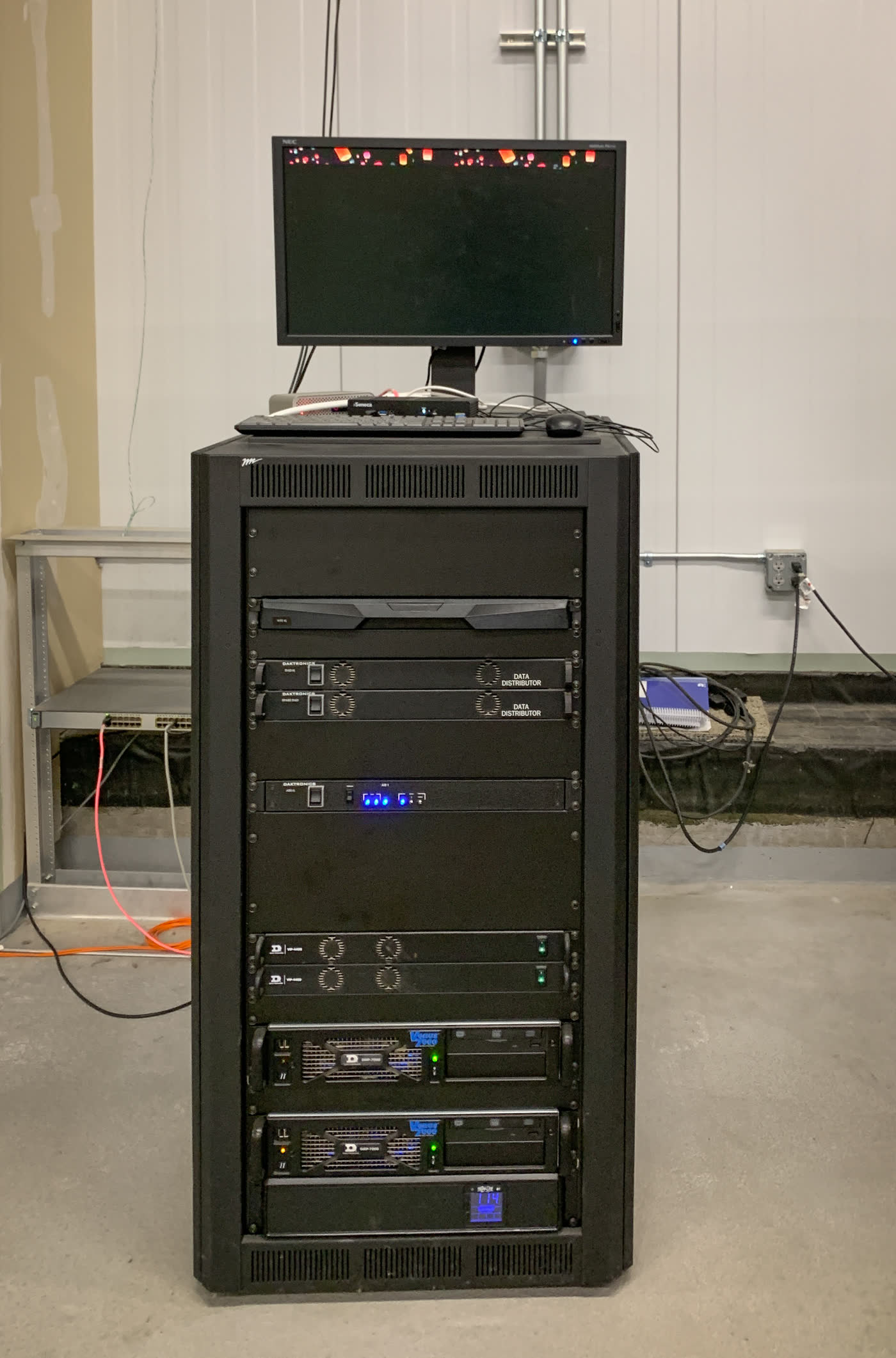
Image context: the cover shows a server rack, not a vector diagram. That choice is deliberate. The Milvus story is about how retrieval infrastructure becomes ordinary enough to run: services, storage, workers, write-ahead logging, indexes, filters, and upgrade discipline. The interesting AI-China question is whether a China-originated vector database can make model memory feel boring in the best database sense.[7]
The 2.6 line is an operations story
Milvus 2.6 is not only a feature release. Its documentation describes a significant architectural shift that reduces deployment complexity and operational overhead. The pre-release notes say Milvus 2.6 replaces external WAL dependencies such as Kafka or Pulsar with Woodpecker, a purpose-built cloud-native WAL system designed for object storage and zero-disk modes.[1] The same section says DataNode and IndexNode responsibilities are consolidated, while compaction, bulk import, statistics collection, and index building move under a unified scheduler.[1]
That is an important signal because vector databases compete on retrieval quality in public demos, but production buyers feel the pain in recovery, compaction, scaling, and upgrade windows. A memory layer that requires too many adjacent systems becomes harder to operate than the application it supports. By pulling WAL behavior, task scheduling, and node consolidation into the core architecture, Milvus is trying to narrow that operational surface.[1][2]
The follow-on releases reinforce that reading. Milvus v2.6.14, dated 2026-04-07, focuses on stability and performance: faster MixCoord recovery, optimized search and query filter performance, and more than 20 bug fixes across crashes, OOM issues, and data correctness problems.[1] Earlier 2.6 releases add replication-topology inspection, TLS minimum-version configuration for object storage, memory optimizations in segment loading and compaction, security fixes, default index changes, and search/storage performance improvements.[1] Those are not glamorous release-note lines. They are the release-note lines that decide whether vector memory survives the move from lab notebook to platform service.
Architecture turns vector search into a control surface
The architecture overview makes Milvus's product boundary clearer. Milvus describes itself as an open-source, cloud-native vector database for high-performance similarity search on massive vector datasets, built on search libraries including Faiss, HNSW, DiskANN, and SCANN.[2] More importantly, it lays out a disaggregated architecture: stateless proxies in the access layer, a Coordinator for cluster topology and consistency, Streaming Nodes for shard-level consistency and WAL-backed recovery, Query Nodes for historical-data querying, Data Nodes for compaction and index building, and storage layers for metadata, object storage, and WAL.[2]
That shape is the point. The vector index is no longer the whole product. The product is the system around the index: routing, metadata, timestamps, query views, segment loading, object storage, write durability, and multi-level result reduction.[2] In AI-China terms, this is where Milvus becomes more interesting than another model-adjacent tool. It gives Chinese and global AI builders a database-shaped place to put embedding memory, then asks them to treat retrieval as a managed data path rather than a pile of custom scripts.
The search data flow also shows why this matters. A query enters through an SDK or REST API, moves through load balancing and proxy routing, touches Streaming Nodes and Query Nodes, loads sealed segments from object storage when needed, and reduces results across multiple nodes before returning to the client.[2] That path is heavier than a toy ANN index, and that is exactly why it is useful. Real retrieval systems need the extra machinery because memory is no longer static.
Hybrid search is the practical RAG boundary
Milvus's hybrid-search documentation shows the next layer of maturity. It supports multiple vector fields and simultaneous ANN searches across modalities or retrieval methods, including dense and sparse vector search.[4] The sparse-dense framing is especially important for RAG: dense vectors capture semantic relationships, while sparse vectors preserve exact term relevance. In practice, a legal memo, a parts catalog, a policy archive, or a codebase search surface needs both. Pure semantic search can miss exact identifiers; pure keyword search can miss paraphrase and conceptual match.[4]
The full-text search documentation pushes the same point into a simpler developer interface. Milvus can use BM25 for relevance scoring, automatically convert raw text queries into sparse vectors, and rank matching results, with highlighted matched terms available in search results.[3] The documentation explicitly ties this to RAG scenarios, where term-specific precision often matters.[3]
This is the most practical reason Milvus belongs in AI-China tracking. Chinese model releases are increasingly strong at generation, coding, and multimodal reasoning, but enterprise adoption still depends on retrieval discipline. If a company cannot find the right clause, SKU, ticket, chart, image, or prior decision, the model's reasoning layer starts from the wrong evidence. Milvus's dense-sparse and BM25 work turns retrieval from a single embedding gamble into a configurable evidence layer.[3][4]
Zilliz turns open infrastructure into a commercial lane
The commercial layer should not be ignored. Zilliz's Chinese company page frames the business around open-source Milvus and managed Zilliz Cloud, describing Milvus as a popular open-source vector database and Zilliz Cloud as an out-of-the-box service for very large vector retrieval.[5] The public GitHub repository reinforces the open path: the project is under the LF AI & Data Foundation, distributed under Apache 2.0, and identifies Zilliz as a major contributor.[6]
That dual posture is strategically useful. Open-source Milvus lets developers inspect, self-host, integrate, and benchmark. Zilliz Cloud gives teams a managed route when the operating burden grows. In AI-China, this is a familiar but important pattern: open infrastructure builds trust and adoption breadth, while the managed service captures teams that want scale, reliability, and support without owning every moving part.
The watch item is whether the open and managed routes stay technically aligned. If open Milvus keeps receiving the architecture, hybrid-search, full-text, stability, and security work visible in the 2.6 branch, the managed product benefits from a credible open core. If the cloud route begins to diverge too sharply from the self-hosted route, teams will have to decide whether Milvus is a database standard or mainly a vendor funnel.[1][5][6]
What to test next
The next evaluation should be workload-shaped. A serious Milvus pilot should test at least four boundaries. First, ingestion and mutation: can the system handle ongoing inserts, deletes, and upserts while search traffic continues? Second, hybrid retrieval: do dense, sparse, BM25, filters, and rerankers improve answer quality for the team's actual documents? Third, operations: how do compaction, segment loading, object storage, WAL recovery, and upgrade paths behave under stress? Fourth, governance: can access control, auditability, backups, and disaster-recovery expectations survive contact with enterprise rules?[1][2][3][4]
Milvus's strongest current signal is not that vector databases are fashionable. It is that the category is maturing back toward database work: durability, scheduling, filtering, schema evolution, recovery, security, mixed retrieval modes, and managed operations. For AI-China, that makes Milvus a useful counterweight to model-release attention. The memory layer is less spectacular than a new chatbot, but it is where many AI systems either become reliable or stay stuck as demos.
Sources
- Milvus Documentation, "Release Notes" (Milvus 2.6 branch through v2.6.14; architecture changes, Woodpecker WAL, RaBitQ, stability, security, and performance updates).
- Milvus Documentation, "Milvus Architecture Overview" (cloud-native architecture, access layer, coordinator, streaming/query/data nodes, storage layers, WAL, and search data flow).
- Milvus Documentation, "Full Text Search" (BM25 full-text search, sparse-vector generation, query behavior, highlighting, and RAG relevance framing).
- Milvus Documentation, "Multi-Vector Hybrid Search" (dense-sparse search, multi-vector fields, multi-modal retrieval, and hybrid ranking rationale).
- Zilliz China, "About Us" (Zilliz company framing, Milvus creator claim, open-source Milvus and Zilliz Cloud positioning, scale claims, and enterprise-user language).
- milvus-io, "Milvus" GitHub repository (LF AI & Data Foundation project, Apache 2.0 license, Zilliz major-contributor note, and public source repository).
- Wikimedia Commons, "File:Server Rack (54126210834).jpg" (source page for the real data-center server-rack photograph used as the cover image).