As of 2026-04-07 UTC, the useful way to read MiniMax is not as one more Chinese lab trying to win a weekly model leaderboard. The sharper market signal is that the company is trying to turn fast-growing developer demand into a quota bundle that travels across coding, office work, and media generation.[1][2][3][4][5] That matters because once a provider stops selling only text-model access and starts selling a resettable workload package across multiple modalities, competition shifts from "which model is best today?" to "which vendor can keep whole agent workflows inside one paid surface?"[2][3][4]
MiniMax's own numbers point in that direction. FY2025 revenue rose 158.9% year over year to US$79.0 million, with more than 70% coming from international markets.[1] The same release says the M2 family became the first Chinese model line on OpenRouter to exceed 50 billion daily tokens in the fourth quarter of 2025, and that by February 2026 average daily token consumption for M2-series text models had grown to more than 6x the December 2025 level, while token consumption from the old Coding Plan had grown by more than 10x.[1] Read together with the newer docs, that is the key transition: MiniMax is trying to catch export demand at the moment it spills out of pure coding and into a broader subscription habit.[1][3][4][5]
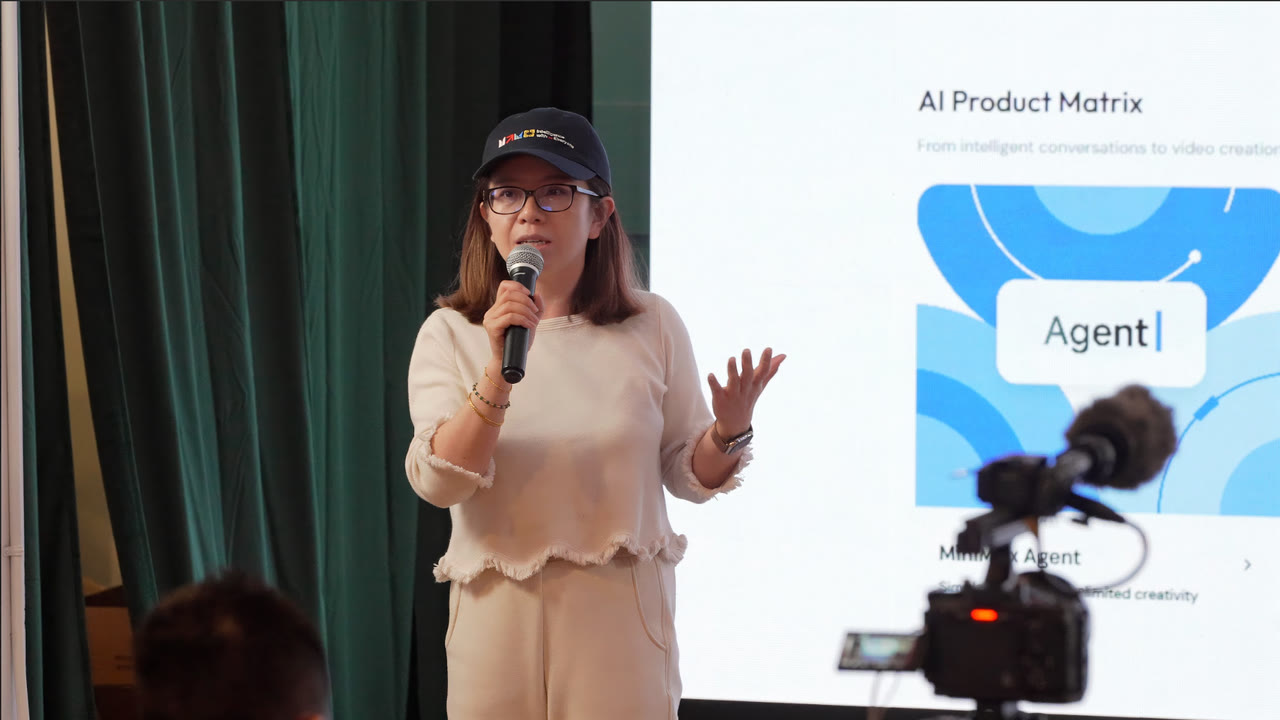
Image context: the cover uses an official photo from MiniMax AI Founder Day @ GTC in San Francisco. It works here because the article is about platform packaging for a global developer audience: the visible product matrix on stage is closer to the commercial story than any synthetic "AI" illustration would be.[6]
What is actually new in the MiniMax business story
The old MiniMax read was easier. A Chinese multimodal company had global creator traction, strong video products, and a credible model program underneath. That read is still true, but it is no longer complete.[1] The financial release now spells out a more operational direction. Management says the company wants to evolve from a large-model company into a platform company for the AI era, while explicitly calling out coding, workplace scenarios, and multimodal creation as the next big expansion points for intelligence demand.[1]
That language would be easy to dismiss as investor-relations polish if the product docs did not move the same way. But they do. The release-notes page logs a February 2026 M2.5 cycle framed around programming, tool calling and search, office productivity, and related scenarios, then a March 18, 2026 M2.7 cycle framed as the start of "recursive self-improvement."[2] The coding-tools guide pushes further up the stack: MiniMax is no longer only documenting an API endpoint. It is documenting how M2.7 plugs into AI coding tools and compatible Anthropic- and OpenAI-style clients, because the commercial surface it wants is not a naked model call. It is a developer workflow that stays inside MiniMax defaults.[4]
This is where the numbers in the FY2025 results become more valuable than the slogans. MiniMax split US$53.1 million of 2025 revenue into AI-native products and US$26.0 million into its Open Platform and enterprise services, while gross margin improved to 25.4% even as adjusted net loss remained US$250.9 million.[1] That profile says two things at once. First, the company has real international demand and real paid usage. Second, it still needs a packaging format that can compound spend faster than raw model comparisons can. The Token Plan is the clearest evidence that this is the direction of travel.[1][3]
Why the Token Plan matters more than a benchmark card
The Token Plan overview makes the shift explicit. MiniMax says the plan extends upon the former Coding Plan by providing access beyond language models, so more creative agents and applications can be built under one subscription.[3] That sentence is the whole strategy in miniature.
Instead of keeping coding on one commercial lane and everything else on pay-as-you-go APIs, MiniMax is trying to normalize one bundled unit. In the standard plan table, M2.7 is sold as 1,500, 4,500, or 15,000 requests per five hours, while other modalities are attached as daily quotas: speech characters, image generations, Hailuo video runs, and Music 2.5 output.[3] The high-speed tiers push text capacity up to 30,000 requests per five hours and increase the daily multimedia allowances at the same time.[3]
That matters because the bundle changes the buyer psychology. A coding-only plan invites direct comparison with other coding-only plans. A multimodal quota bundle invites users to keep adjacent work inside the same account: generate code with M2.7, clean up a deck, synthesize speech, render an image, or produce a short Hailuo clip without leaving the subscription envelope.[3] In commercial terms, MiniMax is trying to turn a high-frequency text habit into a broader workload-retention loop.
The company even preserves the conversion path when quota runs out. The docs say a user can swap from the Token Plan key to a pay-as-you-go API key and continue from the same tooling pattern, while the text limit resets on a rolling 5-hour window and the non-text models reset daily.[3] That is good platform behavior. It minimizes workflow interruption while still teaching users to think in MiniMax's own commercial units.
Why coding is still the wedge, not the whole story
Coding remains the wedge because it is where repetitive, high-intensity demand shows up earliest. The FY2025 release says coding-plan token usage grew more than 10x by February 2026, and M2.5 is framed as making "complex agents economically scalable" with a 37% efficiency improvement over M2.1 in coding.[1] The M2.7 coding-tools guide then turns that wedge into distribution: MiniMax is documented for OpenClaw, Claude Code, OpenCode, Cline, and other tool surfaces because that is where developer traffic becomes durable habit.[4]
But the important commercial move is that MiniMax does not stop at coding. The same company that documents M2.7 for code workflows also sells a plan where coding requests sit next to video, music, image, and speech quotas.[3][4] That is the bridge from a narrow developer budget to a wider application budget.
The external market signal supports this reading. SCMP's late-February report on OpenRouter usage says MiniMax's M2.5 led the platform that month with 4.55 trillion tokens, ahead of Moonshot's Kimi K2.5, after a run of new Chinese model releases.[5] That does not prove durable monetization by itself. It does show that international developer demand exists at scale. The Token Plan is MiniMax's attempt to catch that demand before it leaks into someone else's adjacent workflow surface.[3][5]
The counterweight
There is a real counterweight, and it should not be softened. Bundling is only a moat if users actually consume the bundle in repeated, paid workflows. Otherwise it becomes a discount wrapper around expensive infrastructure.
MiniMax's own financials keep that boundary visible. Adjusted net loss was still US$250.9 million in 2025.[1] Gross margin improved materially, but the company still has to prove that higher-volume subscription packaging produces better monetization quality rather than just broader quota consumption.[1] There is also an execution risk inside the plan design itself: if users mainly want the text lane and treat the media allowances as decorative extras, then the bundle is less defensible than it looks.
That is the falsifier: if Token Plan adoption grows while margin quality stalls and cross-modality usage stays shallow, the moat thesis weakens quickly. In that case MiniMax would still have demand, but not yet a superior commercial container for that demand.[1][3]
What to watch next
First, watch whether MiniMax keeps moving the coding wedge upward into finished workplace output. The M2.7 materials already stress office editing, analyst-style workflows, and complex skill use; the question is whether these remain demos or become ordinary plan consumption.[2][4]
Second, watch whether the Token Plan keeps absorbing more real work than the old Coding Plan did. The shift from a coding-only label to a multimodal plan is already public. The next proof has to come from retention and workload breadth, not from naming alone.[1][3]
Third, watch whether international usage continues to validate the strategy. More than 70% of FY2025 revenue was international, and OpenRouter demand gave MiniMax public export evidence.[1][5] If the company keeps winning overseas developer attention while deepening paid workflow stickiness, the bundle starts to look structurally important instead of merely clever.
Bottom line
MiniMax's new moat is quota bundling across coding, office, and media. The company still needs to prove that this produces better economics than a plain model race, but the direction is already visible in the numbers: international demand is real, M2-series usage is accelerating, and the former Coding Plan has been widened into a multimodal subscription designed to keep more work inside one account.[1][3][5]
Sources
- MiniMax, "MiniMax Global Announces Full Year 2025 Financial Results" (March 2, 2026; revenue mix, international share, M2/M2.5 adoption, Coding Plan growth, margin, and loss figures).
- MiniMax API Docs, "Models" release notes (March 18, 2026 M2.7 entry and February 2026 M2.5 entry describing the release focus).
- MiniMax API Docs, "Token Plan Overview" (the Token Plan extends the former Coding Plan, bundles multimodal quotas, and uses a rolling five-hour reset for M2.7 requests).
- MiniMax API Docs, "M2.7 for AI Coding Tools" (official coding-tool integration guide covering M2.7 deployment across coding clients and compatible API surfaces).
- South China Morning Post, "China’s MiniMax, Moonshot top AI token use ranking, ending year of US dominance" (February 25, 2026; OpenRouter usage context for MiniMax M2.5).
- MiniMax, "MiniMax AI Founder Day @ GTC: Inside the Conversations on What's Next in AI" (official event page and source page for the cover photograph used in this article).
Editor’s Pick Review
This piece wins the editor pick because it turns a noisy model-cycle narrative into an operator-grade business thesis with tight 24-hour relevance. The argument is explicit, falsifiable, and numerically anchored: revenue mix, international share, token velocity, quota reset mechanics, and margin/loss context are all connected to one clear claim about bundle-driven retention rather than leaderboard optics.
It also passes today’s stricter image-policy gate cleanly. The hero visual is an immersive, topic-grounded real event photo (MiniMax Founder Day @ GTC) that directly matches the article’s platform-packaging thesis; there are no analytical diagrams, synthetic concept art, or decorative abstractions.