As of 2026-05-11 UTC, the useful way to read Huawei Cloud's Singapore MaaS launch is not as one more regional cloud-availability note and not as a simple overseas extension of the Pangu brand.[1] The stronger ai-china signal is narrower and more commercial. Huawei is exporting a token-service lane: an APAC cloud surface where Chinese open-model demand can be bought as governed inference, hosting, fine-tuning, and evaluation capacity under Huawei's own control plane.[1][2]
That distinction matters because the April 8 Singapore announcement does not lead with one proprietary model victory. Huawei says MaaS in Singapore will support six models from GLM, DeepSeek, and Qwen, aimed first at intelligent Q&A and AI coding, with one-click access, out-of-the-box model hosting, and lifecycle support from deployment to inference, fine-tuning, and evaluation.[1] That is a different market move from exporting one flagship model family. It is the export of a managed lane for consuming several Chinese model lines at once.
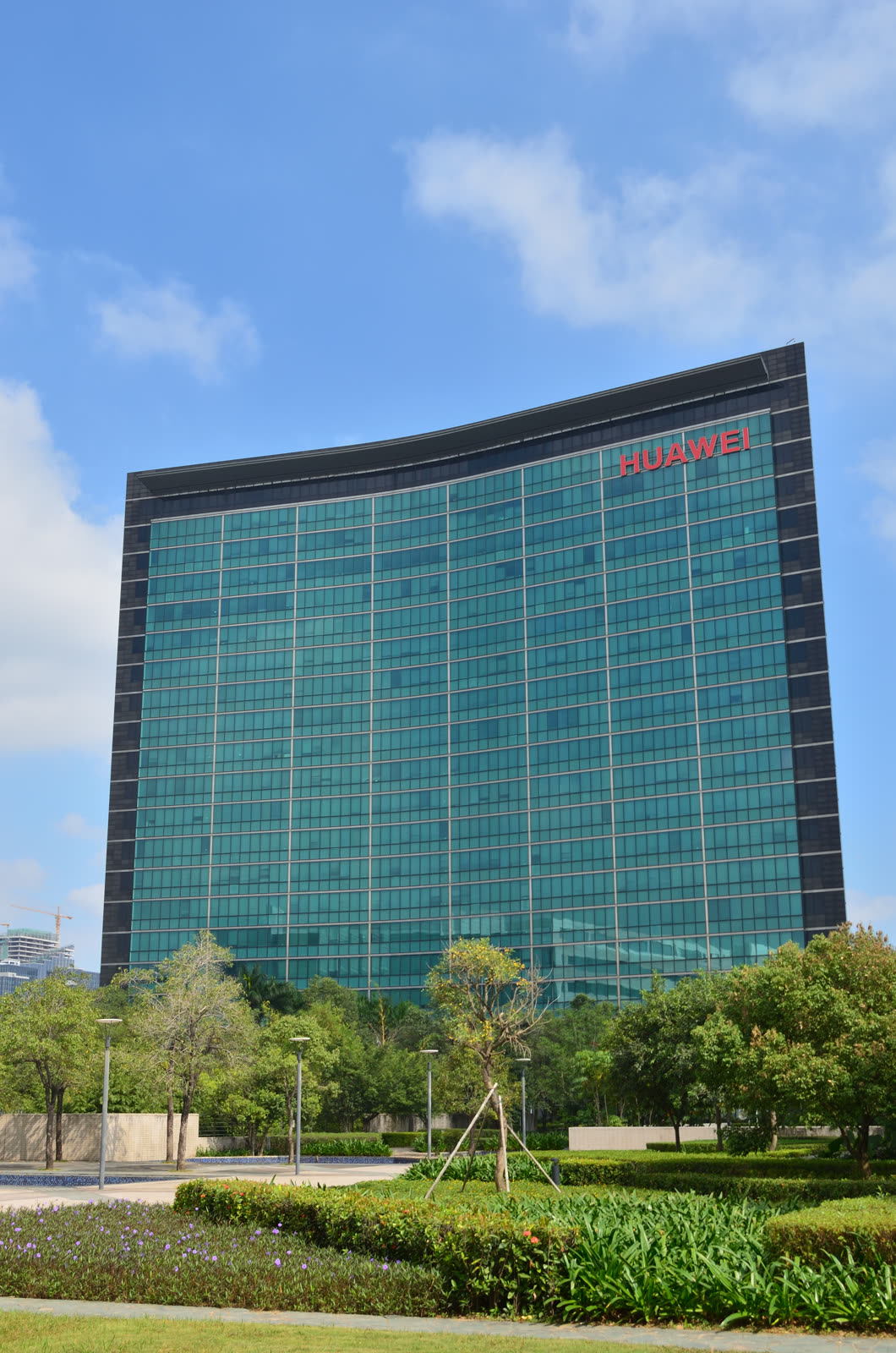
Image context: the cover uses a real Wikimedia Commons photograph of a Huawei office tower in Shenzhen. That is the right visual register here because the article is about an institutional export surface. The strategic unit is not a single model checkpoint or a splashy launch asset. It is a company-level package of cloud regions, permissions, lifecycle tooling, and model supply.[6]
The opening move is roster control, not single-model branding
The Singapore launch page is unusually explicit about this. After noting the official launch date of 2026-04-10, Huawei says its in-house acceleration engine will provide stable and high-quality token services for mainstream models, and it immediately names GLM, DeepSeek, and Qwen as the first supported families.[1] The page then describes two opening workload classes: knowledge-style Q&A and coding.[1] This is not the language of a Pangu-only export story. It is the language of a cloud vendor trying to sit above model brands and sell reliable throughput.
The September 2025 baseline helps clarify the continuity. At HUAWEI CONNECT 2025, Zhang Ping'an said Huawei Cloud's AI Token Service abstracts away the underlying technical complexity and directly provides the final AI computing result, while the version powered by CloudMatrix384 was positioned as a higher-performance inference service rather than a mere hardware showcase.[2] The Singapore move extends that logic into an overseas lane. In this reading, Pangu still matters as part of Huawei's broader AI stack, but the commercial export object is increasingly the token-service shell around a mixed roster.[1][2]
That is strategically important in ai-china because mixed-model demand is already real. Many enterprise teams do not want to bet their whole workflow on one family. They want coding and agent models, stable hosted inference, a short path to testing, and a cloud vendor who will hold the operational complexity. Huawei's Singapore language reads as an answer to that exact demand.[1]
The public docs show a staged but governed MaaS surface
Huawei's own documentation reinforces the idea that this is a managed lane rather than an open-ended model bazaar. The international MaaS Use Cases and Workflow guide says MaaS integrates open-source models including Qwen and DeepSeek, lets users choose pretrained models directly instead of building from scratch, and helps businesses build and deploy model-powered applications quickly.[3] Just as importantly, the same guide's published Supported Regions line points to CN-Hong Kong.[3]
That apparent narrowness is useful information, not a contradiction to ignore. My inference is that Huawei's export lane is being expanded carefully: broad marketing language in Singapore, but a still-tightly staged public documentation surface in the international guide.[1][3] This is exactly what a controlled export lane should look like in its early commercial phase.
The MaaS Model Release Notes make the control surface even clearer. Huawei publishes model additions and updates inside that shell, and the visible international roster is already cross-vendor. The notes show GLM-5 in CN-Hong Kong on 2026-02-12, describing it as the latest flagship GLM model with 198K context, function calling, and prefix continuation; GLM-5.1 appears on 2026-04-07; DeepSeek-V4-Flash appears on 2026-04-24 with 1024K context plus function calling; and Qwen3-32B-128K is listed as a new model release in CN-Hong Kong.[4] That is not a random assortment of third-party endpoints. It is a vendor-curated release cadence.
Placed beside the Singapore announcement, the picture becomes more legible. Huawei is not only reselling model access. It is deciding which open-model families enter the lane, when they appear, how they are described, and inside which regional operating envelope they are exposed.[1][4]
Permissions are part of the product, not an afterthought
The strongest clue that this is an enterprise export lane comes from the authorization docs. Huawei's Configuring ModelArts Agency Authorization for Using MaaS page says MaaS requires proper permission management, that all users must authorize ModelArts access before using the MaaS service, and that ModelArts uses IAM plus one-click agency authorization because it must access other services such as OBS for training tasks.[5]
This matters because token service in Huawei's language is not only metered inference. It is governed use inside the ModelArts operating shell. The user is not simply handed a raw model name and a bill. The user is placed inside an access model where permissions, agencies, and cross-service authorization are first-class parts of the workload.[5]
That pushes Huawei away from a pure price-war interpretation. A vendor can always cut token prices. It is harder to offer a lane where model roster, lifecycle tasks, and cloud permissions are already arranged into one enterprise pattern. In the Singapore announcement, Huawei says customers can integrate AI capabilities into service systems without worrying about the underlying infrastructure.[1] The authorization guide shows what that promise really means in practice: somebody else still has to manage the infrastructure boundary, and Huawei wants that somebody to be Huawei.[1][5]
Why this matters in AI-China
The commercial implication is sharper than the launch headline. Huawei Cloud is trying to export not only compute and not only Pangu, but a Huawei-controlled access surface for Chinese open models.[1][2][3][4][5] If this works, the company can compete above the model layer. The value would sit in packaging: regional latency, curated roster, lifecycle tooling, and permission structure.
The April 8 announcement is already pointing toward that broader stack. Huawei says APAC now runs across five Regions and 18 availability zones in Singapore, Thailand, Hong Kong (China), Indonesia, and the Philippines, with 50 ms access latency, and it adds that CodeArts and AgentArts will launch outside the Chinese mainland in the second half of 2026.[1] That matters because the export lane gets stronger when hosted models, coding agents, and agent platforms can all sit on the same regional fabric.
The boundary should stay clear. Public evidence still shows a staged lane rather than a frictionless global mesh, and the international documentation remains visibly concentrated in CN-Hong Kong today.[3][4] The strongest claim this article can support is therefore narrow: Huawei Cloud's current move is to turn China-model demand into a governed APAC token-service contract, with cross-vendor roster control and ModelArts-centered lifecycle management at the core.[1][3][4][5]
What to watch next
- Watch whether the international MaaS docs expand beyond the current CN-Hong Kong center of gravity and make Singapore's operational status more explicit in public guidance.[1][3][4]
- Watch whether the opening GLM / DeepSeek / Qwen trio grows into a broader curated roster or stays tightly bounded around the current high-demand families.[1][4]
- Watch whether CodeArts and AgentArts actually arrive outside the Chinese mainland on schedule in H2 2026. If they do, Huawei's export lane rises from hosted token service to a fuller agent-execution stack.[1]
Sources
- Huawei, "Huawei Cloud Introduces Token Service in Singapore" (April 8, 2026; Singapore MaaS launch on April 10, GLM/DeepSeek/Qwen opening roster, lifecycle from deployment through evaluation, H2 2026 overseas CodeArts/AgentArts plan, and APAC network details).
- Huawei, "Huawei Cloud: Fostering the Fertile Ground for Compute, Empowering AI Pioneers for Industries" (September 19, 2025; AI Token Service framing, CloudMatrix384 baseline, and abstraction of underlying AI-compute complexity).
- Huawei Cloud, "MaaS Use Cases and Workflow" (international user guide; Qwen/DeepSeek integration framing, rapid build/deploy positioning, and published supported-region line).
- Huawei Cloud, "MaaS Model Release Notes" (international product bulletin; CN-Hong Kong roster updates including GLM-5, GLM-5.1, DeepSeek-V4-Flash, and Qwen3-32B-128K).
- Huawei Cloud, "Configuring ModelArts Agency Authorization for Using MaaS" (international user guide; IAM control, mandatory ModelArts authorization, and one-click agency setup for cross-service access).
- Wikimedia Commons, "File:HuaweiShenzhen.jpg" (source page for the real Shenzhen Huawei office photograph used as the article image).