As of 2026-03-29 UTC, Kuaishou is easiest to misread when it gets reduced to one more China video-model company trying to win a crowded ranking battle. The public record points to a narrower and more durable read. Kling matters because it now sits inside a company that already owns traffic, creator behavior, advertising demand, merchant spend, and short-form viewing habits at massive scale. In the first quarter of 2025, Kuaishou reported 408.0 million average DAUs, 711.7 million average MAUs, and a revenue mix still led by online marketing services at 55.1% of total revenue.[1] That is the operating base beneath the model story.
This matters for AI-China analysis because a video model becomes more valuable when it is not waiting for distribution from scratch. Kuaishou can ship model improvements directly into an existing content and business ecosystem, then measure whether those improvements change creation volume, marketing conversion, and paid usage across the same platform boundary.[1][4][5]
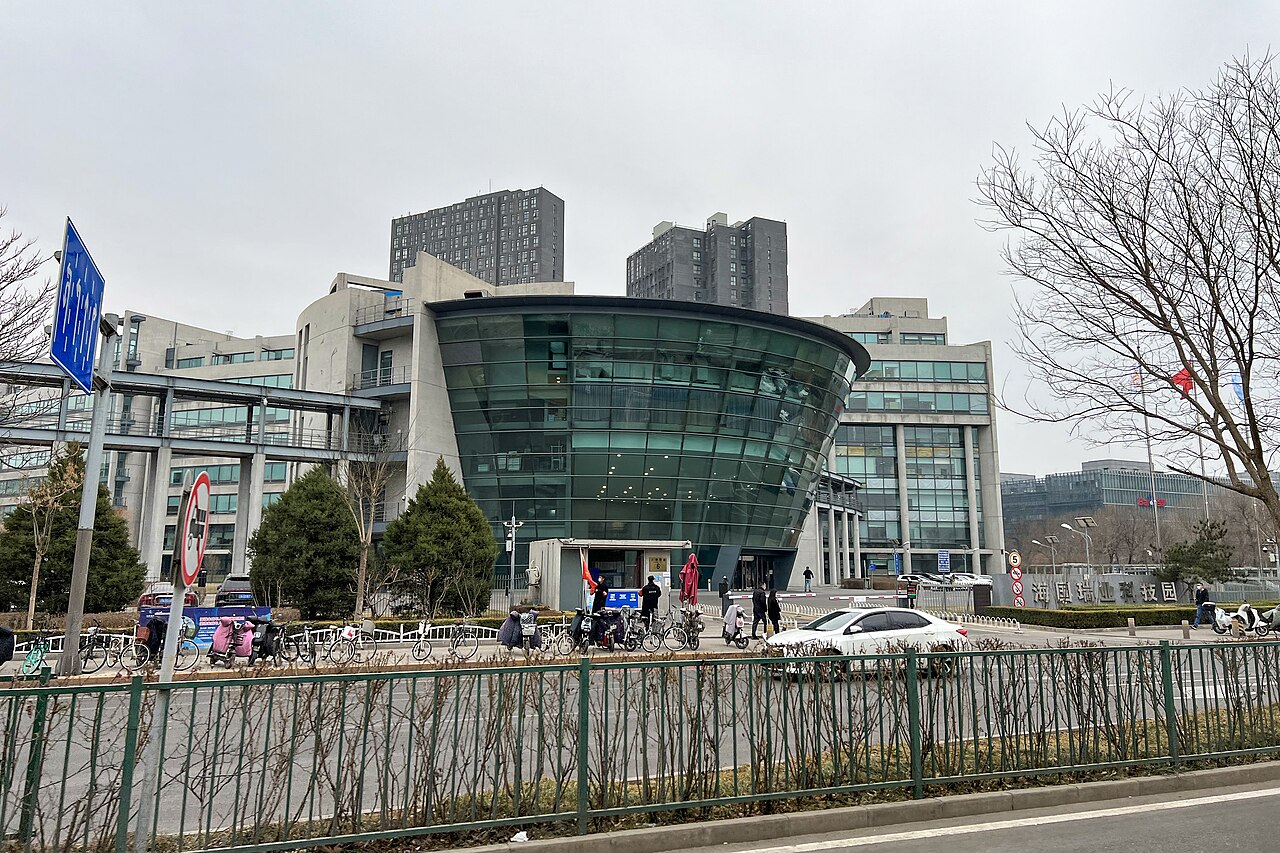
Image context: the cover uses a real Wikimedia Commons photograph of Kuaishou headquarters in Beijing. That is the right visual here because the argument is about a company-level loop of distribution, creators, and monetization, not a generic AI image.[6]
1) The platform base comes first
Kuaishou's first-quarter 2025 results are useful because they keep the scale question concrete. The app averaged 408.0 million DAUs and 711.7 million MAUs, while management said it was further embedding AI across both the content ecosystem and the business ecosystem.[1] That language matters. It means AI is being treated as infrastructure for the whole platform, not as a side project that lives apart from the core revenue engine.
The revenue mix reinforces the same point. In Q1 2025, online marketing services contributed 55.1% of revenue, live streaming contributed 30.1%, and the remaining 14.8% came from other services.[1] So when Kling improves creator throughput or lowers creative friction, the potential value is not limited to model subscriptions alone. The improvement can flow into ad supply, merchant tooling, and content surfaces that already monetize well.
That is the first reason Kuaishou deserves a different analytical frame from firms that still need to build distribution one customer at a time. Kling is landing inside a mature attention machine.
2) Kling is being shaped as a creative interface, not just a benchmark object
The April 2025 Kling AI 2.0 launch makes this visible. Kuaishou said the model family had surpassed 22 million users globally within ten months of the original June 2024 launch.[2] More important than the raw user count is the product direction. Kling 2.0 introduced a multi-modal visual language interaction model and a Master Edition with upgraded multimodal video editing, which pushes the system closer to a working creative surface than to a single text-prompt showcase.[2]
The DeepSeek-R1 integration from March 2025 pushes the same logic one layer lower. Kuaishou said the integration helps users turn ideas into professional prompts for video and image generation, including with an Inspiration Word Bank that lets people control scenes, lenses, shots, lighting, and atmosphere in more granular ways.[3] That does not merely add another model name to the stack. It lowers the prompt-design burden that often separates casual curiosity from repeat creative use.
Taken together, these moves suggest that Kuaishou does not need Kling to function only as a prestige frontier model. It needs Kling to become easier to use, easier to route through, and easier to insert into actual content production behavior.[2][3]
3) The commercial signal is now coming from the closed loop, not only from stand-alone model sales
The strongest evidence sits in Kuaishou's own commercialization disclosures. In the 4Q24 management presentation, the company said marketers' average daily spending with AIGC marketing materials surpassed RMB30 million, while Kling AI's cumulative revenue exceeded RMB100 million as of February 2025.[5] That is already a very different signal from a company that only reports model demos or user signups. It shows AI generation entering an ad workflow where money is already changing hands.
By the second quarter of 2025, the signal had become larger and more explicit. In the 2025 Interim Report, Kuaishou said revenue from Kling AI surpassed RMB250 million in Q2 2025.[4] It also said Kling had assisted prosumers and corporate clients across advertising and marketing, film and short plays, gaming interactions, and smart hardware.[4] That scope matters. The model is no longer described as a narrow creator toy. It is being positioned as production infrastructure across multiple commercial categories.
The interim report adds another important link. Kuaishou said growth in other services in Q2 2025 was driven in part by the Kling AI business, and that upgraded AIGC marketing material solutions improved conversion rates for advertisers.[4] This is the operating clue that turns the dossier. Kling is not just selling output. It is being woven into a flywheel where better AI assets can help advertising performance, and stronger advertising demand can justify deeper product investment.
4) Why this matters more than another video-model leaderboard cycle
Many AI-China companies are still being judged through one of three frames: cheap API competition, open-weight credibility, or flagship benchmark headlines. Kuaishou's public evidence points toward a fourth frame: model capability fused to an existing content-commerce system.[1][4][5]
That system is getting denser, not thinner. In the second quarter of 2025, Kuaishou said it launched OneRec, an end-to-end generative recommendation large model designed to predict videos users would prefer from the entire corpus, with better training and inference efficiency.[4] Recommendation, creation, and monetization are therefore moving together. The company is not only asking whether Kling can generate a better clip. It is also improving how the platform matches content to viewers and how advertisers monetize attention around that content.
This is why the standard "who has the best video model this month?" framing under-describes Kuaishou. The company's more durable edge may come from how much of the loop it already owns: creation tools, recommendation, distribution, marketing demand, and short-play industrialization.[1][4][5]
5) The short-play lane shows what the bigger strategy looks like
Kuaishou's short-play activity is especially revealing because it turns AI generation into repeatable commercial workflow. In the interim report, the company said Kling AI and Kuaishou Astral Short Plays jointly produced New World Is Loading, described as the world's first AI-generated anthology series, and said the project had reached nearly 200 million cumulative views globally.[4]
That does not prove AI-native short plays are already a dominant business category. It does show how Kuaishou is trying to move AI from isolated creative experimentation into serialized content, audience distribution, and monetizable viewing behavior on a platform that already understands short-form demand.[4] The strategic value lies in the workflow continuity.
For a company dossier, that continuity matters more than a one-week model ranking. If Kling can help creators, advertisers, studios, and merchants work faster inside Kuaishou's own surfaces, then the model's value compounds through usage loops that outsiders do not control.
Boundary and risk
This thesis weakens if Kling's revenue keeps growing but remains too dependent on one-off enterprise projects rather than repeated workflow usage.[4] It also weakens if Kuaishou improves creative tooling but fails to show that those improvements keep lifting ad conversion, content supply quality, or merchant spend over multiple quarters.[4][5]
There is a second risk as well. Video generation is getting more crowded, and Kuaishou cannot assume interface improvements alone will preserve differentiation. If rival platforms make prompt generation, multimodal editing, and short-form production equally easy while matching output quality, then Kuaishou's advantage will depend even more heavily on how tightly Kling stays connected to recommendation and monetization surfaces.[2][3][4]
What to watch next
Three signals matter more than another isolated model release.
First, watch whether Kling revenue keeps scaling inside recurring creator and advertiser workflows, not only through headline enterprise wins.[4][5]
Second, watch whether Kuaishou keeps deepening the connection between AI asset creation and marketing conversion. That is where the closed-loop thesis becomes economically defensible.[4][5]
Third, watch whether OneRec, short-play production, and Kling's creative interfaces start to look like one coordinated operating stack rather than parallel initiatives with loose branding ties.[2][4]
Bottom line
Kuaishou's real AI edge in 2026Q1 is not that it has a video model worth mentioning. It is that Kling is now being inserted into a full platform loop of traffic, recommendations, creator tooling, advertising spend, and short-play commercialization.[1][4][5]
That makes Kuaishou harder to evaluate with the usual model-race template. The more useful question is not whether Kling wins one more leaderboard cycle. It is whether Kuaishou can keep turning AI generation into a thicker content-commerce operating system inside a platform it already knows how to monetize.
Sources
- Kuaishou Technology, "Kuaishou Technology Announces First Quarter 2025 Unaudited Consolidated Results" (May 27, 2025; 408.0 million DAUs, revenue mix, AI embedded across content and business ecosystem).
- Kuaishou Technology, "Kling AI Advances to the 2.0 Era, Empowering Everyone to Tell Great Stories with AI" (April 15, 2025 PDF; 22 million users, multi-modal visual language, Master Edition launch).
- Kuaishou Technology, "Kuaishou Kling AI Integrates DeepSeek, Lowering the Entry Barrier for AI-Powered Creative Content" (March 17, 2025; prompt assistance and Inspiration Word Bank workflow).
- Kuaishou Technology, "2025 Interim Report" (September 4, 2025 PDF; Kling Q2 revenue above RMB250 million, advertising/short-play/gaming/smart-hardware use cases, OneRec rollout).
- Kuaishou Technology, "4Q24 Management Presentation" (March 25, 2025 PDF; AIGC marketing-material spend above RMB30 million per day and Kling cumulative revenue above RMB100 million as of February 2025).
- Wikimedia Commons, "File:Kuaishou headquarters, west gate (20220311140625).jpg" (source page for the cover photograph).