As of 2026-03-29 UTC, the cleanest way to read Baidu's 2025 ERNIE pivot is that the company stopped treating model access as the scarce product it had to defend at all costs. In March, Baidu made ERNIE 4.5 and ERNIE X1 free on the consumer side and moved ERNIE 4.5 onto Qianfan for enterprise API use.[1] In June, it open-sourced the ERNIE 4.5 family under Apache 2.0 and paired that move with official deployment tooling.[2] By the second quarter, Baidu was telling investors that Qianfan's model library had expanded to include the open-sourced ERNIE 4.5 series and additional third-party models.[4]
Put those steps together and the business logic changes. The question is no longer whether Baidu can keep ERNIE scarce enough to charge premium access at every layer. The more useful question is whether Baidu can turn ERNIE into a wider funnel that feeds AI Cloud growth and makes Qianfan harder to avoid for enterprise teams.[1][2][3][4]
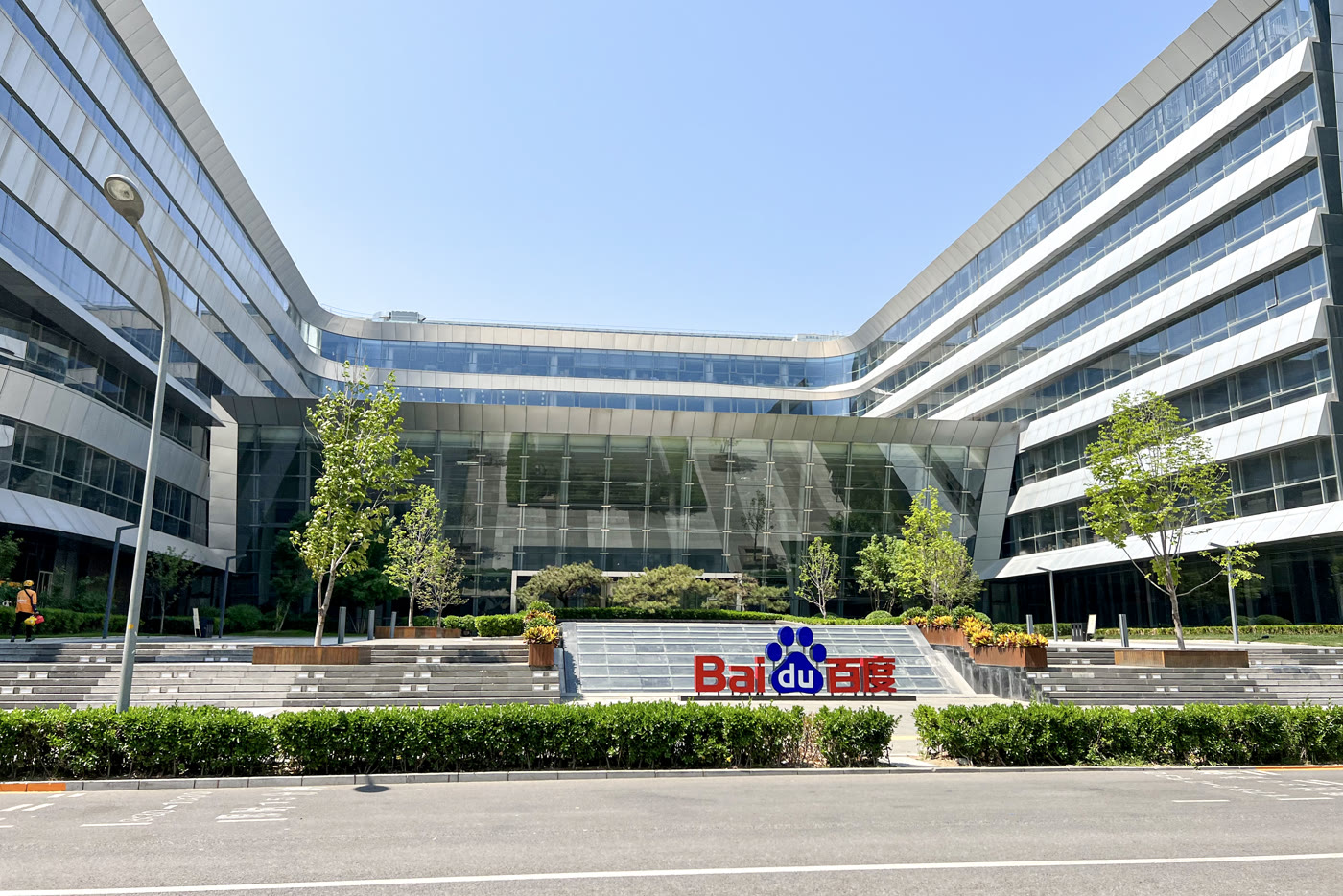
Image context: the cover uses a real Wikimedia Commons photograph of Baidu's ZPark Phase II campus in Beijing. That is the right visual here because this piece is about a company-level platform strategy, not a generic AI diagram.[6]
What changed in sequence
The sequence matters.
On 2025-03-16, Baidu's cloud announcement said ERNIE 4.5 and ERNIE X1 were formally released, already available for free to users on the ERNIE Bot surface, with ERNIE 4.5 live on Qianfan and ERNIE X1 about to follow there.[1] That was an important pricing and distribution signal. A company still trying to maximize scarcity would not widen the consumer surface and enterprise API surface at the same moment.
Then came the open-source move. On 2025-06-30, Baidu's ERNIE blog announced 10 open-source ERNIE 4.5 models, including MoE lanes with 47B and 3B activated-parameter scales, a largest model with 424B total parameters, and a 0.3B dense model, all under Apache 2.0.[2] Just as importantly, Baidu framed the release as more than weights: the models were tied to PaddlePaddle training and deployment plus open development toolkits that lower post-training and serving friction across multiple hardware environments.[2]
The financial framing then caught up. In Baidu's first-quarter 2025 results, management said AI Cloud surged 42% year over year and explicitly highlighted Qianfan's expanded model library and toolkits for multimodal and reasoning-model training and fine-tuning.[3] In the second-quarter 2025 results, Baidu said AI Cloud kept delivering robust growth and noted that Qianfan had expanded its model library with the open-sourced ERNIE 4.5 series and more third-party models.[4]
That is the real arc. Free access, open models, more tooling, then a managed platform that carries both Baidu models and outside models. The center of gravity is moving upward.
Why this looks like a funnel reset, not a surrender
There is an easy superficial reading of these moves: Baidu got pressured by competition and had to give things away. Reuters' March 16 report captures that pressure clearly. It described Baidu launching the new models while Chinese AI competition intensified, with DeepSeek re-energizing the race through strong performance at lower cost.[5]
That competitive context matters, but it is still only the outer layer. The deeper market question is where Baidu thinks durable value can still be captured once model scarcity weakens.
The source trail points to one answer: Baidu is trying to capture value above the standalone model endpoint. Free consumer access can keep ERNIE visible. Open-source weights can widen developer attention and lower adoption friction. But the monetizable control point is increasingly Qianfan plus the broader AI Cloud contract that sits around deployment, toolchains, model choice, and enterprise workflow integration.[1][2][3][4]
That is an inference from the sources, not a quoted Baidu sentence, but it is the most coherent way to connect them. A company that believed exclusive model scarcity remained its best moat would be less eager to widen free access, less eager to open-source a model family under Apache 2.0, and less eager to tell investors that its managed platform now includes both its own open models and third-party models.[2][4]
The strategic tell is Qianfan's willingness to carry outside models too
The second-quarter disclosure is the strongest clue.[4] Once Qianfan is positioned as a place where open-sourced ERNIE 4.5 and third-party models can coexist, Baidu is implicitly telling the market that the sticky layer is not "only use our model." The sticky layer is "run your AI-native application development and managed model operations here."[4]
That is a meaningful change in AI-China business logic. Platform owners usually become more durable when they can host more than one model family without losing the billing, tooling, and governance surface. If Qianfan can benefit whether an enterprise prefers ERNIE, a third-party model, or a mixed stack, Baidu's revenue opportunity becomes less sensitive to one benchmark cycle or one branded flagship.[4]
This is also why the open-source move and the managed-platform move are not contradictions. They are complementary if the goal is to widen the top of the funnel while keeping the enterprise operating surface inside Baidu's cloud boundary.[2][3][4]
Why AI Cloud growth matters more than one benchmark headline
The first-quarter number matters here because it gives the strategy an economic anchor. Baidu said AI Cloud grew 42% year over year in the first quarter, driven by demand for its full-stack AI products and solutions.[3] That does not prove every ERNIE pricing decision caused the growth. It does show where management wants investors to look.
That emphasis is important. If AI Cloud is the line item accelerating while Baidu invests heavily in AI, the practical read is that model capability is being used to support a broader commercial surface, not merely to sell one premium chat endpoint.[3][4]
The March and June decisions fit that frame. Free access can increase reach. Open-source models can widen experimentation. Tooling can reduce deployment hesitation. Qianfan can then sit in the middle as the place where that widened interest is supposed to turn into managed usage, governance, and recurring cloud revenue.[1][2][3][4]
This is where Baidu's posture starts to resemble a classic control-plane play. The premium object is no longer only the model. The premium object is the environment where enterprises build, tune, route, and run model-backed systems.
What could break this thesis
The thesis is not self-executing.
It weakens if open-sourcing ERNIE widens awareness but fails to pull meaningful enterprise activity into Qianfan.[2][4] It weakens if third-party model support makes Qianfan look like a neutral catalog without creating enough platform stickiness to defend margins.[4] And it weakens if AI Cloud growth slows materially once the initial novelty of the free-and-open shift fades.[3][4]
There is also a simpler risk. Wider access only helps if developers and enterprises still believe Baidu's platform is the convenient place to operate. If the market takes the open-source weights and deploys them elsewhere, Baidu broadens the funnel without owning the high-value layer that comes after the funnel.
What to watch next
Three signals matter more than another isolated model launch.
First, watch whether Baidu keeps making ERNIE easier to enter while still thickening the managed experience inside Qianfan.[1][2][4]
Second, watch whether AI Cloud keeps outgrowing the rest of Baidu Core strongly enough to justify the current investment posture.[3][4]
Third, watch whether Qianfan's value proposition becomes clearer as a control plane for mixed-model enterprise work rather than merely a storefront for whichever models are currently fashionable.[4]
Bottom line
Baidu's important 2025 ERNIE move was not only that it launched new models in a more competitive market.[1][5] It was that the company widened free access, open-sourced a major model family, and then kept pointing enterprise users back toward Qianfan and AI Cloud.[1][2][3][4]
That combination suggests a market-level reset. Baidu no longer needs ERNIE to stay scarce in every lane. It needs ERNIE to make the top of the funnel wider, so the managed platform beneath it becomes more valuable.
Sources
- 百度智能云,“两连发!文心大模型4.5及X1,上线千帆!”(2025年3月16日;文心4.5与X1发布、免费开放、千帆上线节奏)。
- ERNIE Blog,“ERNIE 4.5 模型系列正式开源”(2025年6月30日;10款模型、Apache 2.0、PaddlePaddle 训练与部署工具链)。
- Baidu via PR Newswire, "Baidu Announces First Quarter 2025 Results" (2025-05-21; AI Cloud up 42% year over year and Qianfan toolkit/library expansion).
- Baidu via PR Newswire, "Baidu Announces Second Quarter 2025 Results" (2025-08-21; Qianfan model library expanded with open-sourced ERNIE 4.5 and additional third-party models).
- Reuters via Yahoo Tech, "China's Baidu launches two new AI models as industry competition heats up" (2025-03-16).
- Wikimedia Commons, "File:Baidu Technology Park at ZPark Phase II (20220502113650).jpg" (source page for the cover photograph).