
As of 2026-04-12 UTC, the most useful way to watch Kling AI's 1 minute 54 second trailer "Kling 3.0 Model: Everyone a Director. It's Time.", published on February 4, 2026, is to resist the simplest reading available to it.[1] The simple reading is that Kuaishou has made its AI videos look more realistic again. The stronger reading is narrower. This trailer is trying to turn realism into a workflow promise. It says prompts should not only produce attractive clips; they should produce something closer to directorial control over shots, continuity, and sound.
The official Kling materials make that interpretation much easier to defend. The VIDEO 3.0 User Guide says the model line upgrades multi-shot narratives, element consistency, native audio, multilingual dialogue, dialects and accents, and 15-second output inside what it calls a more deeply integrated multimodal framework.[2] The Element Library User Guide then explains how Kling wants to stabilize characters, props, scenes, and even voices as reusable assets across shots rather than as lucky one-off generations.[3] Older materials show where these pieces came from: Kling O1 was framed as a unified multimodal creation engine built to solve the consistency problem across generation and editing, while VIDEO 2.6 introduced the first serious native-audio push by promising synchronized visuals, narration, dialogue, and sound effects in one pass.[4][5]
Put together, those sources suggest that Kling 3.0 is not mainly a "better video model" ad. My inference is that Kuaishou is pitching a director surface: one product layer where promptable shot sequencing, reusable subject memory, and audio-video coordination begin to behave less like separate tricks and more like production grammar.[1][2][3][4][5]
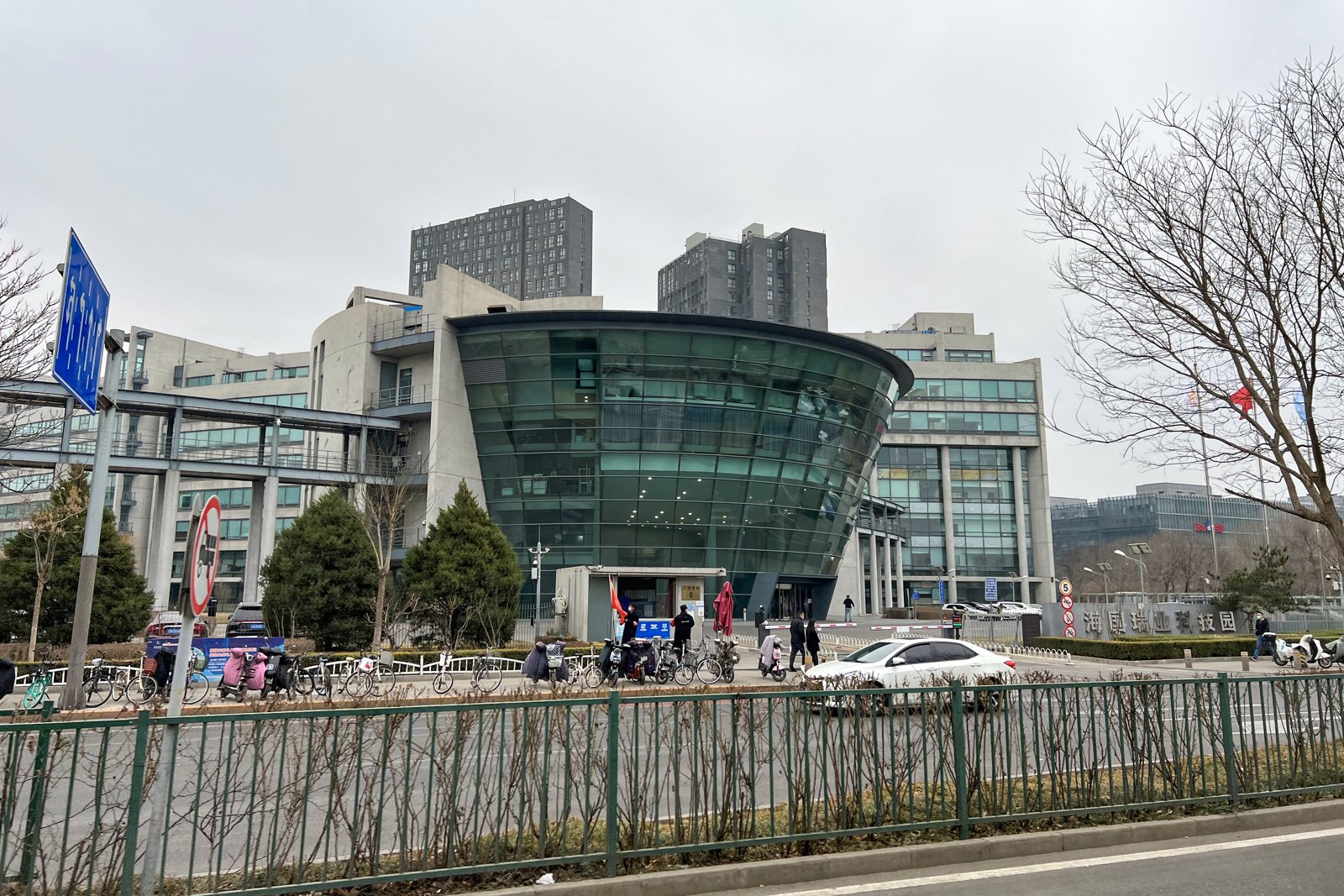
Image context: the cover uses a real Wikimedia Commons photograph of Kuaishou headquarters in Beijing. That is the right visual here because Kling 3.0 is not presented as an isolated research artifact. The trailer and product guides both point toward a company-scale creative stack with reusable assets, subscription tiers, and a widening set of workflow surfaces.[6]
Around 0:10, the trailer uses impact sports because Kling wants realism to mean physical obedience
The opening movement does not start with dreamy landscapes or ornamental camera drift. It starts with combat-sport and arena imagery: a fighter walking out, a close-up under harsh lights, then a punch-driven ring sequence that makes body contact, sweat, motion blur, and camera instability do the persuasive work.[1] That choice matters. Kuaishou is telling the viewer that the benchmark is not static beauty. The benchmark is whether bodies, props, and camera perspective can survive rapid motion without collapsing into visual confusion.
That aligns with the written upgrades in the VIDEO 3.0 guide. The guide keeps returning to more precise semantic response, stronger realism, and longer scenes that can handle more complex action and development.[2] The continuity claim also inherits directly from Kling O1, whose launch pitch stressed "director-like memory" for characters, props, and settings across moving shots.[4] Read beside those texts, the trailer's sports material stops looking like generic hype footage. It becomes a stress test. Kuaishou wants the viewer to feel that Kling 3.0 can keep action legible under pressure.
This is an important distinction in ai-china. Plenty of video demos still sell atmosphere first and control second. Kling 3.0 reverses the order. It uses spectacle, but the spectacle is chosen so that failure would be obvious. If the athlete's body, the camera angle, or the object trajectory slips, the illusion breaks immediately. The opening therefore functions as a compact claim about obedience to motion logic rather than about "cinematic vibes" by themselves.[1][2][4]
Around 0:35, "narrative under your control" reveals the real subject: shot grammar
The decisive turn arrives when the trailer stops flashing action and begins to show structured sequences: sports clips, car footage, split-screen movement, aircraft imagery, and then an interface layer that implies assembly rather than mere generation.[1] This is where the tagline about everyone being a director becomes concrete. The trailer is no longer saying only that Kling can render a scene. It is saying Kling can help decide how a scene is broken into shots.
The VIDEO 3.0 guide makes that point explicitly. Its first highlighted upgrade is Multi-Shot, described as an AI-director mode that can infer scene coverage, shot transitions, framing, and camera changes from prompts, including classic shot-reverse-shot dialogue and more advanced cross-cutting structures.[2] The guide even separates automatic multi-shot planning from a Custom Multi-Shot mode where creators specify the content and duration of individual shots.[2] That matters because it moves Kling's pitch one layer upward. The product is not only "video from text" anymore. It is closer to promptable shot grammar.
That is why the middle of the trailer feels different from older AI-video montages. Instead of staying at the level of isolated clips, it keeps implying sequencing logic and editorial intent. My inference is that Kuaishou wants creators to stop judging Kling 3.0 as a still-image engine with motion added later. It wants them to judge it as a tool that begins to understand scene coverage and narrative pacing in a more recognizably directorial way.[1][2]
Around 1:00, the interface and the Element Library turn consistency into reusable memory
The trailer's next important move is to reveal product UI rather than hiding behind output alone.[1] Once the interface appears, the continuity story sharpens. Kling is not asking users to hope that a character's face or a prop's shape survives a second generation. It is introducing a workflow where those traits can be stored, called back, and bound into later work.
The Element Library guide is the strongest supporting source here. It describes a repository for characters, items, scenes, costumes, and effects, with support for multi-angle references, up to 7 reference characters in video generation, and one-click reuse across images and videos.[3] In 3.0 Omni, character elements can also carry voice consistency, meaning the same character can preserve both appearance and vocal identity across different works.[3] That is a much more consequential claim than "better consistency." It suggests Kling wants continuity to become a reusable production asset.
This is also where the relation to Kling O1 becomes clear. O1 was sold as the unified model that solved consistency across generation and editing; the Element Library turns that architectural promise into a user-facing asset system.[3][4] The trailer is therefore doing more than proving one sample clip looks stable. It is trying to show that stability can be operationalized, stored, and redeployed. In commercial terms, that is the difference between a viral demo and a tool people can actually plan around.
Around 1:18, native audio changes the product from clip generation into scene generation
The last major turn comes with the "Upgraded Native Audio" card and the wedding- and gathering-like scenes that follow, complete with subtitle overlays and character speech cues.[1] The point is not simply that the video has sound now. The point is that sound has become part of the scene contract. Characters are meant to speak, in the right voice, in the right language, while camera movement and facial motion remain coherent.
Again, the written materials are unusually explicit. VIDEO 3.0 adds multi-character speaker referencing, five supported dialogue languages, code-switching, and named dialect or accent control.[2] The earlier VIDEO 2.6 guide shows why Kuaishou treats this as a foundational shift: the whole purpose of 2.6 was to escape the era of "silent visuals" and generate voice, sound effects, ambient audio, and image motion together in a single pass.[5] Kling 3.0 does not abandon that lane. It sharpens it by making speaker assignment and multilingual scene work much more specific.[2][5]
That changes the meaning of the whole trailer. A silent clip generator mostly sells surfaces. A native-audio system begins to sell scenes. Once dialogue, ambient sound, and speaker identity are fused into the same prompt-and-shot pipeline, the product starts moving toward previsualization, ad concepts, social skits, and lightweight narrative work rather than mere motion postcards. My inference is that this is why the trailer ends by widening toward the full creative engine, including upgraded image generation. Kuaishou wants Kling 3.0 to look like a broader creative operating surface, not just another model checkpoint.[1][2][3][5]
That is what makes the trailer worth embedding now. Its strongest message is not "we have prettier AI video." Its stronger message is that Kuaishou is trying to package three production problems into one interface: shot planning, subject memory, and audio-video coordination. In AI-China terms, that is a meaningful shift. The competitive line moves away from one impressive clip and toward whether a creator can keep returning to the same system for the next shot, the next scene, and the next revision.
Sources
- Kling AI, "Kling 3.0 Model: Everyone a Director. It's Time.," official YouTube video, published February 4, 2026.
- Kling AI, "Kling VIDEO 3.0 Model User Guide" (February 6, 2026; multi-shot narratives, element consistency, native audio, multilingual dialogue, and 15-second generation).
- Kling AI, "Kling Element Library User Guide" (February 5, 2026; reusable character/item/scene assets, voice binding, and reference-driven consistency).
- Kuaishou Technology, "Kling O1 Launches as the World's First Unified Multimodal Video Model" (December 2, 2025; unified generation-and-editing engine, director-like memory, and consistency framing).
- Kling AI, "KLING VIDEO 2.6 User Guide" (December 16, 2025; native audio, synchronized voice/sound/effects, and the shift away from silent-video generation).
- Wikimedia Commons, "File:Kuaishou headquarters, west gate (20220311140625).jpg" (source page for the photograph used in this article).