The most revealing character in FlagTree's September release names is the plus sign. On September 28, 2026, the project published 0.7.0+triton3.6 alongside versions tied to Triton 3.5 and 3.3. One compiler project was advancing several generations of its underlying software at once.[2]
That makes FlagTree an unusually concrete window into China's AI infrastructure. The project, part of the FlagOS software stack, brings multiple chip backends into a shared compiler repository. A backend is the portion that turns a program into instructions for a particular target. The ambition is to give chip developers a common place to integrate with Triton, the language and compiler ecosystem used to write small, intensive computations called kernels.[1][5]
The interesting question is what happens after the first successful port. Can a team preserve its hardware-specific work while the shared compiler changes around it? FlagTree's release history and design documents, checked on November 12, 2026, show a developing answer: keep the differences explicit, share what can be shared, and make version alignment visible.
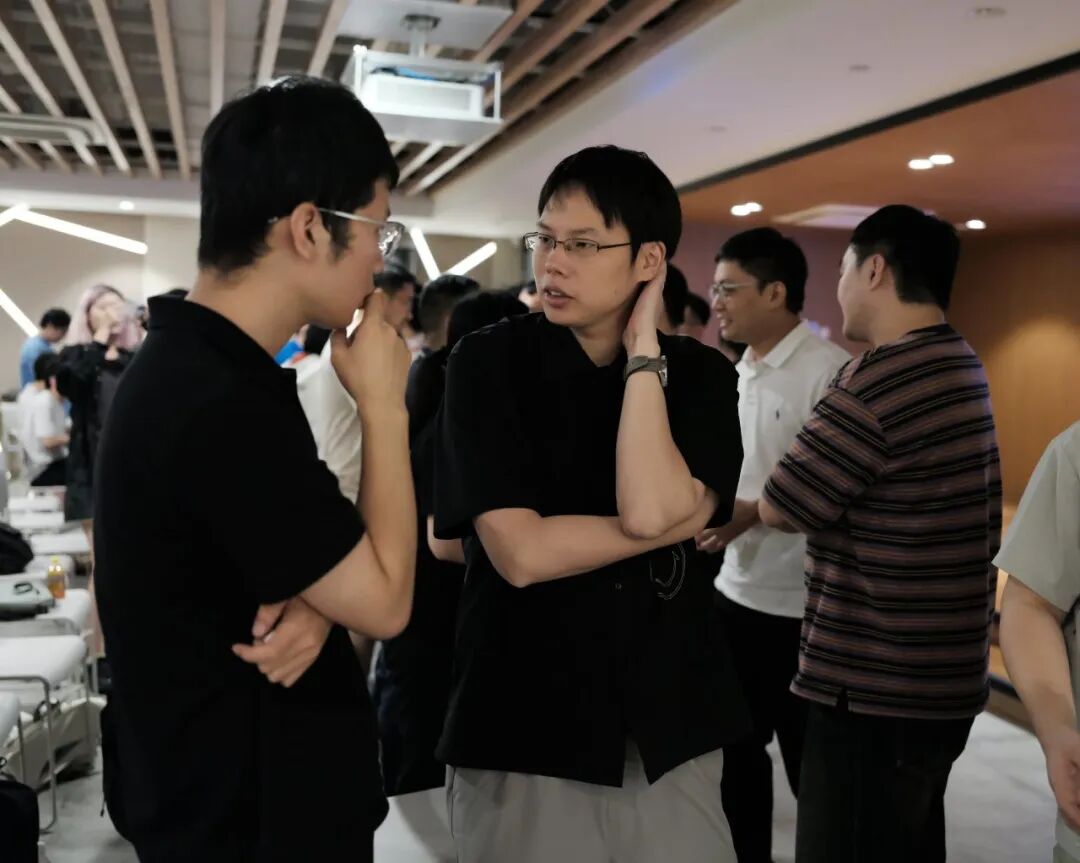
A common home still has several versions
FlagTree's earlier 0.3.0 notes describe an intentionally practical starting point: accommodate existing chip adaptations, bring them into one repository, and establish common engineering support. The same notes identify separating backend-specific implementation from the main code as work still to be developed.[3]
The subsequent history shows why that separation matters. FlagTree records MetaX arriving on a Triton 3.0 baseline in June 2025, then moving to 3.6 in June 2026. Ascend's recorded June 2026 upgrade reached 3.5. These are different migration paths inside the same project.[1]
The September release family preserves that distinction. Its 3.6 notes include new SpacemiT and Tsingmicro integrations and an optional NVIDIA TileIR backend. The 3.5 notes include Ascend language-extension work and benchmarking fixes. The 3.3 notes continue backend and build maintenance.[2]
A shared version number therefore needs its suffix. For someone reproducing a compiler problem, “FlagTree 0.7.0” leaves out part of the environment. For someone assessing ecosystem progress, three maintained baselines can indicate useful accommodation of existing hardware. They can also imply continuing work whenever a fix needs to travel between branches. Counting supported chips alone cannot distinguish those possibilities.
Put the differences where maintainers can see them
The backend-specialization design is more revealing than a compatibility slogan. It asks contributors to replace direct edits to shared code, or copies of an entire codebase inside a backend, with localized implementations of the differences. In principle, the shared code should avoid accumulating vendor-specific branches.[4]
One Python mechanism, spec_path, gives a backend's replacement module priority when it exists and otherwise uses the shared implementation. The design's Iluvatar example replaces compile.py while reusing neighboring files. Its Moore Threads example replaces a different set of modules. Contributors are told to omit files whose behavior is already provided by the common code.[4]
Consider the maintenance consequence. If a vendor copies a directory to change one file, a later shared fix to another file may never reach that copy. Keeping the unchanged files shared removes that particular divergence. The overridden file still needs attention when its assumptions or interfaces change. This is a reduction in duplicated work, not evidence that upgrades become automatic.
The design also documents a trap: applying path overrides at both parent and child directory levels can conceal shared child code. That warning matters because a tidy repository can still load the wrong implementation. The mechanism needs rules about how replacements interact, not merely a directory in which to store them.[4]
The release notes offer evidence that these rules are being used. September's 3.6 changes include replacing Moore Threads monkey-patching with dynamic spec_path lookup and confining Kunlunxin integration changes to an overlay.[2] These are small changes to read, but they bear directly on whether the next compiler upgrade can be reviewed without rediscovering every vendor exception.
Share the language without flattening the hardware
Common maintenance also depends on what kernel authors can express. Triton's attraction is that developers describe blocks of computation while the compiler handles much of the hardware mapping. FlagTree's TLE design argues that some workloads need more explicit control over memory, parallelism and communication.[5]
Its response is graduated access. TLE-Lite adds lightweight extensions; TLE-Struct exposes abstractions suited to architecture families; TLE-Raw admits native programming paths for expert optimization. For example, tile extraction and insertion let a developer describe work on a smaller block within a tensor. The raw layer leaves room for code that must use vendor-specific facilities.[5]
This creates a useful tension. More shared expression gives the compiler more work it can carry between targets. More native code gives specialists greater control, while leaving more behavior tied to the chosen hardware. The design explicitly provides both routes; their presence should not be read as proof that every route exists on every backend.[5]
For an AI team, the implication is practical. “This kernel uses TLE” is the beginning of a compatibility inquiry. Which primitives does it use? Which backend implements them? Which compiler version produced the executable? The answers identify where future maintenance will fall.
The next upgrade is the test
My reading is that FlagTree's durable contribution could be a better division of engineering labor. A chip team should be able to maintain its distinctive implementation while benefiting from common fixes. A kernel author should be able to see where portable expression ends and specialized work begins. The public designs make those goals inspectable; they do not establish how much engineering time has already been saved.
The next evidence to watch is correspondingly ordinary: whether backend migrations preserve localized changes, whether fixes reach the maintained branches, and whether released packages can be traced to a reproducible compiler environment. A new backend is an arrival. Keeping it useful through the next upstream change is the harder achievement.
Sources
- FlagOS contributors, “FlagTree” — official repository, project scope, backend integration history and version-specific installation guidance; checked November 12, 2026.
- FlagOS contributors, “FlagTree releases” — September 28, 2026 release family for Triton 3.6, 3.5 and 3.3, including backend specialization changes.
- FlagOS Community, “FlagTree 0.3.0 release” — Chinese first-hand release notes on repository consolidation and backend separation.
- FlagTree contributors, “FlagTree Backend Specialization” — Chinese design document explaining shared code, backend overrides, module lookup and directory constraints.
- FlagTree contributors, “TLE Architecture Design” — language-extension layers, tile operations and native-code compilation paths.
- HyperAI, report on Guo Hui and Xiao Hang's FlagTree presentation at the August 1, 2026 Meet AI Compiler event, published August 8 on the BAAI community site — event context and photograph.